Turbo Pudding
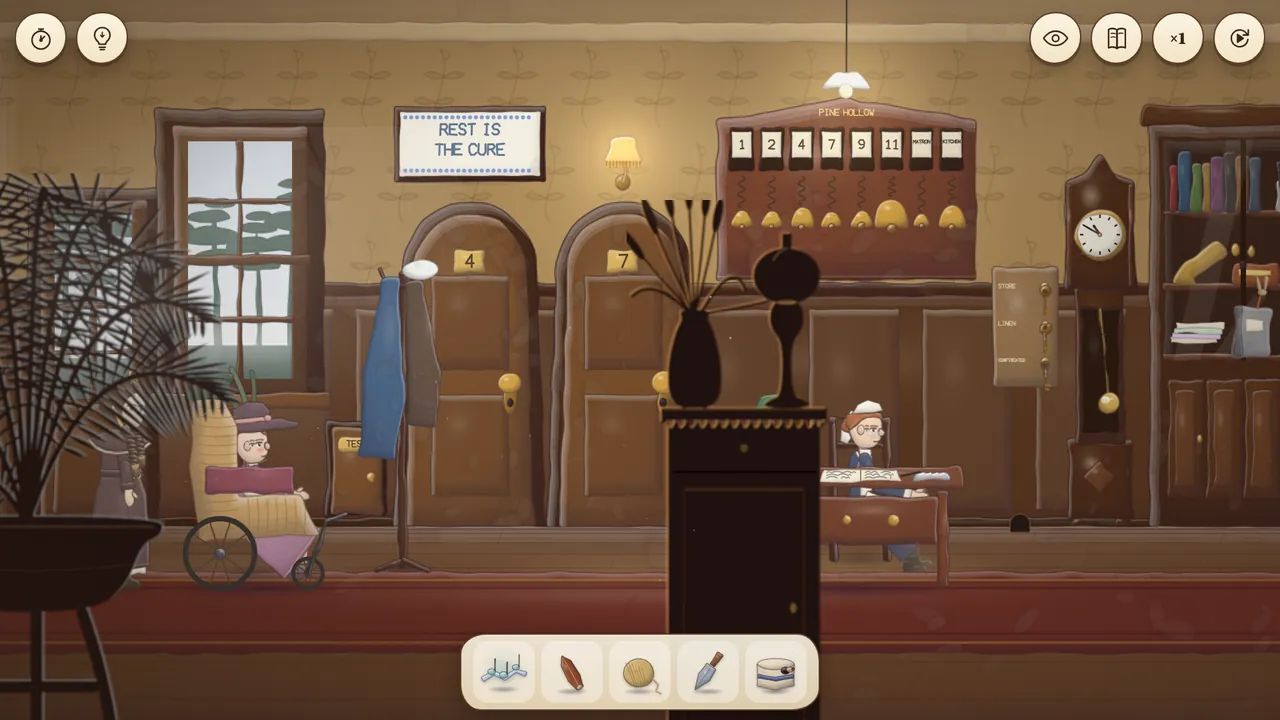
After a dream in a dark forest, Fernevale’s first chapter opens in October 1911 at Pine Hollow, a sanatorium on Bagshot Heath in Surrey. A cross-stitched sign in the corridor says REST IS THE CURE. Everyone inside has an opinion about Daina Ozola’s dreams, and most of them are wrong. Here are the people you meet in the first two chapters.
Daina Ozola
Daina is seventeen, comes from Riga and draws forests nobody has ever seen. She wakes up in Ward Seven with moss on her feet, red earth under her nails and her left hand closed in a fist. Before anything else she bites her finger, writes “Bit finger. Hurt.” in her sketchbook and calls it science.
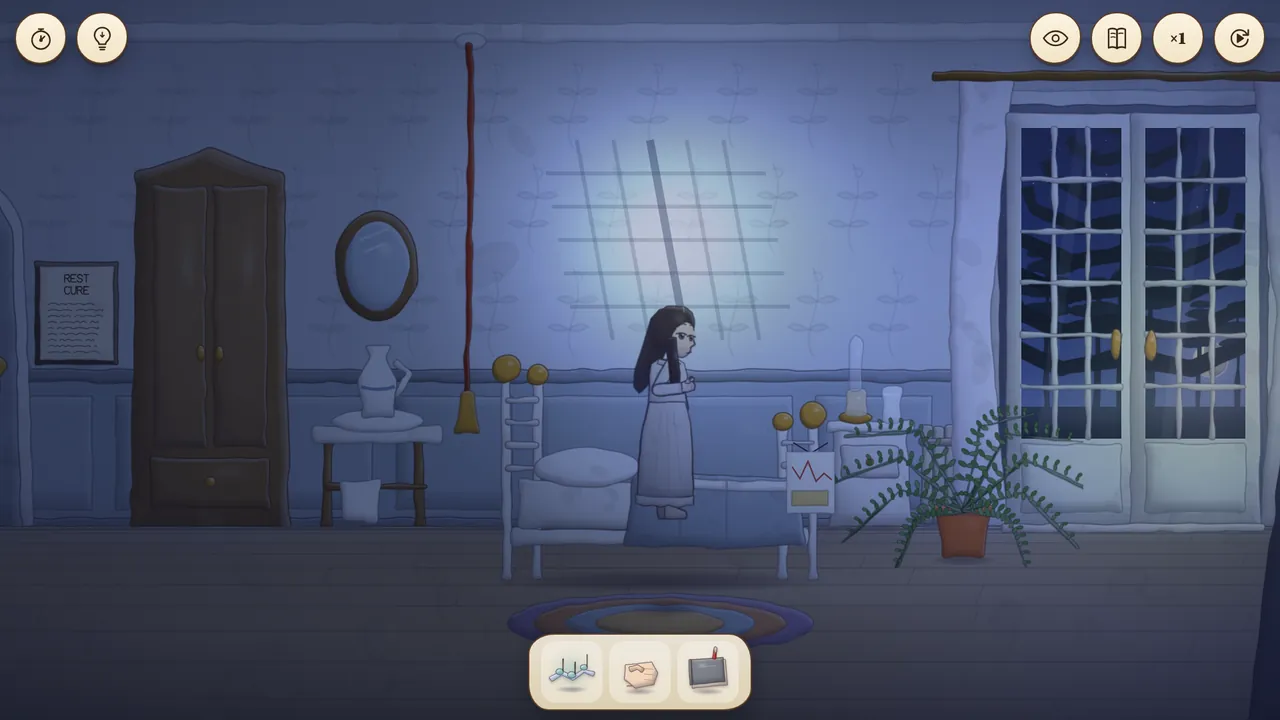
That is Daina in one scene: frightened, funny and stubborn all at once. She talks to herself the way people do when nobody believes them. Her sketchbook is your journal in the game. It keeps every clue you find, and the drawings she makes half asleep turn out to matter more than anyone thinks.
Sister MacRae
Sister MacRae keeps order on the wards. She is Scottish, short with words and never wrong about a temperature. When the chart on the bed rail calls the new patient “Dinah”, Daina corrects her: Dinah is a cat in a book. “Aye, well. The cat’s not on my list, and you are.”
Sister keeps the bell board, the duty book and the keys, and she does not believe a word about the forest. Watch her anyway. There is more kindness under that starched cap than she will ever admit, and she has her own quiet ways of not seeing things after ten o’clock.
Dr Fell
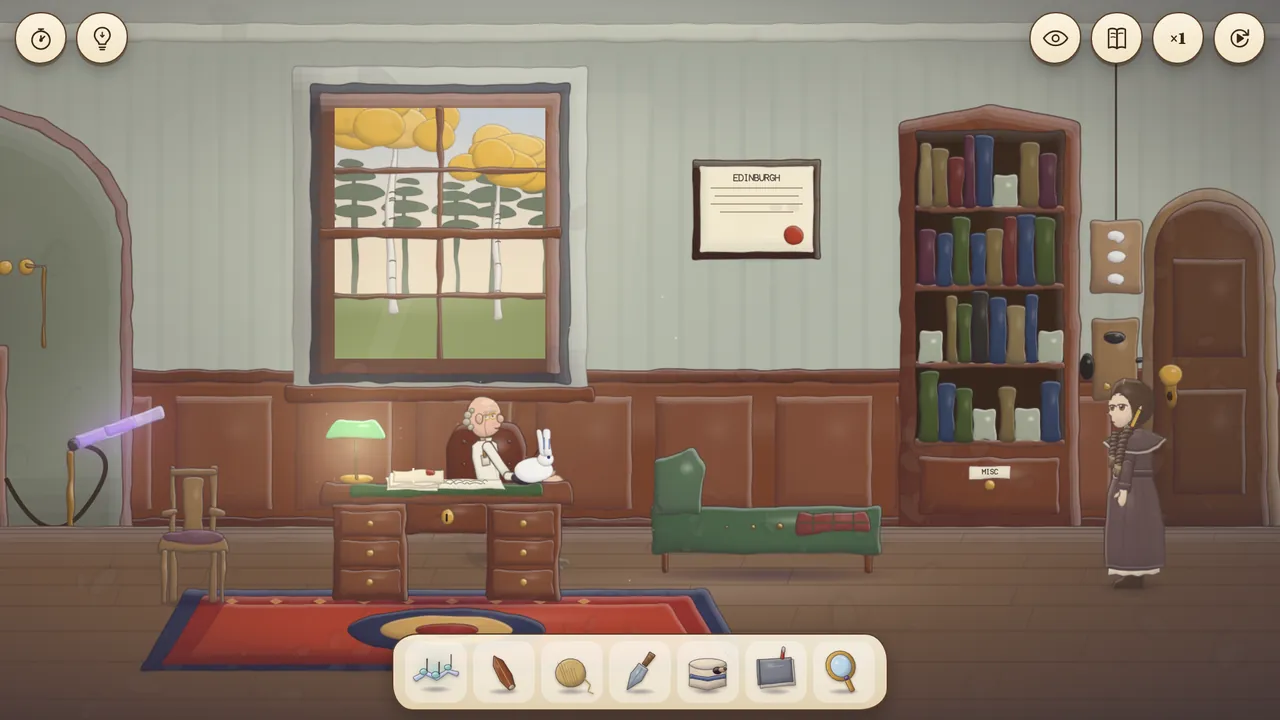
Dr Fell runs Pine Hollow. He has an Edinburgh diploma on the wall, a manuscript on the desk and a cheerful answer for everything. Daina’s forest, he explains, is a hypnagogic hallucination: nothing in it is real. His favourite treatment is “a little d’Arsonvalisation. Perfectly harmless. Mostly.” The patient holds a glass tube that is supposed to glow steady. In Daina’s hands it flickers, ripples and sulks.
That treatment is real history. Around 1900, doctors all over Europe were treating “nerves” with high-frequency currents, a cure named after the French physician Arsène d’Arsonval, and glowing glass electrodes were the height of modern medicine.
Win Ashby
Winifred Ashby of Ward Nine introduces herself in one line: “Holloway, then here. Father calls it a holiday.” Holloway was the London prison where suffragettes were locked up, and Win is very proud of having been one of them. Her battle cry, “Deeds, not words!”, was the real motto of the Women’s Social and Political Union.
Win naps with a Bible open on her face, calls Daina “comrade” and hands out advice like “Never surrender evidence to a man with a notebook.” When Dr Fell tells Daina that nothing in her dream is real, Win answers from under the Bible: “Funny. Everything I was told wasn’t real turned out to be.”
Mrs Bunce
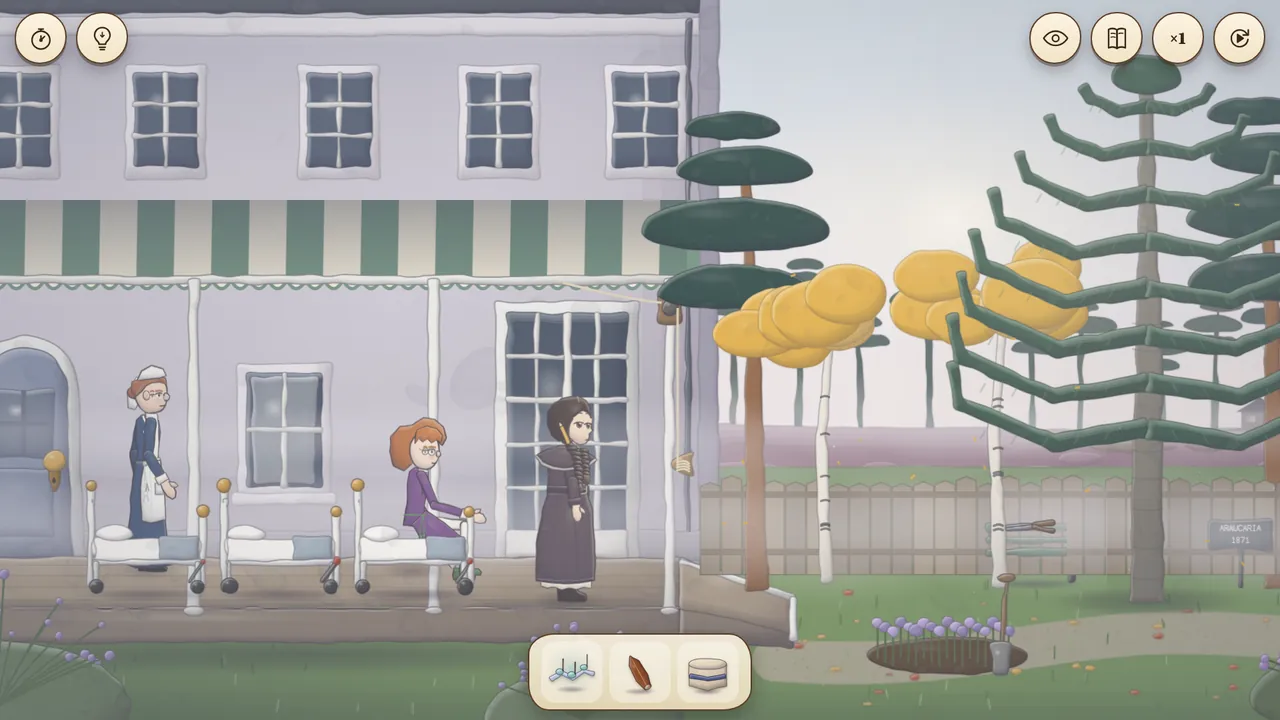
Mrs Bunce watches the corridor from a wicker bath chair by the window, under a hat the size of a cartwheel, lorgnette always up. She has decided Daina is a spy. Her evidence: Daina is Latvian, and “Sidney Street was crawling with Latvians.” In January 1911 every newspaper in Britain had covered the Siege of Sidney Street, a gunfight in London’s East End with a gang of Latvian émigrés, so Mrs Bunce is not short of material. She is wrong about Daina, of course, but she rings a very loud bell.
Mr Hatch, the Vicar and Pudding
Mr Hatch is the gardener, a Somerset man of few words. His robin is called the Vicar, “always first at the digging”, and it hops from his cap to his spade without bothering to fly. Hatch knows the monkey puzzle tree in the garden better than the doctor does: forty years, and never a single cone. So when a strange seed turns up, he is the first to say it did not fall off his tree. “Doctor knows his Latin. I know my tree.”
Under the leaves lives a hedgehog. “Pudding, I call ’im. Every hedgehog in Somerset’s called Pudding. Saves confusion.” Pudding is about to travel a great deal further than any hedgehog in Somerset, mostly asleep in a hatbox, and he snores at the worst possible moments. Once, at exactly the right one.
Opi
One more person lives at Pine Hollow without ever arriving: Opi, Daina’s grandfather. He comes back in memories, always calling her “little bird”, always telling her to look at the moon. In one of them, on a snowy night in Riga, torches move along the street below the window, and Opi puts his big hand over her eyes. “Don’t look at the lanterns, little bird.”
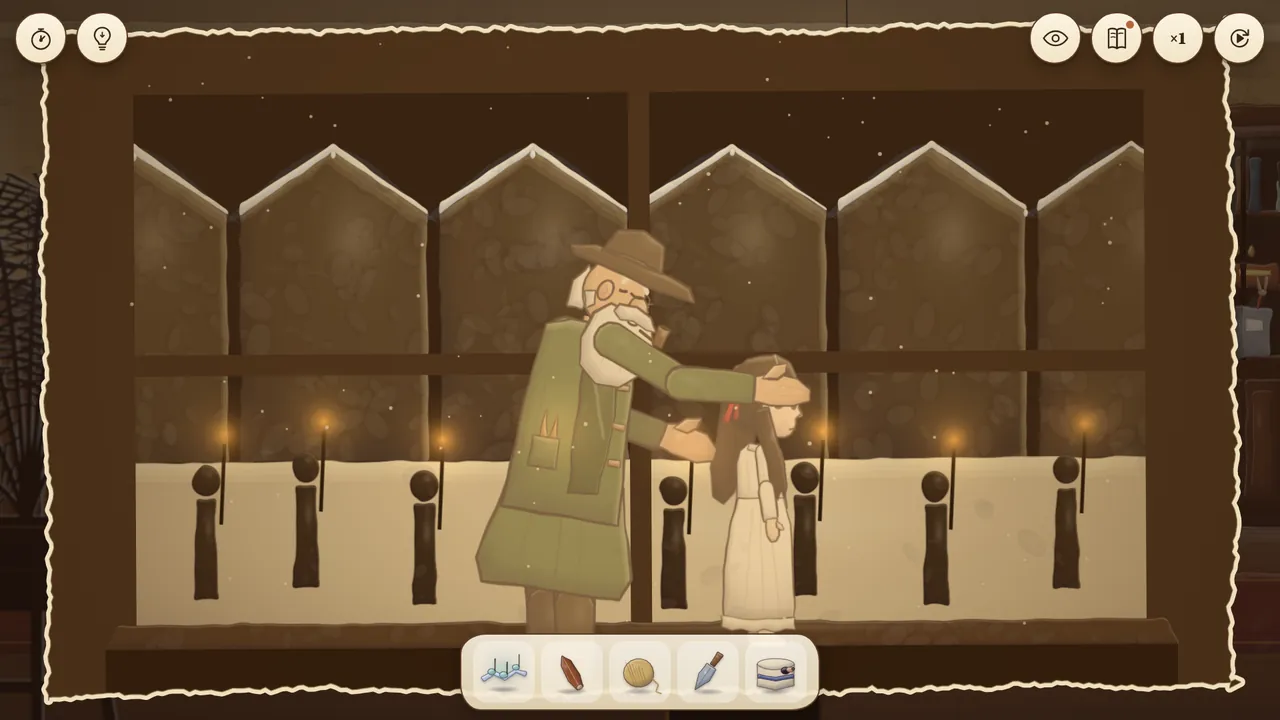
Why Opi left, and where the forest from his song really is, is what the rest of Fernevale is about. Pine Hollow is chapters one and two. After that the road goes north to Hull, across the North Sea in the fog and home to Riga.