Turbo Pudding
Panemonium has no audio files. Every note you hear is played live in your browser as you go. It’s Wednesday, so this dev diary is about the music: how it’s written, how it changes as the glass breaks and why the Prism plays the harp.
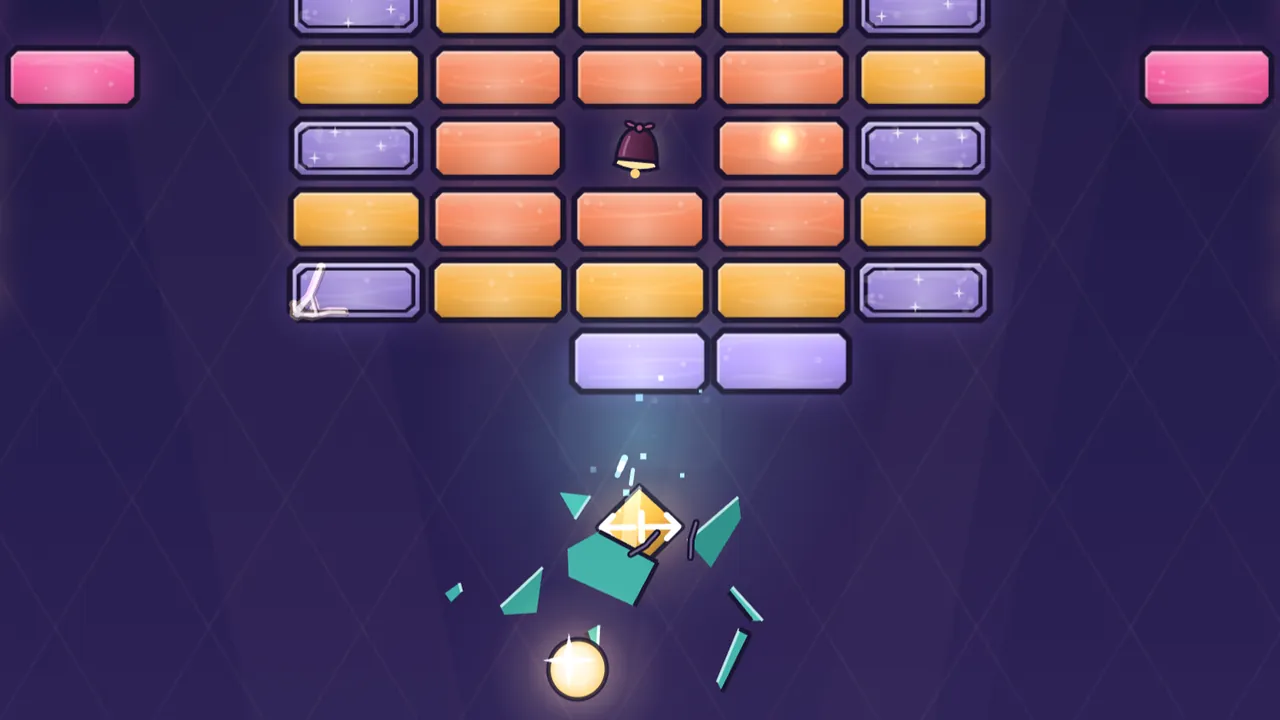
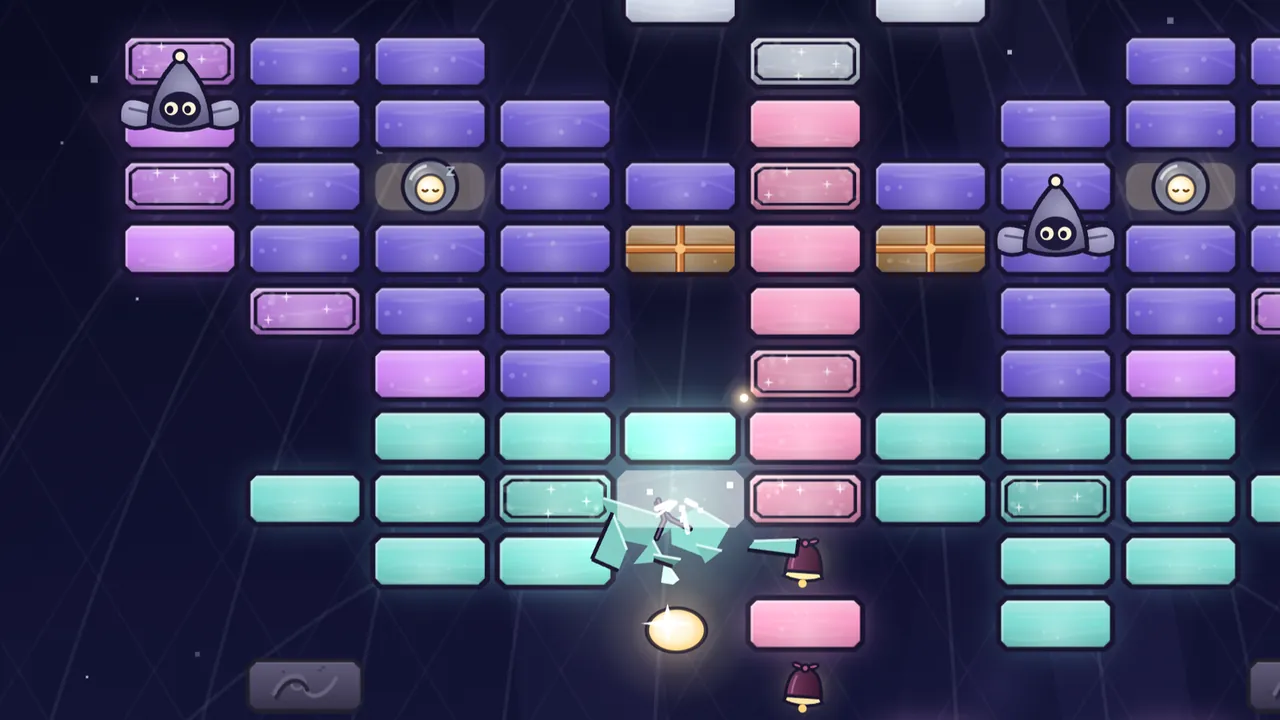
The picture at the top is level 2, Twice as Thick, in Lantern Lane. A lavender pane has just burst into shards, an amber Broadpane capsule tumbles out, and a crystal chime has just gone off in your speakers.
Glass chamber pop at daybreak
Before we wrote a single note, we gave the sound a brief: glass chamber pop at daybreak. Celesta and bells lead. A harp picks the chords, a glass harmonica holds the ground, brushes and a soft kick walk along, and a warm sub bass sits under all of it.
The songs are written as lines of text, sixteen steps to a bar, where each step starts a note, holds it with a dot or rests with a dash. A level song runs through its two parts, plays them again with extra voices, takes a four-bar break and goes back to the top. One round takes about seventy seconds, so a level usually hears two or three.
The town has a tune of its own. In our notes, it’s called “Vitrea at Dusk,” and it opens the game like a music box, just harp and pad for four bars. It’s in F Lydian, a scale with one raised note, and our score says that note is the light.
Every world has its own band
Lantern Lane plays on celesta and marimba over a kit made of glass, at 116 beats a minute. Belfry Heights brings in bells and a kit of clock sounds at 124. The Glasshouse swings on flute and harp at 108, and the Moon Dome slows to 96, on glass harmonica with a soft choir behind it.
The glass itself rings differently in each world. Lantern Lane is “warm lamp glass,” Belfry Heights is “bell bronze and glass,” the Glasshouse is “wet glass that sings” and the Moon Dome is “soft, night glass.” Stone and frames get a knock with no note from the key at all, so your ear can tell an obstacle from a reward before your eye does.
The dawn turns the music up
Every level starts at dusk, and so does its song. You hear a pad, the bass, the hats and half of the arpeggio, all under what we call the velvet: a filter that keeps the sound soft and muffled. As the glass breaks, the velvet lifts, and by the time 80 percent of the panes are gone, it’s all the way open.
The band comes in with the dawn. At 15 percent of the glass, kick and snare join. At 40, the melody. At 70, the second melody, the harmony and the full arpeggio. Layers only ever climb, and only at the start of a phrase, every second bar, so nothing barges in halfway through a line. When three panes or fewer are left, the hats step out, and the field goes quiet for the last shots. A pause or a lost Spark lays the velvet down again, and a Yawn capsule sinks the music into a haze.
Combos play along
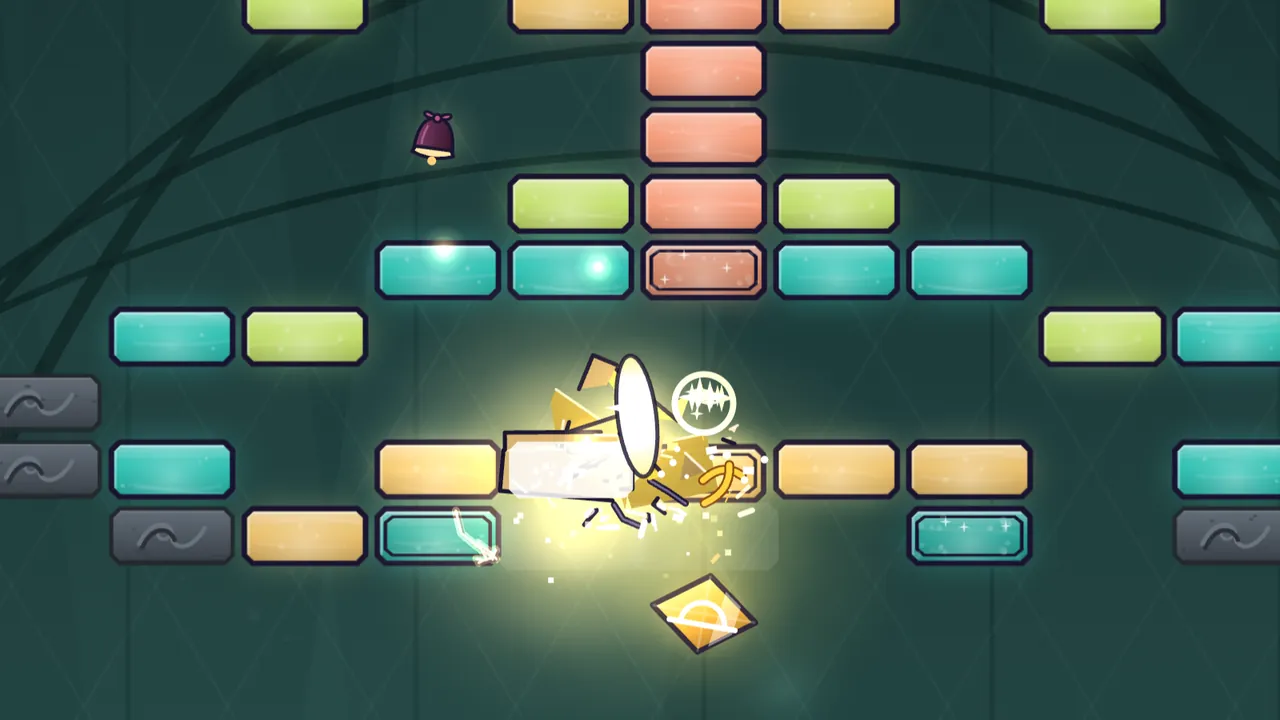
Every break is a short crystal chime over a crisp crackle. In a combo, each chime climbs one step up a five-note scale in the key of the song that’s playing, up to two octaves, so a long rally comes out as a run in tune with the music.
The combo counts panes broken since the Spark last touched the Prism, and the band reacts. At 5, the hats double up. At 10, the arpeggio jumps an octave. At 15, the second melody comes in, and at 20, a cymbal crashes and that melody moves up an octave onto bells.
The Prism plays the harp
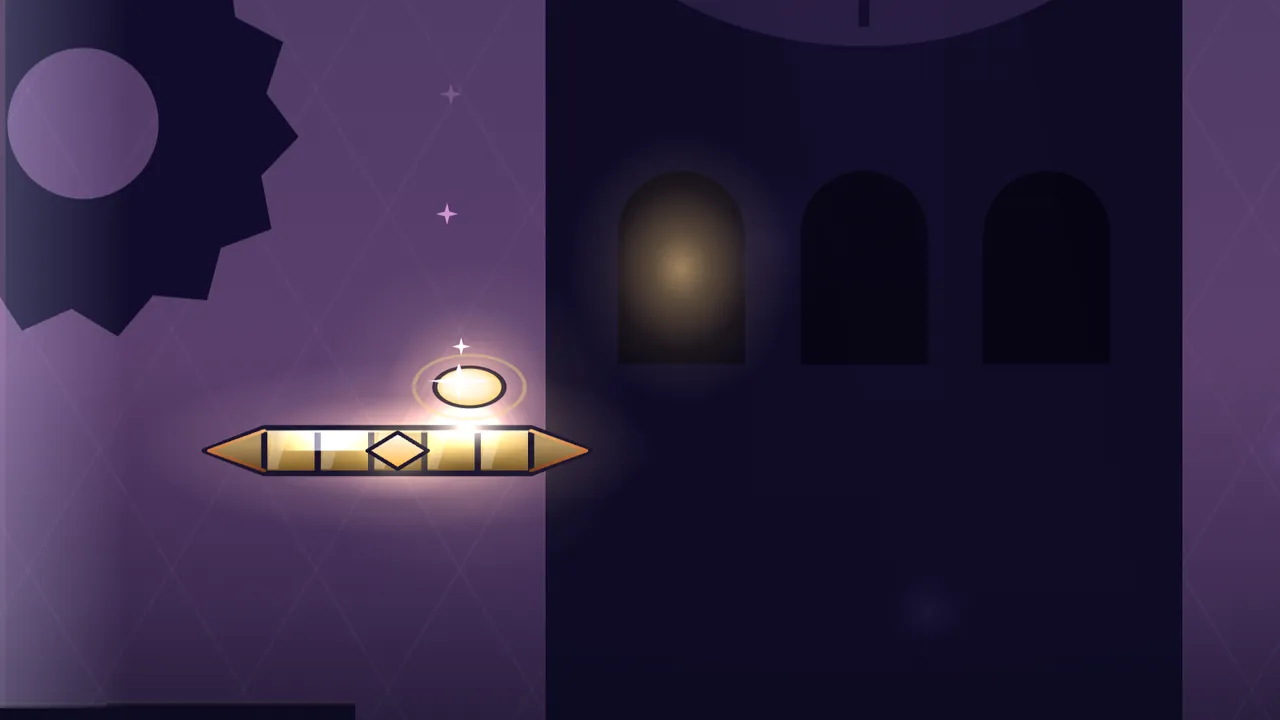
The Prism, Mira’s paddle, answers every bounce with a soft, low knock and a harp note from whatever chord is playing right then. Catch the Spark in the middle, and you hear the root of the chord. A little further out, the third. At the very edge, the fifth. Your ear hears where you hit, the same way your eye sees the angle.
The three bells in each level work the same way. Each world has its own three notes from the town’s tune, and every bell you find rings its note on a tubular bell, with a celesta an octave above. The third bell rings all three. When the last pane goes, there’s a breath of silence, a harp runs up two octaves, and the sunrise lands on one big bell.
Even the talk is in tune: Mira speaks in A major, Duchess Dusk in B-flat minor, and the Dimlings chirp in no key at all. The Duchess’s own lullaby, “Hush Now,” starts with three falling notes we call “a yawn down the triad.”
Lantern Lane is free to play in your browser at panemonium.com: the first five levels, the first boss included. The full game, all twenty levels, is $4.99, paid once. More about the game is on its Panemonium page.