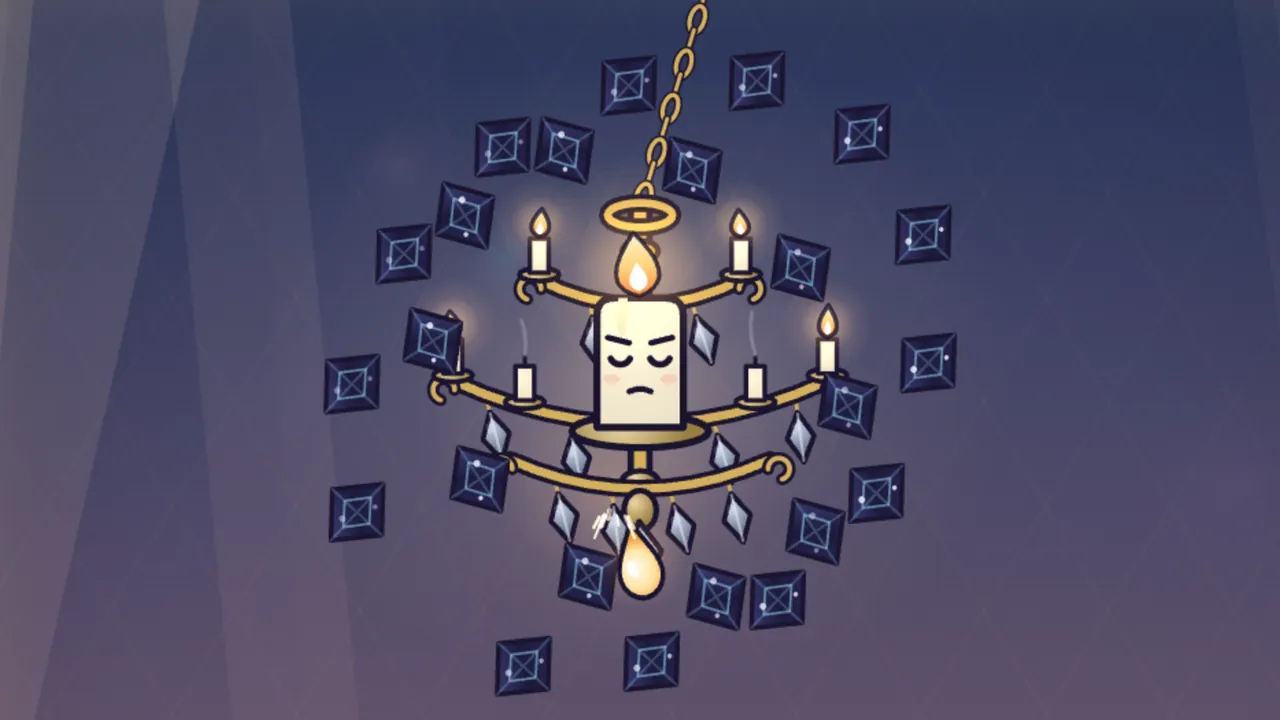
Turbo Pudding
There isn’t a single image file in Panemonium. Every pane, shard, ray of light and face is drawn by code, right at your screen’s own resolution, so the glass stays sharp on a phone and on a big monitor alike. Before any code, though, there were notes, rules and decisions. Here are a few pages from that sketchbook.
Three towns on the drawing board
We sketched three possible worlds: a town of stained glass at dawn, caves full of crystals, and a frozen kingdom under the northern lights. Glass won, for two reasons.
First, glass breaks the most beautifully: colored shards, a flash of light, a ring. Second, it gave breaking a kind meaning. In Vitrea, the glass town, Duchess Dusk has caught the dawn and locked it in glass, pane by pane. So every pane you break lets a little morning out, and smashing things turns into a good deed.
The style comes from Art Nouveau lamps and windows: curved lead lines, plant shapes and warm gold frames. We kept well away from church windows and gothic arches.
Glass, or not glass
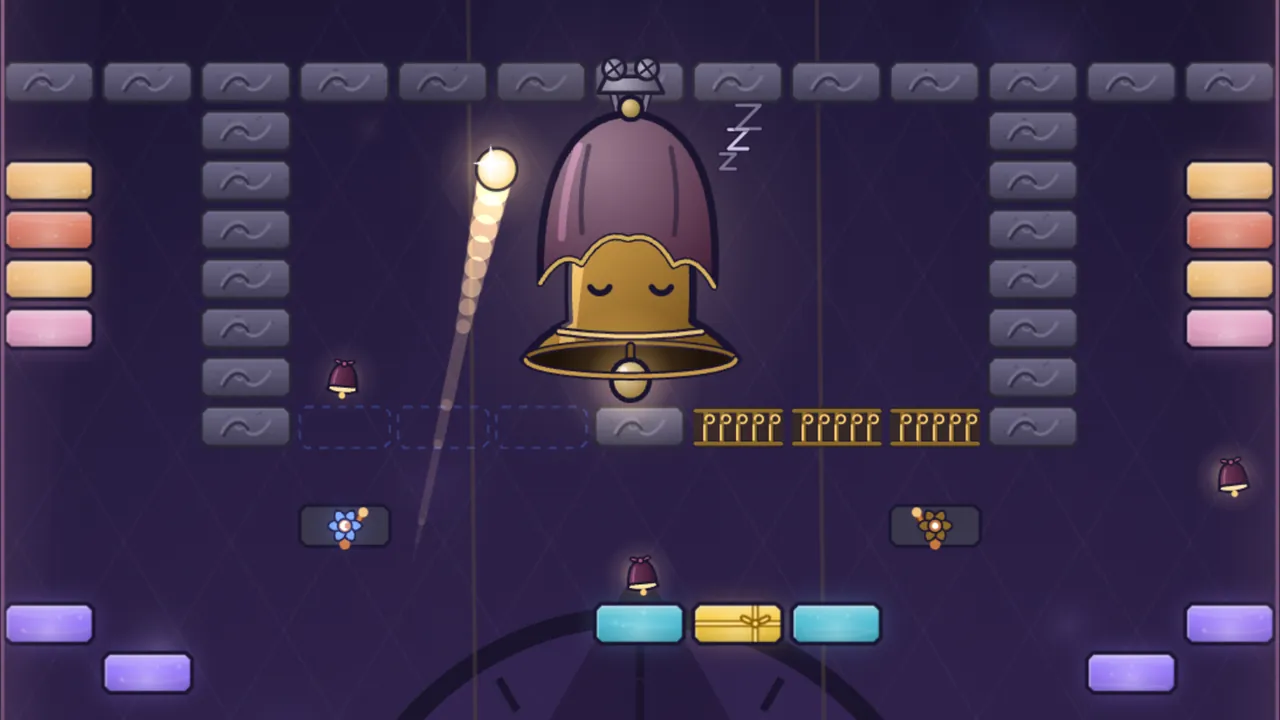
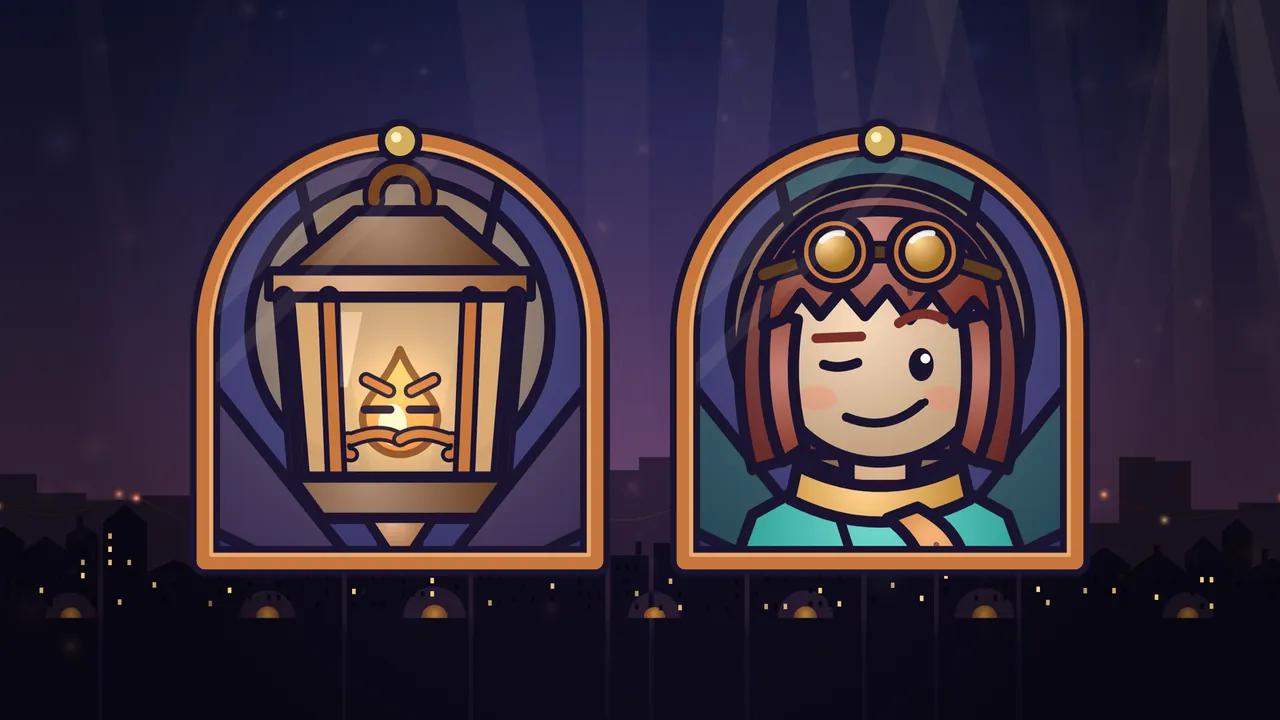
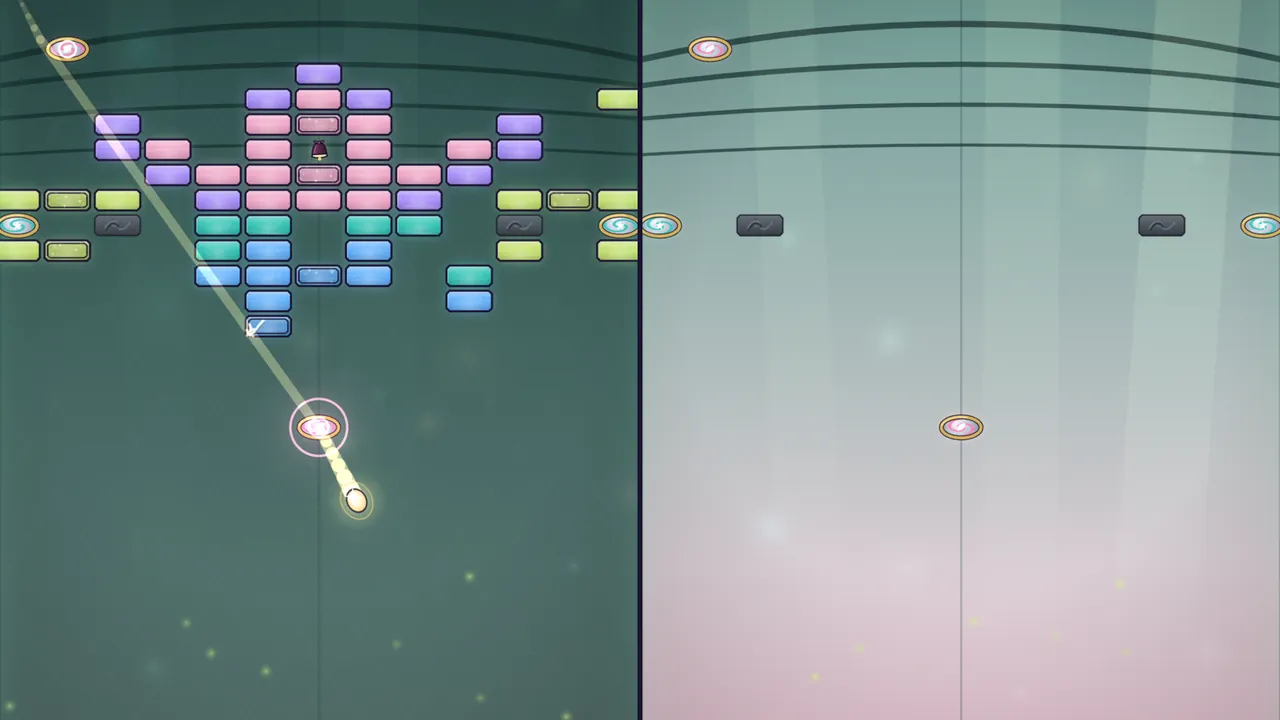
The first rule in the sketchbook is simple. Everything that breaks is glass: it glows from inside and lights up when the Spark flies past. Everything that doesn’t break is not glass. Carved stone, brass and cast iron are all matte, with no glow at all. You can tell what to hit in a split second, without thinking about color. Gaffer, the old talking lantern, puts it his own way: “Stone doesn’t break. Play around it, or use it to bank shots.”
The second rule: the frame tells you how strong a pane is, and it reads even if you can’t tell colors apart. One hit takes a thin lead frame. Two hits, a double frame and a dusting of frost. Three hits, a brass cross over the glass.
Then came the small touches. Each pane has faint streaks and tiny bubbles in it, because old glass is never quite even. A cracked pane always cracks the same way, and the dawn shines through the cracks. When a pane has one hit left, that light pulses, as if the morning inside can’t wait.
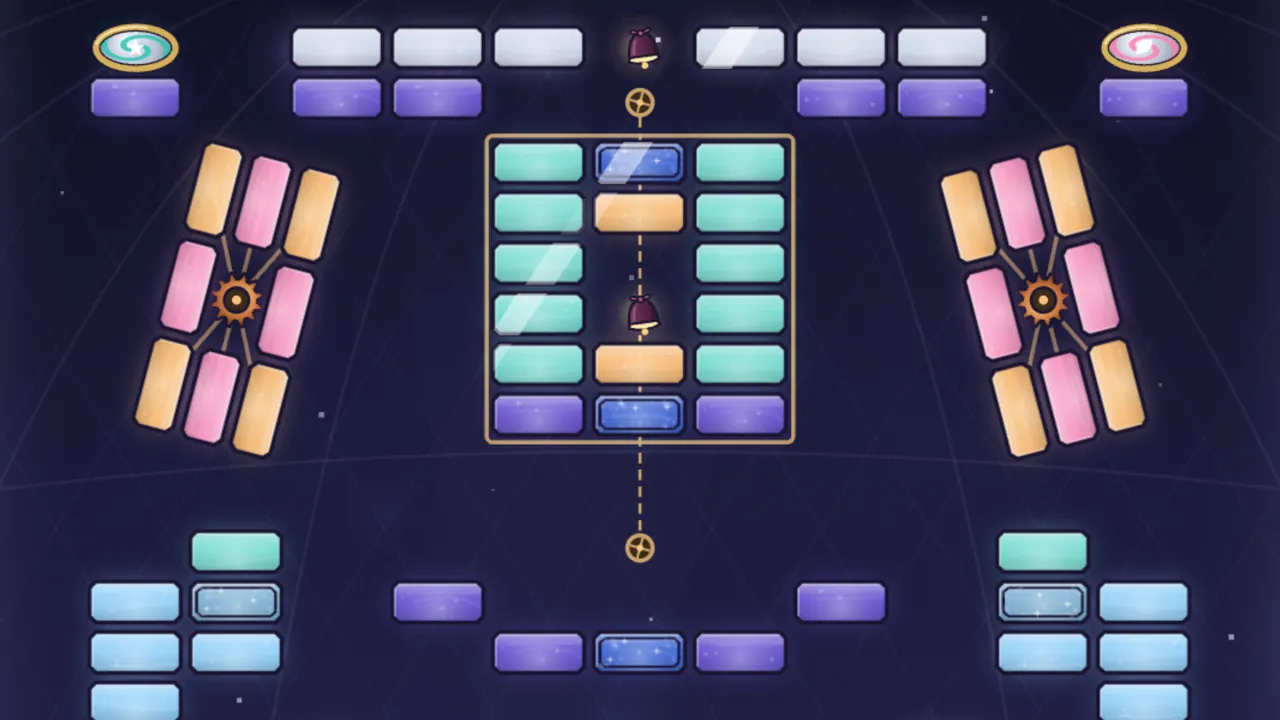
Moving glass got its own hardware. Rope Panes ride a dashed rope between two turning pulleys, held in a brass frame. Gear Panes hang on brass spokes from a twelve-tooth gear that turns with the ring.
A sky that wakes up
Every town in the game is painted twice, once at dusk and once at dawn. As you play, the dawn painting is laid over the dusk one, a little more with every pane you break. Each window and lamp in the town has its own moment to light up, so the town wakes up while you play, and the shafts of light grow brighter as the morning comes.
One rule kept all this in check: the sky can get light, but the part of the screen with the glass stays deep even at dawn, and the bottom, where the Prism moves, stays the darkest. The Spark is gold with a dark rim, so it reads on any glass.
How a pane breaks
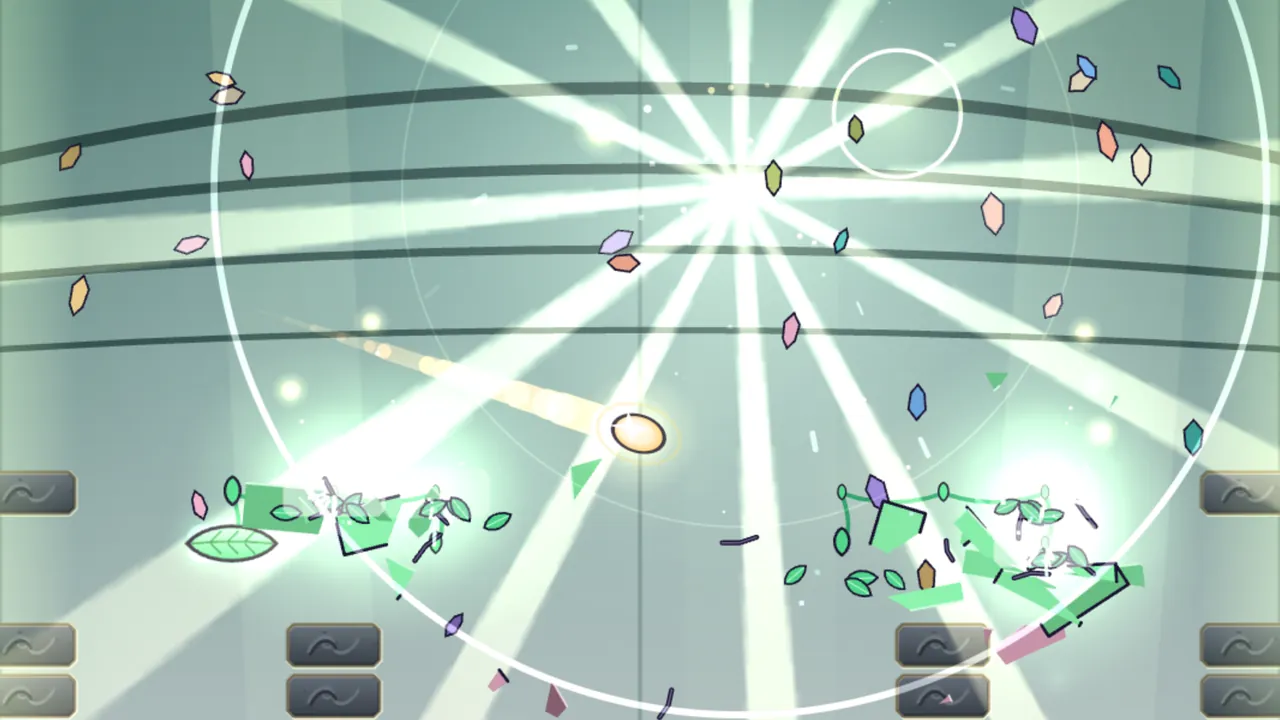
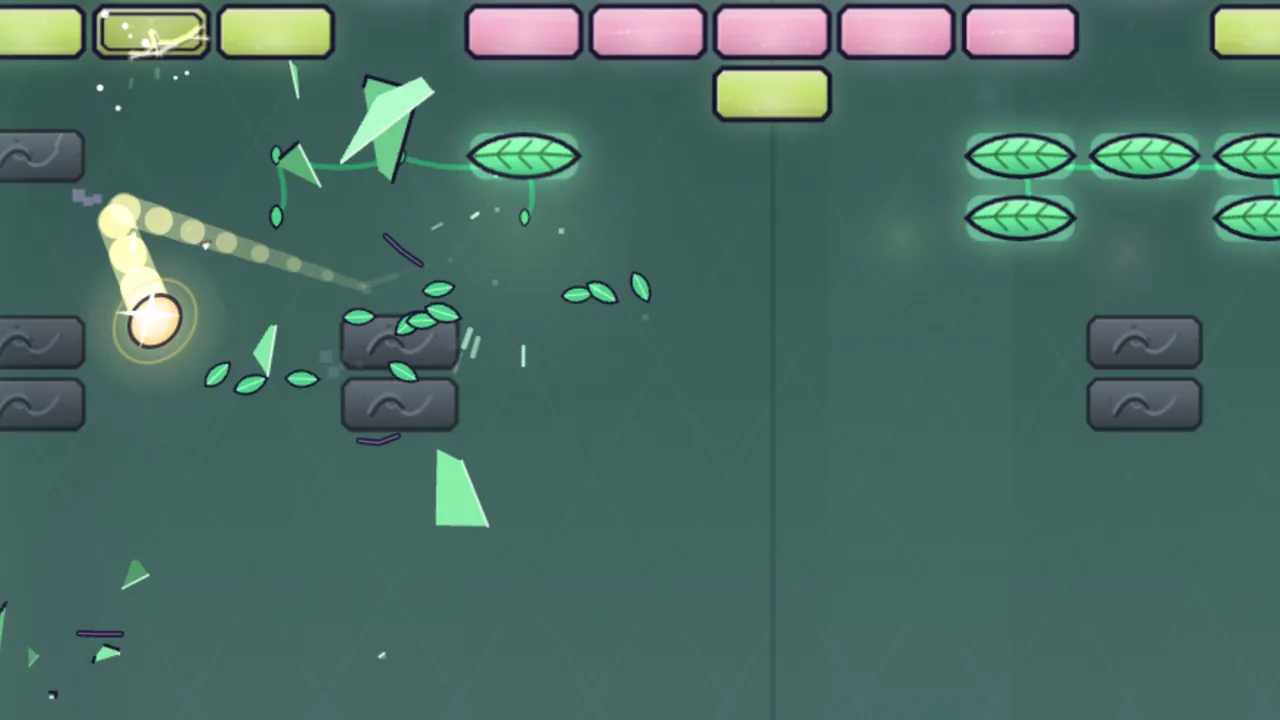
A pane breaks from the point where the Spark hits it, into wedges that get smaller near the impact. Half the shards keep a piece of lead on their outer edge, the way real stained glass breaks along with its frame, and two bent strips of lead tumble down, heavier and hardly turning. The shards wink as they spin, catching the light. And the light escapes: a soft glow, and a tiny ember of dawn that flies up into the sky.
Each material breaks its own way. Double panes shed their frost first, then fall as snow. Barred glass loses its brass bars one hit at a time. Glass hot from the kiln bursts into shards that cool as they fly, from pale yellow to orange to dark red. Gift glass loses its ribbons in a shower of confetti, and vine glass drops leaves that glide down instead of falling.
The last pane of a level gets a little ceremony. Twelve rays of sunrise open from the point of the hit and slowly turn, the stones and frames are edged with gold, and petals in the town’s glass colors drift down, forty of them on a computer.
The name, cut from glass
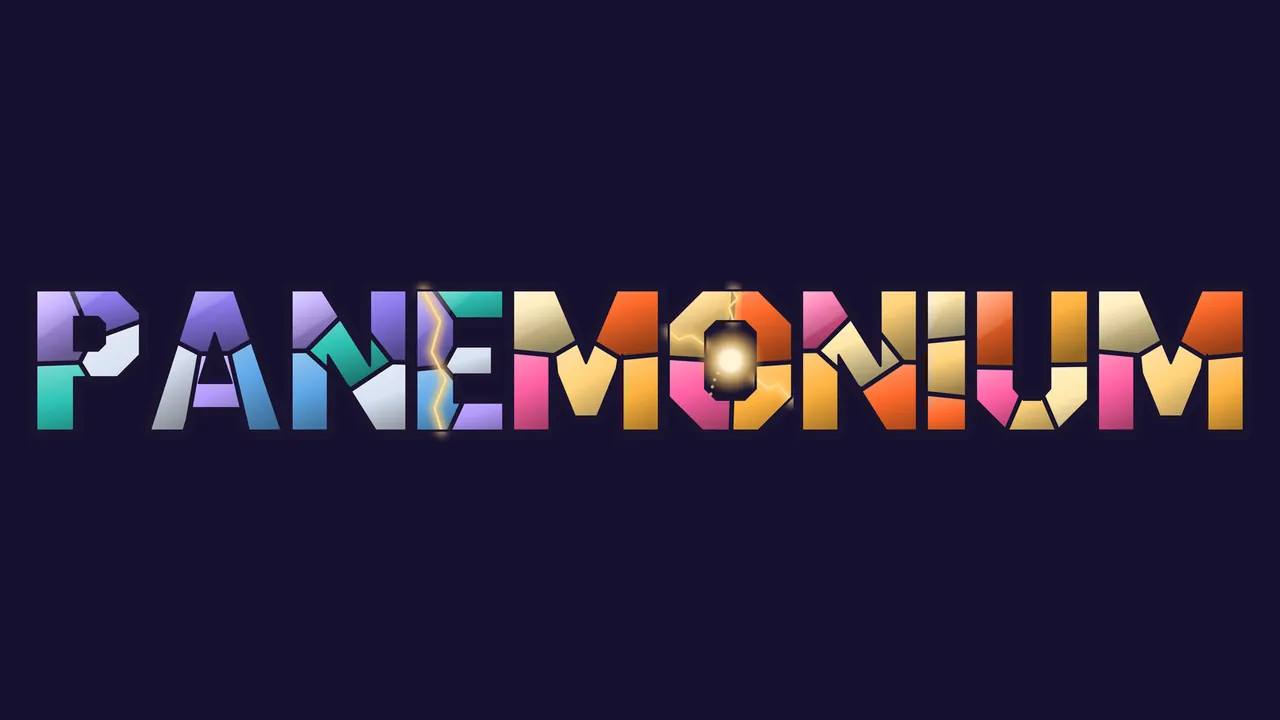
Even the name is a pane of glass. We lettered it from scratch: ten letters, each cut into three to five pieces and framed in lead. PANE is cold dusk glass, MONIUM is warm dawn glass, a crack of gold light runs down the E, and the Spark sits in the O, where it has cracked its ring. The title screen, the app icon and the website all draw the very same mark.
See it for yourself
Lantern Lane is free to play in your browser at panemonium.com: the first five levels, the first boss included. The full game is $4.99, paid once. More about the game is on its Panemonium page.