Turbo Pudding

In Panemonium, nobody gets a speech bubble. When someone talks, their face appears in a small stained-glass window: an arch with a copper rim, colored panes held in lead and a glint across the glass. And the face changes with every line. Mira has five moods, Gaffer has four and the Grand Chandelier has two. It’s Monday, so let’s meet the cast of Lantern Lane, one mood at a time.
A window that breathes
Each portrait is drawn in code. Behind the face sits a fan of seven panes in two shades of night, with a ring of glass behind the head in the speaker’s own color: amber for Mira, dawn gold for Gaffer and pale blue for the Chandelier.
The window rises and falls by a hair, one slow breath every two seconds. It blinks for about an eighth of a second every 2.5 to 4 seconds, and each character keeps a rhythm of their own, so two faces in a conversation rarely blink together. When two characters talk, one sits on the left and one on the right. The one speaking stays bright, and the other one dims.
Mira, five ways
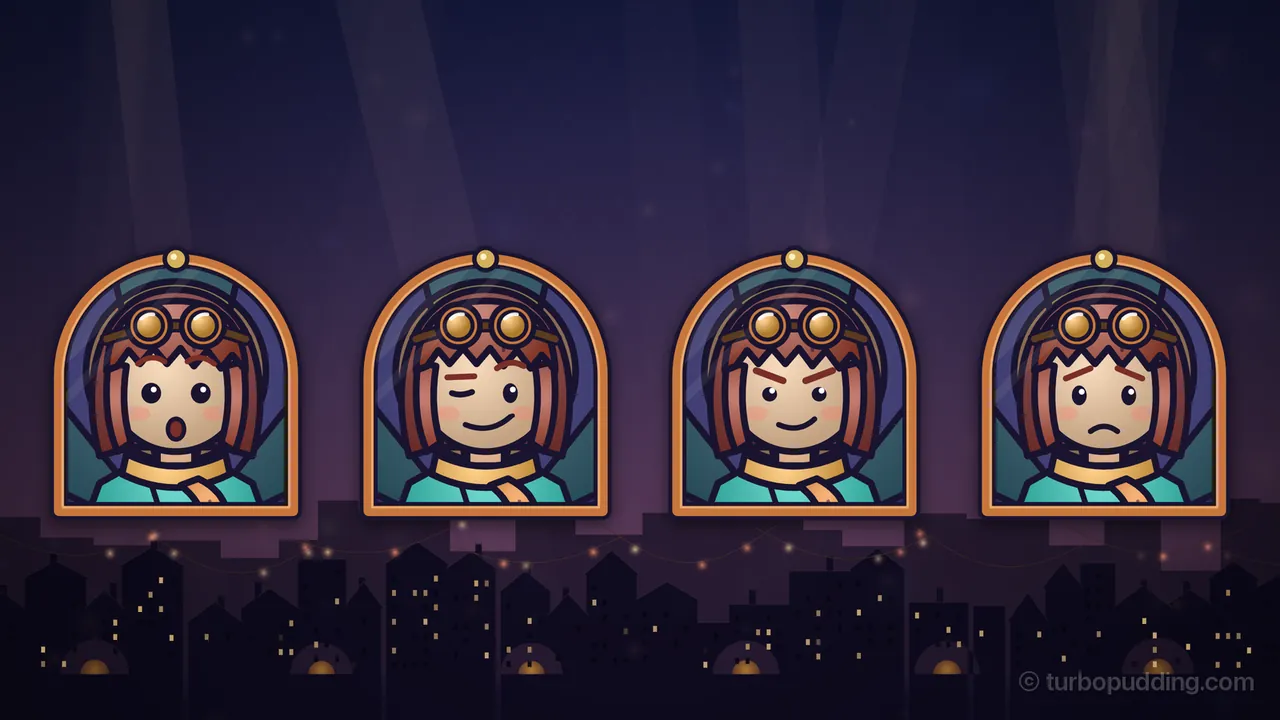
Mira, the lamplighter’s apprentice, has an auburn bob with a fringe cut in zigzag teeth, brass goggles with amber lenses on her forehead and an amber scarf over a teal coat.
When she’s happy, her eyes close into two arcs, her brows lift and her mouth opens wide enough to show her tongue. That’s the face for “Then let’s make some noise!” Surprise gets round eyes, high brows and a little round mouth. Sly is a wink: one eye shut, one brow flat and the other arched, and a lopsided smile. She wears it to ask the big question of the prologue: “So if I break the glass, the morning comes out?”
Determined narrows her eyes under two brows that slant down toward her nose, with a firm half smile: “Wakey wakey, big lady!” And worried tips her brows up in the middle, over a small frown. That one belongs to the moment she hears what the Duchess has done next: “She took the BELLS?”
Gaffer, a face made of fire
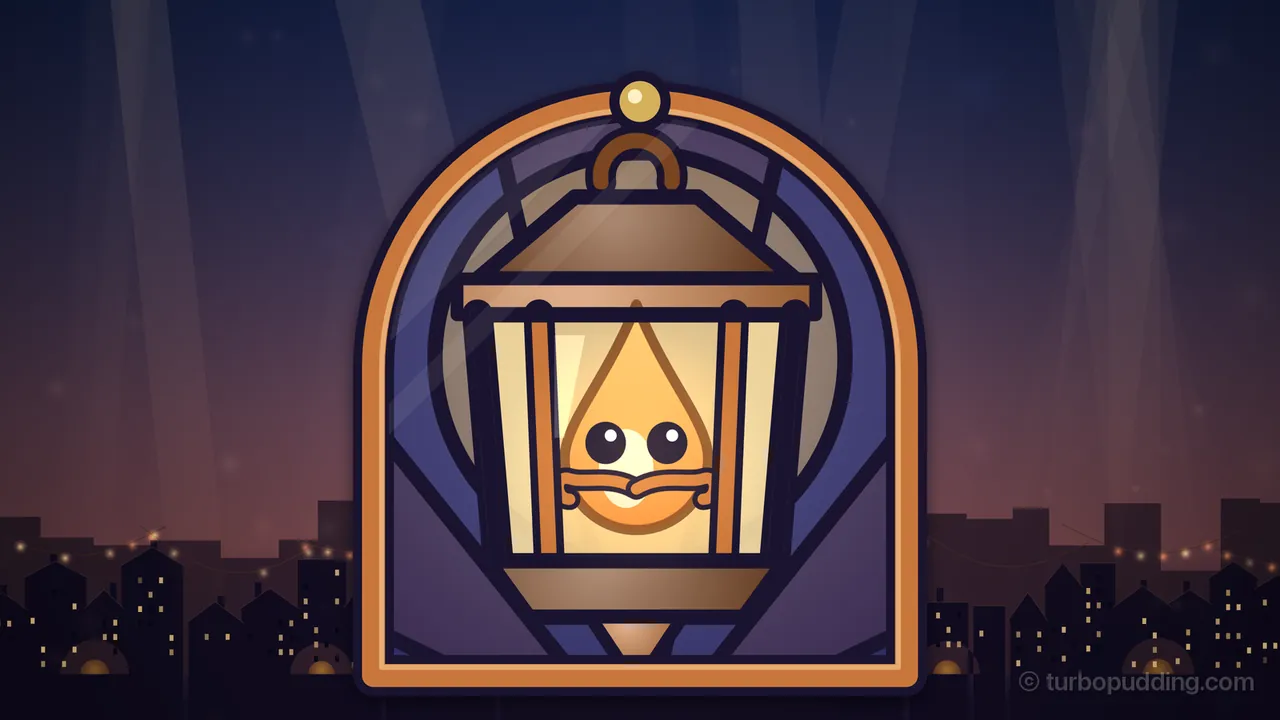
Gaffer, the old talking lantern on Mira’s pole, keeps a face inside the flame: two eyes and a curly mustache of copper filigree. So the flame does the acting. A calm Gaffer looks out with half-shut eyes: “Look at the window. That pane is glowing. Dawn is stuck inside it.”
A grumpy Gaffer is a smaller flame, four-fifths of its usual height. The light behind the glass turns a deeper amber, the eyes become slits under two copper brows and the mustache droops. A warm Gaffer is the opposite: the flame grows a little and goes paler at the tip, the eyes turn into happy arcs and the mustache curls up. “Up we go, then.”
Alarmed is the loudest mood of all. The flame shoots up a fifth taller, the eyes go round and the whole window trembles, 12 times a second. It’s the face for the moment Lantern Lane goes quiet: “Hear that? The bells just went quiet. All of them.”
Voices that change with the mood
Nobody in Vitrea speaks out loud, but everybody babbles. A line types out at 40 letters a second, and every few letters, the speaker sings a short note. Mira chirps high, with a note on every second letter. Gaffer buzzes low, in D major, on every third. Each note comes from the letter itself, so a line sounds the same every time you hear it. A question mark lifts the voice a step, and a period lands it on the home note.
The mood moves the voice, too. Joy lifts it two semitones and speeds it up, so a happy Mira sings a note on every letter. Worry drops it two and slows it down. A grumpy Gaffer goes three semitones down and sounds muffled, as if behind thicker glass, and an alarmed one jumps five semitones up and talks faster. A warm Gaffer gets a soft echo.
The Grand Chandelier, asleep and awake
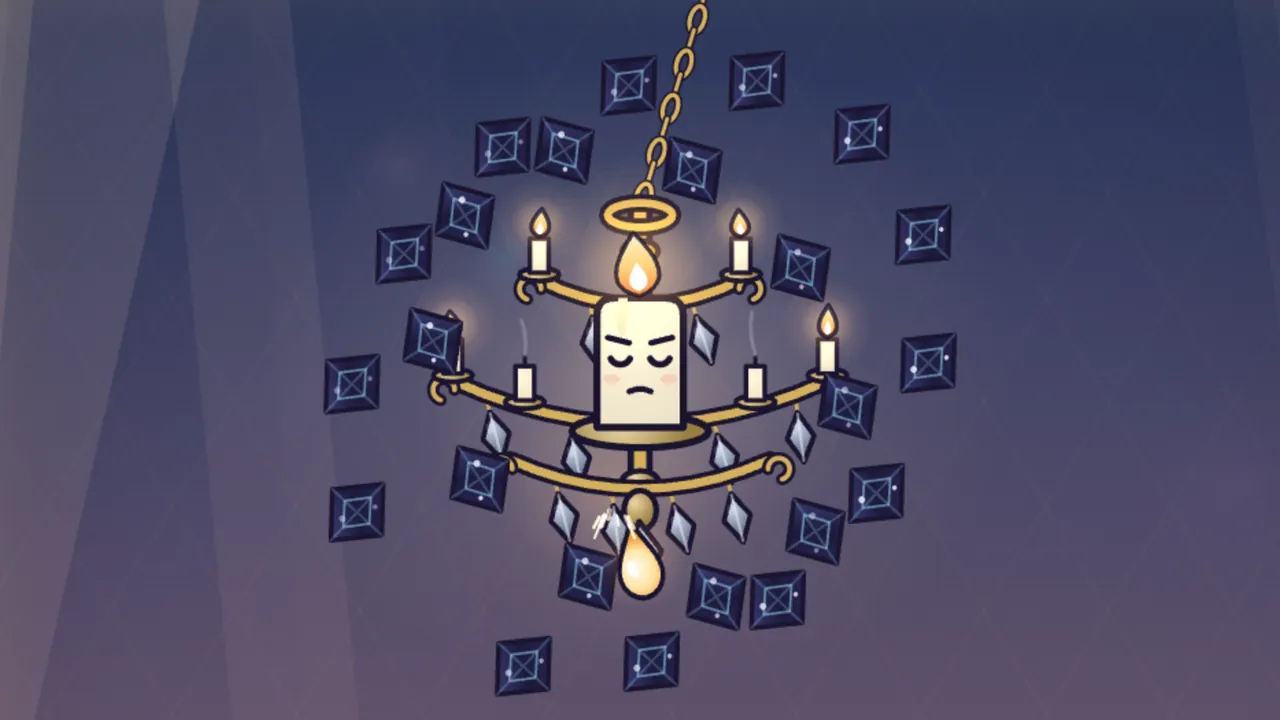
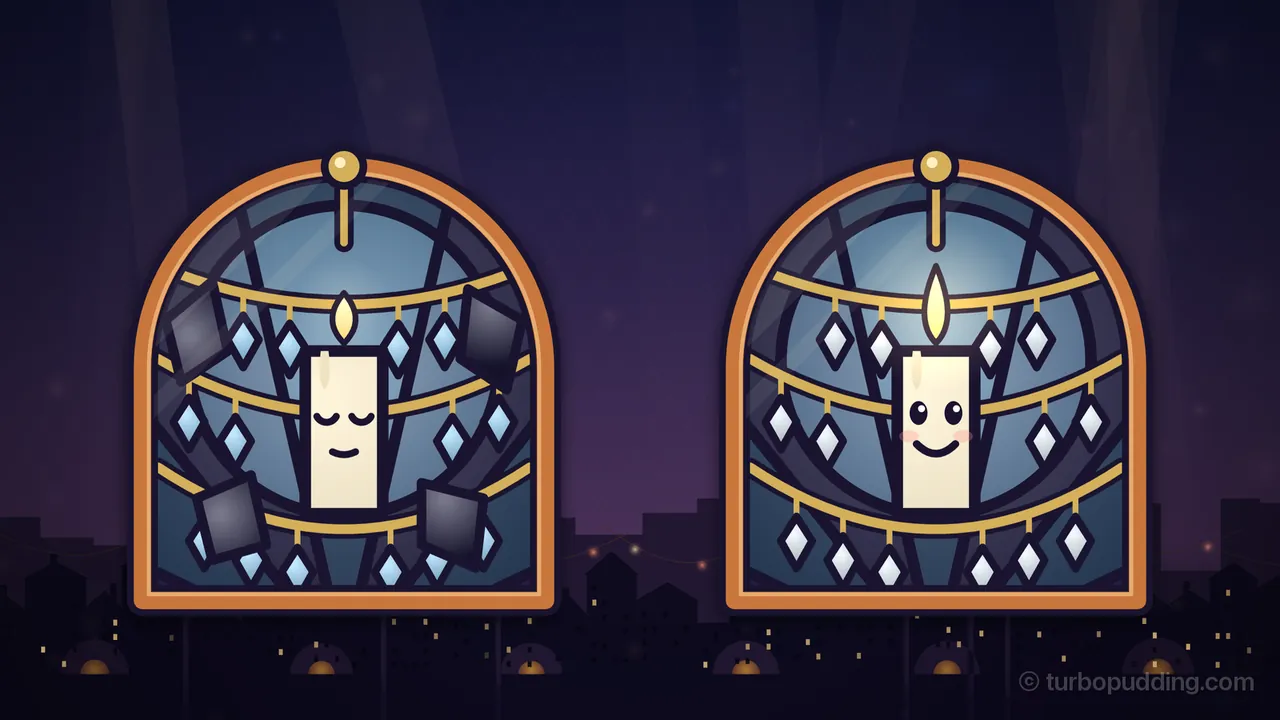
At the end of Lantern Lane hangs the Grand Chandelier. In her portrait, three swags of gold chain hung with crystal drops circle a white candle, and her face is on the wax. She has only two moods, and they tell her whole story.
Dreaming, she sits behind four shards of dark crystal. Her drops are pale blue, her flame is small, her eyes are shut and she smiles in her sleep. Even her voice, a little bell, rings with a deep echo.
Awake, the dark shards are gone. The drops turn almost white, the flame grows half again as tall, her eyes open, her cheeks go pink and a warm glow pulses around the candle. Her first words: “Oh! I was having the strangest dream. Thank you, dear.”
Meet them in Lantern Lane
Lantern Lane is free to play in your browser at panemonium.com: the first five levels, the Grand Chandelier included. The full game is $4.99, paid once. More about the game is on the Panemonium page.