Turbo Pudding
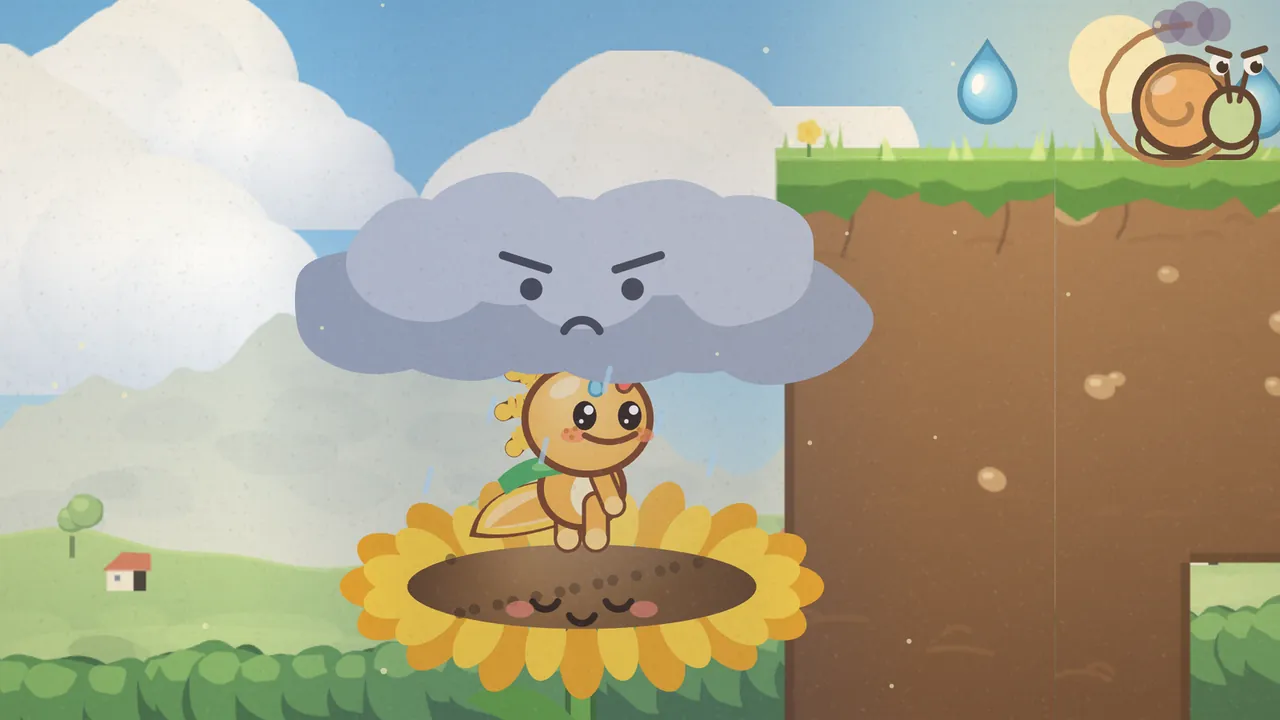
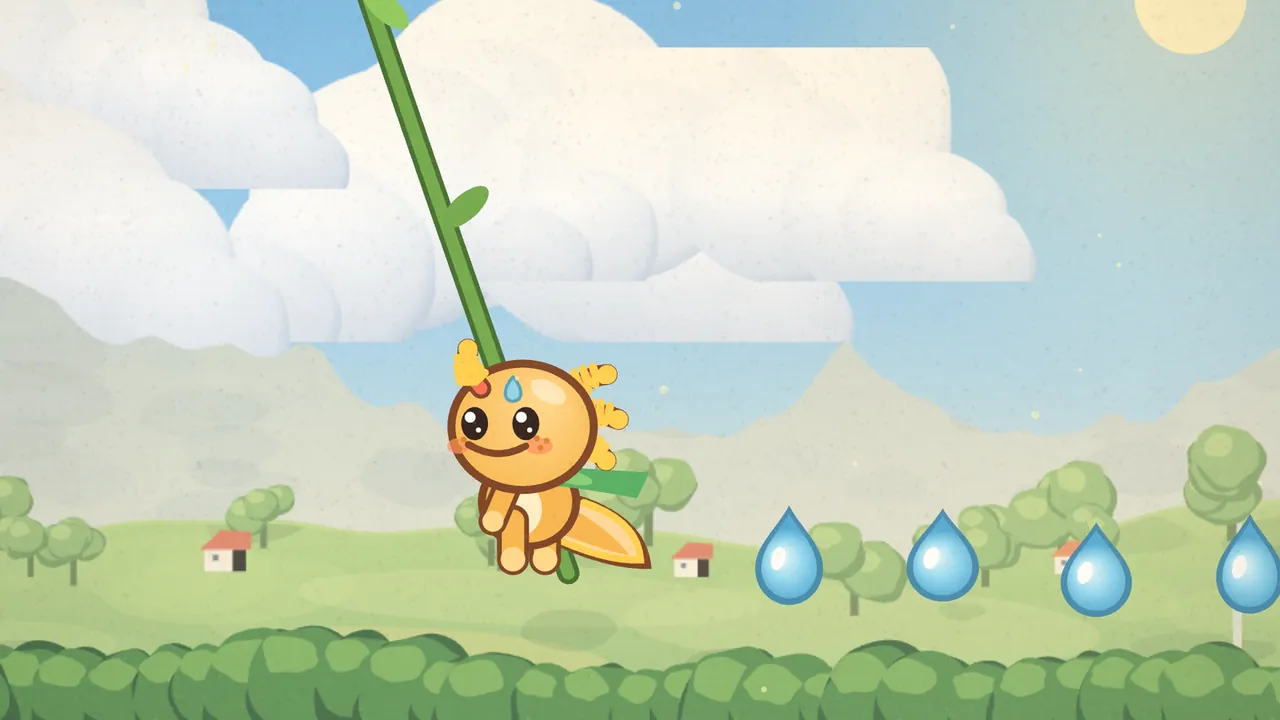
One gray morning a cloud of grumbles rolled over the Whispering Meadow, and everyone it touched turned cross and crabby. Gilby doesn’t fight any of them. He lands on a grumpy critter, and it falls asleep, or he washes the grumble off with puddle water, and it wakes up kind. As a note in the game’s code puts it, nobody is hurt.
The six levels of the meadow hold 42 grumpy critters of six kinds. It’s Friday, so here is a field guide to all of them, with a few things we only noticed while reading the code.
How to tell a grumpy one
A grumpy critter wears its mood on its head: a little purple storm cloud, and every so often a tiny yellow lightning bolt flickers inside it. Its brows slant down, too. Once it’s asleep, its eyes turn into two small arcs and a “z” floats up. A washed critter has no cloud at all. Instead, now and then, a little pink heart floats up.
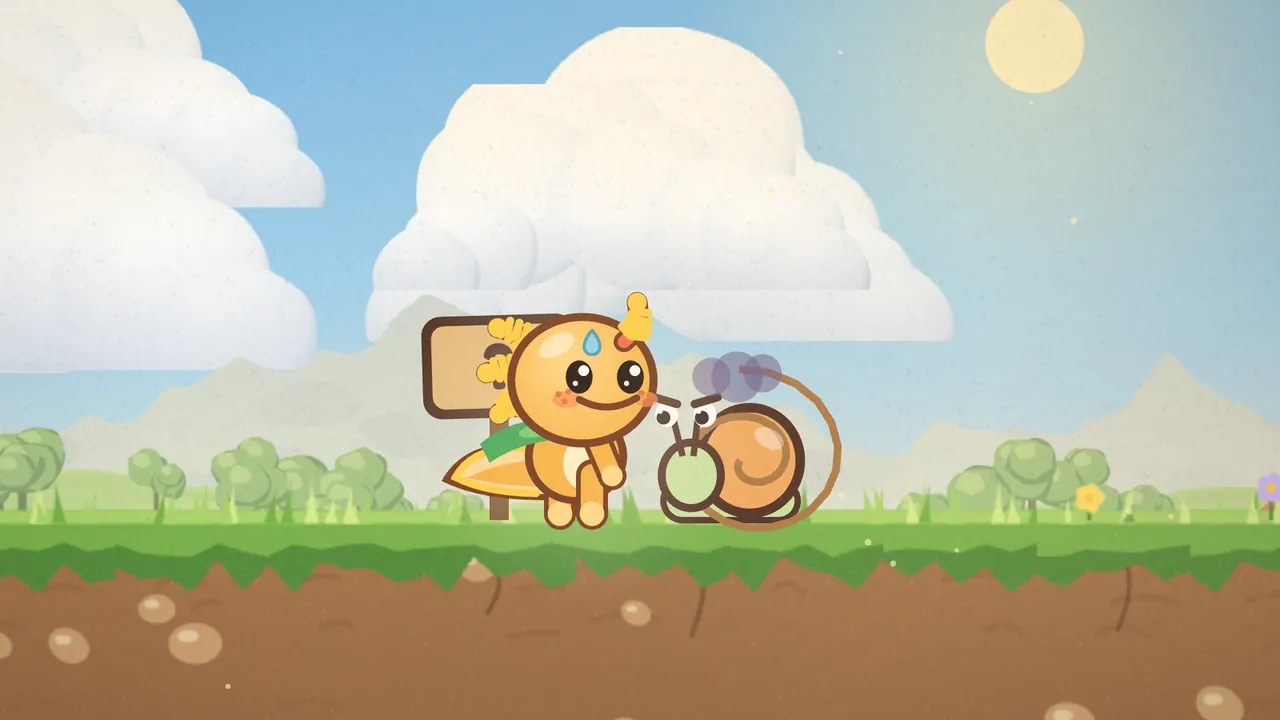
The snail
Ten snails, which makes them the most common critter in the meadow, tied with the beetle. An orange spiral shell, a pale green body and eyes on stalks. Snails are careful walkers: they turn around at every ledge rather than step off. Despite the reputation, they are not the slowest critters in the meadow. That title goes to the Burrbit.
A sleeping snail is a pillow. As one of the signs says, “A sleepy snail is as soft as a pillow. Hold jump and bounce on it!”
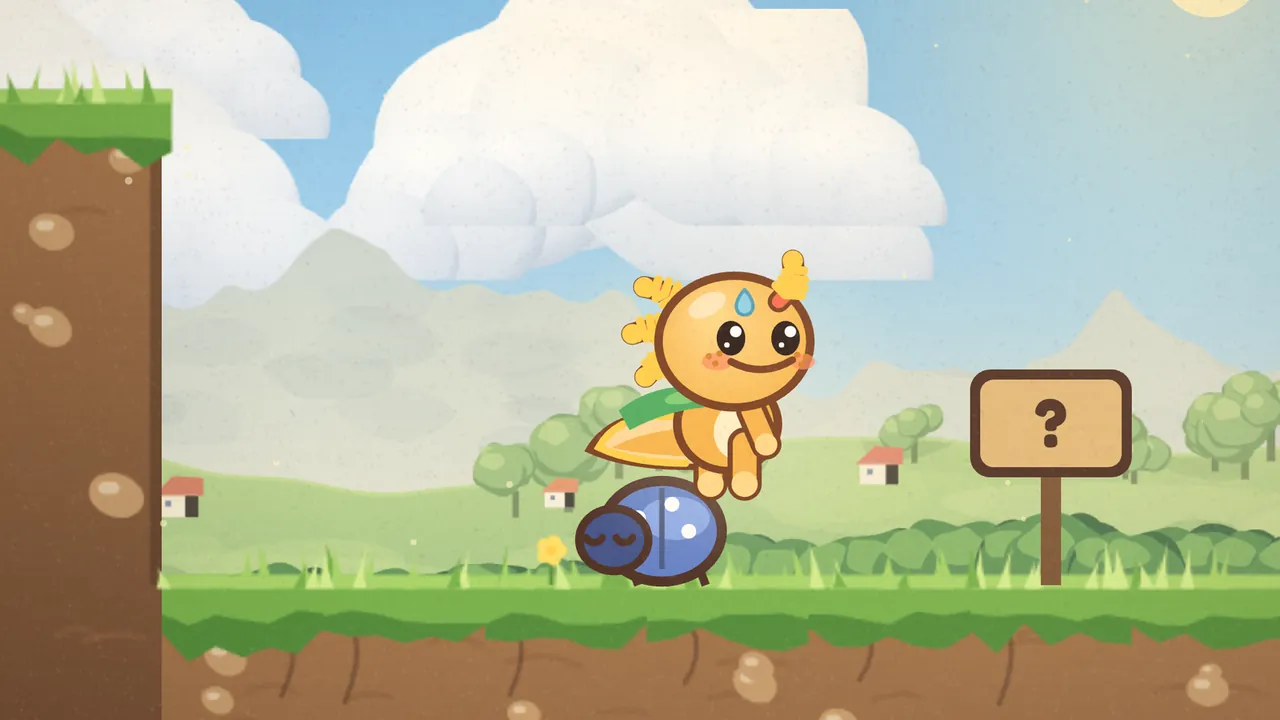
The beetle
Also ten. A round blue shell with white spots and a dark blue head. Beetles are the bold ones: they happily hop down small steps, but never into water, thorns or a pit. A sleeping beetle isn’t a pillow. It’s a step, and a very patient one.
The frog
Seven frogs, green, with a pale tummy and pink cheeks. A frog sits still for a little over a second, then hops. If Gilby is nearby, it turns to face him first, every single time. Like the snail, a sleeping frog makes a fine pillow.
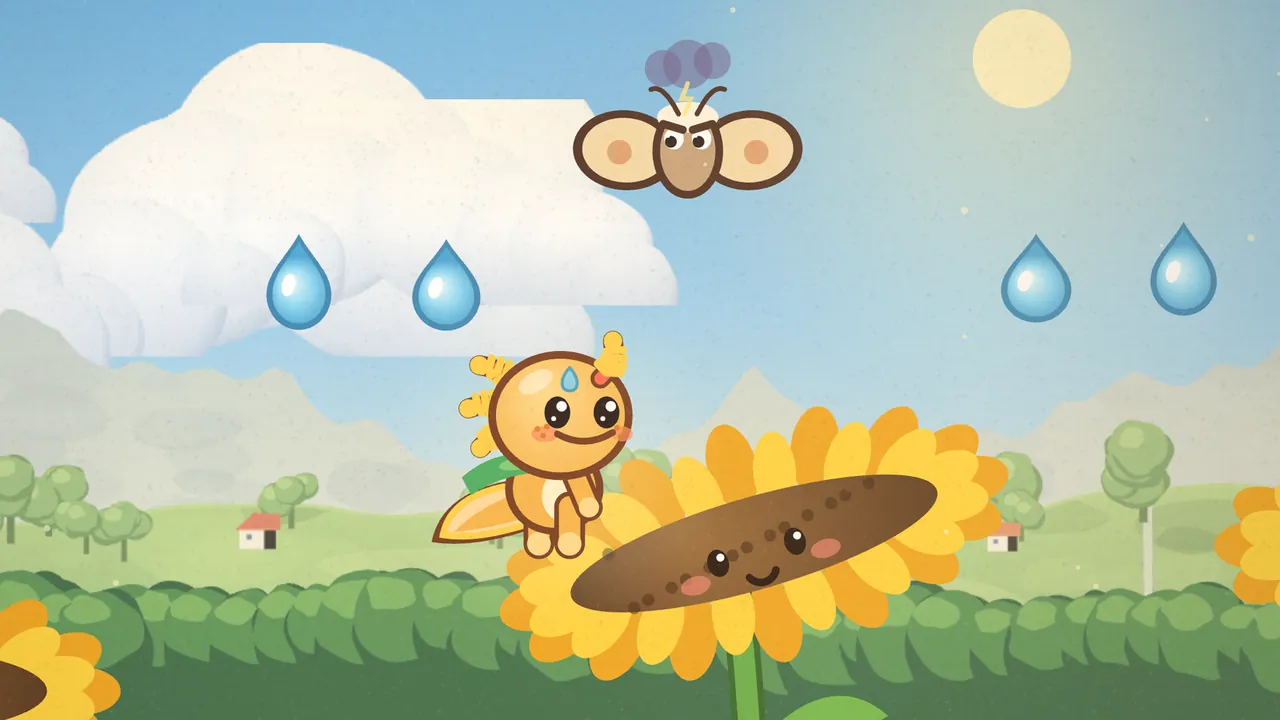
The moth
Six moths, with cream wings, orange spots, a fluffy collar and curly antennae. A moth flutters back and forth over its own short stretch of sky, bobbing up and down as it goes. Wash one, and it keeps fluttering, only slower. Put one to sleep, and it comes down to the ground and joins the steps.
The fish
Only three, and all of them live in the pond in Puddle Path, paddling back and forth under the water. Gilby is an axolotl, so the pond is home turf for him too. One rule is different down there: a sleeping fish never turns into a step. It just sleeps.
The Burrbit
The only critter with a proper name. A Burrbit is a round burr with leaf ears, a lilac tuft and little hooks all over, and it’s the slowest critter in the meadow. You can’t land on one. The code is blunt about it: “spines are spines, however heavy you are.” Only water helps. “A splash washes the grumble off a prickly Burrbit,” a sign explains. The hooks fold flat, the ears droop and the tuft flops over, soft as a pom-pom.
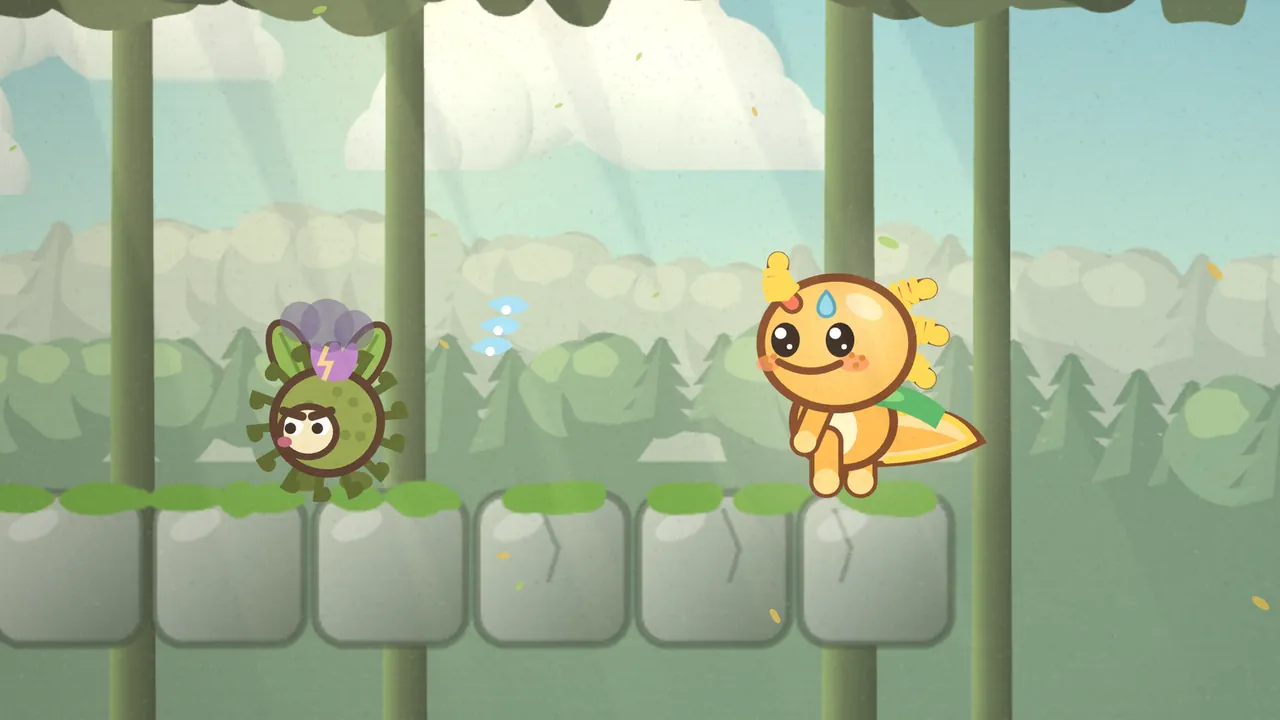
No water left? Bump the block it’s standing on from below. Any critter on a bumped block gets bounced off its feet and falls asleep.
House rules
Every critter follows a few rules, whether you notice them or not.
Critters keep secrets. To a critter, the earth around a hidden hollow is a solid wall, so none of them ever wanders into one and gives it away.
Critters wait for you. One that is well off screen stays exactly where it is, so nobody wanders off before you arrive.
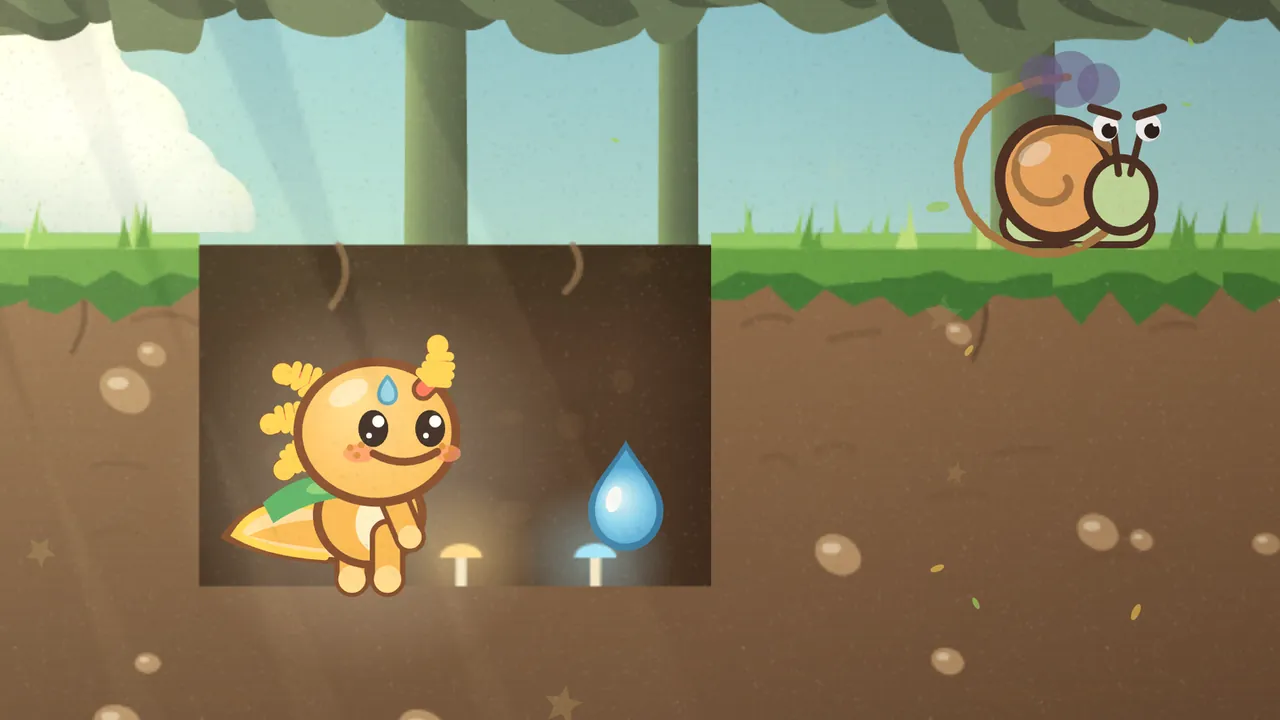
Every critter counts once. In Hedgerow Hush, the way out opens only when every critter is calmed. Asleep or washed, it counts the same, and a washed critter you later tuck in for a nap doesn’t count twice.
No dice. When a frog hops or how a moth flutters depends on where it starts, not on chance, so a level plays the same way every time.
And one for Gilby
Gilby has three hearts. Lose one, and the cure is very axolotl: get in the water. In the water, lost hearts grow back one at a time, about every two and a half seconds. The code comment for it is two words long: “axolotls regrow.” And in Cozy mode, a bump costs nothing at all, and a fall ends with a bubble carrying Gilby back to the last firm ground.
Come and meet them
The first two levels, Dewdrop Meadow and Puddle Path, are free to play in your browser at pitterplop.com. The full game is $4.99, paid once. More about the game is on the Pitterplop page.