Turbo Pudding
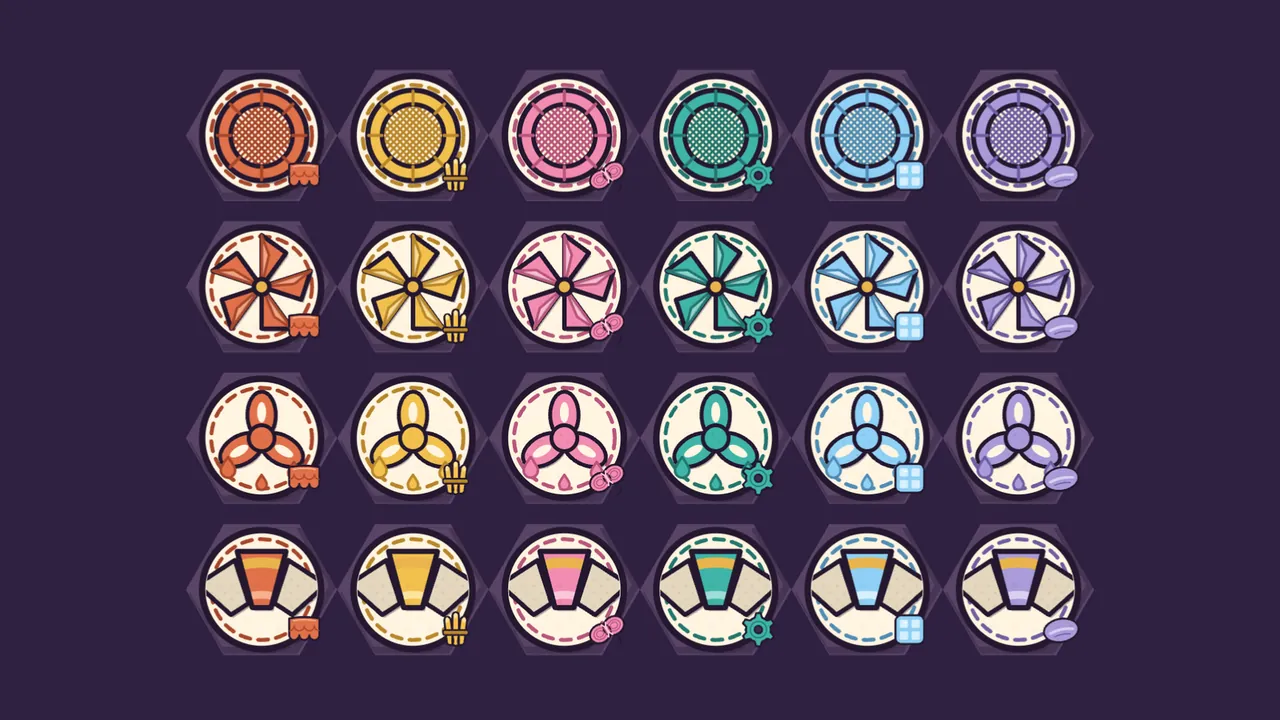
Amblestead is a match puzzle on a board of hexagon plates, and it has four special pieces: the Sieve, the Pinwheel, the Tri-Dye and the Keystone. This Wednesday’s dev diary is about where they come from, because we set one rule early and kept it.
The rule: no special is made by how long a line is, or by an L, a T or a square. No special clears a whole row, flies to a target or wipes out one color. Each one is born from the shape of a move, and each keeps the color of the piece it grew from.
A compass over the board
A hex board has three directions: straight up and down, and two slants. Over the board hangs a little compass with a mark for each. When your swap clears a line along a direction, its mark lights up.
At the end of the move the compass decides. Both slants lit? You get a Sieve. All three? A Tri-Dye. Up-and-down plus one slant gives nothing, and a move makes one compass special at most.
There’s a catch that took us a while to find: only the lines cleared by the swap itself count, not the cascades after it. In an early build every wave counted, and the hex board loves cascades, so levels handed out about 13 specials each, three of them Tri-Dyes. Nobody could tell which move had done what. Now the goal is three to six specials in a 25-move level. In our test runs it comes out at about 4.7: 1.6 Sieves, 1.6 Pinwheels, 1.3 Keystones and a rare 0.2 Tri-Dyes.
The Sieve sorts
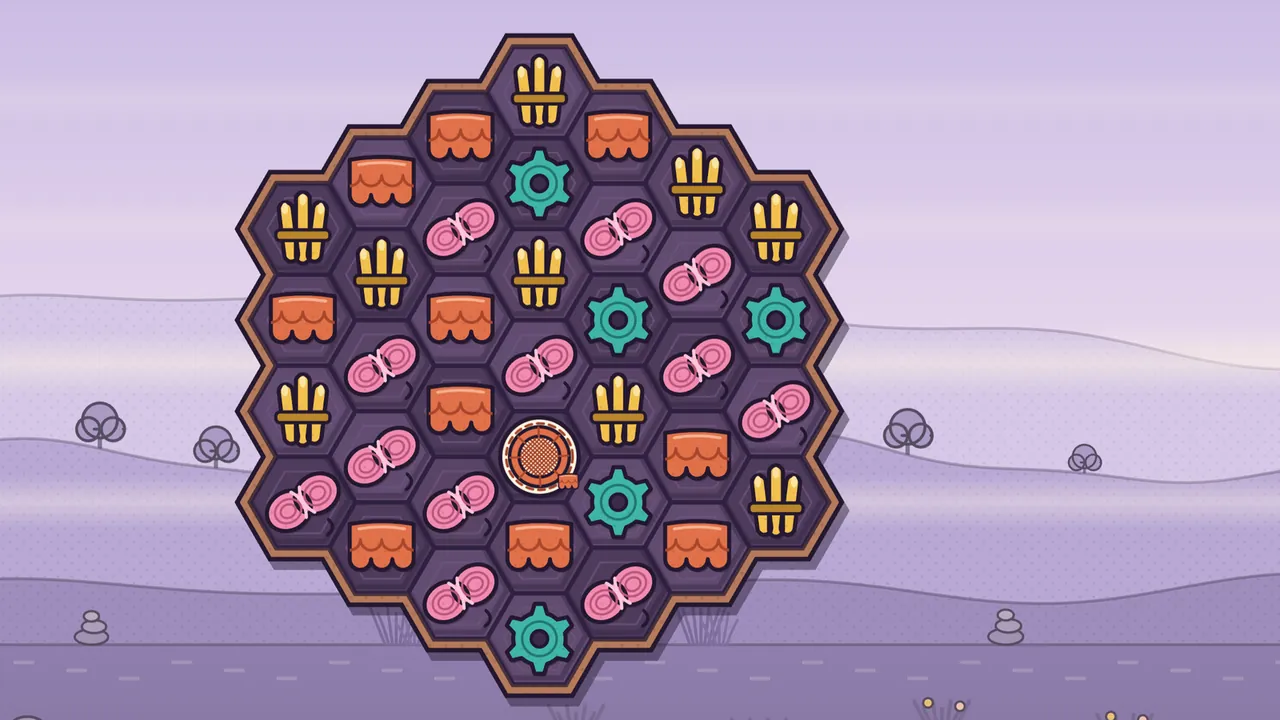
The Sieve looks like a round woven sieve. Swap it and it shakes its column. Anything stuck there takes a hit, and then the pieces sort themselves by color, the biggest groups settling at the bottom. Nothing gets destroyed. It just tidies up.
Pim teaches it on level 3, the top of the Lookout. That board is the lantern room, so it’s a hexagon with an extra tall middle column, which gives the first Sieve a long column to sort.
The Pinwheel is born from a gap
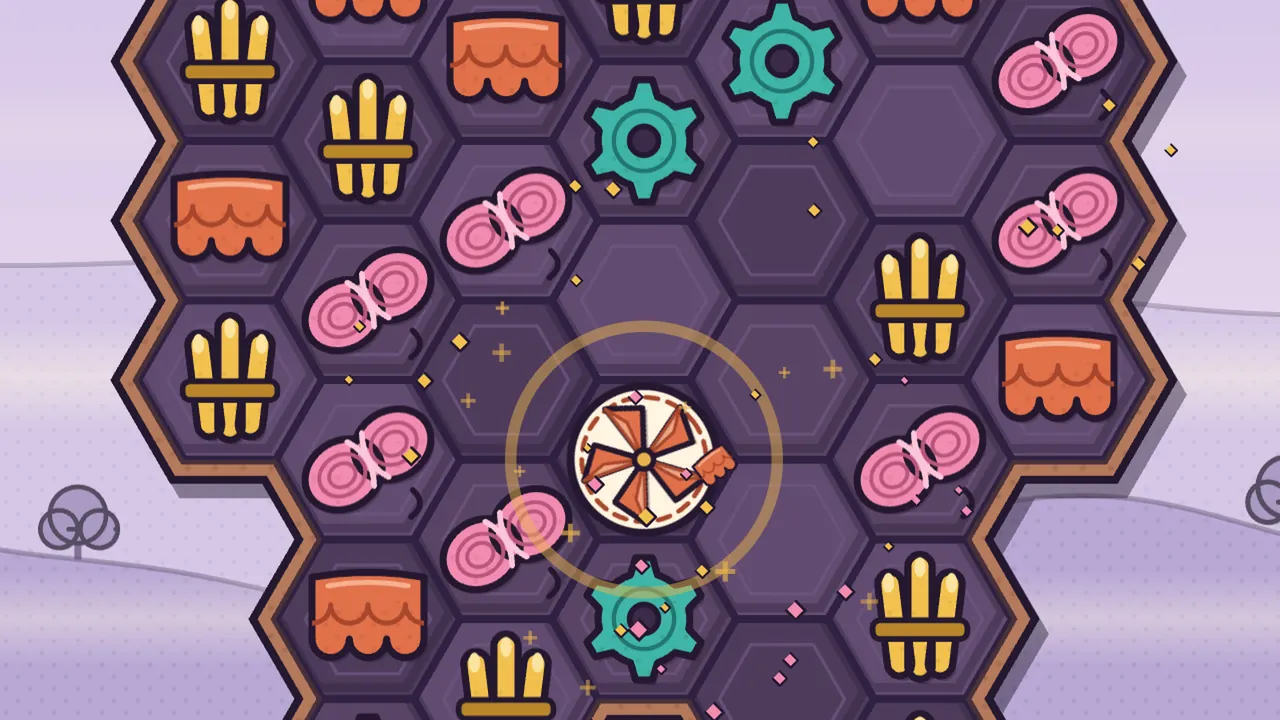
The Pinwheel doesn’t come from the compass. It comes from emptiness. If a plain piece survives your swap while at least four of its six neighbors are cleared, it spins up into a Pinwheel. Delva teaches it on level 2, on a board shaped like the Lookout’s two legs.
Swap a Pinwheel and the ring of six pieces around it turns two places clockwise, while the next ring out turns one place counterclockwise. Anything stuck in the inner ring takes a hit.
At first a Pinwheel could be born in every cascade wave, and a level made eight of them. Now it’s the swap’s own wave only, one per move. The art changed too: our first Pinwheel had three blades and looked more like a propeller, or even a rocket. Now it’s a five-sail folded paper pinwheel on a gold pin.
The Tri-Dye paints three lines
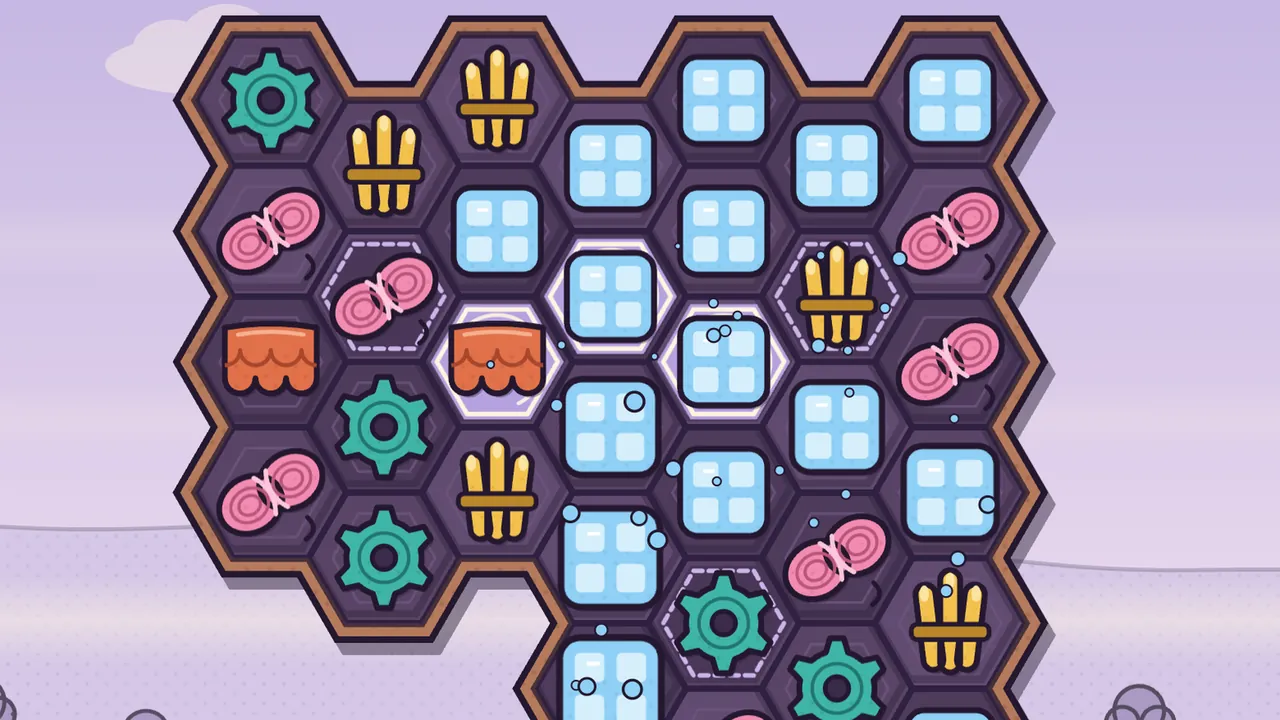
Light all three marks with one swap and you get the rarest piece in the game, a dyed knot with three loops and three little drops. Swap it and it sends six rays along all three directions, and every piece in their way takes its color.
Mayor Barty shows it off on level 9, at the top of Mayor’s Corner, where its rays also wet the plates on the floor. Below, a glass Tri-Dye has just gone off, and three long lines of the board have turned into glass panes.
The Keystone drops from a deep cascade
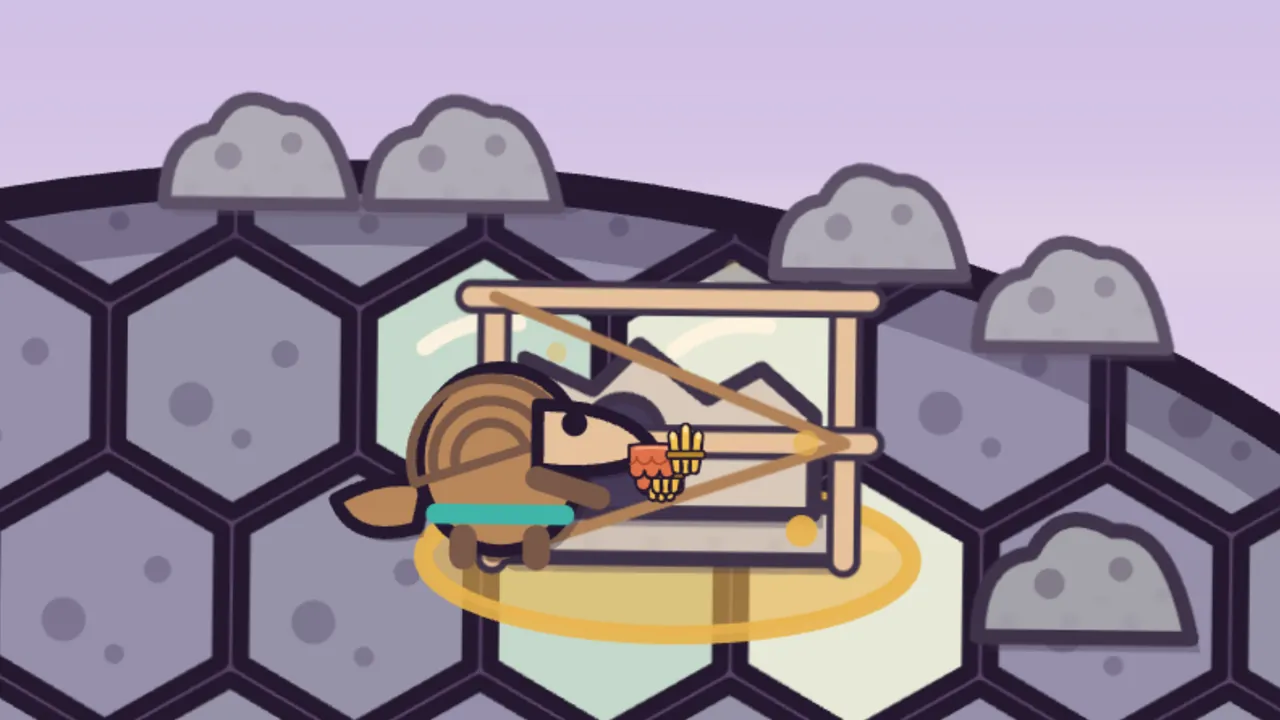
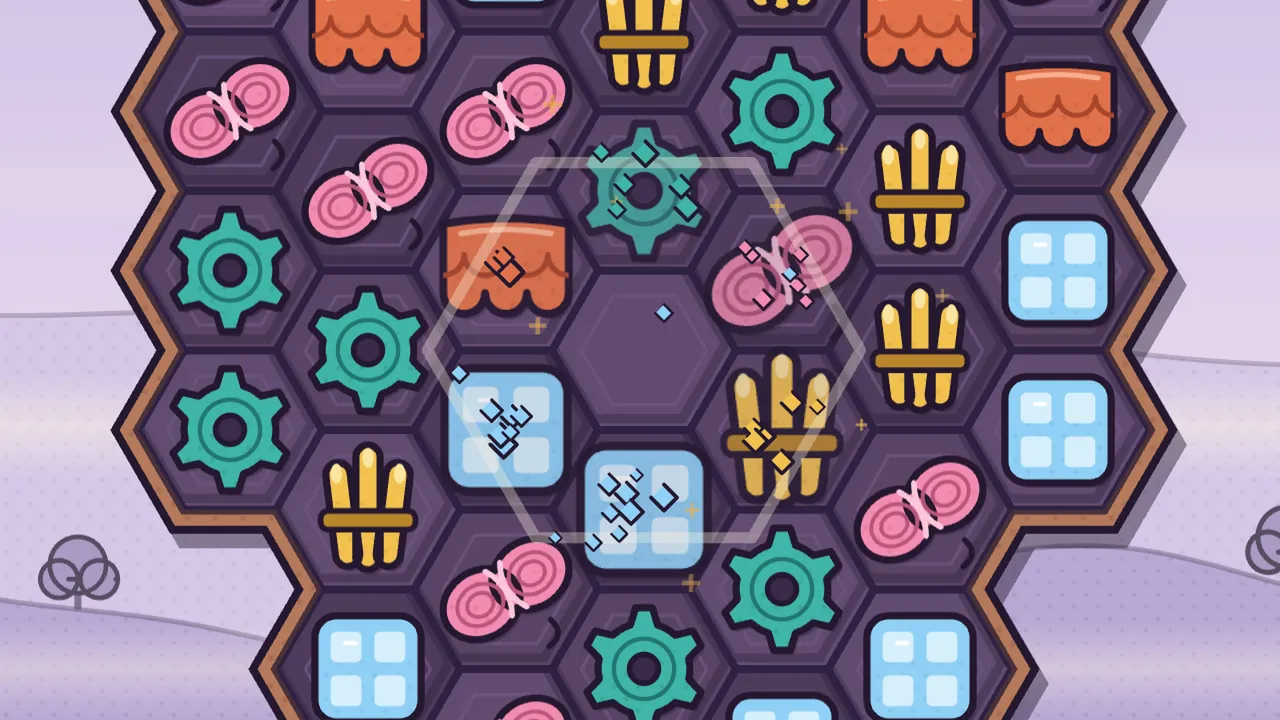
The Keystone is a wedge-shaped arch stone with a gold stripe. When one move clears six waves in a row, the swap plus five cascades, a Keystone drops in from above.
You can watch it coming. From the third wave a small stone arch appears over the board and counts the waves, a side stone on the left, then the right, then the left again. On the sixth wave the keystone drops into the top.
Swap it and it knocks out a flower of seven cells, itself and the six around it. Blockers there take two hits, and every material you collect counts double for the rest of that move.
It used to take only four waves, which made three or four Keystones a level. At six it’s about one. Level 5 teaches it its own way: the Bridge planks board sags in the middle like a rope bridge, and a Keystone is already waiting in the dip.
Colors you can read in gray
Since every special keeps its color, each one wears a small seal of its material on the side, so you could tell them apart even in black and white. In the picture at the top, all four specials sit in all six materials.
All four are taught in Mist Valley, the first chapter, which is free to play in your browser at amblestead.com. The full game, all six chapters, is $4.99, paid once. More about the game is on its Amblestead page.