Turbo Pudding
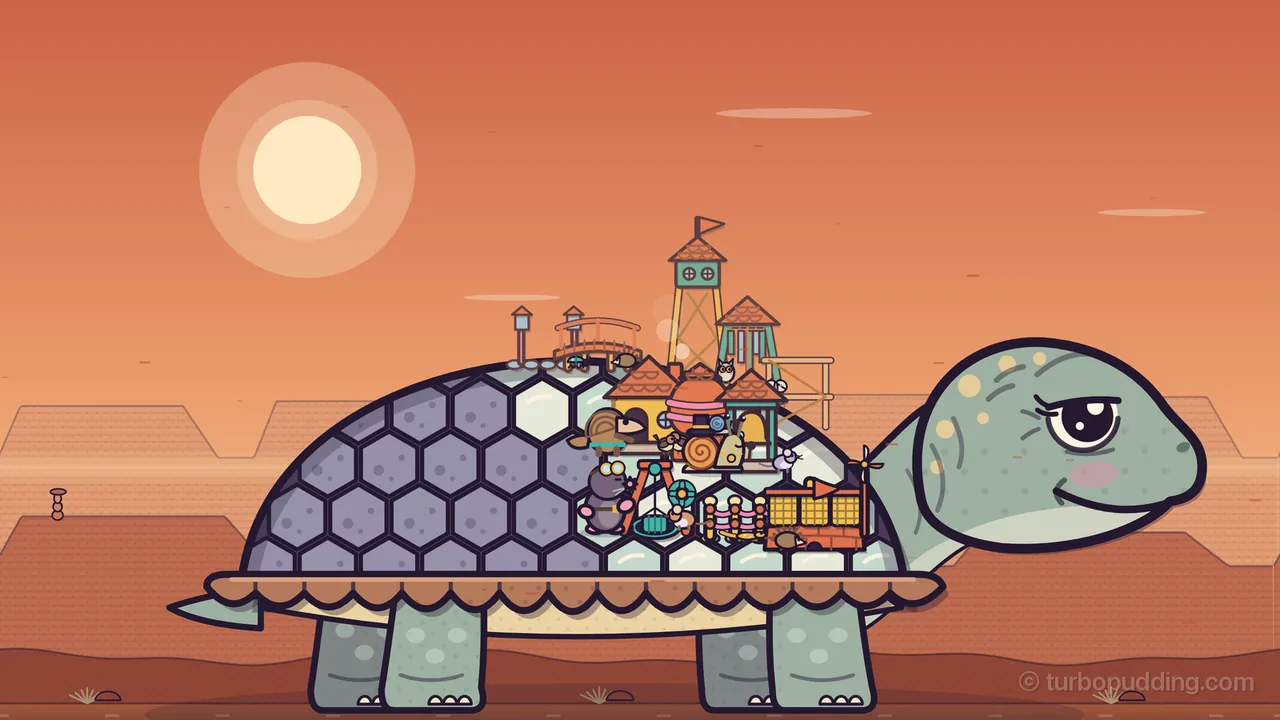
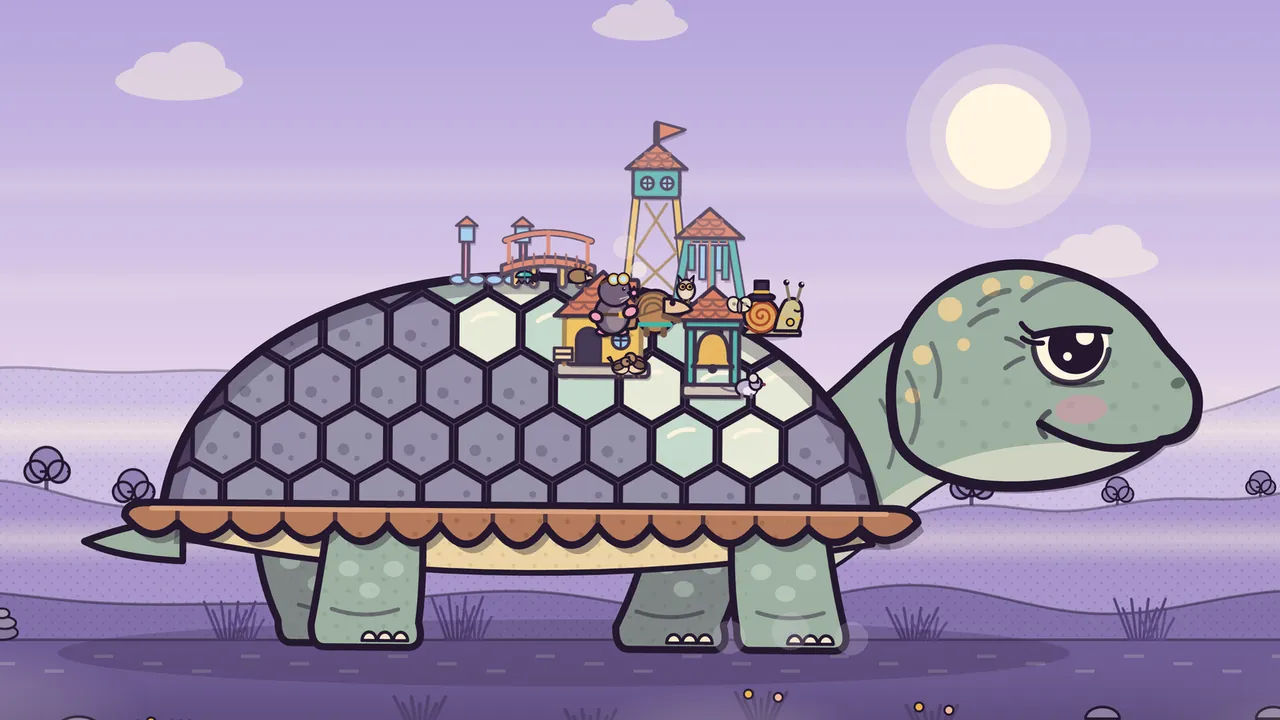
Amabel, the turtle who carries the town in Amblestead, is as big as a hill and has slept for a hundred years. When she walks into Red Canyon, a beaver called Baron Bulwark builds a dam across her way and asks her to stay and be his foundation. He calls her a tortoise. The next time he does it, Amabel answers in capital letters: “TURTLE. AND NO.” So who’s right? It’s Thursday, so here’s the real story of the animals behind her.
Every tortoise is a turtle
Turtles are a whole order of reptiles, called Testudines, with about 360 living and recently extinct species. Tortoises are one family inside it: the turtles that live on land. So every tortoise is a turtle, but not every turtle is a tortoise. In American English, “turtle” covers the whole group, and “tortoise” is kept for the slow land walkers. In Britain, “turtle” mostly means the ones that live in the sea.
Even the scientific name takes a side: Testudines comes from testudo, the Latin word for tortoise. The Galápagos Islands are named for tortoises too: Spanish explorers called them after galápago, the Spanish word for tortoise. By the dictionary, Bulwark is just being specific.
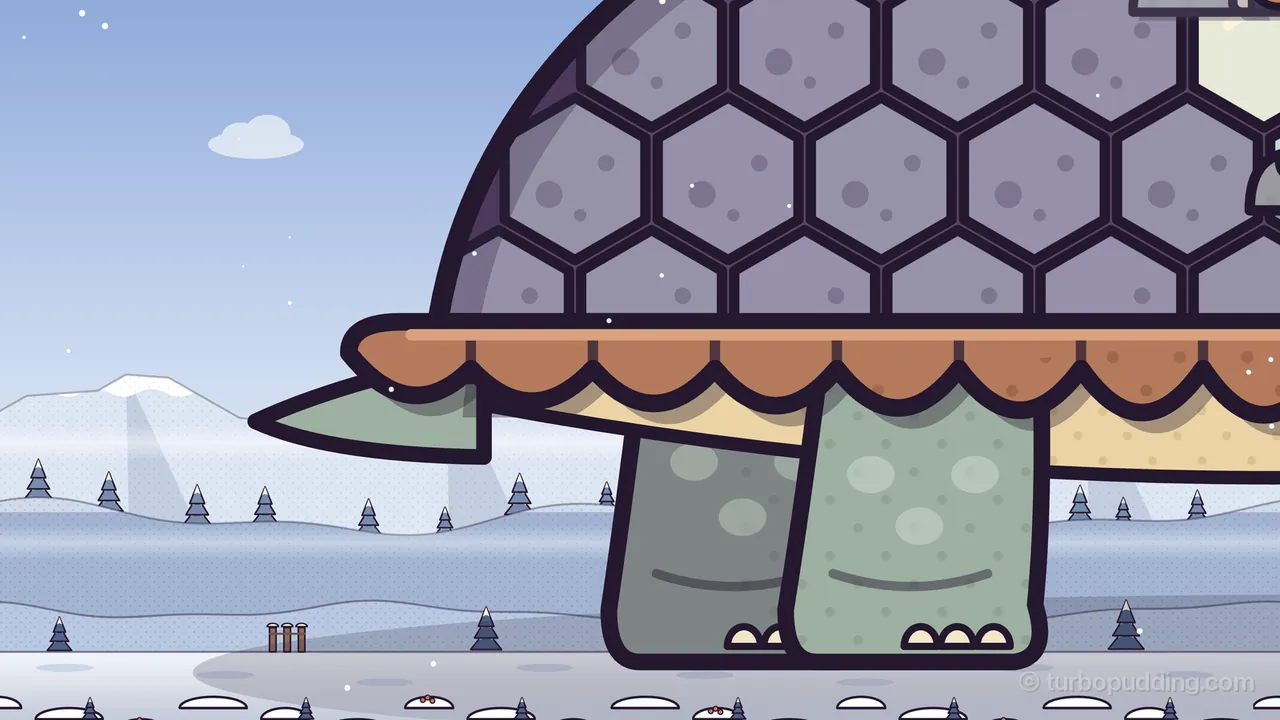
Her feet say tortoise as well. Tortoises have column-like legs with short toes, a lot like an elephant’s feet, while freshwater turtles have longer toes with webbing for swimming.
A shell is a skeleton
A turtle can’t climb out of its shell, because the shell is part of its skeleton. It’s made mostly of 50 to 60 bones. The top half, the carapace, is fused to the backbone and the ribs, which grow sideways as the turtle develops and spread into broad, flat plates. The bottom half, the plastron, is built from bones of the shoulders, the breastbone and the belly. A turtle’s shoulders and hips sit inside its rib cage, and no other animal with a backbone has a shell like it.
The neck is surprisingly regular. Every turtle species, from the short-necked sea turtles to the snake-necked ones, has eight neck bones. Tortoises pull the head straight back into the shell when they hide.
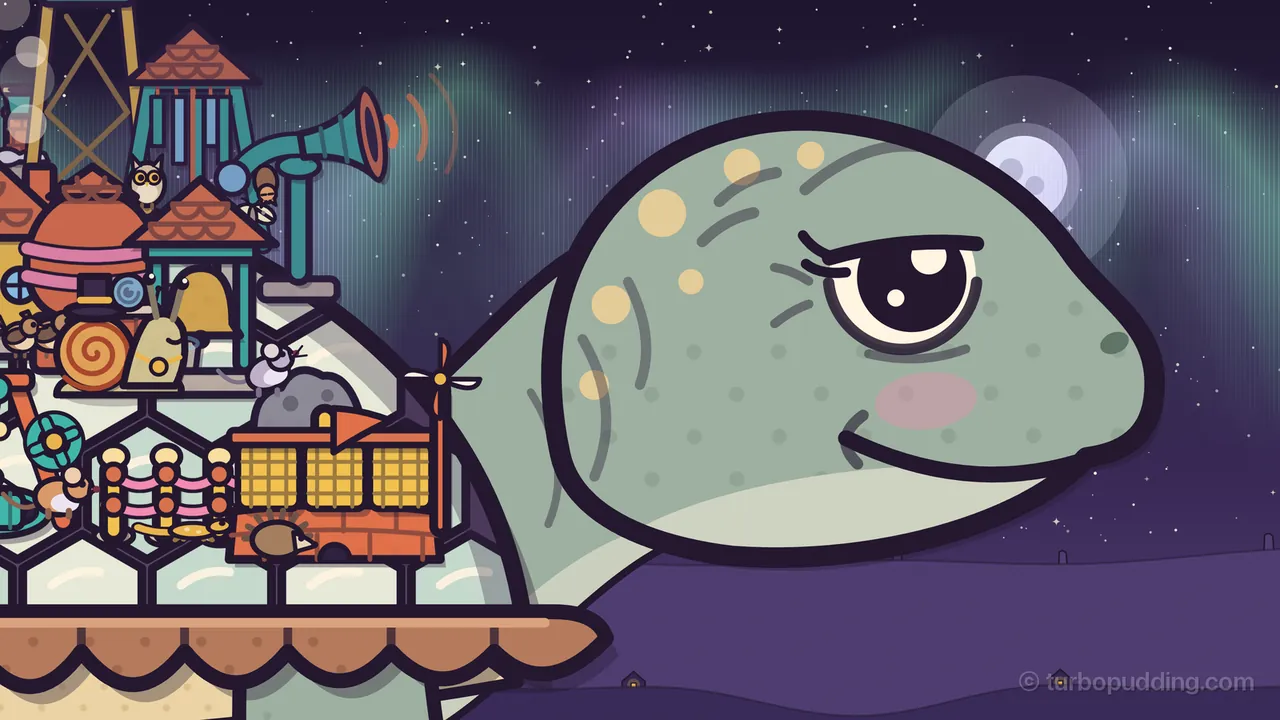
The plates on top
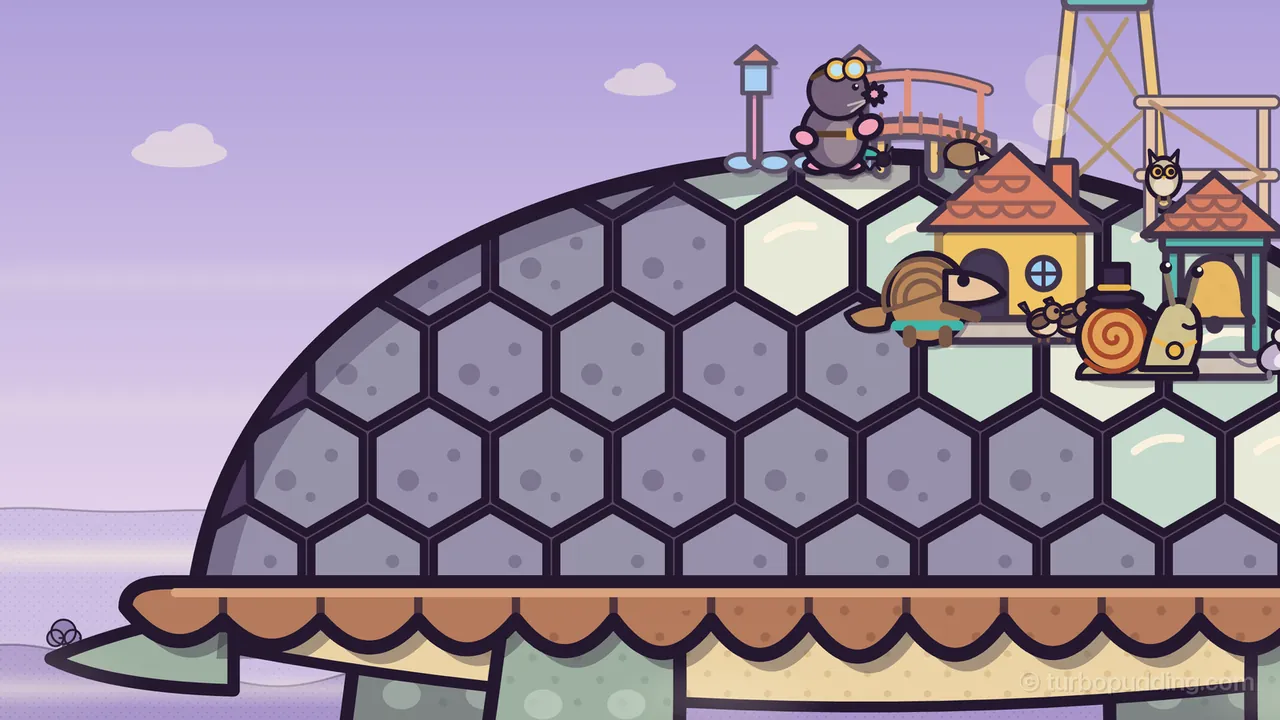
The plates on a shell are called scutes. They’re made of keratin, the stuff of hair, horns and claws, and they cover the bones like a layer of tiles. A typical turtle has 38 scutes on top and 16 underneath. On top, five run down the middle of the back, four pairs line the sides and twelve pairs go around the edge. For the most part, each seam between the bones runs under the middle of a scute, like bricks laid over the joints in the row below.
Land tortoises never shed their scutes. A new layer of keratin grows at the base of each one every year, and researchers can use those layers to estimate how old a turtle is. Freshwater and sea turtles shed old scutes one at a time.
Slow on purpose
A desert tortoise walks at about 0.14 to 0.30 miles an hour. Galápagos tortoises, the biggest living tortoises, have been seen walking at about 0.2 miles an hour between resting and grazing spots. In water, sea turtles can swim at about 19 miles an hour.
A hundred years is young
A hundred-year nap sounds long until you meet Jonathan, a Seychelles giant tortoise who lives on Saint Helena, an island in the South Atlantic. His home is the grounds of Plantation House, the governor’s residence, and the island’s government calls him the world’s oldest living land animal. He came to the island in 1882 already fully grown, which means at least 50 years old, so he hatched around 1832. In 2022, the governor gave him an official birthday: December 4. In his time there, cars, electricity, television and the internet have all reached Saint Helena.
Jonathan isn’t the only one. Galápagos tortoises live more than 100 years in the wild, and one of them, Harriet, lived at least 175 years in captivity.
Sleeping through the hard part
Real turtles do take long naps. In the cold, reptiles go dormant in a way so different from mammals that it has its own name: brumation. When it gets hot and dry, some, like the desert tortoise, go still for the summer instead, which is called aestivation. Turtles can hold their breath far longer than most reptiles, and they can stay dormant for months. Months, though, not a century.
What we made up
No real turtle is the size of a hill. The largest Galápagos tortoises on record reached about 6 feet long and more than 880 pounds. No turtle sleeps for a hundred years, and none carries a town. Amabel’s plates are ours too: they’re all hexagons of one size, because her shell is the puzzle board, while a real shell has its 54 scutes in set places and shapes. The column legs, the slow walk and the long life are real.
Walk with Amabel
Chapter 1, Mist Valley, is free to play in your browser at amblestead.com. The full game, all six chapters on the road to the sea, is $4.99, paid once. More about the game is on the Amblestead page.