Turbo Pudding
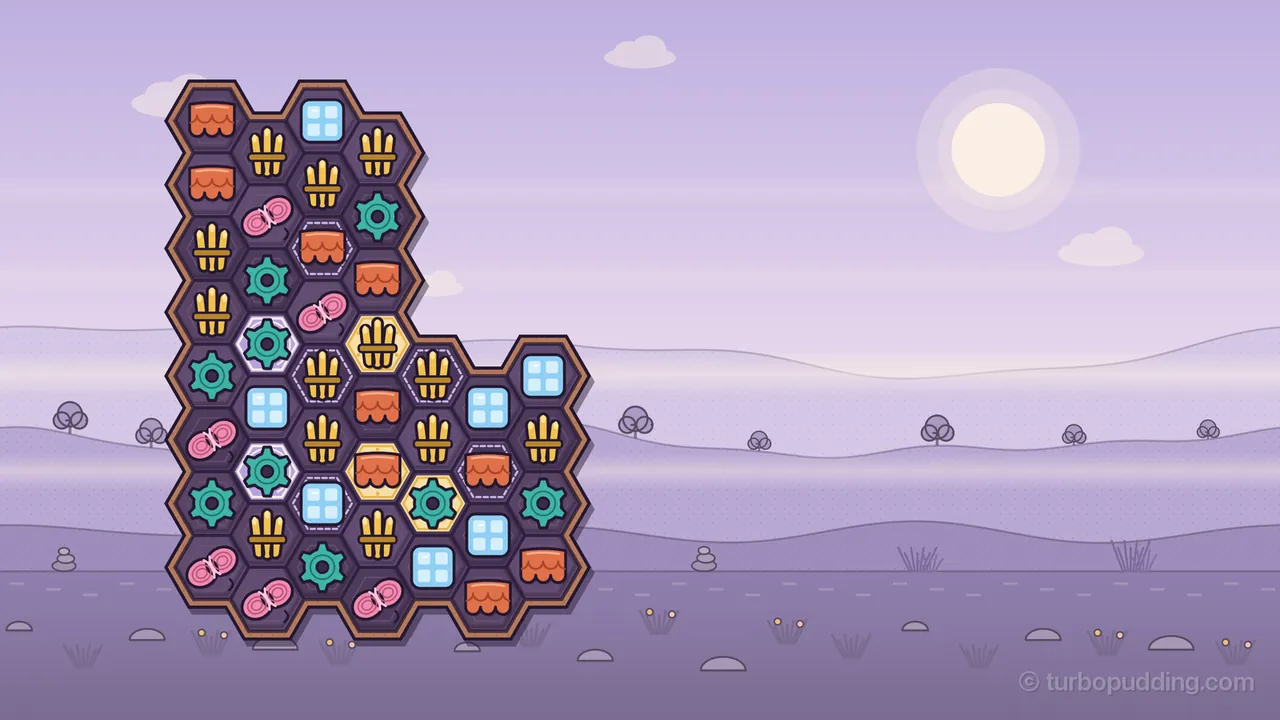
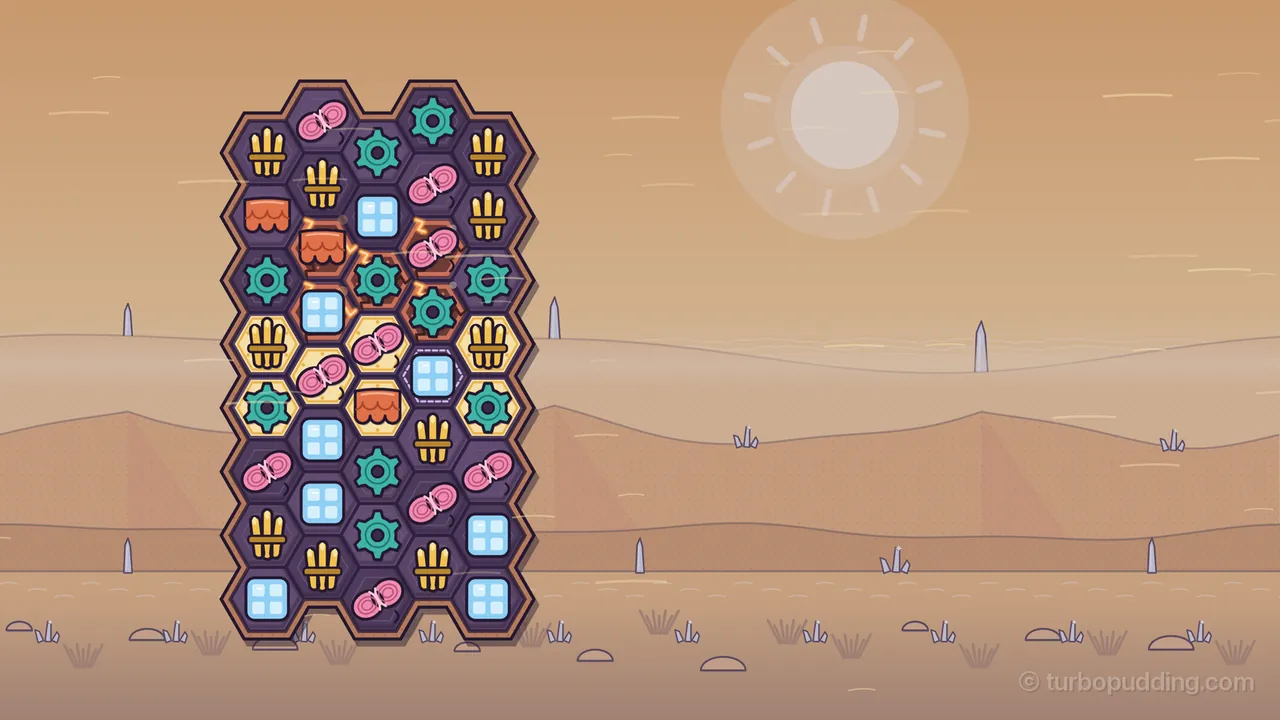
Most of what makes an Amblestead level tick is right there on the board, but a few rules only show up once you look closely. At the top of this post is level 8, Mayor’s Corner, where the board is the corner itself, an L shape, with shell plates set into its floor. Some are still dull, two are wet and shiny, and three have already turned gold.
This Tuesday: how those plates work, what happens when the board starts to walk, and what the game does when the daylight runs out.
Shine first, then set
Shell plates are special cells on Amabel’s shell, and on some levels the goal asks you to set a number of them. Mayor Barty introduces them on level 8: “A plate shines when you clear a piece on it.”
A plate has three states. A dull plate has a dashed outline around its cell. Clear a piece on it, and it turns wet: glossy, with a bright rim. Leave a wet plate alone for one move, and it sets for good, a warm gold that counts toward the goal. From then on, nothing can undo it.
The catch is the moment in between. Clear another piece on a wet plate before it has set, and you scuff it back to dull. A plate can only be touched once per move, so one long chain of matches can’t wet it and scuff it in the same go. The next move can, though. On Mayor’s Corner, all 10 plates have to set within 22 moves, so where you play matters as much as what you match.
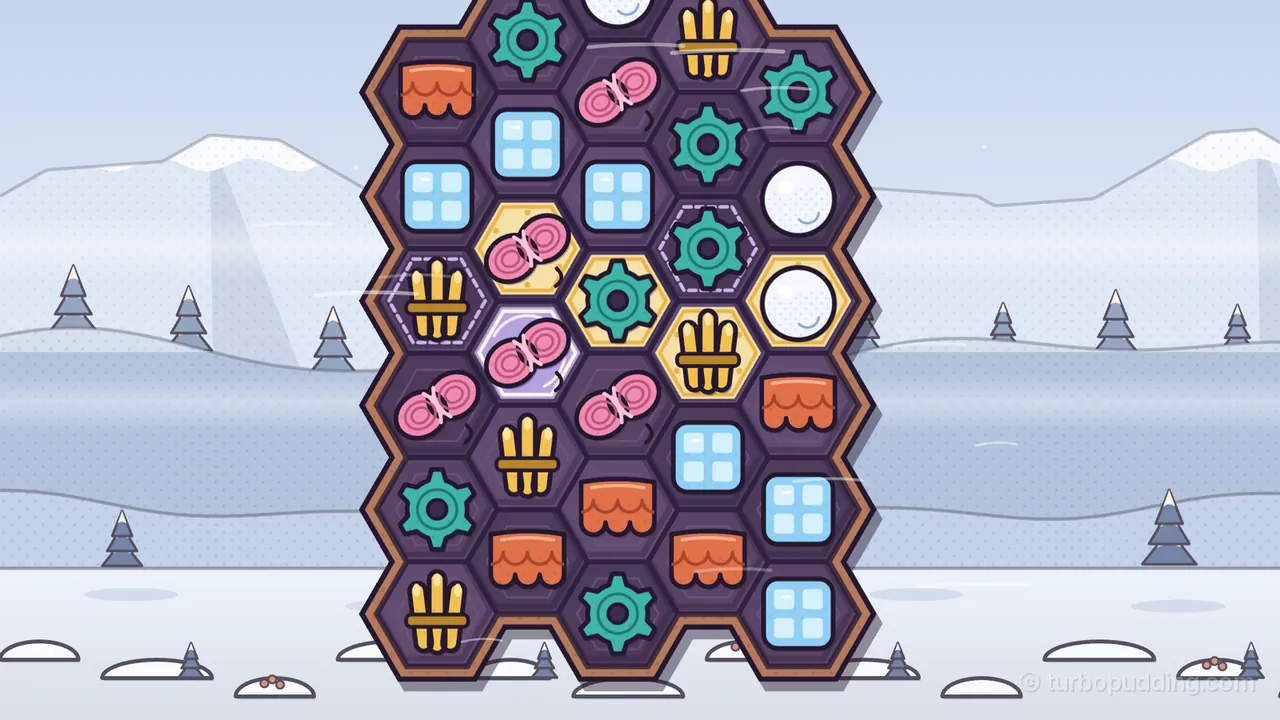
Plates come back all along the road. In Snow Pass, the third chapter, they run across the Warm Roofs, and the snowballs that fall onto the board can land on them too.
The board that walks
Amabel is walking to the sea, and from Red Canyon, the second chapter, some boards walk with her. She explains it herself: “Every few turns I take a step.”
Every few moves, the whole board shifts one column to the left. The column on the far left stays behind on the road, and a new column walks in from the right, with the low thump of Amabel’s footstep. A walking board is always a full rectangle, seven columns wide and eight rows tall, and 15 of the game’s 60 levels walk.
You always get a warning. A round badge with a turtle footprint counts down the moves to the next step, and the column that comes next waits just past the right edge, drawn half see-through, so you know what it brings before it arrives. Sometimes that’s a special piece.
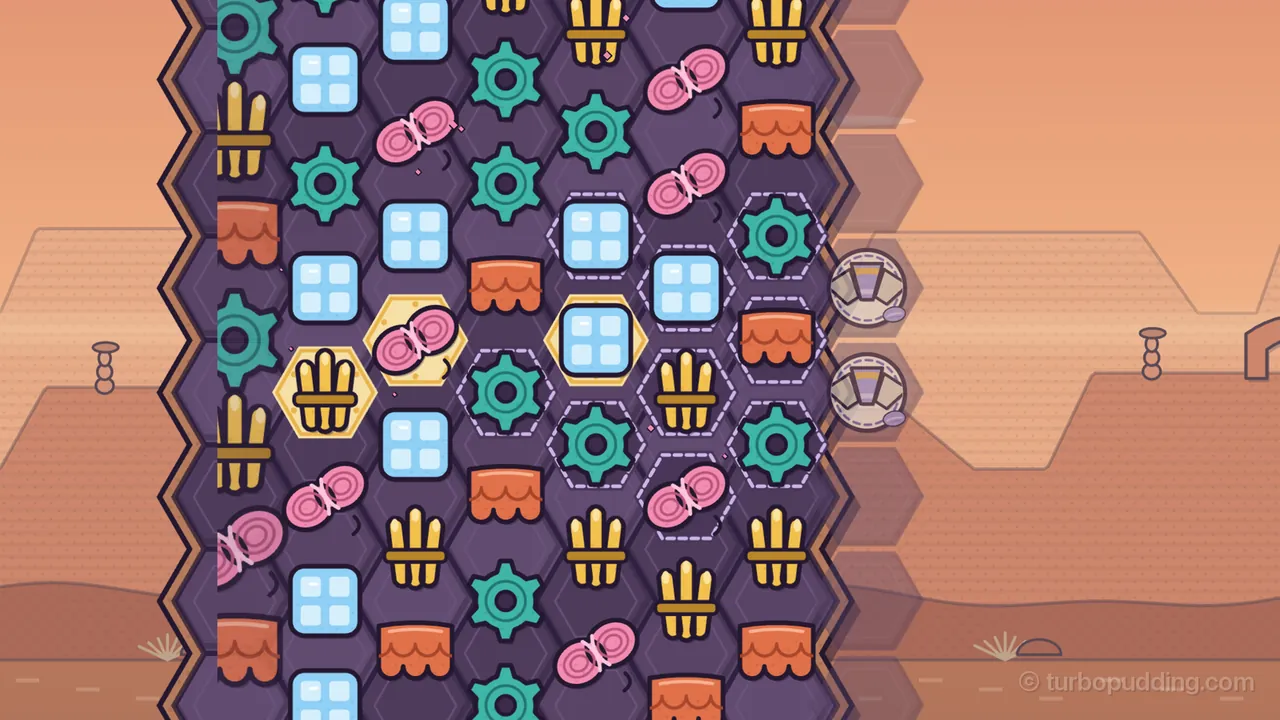
Whatever stays behind is gone. Pieces in that left column don’t count toward the blueprint, and a special piece left there is lost, so it’s worth firing it while you can. Plates walk off too. The Echo Horn, the last level of Red Canyon, draws a horn in 12 plates, but the goal asks for only 11. That leaves room for the first plate of the tube, which walks out on move 8.
One thing works in your favor. Lichen, the gray crust that turns pieces to stone, counts as cleared when its column walks away.
When the daylight runs low
Amblestead has no timers and no lives. Your moves are daylight, and a little sun sinks on a dial as you play. In the last five moves, the whole scene dims a bit more with every move, until the sky takes on the color of dusk.
If the daylight runs out while you’re close, the game offers Last light. “Close” has an exact meaning: what’s left is no more than 15 percent of the whole goal, or 3 items, whichever is more. A sheet says “The sun lingers on the shell” and offers 3 more moves, free, once per try. You can also pick Let dusk fall and end the try.
If dusk does fall, nothing is lost, and the next try starts on a fresh board. Lose the same level twice, and Delva leaves a Keystone on the board for your next try. Lose it four times, and your friends lend their tools: every booster you’ve unlocked is free to use on that level.
That’s the whole list. Losing never quietly makes a level easier or harder behind your back. The only help is the help the game tells you about.
Chapter 1 of Amblestead, with Mayor’s Corner and its first plates, is free to play in your browser at amblestead.com. The full game, all six chapters and 60 levels, is $4.99, paid once. More about the game is on its Amblestead page.