Turbo Pudding
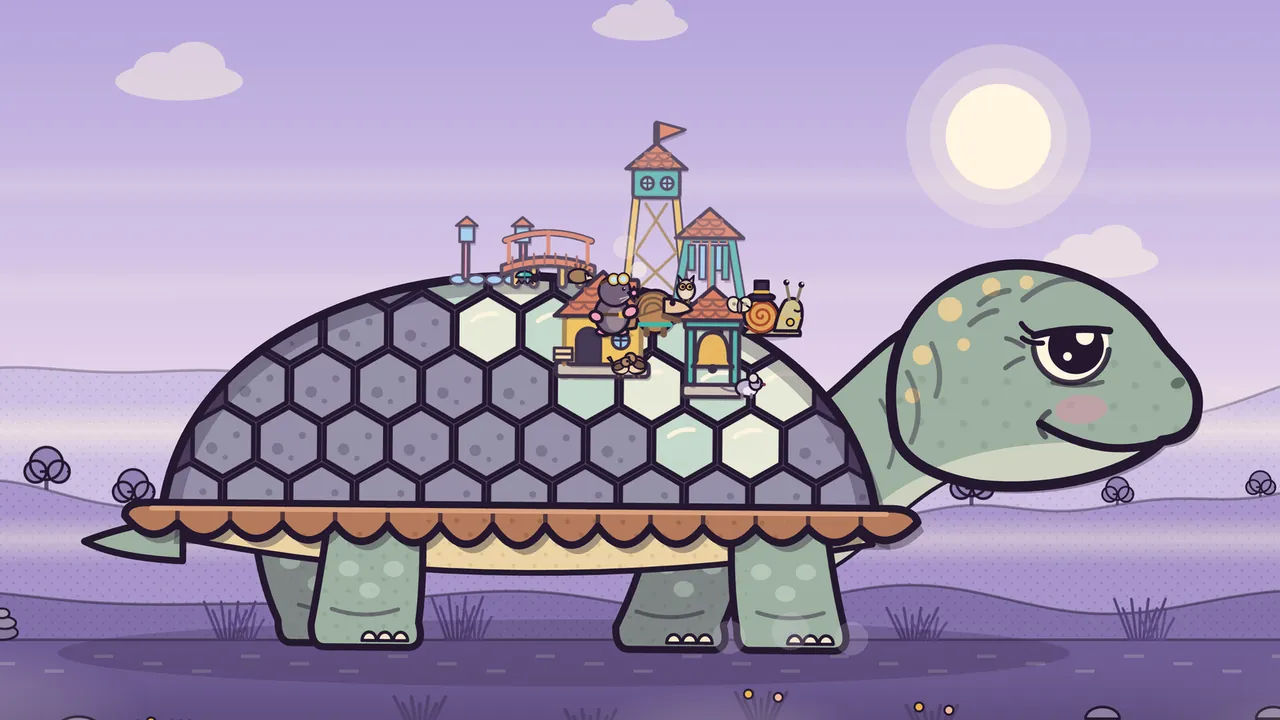
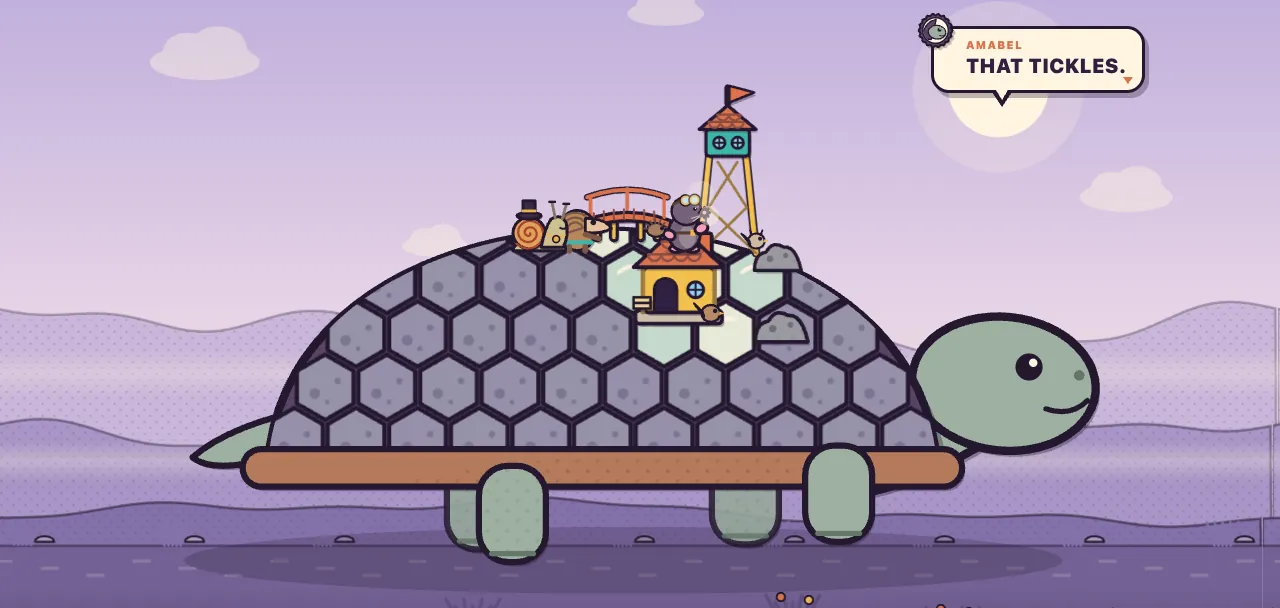
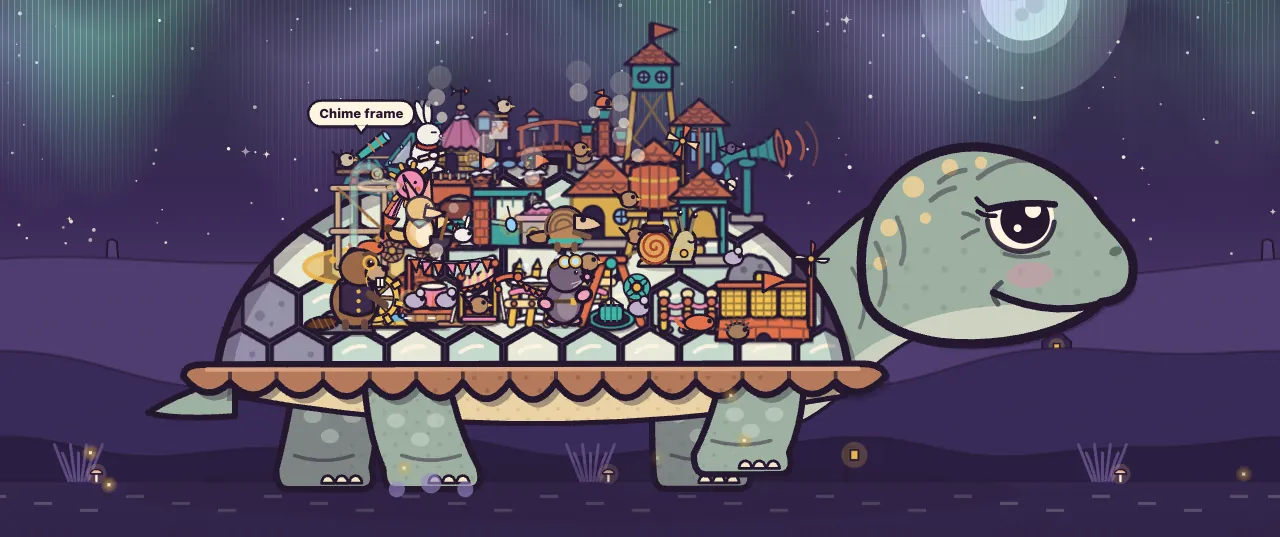
Early in Amblestead, on a ridge in Mist Valley, Pim the pangolin scrubs the grey crust off a path along Amabel’s shell. The giant turtle, freshly awake after a hundred years of sleep, says something she has clearly been thinking about: “I WAS WALKING SOMEWHERE ONCE.” Pim asks where. “THE SHORE WHERE I HATCHED.” From then on, every level you finish ends the same way: Amabel takes a few more steps toward the shore.
It’s Thursday, so here’s the real story. Going back to the beach you came from sounds like something only a storybook turtle would do. Real sea turtles do it all the time.
Home, decades later
Take the loggerhead, a sea turtle that grows 2.5 to 3.5 feet long and weighs 200 to 350 pounds. According to NOAA, the US agency that looks after ocean wildlife, female loggerheads reach adulthood at about 35 years old. When they’re ready to lay eggs, they usually come back to a beach in the general area where they hatched decades earlier.
Think about what that means. A tiny hatchling crawls into the sea, spends decades out in the ocean, and then finds her way back to roughly the same stretch of sand. After that, she keeps coming back to breed every two to three years.
A map made of magnets
How does a turtle find one beach after decades at sea? Scientists think part of the answer is Earth’s magnetic field. Every stretch of coastline has its own magnetic signature, a slightly different strength and angle of the field. The idea is that a hatchling remembers the signature of its home beach and follows it back as an adult.
In 2015, researchers at the University of North Carolina at Chapel Hill tested this with 19 years of nesting records from the biggest loggerhead nesting area in North America. Earth’s magnetic field drifts a little over the years. Where the signatures of neighboring beaches drifted closer together, more turtles nested. Where they drifted apart, fewer did. That’s exactly what you’d expect if turtles were steering by a magnetic memory.
The researchers are careful about it: the imprinting on a home beach hasn’t been watched directly, and nobody yet knows exactly how turtles sense the magnetic field. But it’s the strongest clue so far.
Busy nights on the sand
Loggerheads nest alone and at night. A female crawls up the beach after dark, digs a nest, lays about 100 eggs, covers them and goes back to the sea. In one season she can do this three to five times, about two weeks apart.
Not every sea turtle is that private. Kemp’s ridley, the smallest sea turtle in the world, at about 2 feet long and 70 to 100 pounds, comes ashore in big groups called arribadas, Spanish for “arrival.” It’s also the only sea turtle that routinely nests in the daytime. About 95 percent of all Kemp’s ridley nesting happens in one Mexican state, Tamaulipas, on beaches like Rancho Nuevo.
The warm sand decides
The eggs incubate in the warm sand for about two months. The sand does more than keep them cozy. In loggerheads, the temperature of the nest decides whether each hatchling becomes a male or a female: cooler sand makes more males, warmer sand makes more females.
When the babies hatch, they don’t rush out at once. Florida’s wildlife agency explains that they wait under the sand until it cools down, which is why most of them come out at night. Then they head for the brightest direction. On a natural beach, that’s the open sky over the water, and they turn away from dark shapes like dunes and plants.
That’s also why people on nesting beaches are asked to switch off lights the turtles can see. A bright window or streetlamp can pull hatchlings the wrong way, inland instead of down to the sea, and every extra minute of crawling uses up their small store of energy.
What we made up
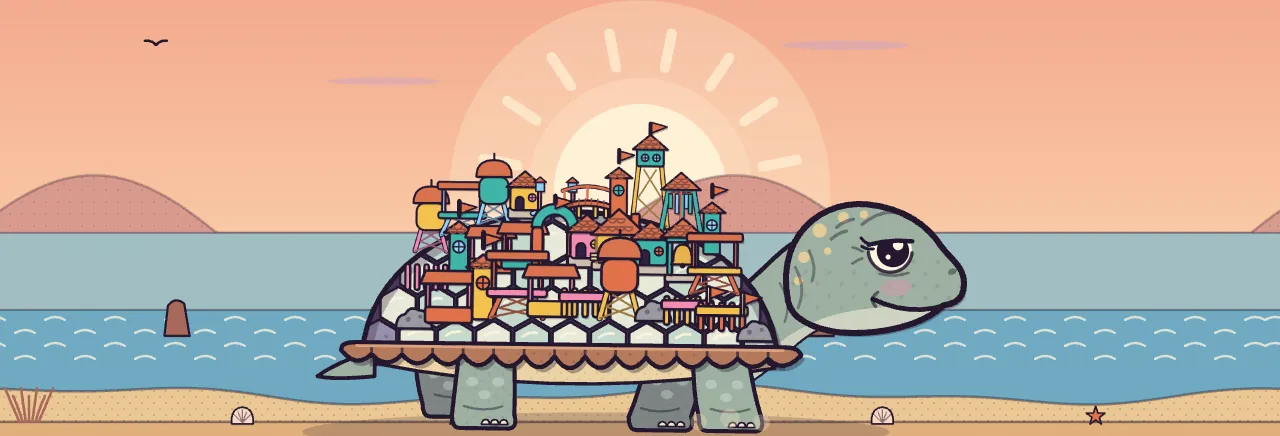
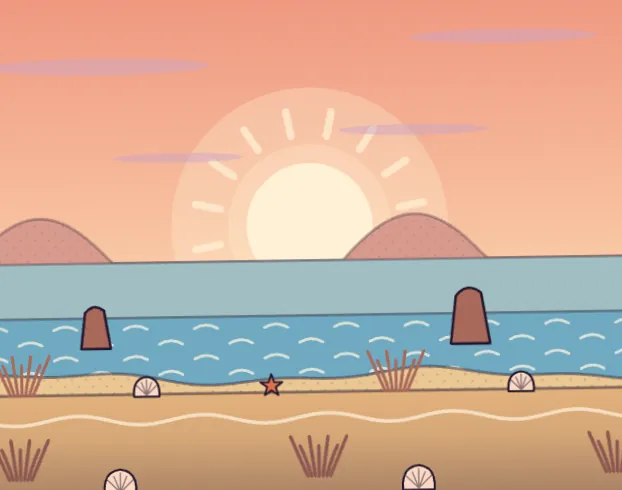
Real sea turtles swim their way home with flippers and come ashore only to nest. Amabel walks the whole road on four thick legs, through Mist Valley, the Red Canyon, the Snow Pass, the Glass Desert and the Aurora Plain, before she ever reaches Sunrise Shore. No turtle naps for a century in the middle of the trip, and none carries a town. The pull of the beach where she hatched, though, is real.
Walk with Amabel
Chapter 1, Mist Valley, is free to play in your browser at amblestead.com. The full game, all six chapters on the road to the shore, is $4.99, paid once. More about the game is on the Amblestead page.