Turbo Pudding
Amabel walks through six places on her way to the sea, and each one leaves something new on the plates of her shell. It’s Tuesday, so here are the level secrets: one piece of trouble from every chapter, the level where it first shows up, and the thing worth knowing before you start.
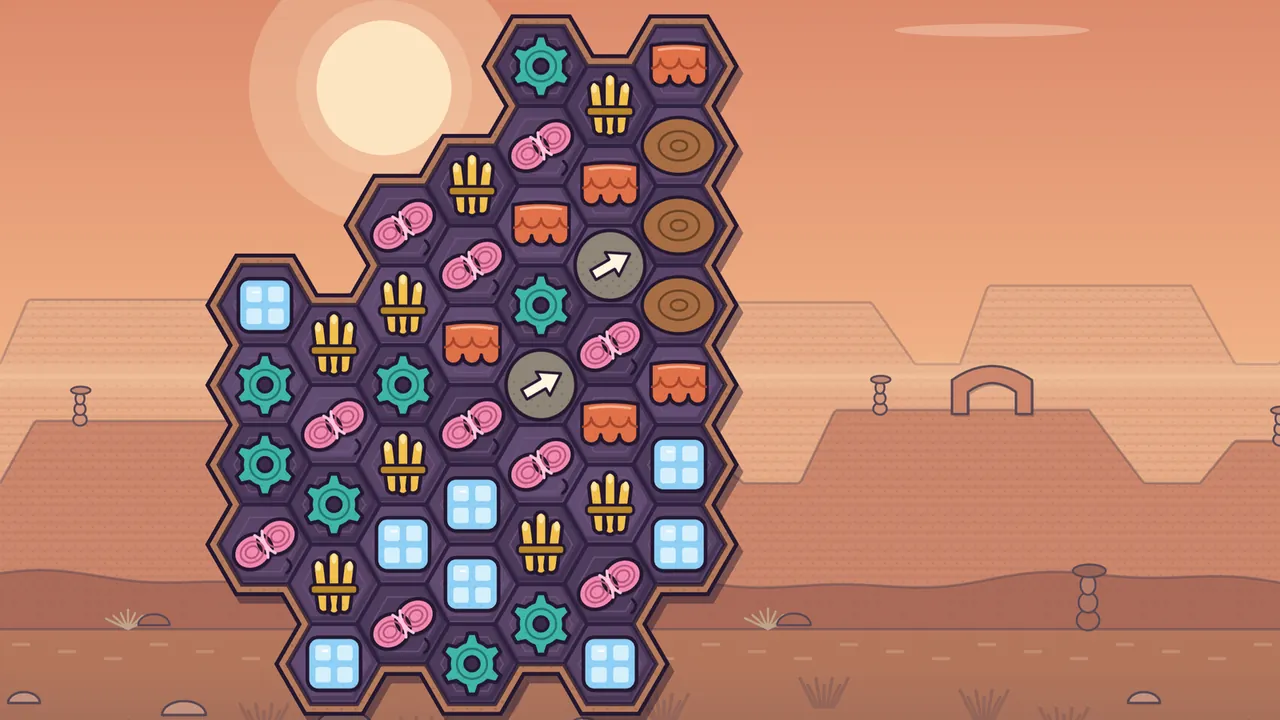
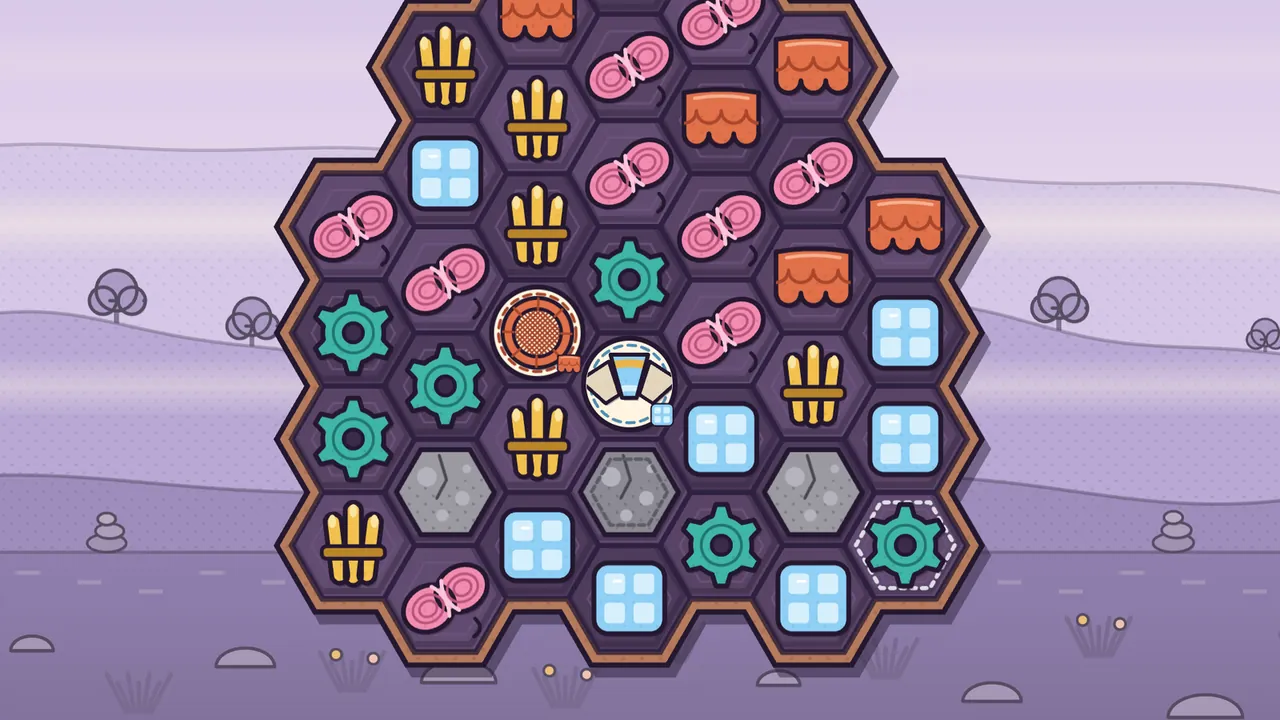
The picture at the top is level 17 in Red Canyon. The board is the spout of a water tank, a log plugs its mouth, and two boulders wait inside with their arrows pointing the way out.
Mist Valley: lichen that creeps
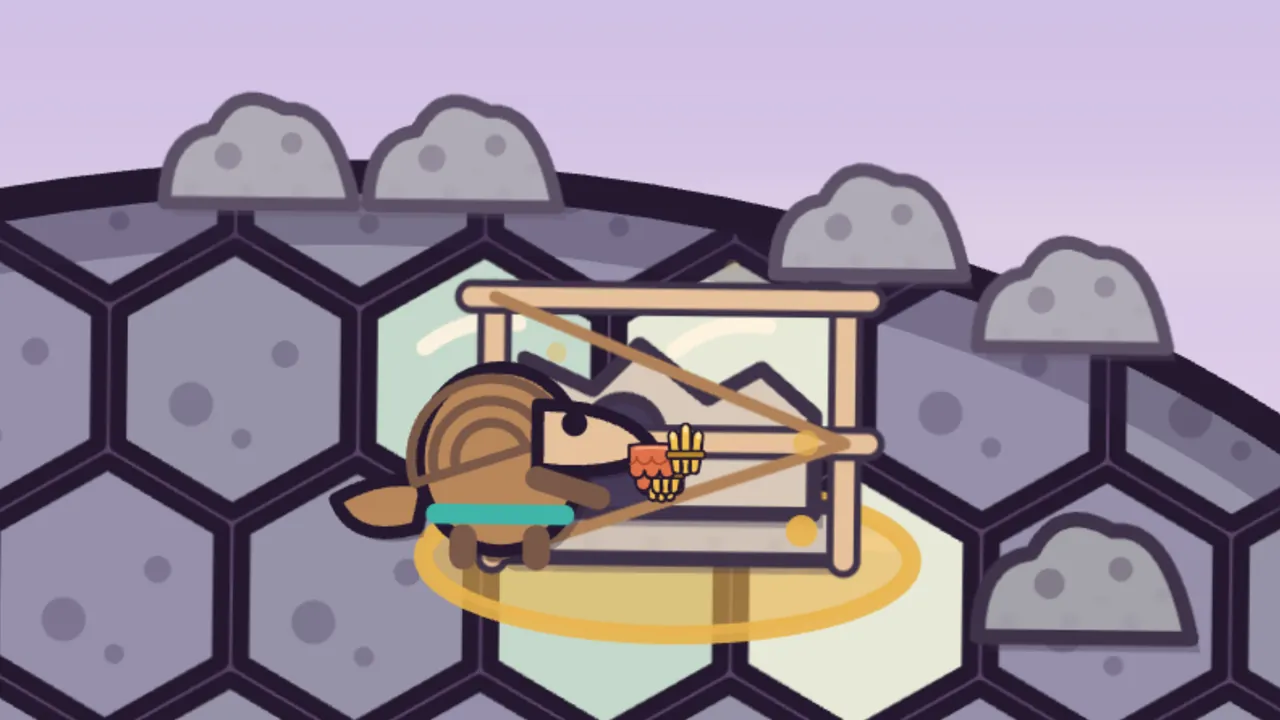
Gray lichen-stone, called Stillness, first turns up on level 6. Clear a piece next to a stone to hit it.
On level 10, the chapter finale, the board is the Wake-up Chime, and lichen sits along the lip of the bell. Here it creeps: a dashed ring shows the cell where it will grow next. The secret: it grows only after a move in which you didn’t hit any lichen. Hit a stone every move and it stays put. Each new stone joins the ones you have to clear, but on this level it can grow three times at most.
Red Canyon: boulders and wind
Rolling Boulders arrive on level 16, where the board is a round tank with three boulders lodged inside. Pim explains: “Clear pieces next to a boulder to push it. It rolls where its arrow points. Roll it out!”
A boulder moves one cell per push, and each wave of a cascade can push it again, so one good move can roll it several cells. It crushes plain pieces in its way, and they count toward your building materials. A special in its way goes off instead, and the boulder waits. Another obstacle stops it. Only rolling it off the board counts for the goal. On level 17, two hits float the log out of the spout first, and then the boulders can roll up and out.
Tumbleweeds come on level 18. After every turn each one rolls a cell with the wind, down and to the right, trading places with the piece there. One hit breaks one. Leave them a few turns and they wait along the downwind edge.
Snow Pass: chimneys and icicles
On level 22 snow falls down three chimney pots. In those columns, every fourth new piece is a snowball. Snowballs fall like pieces, and three touching each other huddle into a Snow Turtle that takes two hits. The goal is twelve hits on snow, on snowballs and turtles alike.
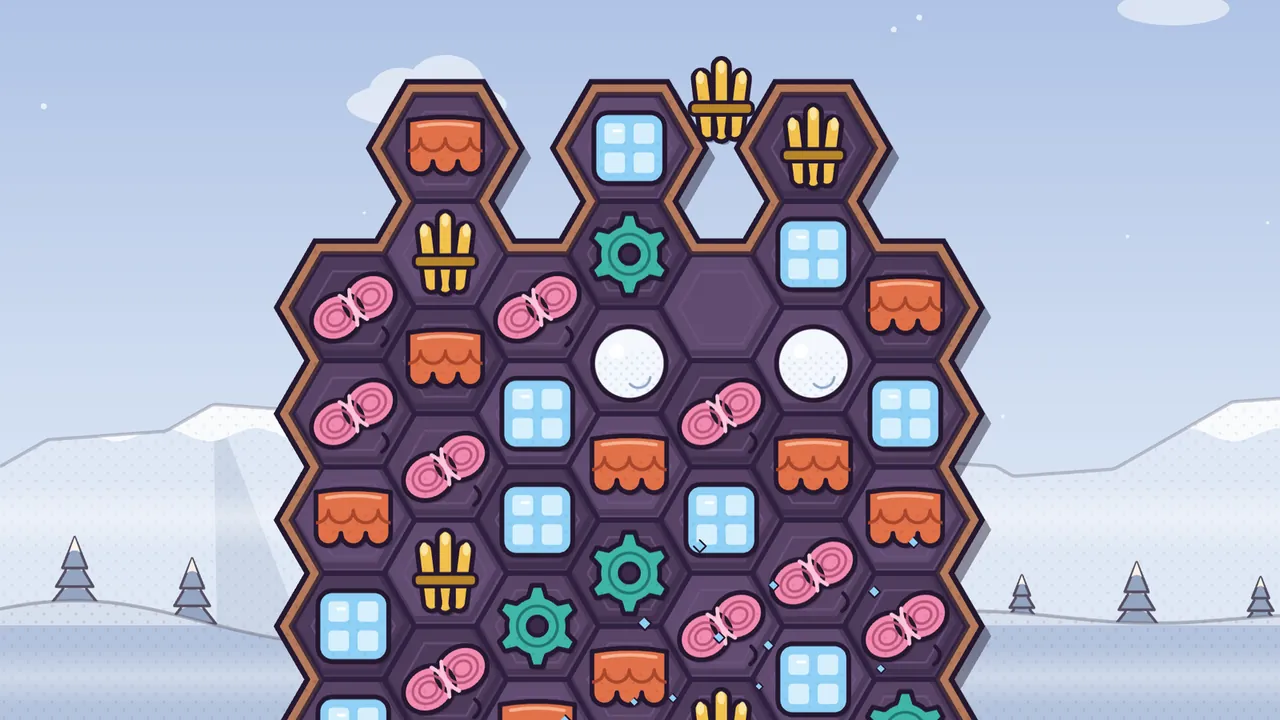
Level 25 is Nils’s map room, with icicles over three columns. Clear a piece in one of those columns and its icicle drops: two hits at once on the first obstacle below, or, in a clear column, the bottom piece goes. The secret: the room’s frozen floor has three two-hit stones, right under the icicles. Here they grow back after five turns.
Glass Desert: a hot kitchen floor
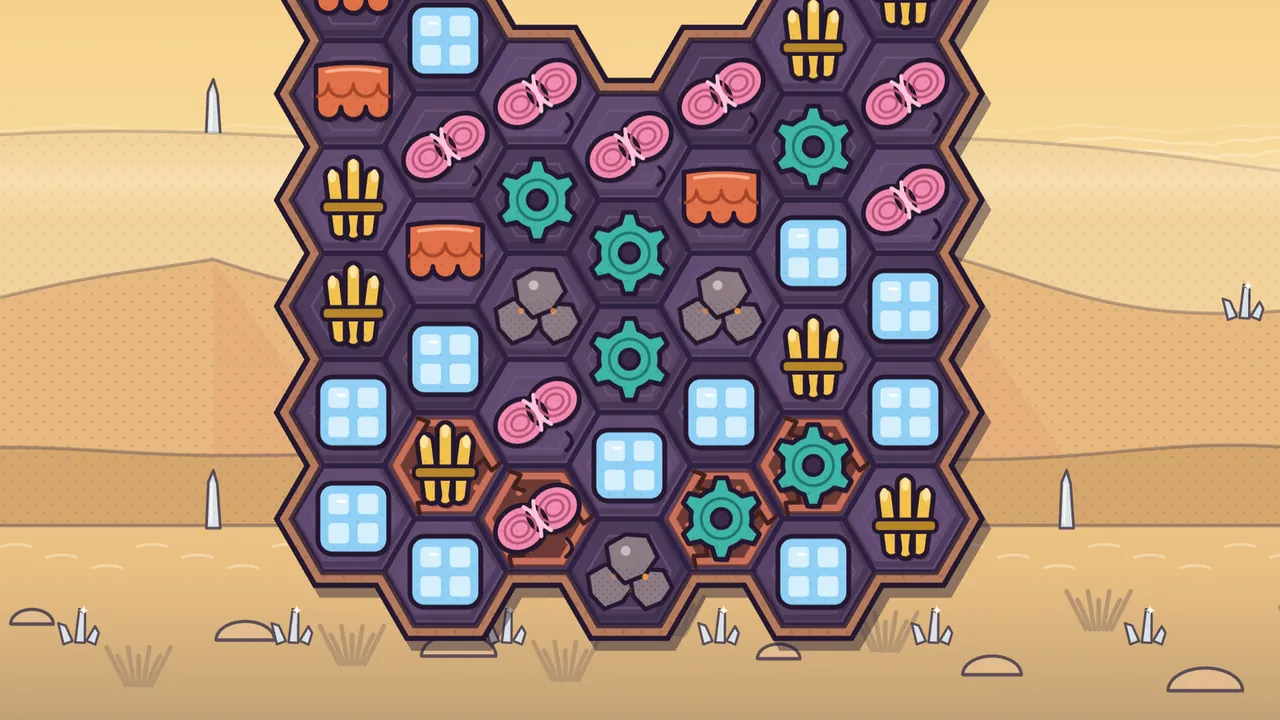
Level 32 is the kitchen, and Saffi has a warning: “Mind the hot stones by my hearth.” A plain piece that ends three turns in a row on a hot stone cracks into a pebble, and a pebble breaks with one hit. If a different piece moves onto the stone, the count starts over.
The secret: here you want the stones to work. The goal is four pebbles, and only three are on the board at the start, so leave a piece on a hot stone for three turns.
Aurora Plain: the geyser that never breaks
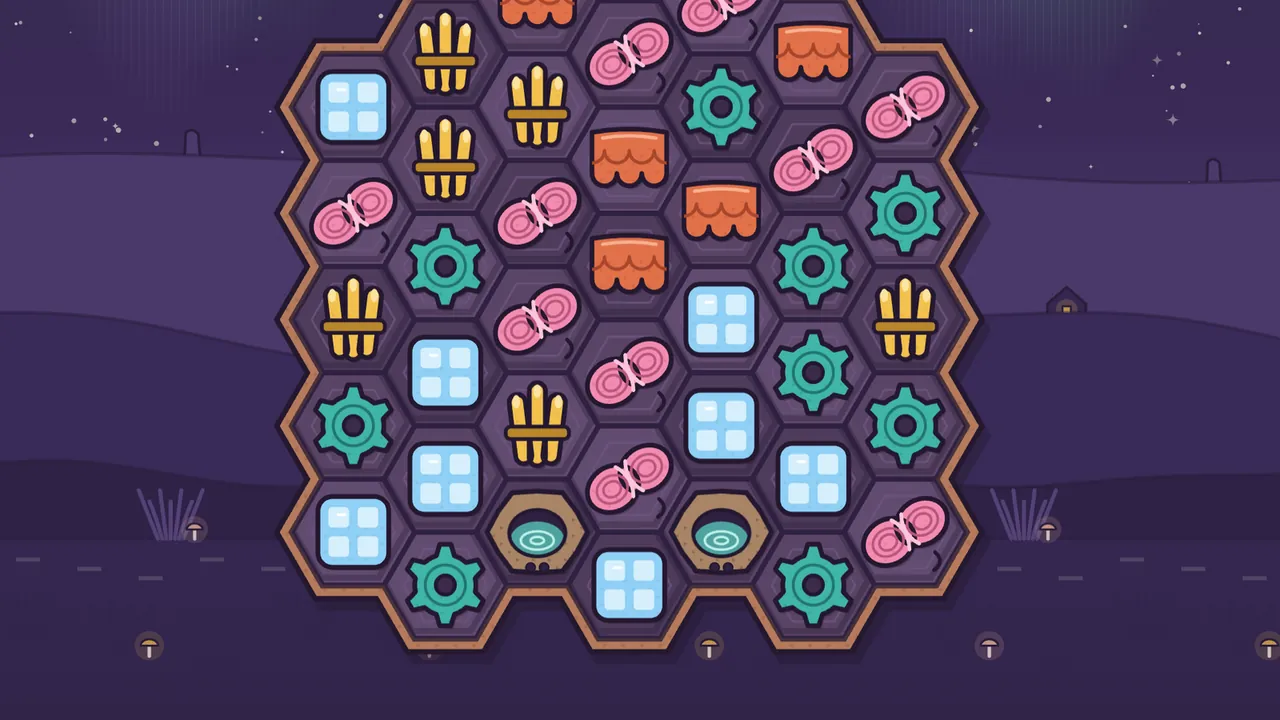
On level 43 the board is a mill house with a gable roof, standing over two hot springs. Baron Bulwark points them out: “On the third turn one flips the pieces above it.”
A geyser bubbles once a turn and erupts on the third. Every plain piece above it, up to the first obstacle, flips upside down, while specials stay put. A geyser can’t be broken, so don’t spend moves on it. Count the turns, look at the column before it erupts, and if the flip lines up a match, it clears like any other.
Sunrise Shore: oysters keep their own hours
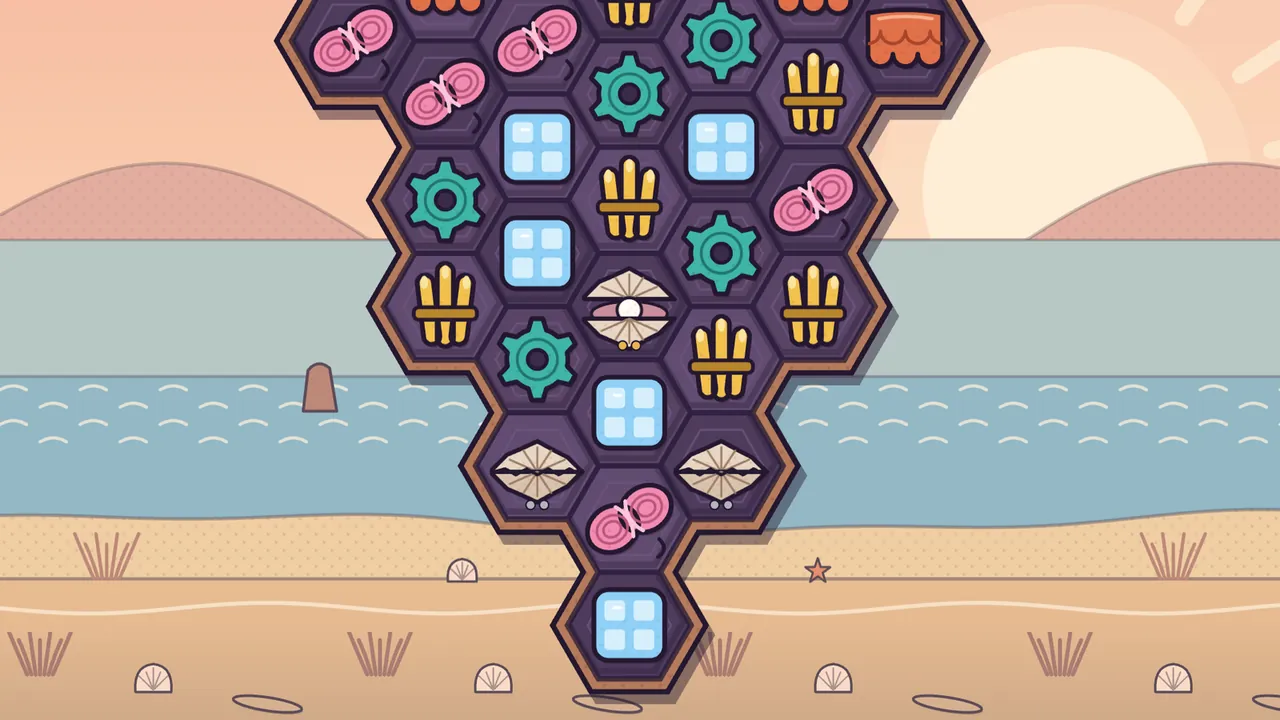
Level 52 is the cradle weave, a basket wide at the rim and narrow at the foot, with three oysters in it. Saffi explains: “Oysters open and shut with the tide.” Each stays open two turns and shut two. A hit on a shut oyster glances off. Clear next to an open one twice, and out rolls a pearl.
The last secret: the two hits don’t have to come in the same tide. An oyster keeps the first hit while it’s shut.
Mist Valley, the first chapter, is free to play in your browser at amblestead.com. The full game, all six chapters, is $4.99, paid once. More about the game is on its Amblestead page.