Turbo Pudding
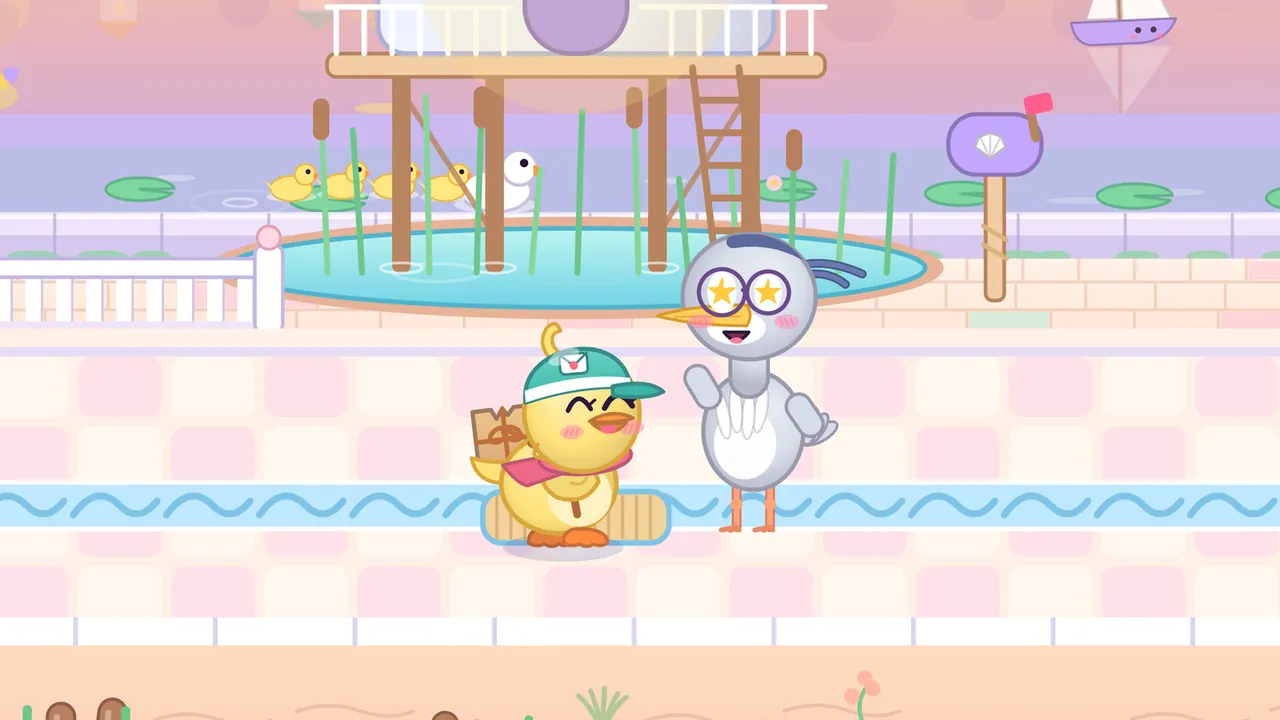
Chapter 5 of Dilly Delivers takes our duckling courier to Mirror Lake, a world of lily pads, cafés and pastel promenades. Aunt Reed, the heron who runs the lake post office, gives Dilly a warning on day 18: “The swans are nesting. They are lovely. They are also terrifying.” Dilly is puzzled. Aunt Reed explains: “Like most of my relatives, dear.”
While drawing those swans, we read up on real ones. In Britain, it turns out, swans and crowns really do go together.
The swans of Mirror Lake
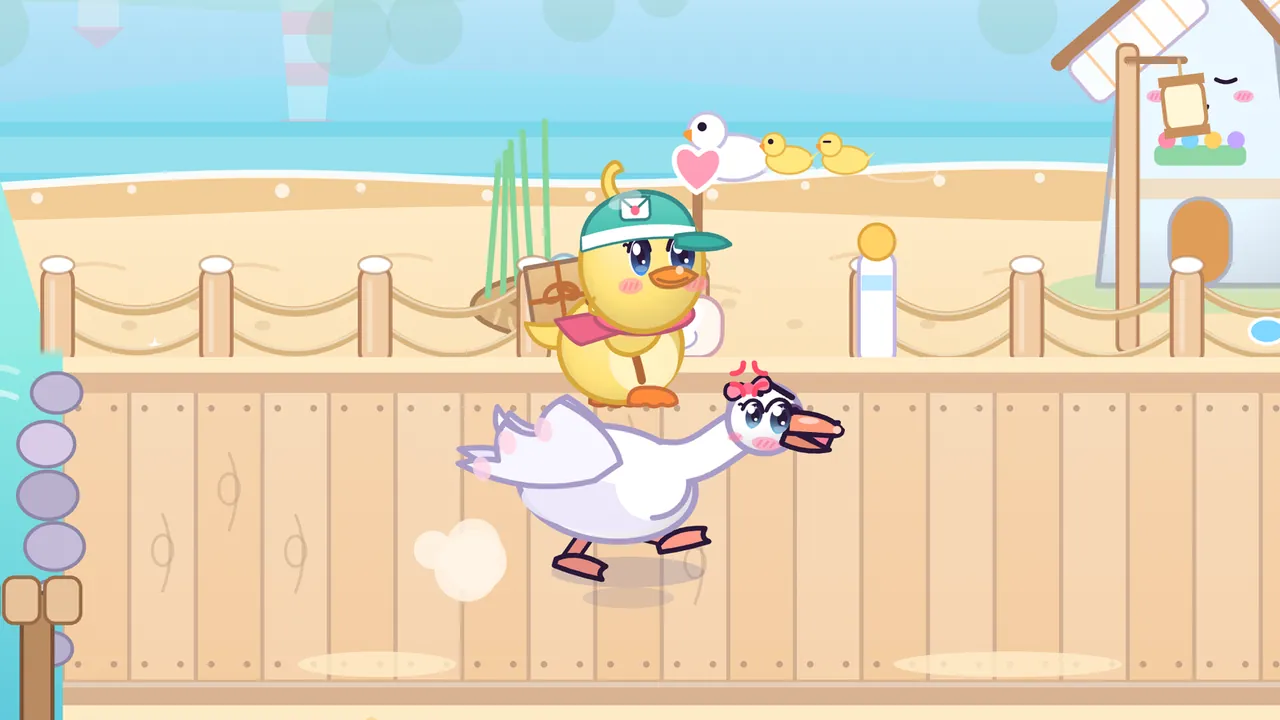
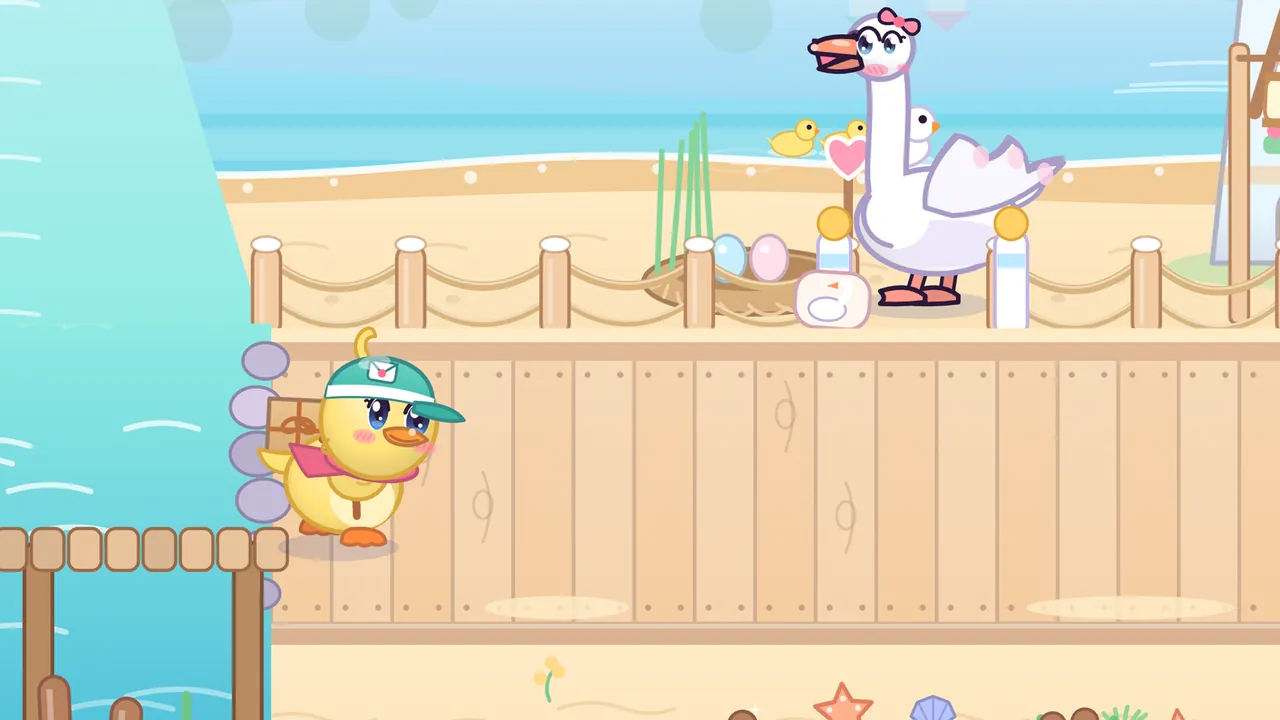
Our swan is plump and white, with a long S-shaped neck, a tiny pink bow and a pink-orange beak with a little plum knob. Each one lives behind a gate on the lakeside, in a round reed nest with two pastel eggs. A small sign on the gate post shows a swan, so you know whose stretch of promenade is next.
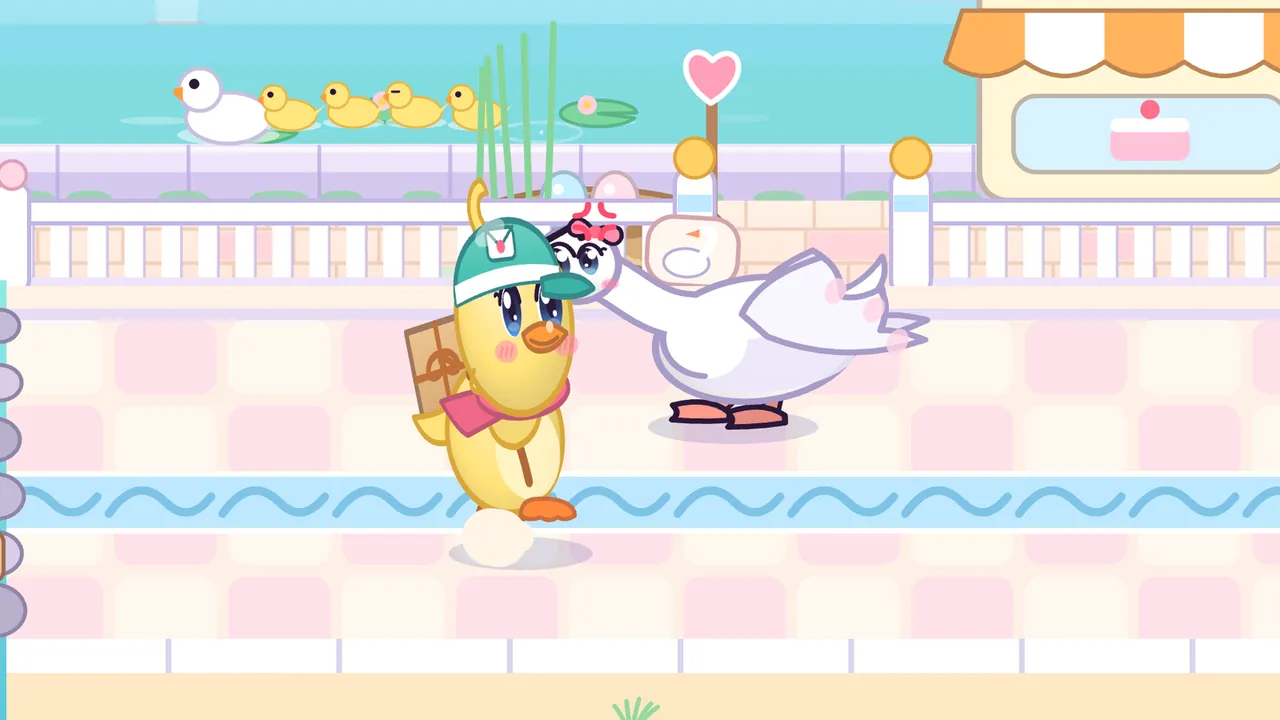
When Dilly comes within four tiles of the gate, the swan notices her and gives chase, up to five tiles past its gate. If it catches her, it grabs the parcel and a tug-of-war begins. Tap fast to tug it back. A grab costs the parcel 14 points out of 100, double for a fragile one, and a good tug wins back up to 40 percent of that. Dilly herself never gets hurt. Or time a jump well and hop right over the swan.
The real bird: the mute swan
The real bird closest to ours is the mute swan. It is wholly white, with an orange beak bordered with black and a pronounced knob on top of the beak, larger in males. The young are called cygnets, and when they get tired on the water, they may ride on a parent’s back.
The name “mute” comes from the bird being less vocal than other swans. Quiet does not mean calm, though. Mute swans can be very aggressive in defense of their nests. Most of the time a defense begins with a loud hiss. If that does not work, the swan attacks, striking with bony spurs in its wings and biting with its large bill. So Aunt Reed’s “lovely and terrifying” is a fair summary.
A crown for the swans
According to the royal household, the Crown has held the right to claim all unmarked mute swans in open waters since the twelfth century. Swans were then a prized food, served at feasts, and monarchs granted rights of ownership to many people and organizations.
Today only three organizations besides the Crown still keep those rights. Abbotsbury Swannery was granted its right in the fourteenth century. Two London livery companies, the Vintners and the Dyers, have held theirs since the fifteenth. Owners once made their marks on the top of the swan’s beak and recorded them in a swan roll made of vellum. Now the mark is a small numbered ring on the leg. Crown birds are left unmarked.
The old penalties were harsh. Stealing swan eggs alone could mean a year and a day in prison. Today swans are a protected species, and nobody eats them.
All up!
Every July, the King’s Swan Marker leads a five-day journey up the River Thames to Abingdon. It is called Swan Upping. A small fleet of traditional rowing skiffs sets off, crewed by Swan Uppers in scarlet shirts, with the Swan Marker in a hat with a white swan’s feather.
When they spot a family of swans and cygnets, they call out “All up!” The boats gather around the birds, the Uppers lift them from the water and check their health. Cygnets are weighed, measured and checked for injuries, often caused by fishing hooks and line. Cygnets of the Vintners and the Dyers get a numbered ring, and who owns a cygnet depends on its parents.
The ceremony is hundreds of years old, but today it has two clear goals, conservation and education. Children from local primary schools meet the Swan Markers along the riverbank, learn how swans live and get to see cygnets up close.
What we kept for the lake
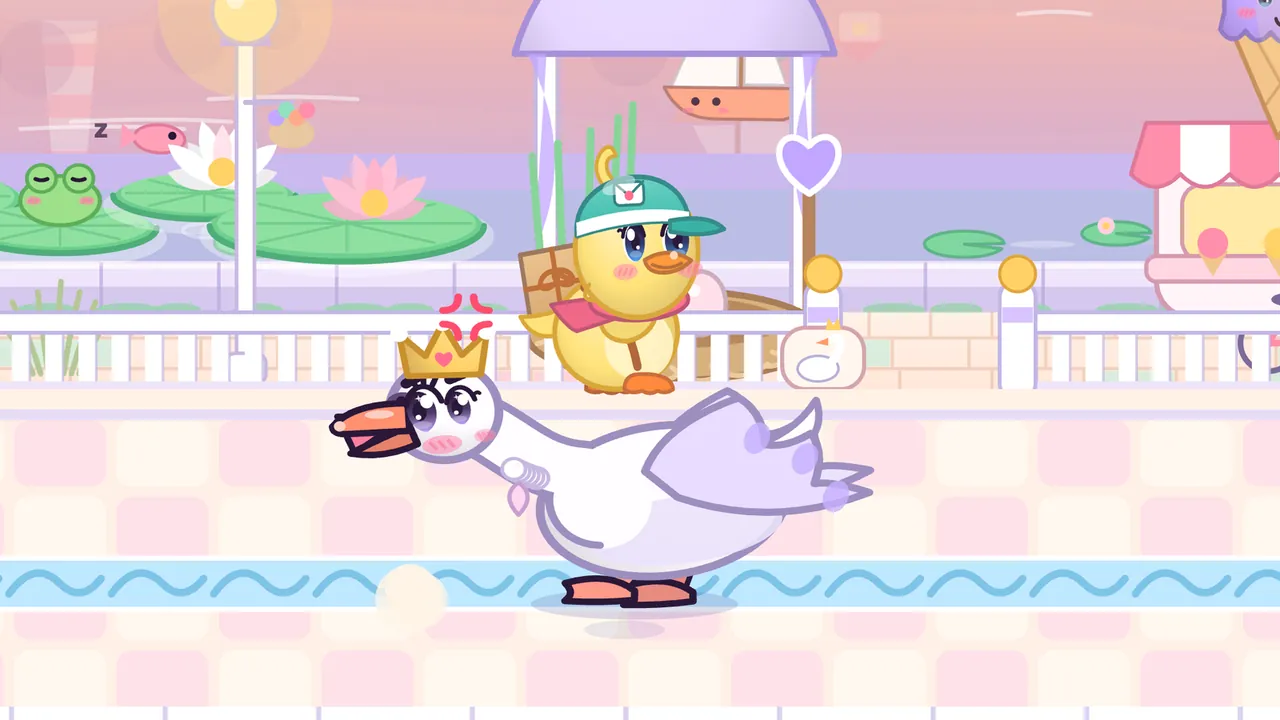
Nobody lifts our swans out of the water, but Mirror Lake does have a queen. On day 20 the Swan Queen holds court on the north shore, by a little white pavilion with a lilac curtain and a crown on top. She is 1.35 times the size of a regular swan, notices Dilly from farther away and guards a much longer stretch of promenade. Her chase comes in waves, three seconds of dashing and a second and a half of rest, so you can pick your moment. Aunt Reed’s advice for the day is the best we have: “Bow politely… then RUN.”
That same day, the last parcel of the chapter is a reading lamp for Aunt Reed herself, delivered to her stilt house by the pond.
Come visit Mirror Lake
Chapter 1, Pudding Town, is free to play in your browser at dillydelivers.com. The full game, all six chapters, is $4.99, paid once. More about the game is on the Dilly Delivers page.