Turbo Pudding
In Helicorn, even the craters end up full of flowers, so it fits that all three helicopters in the hangar are named for plants. This Thursday, the real plants behind the names, and what each one lent to the helicopter that carries it.
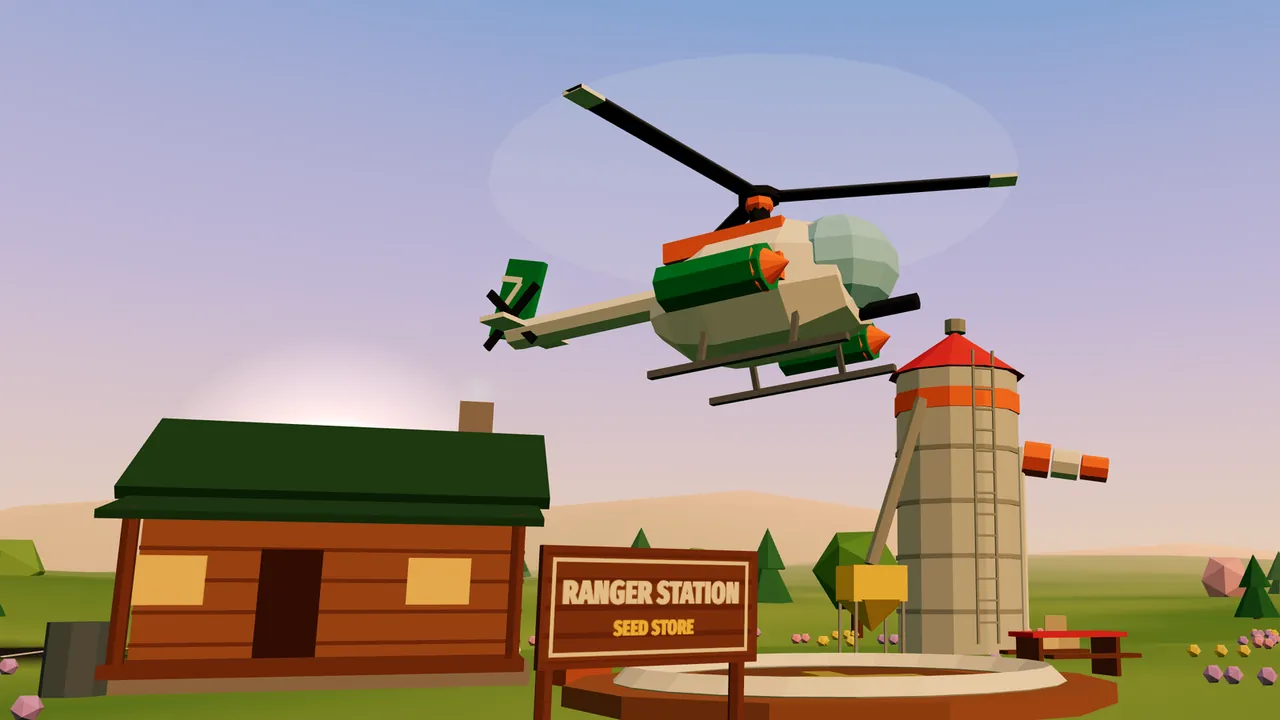
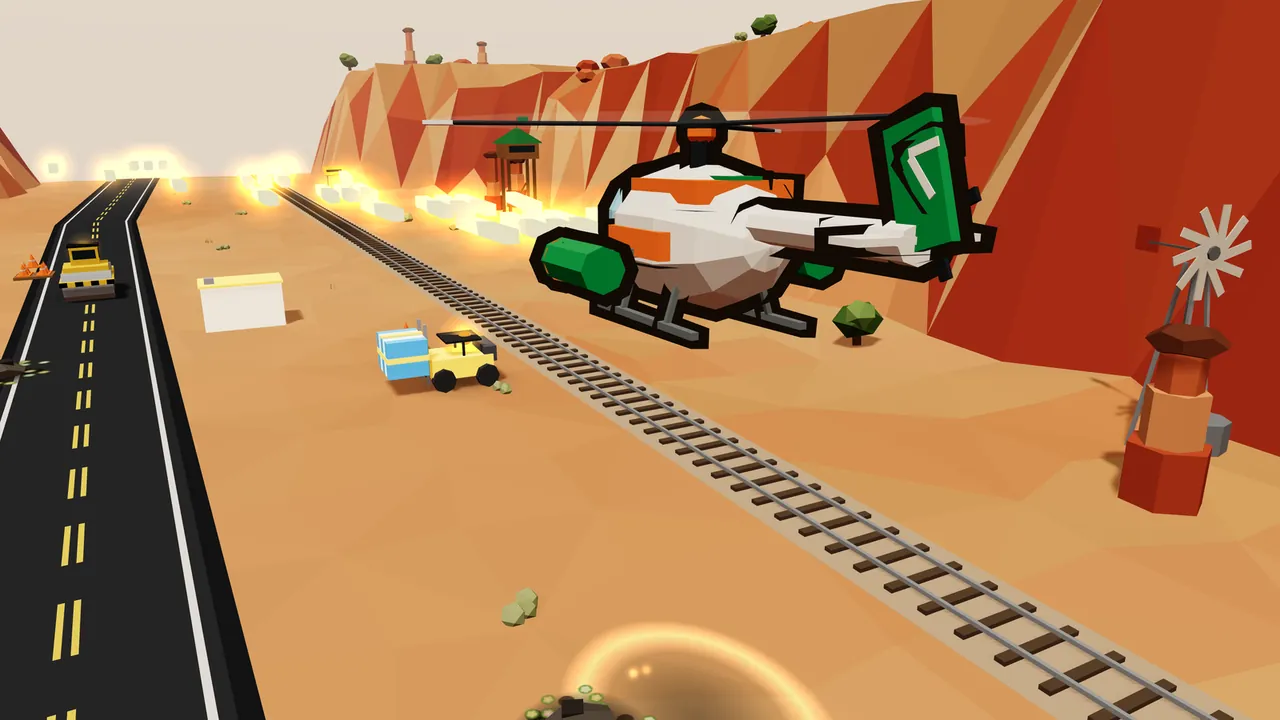
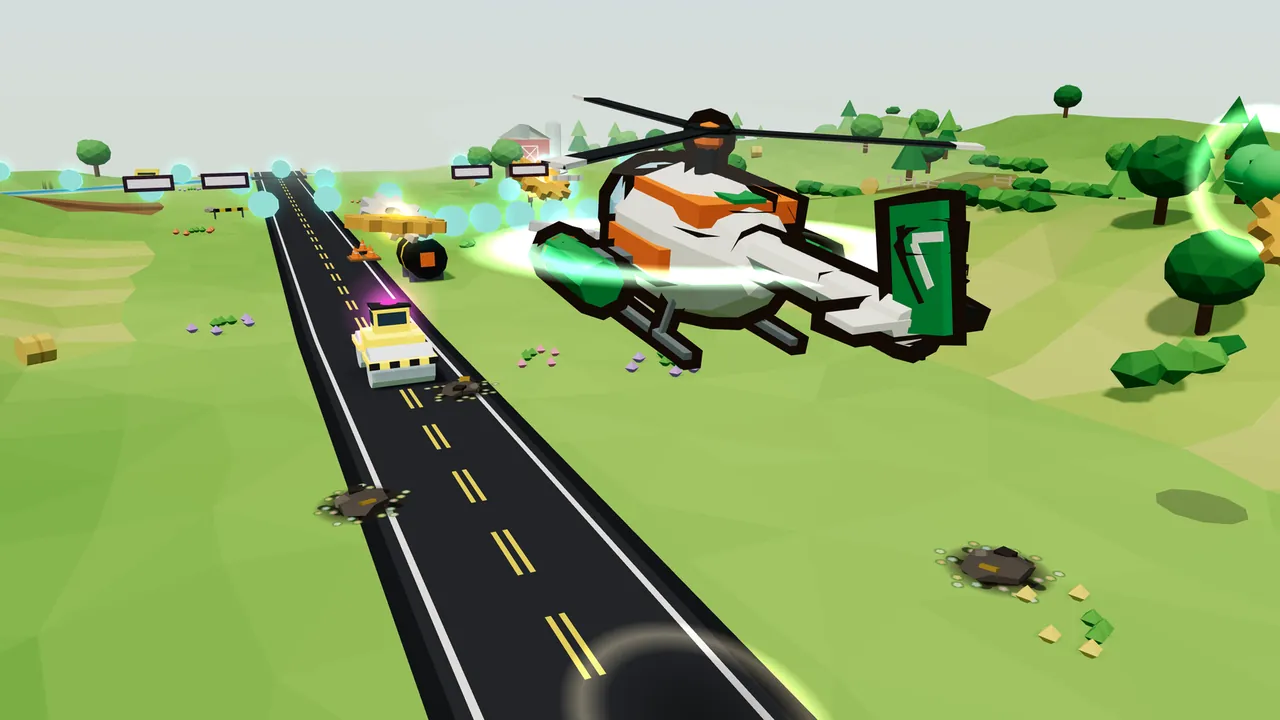
The picture at the top is Thistle over Rustrock Canyon.
Thistle, the one that started it all
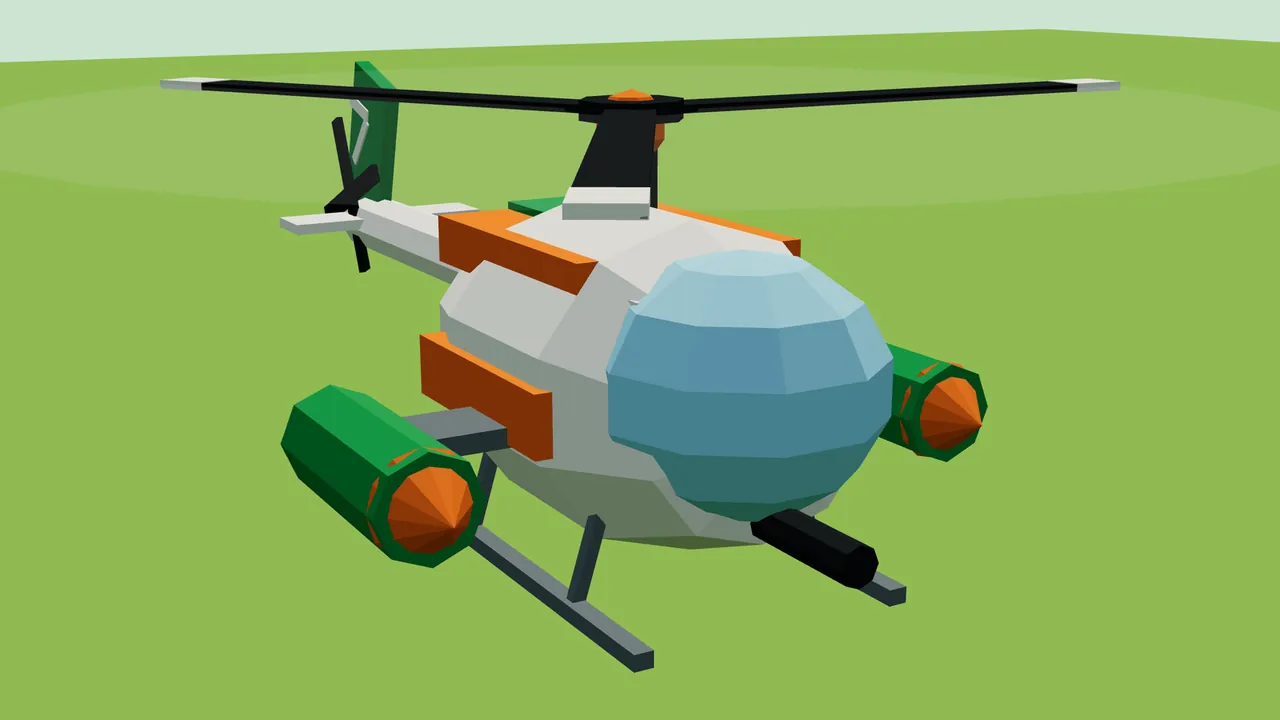
Thistle is where everyone starts. Before it got a cannon, it was Old Hatch’s seeding helicopter, and Hatch still remembers: “Thistle seeded these islands once. Clover from the air. Took a week.” The hangar card calls it “Steady and forgiving,” and in the credits it plays “Herself (retired seeding helicopter).” We gave it a round body, a big round canopy and stub wings with hopper pods left over from its seeding days.
The real thistle is the floral emblem of Scotland. An old legend explains why. A Norse army tried to creep up on the Scots at night, one barefoot raider stepped on a thistle, and his cry gave the attack away. Some tellings put it at the Battle of Largs in 1263, but it stays a legend, not a record.
The thistle was on Scottish silver coins by 1474, under King James III. It also gave its name to the Order of the Thistle, the oldest and highest order of chivalry in Scotland. The motto, Nemo me impune lacessit, means “no one provokes me with impunity,” a nod to the prickles.
There is a soft side, too. When a thistle goes to seed, its feathery tufts are called thistle-down. Goldfinches eat the seeds, and birds line their nests with the down. Prickly, hard to push around and good with seeds: we think the name fits.
Dandelion, the light one
Dandelion opens in the hangar after Rustrock Canyon, the second world, for 40,000 Scrap. It is the fastest of the three, and its magnet pulls in Scrap from farther away. The catch is right on the card: “Light and quick, a wider magnet. Thin skin: fly it clean.” It carries less armor than Thistle, so every hit counts. We built it as a slim glass-nosed pod on a thin boom, with a hoop around the tail rotor and, on top of the mast, a fluffy white seed puff.
The name comes from the French dent de lion, “lion’s tooth,” for the jagged edges of the leaves. A week or two after the yellow flower blooms, the head turns into a round white ball of seeds, sometimes called a clock or a blowball. Each seed hangs under its own tiny parachute of fine white hairs.
That parachute does something clever. As the seed falls, the air passing through the hairs curls into a small ring-shaped swirl that stays attached just above it, and that swirl helps carry the seed a long way on the wind. In damp air, the parachute folds shut, and the seed waits for better weather. A light thing that travels far and doesn’t like rough handling. That’s the helicopter, too.

Ironbark, the heavy one
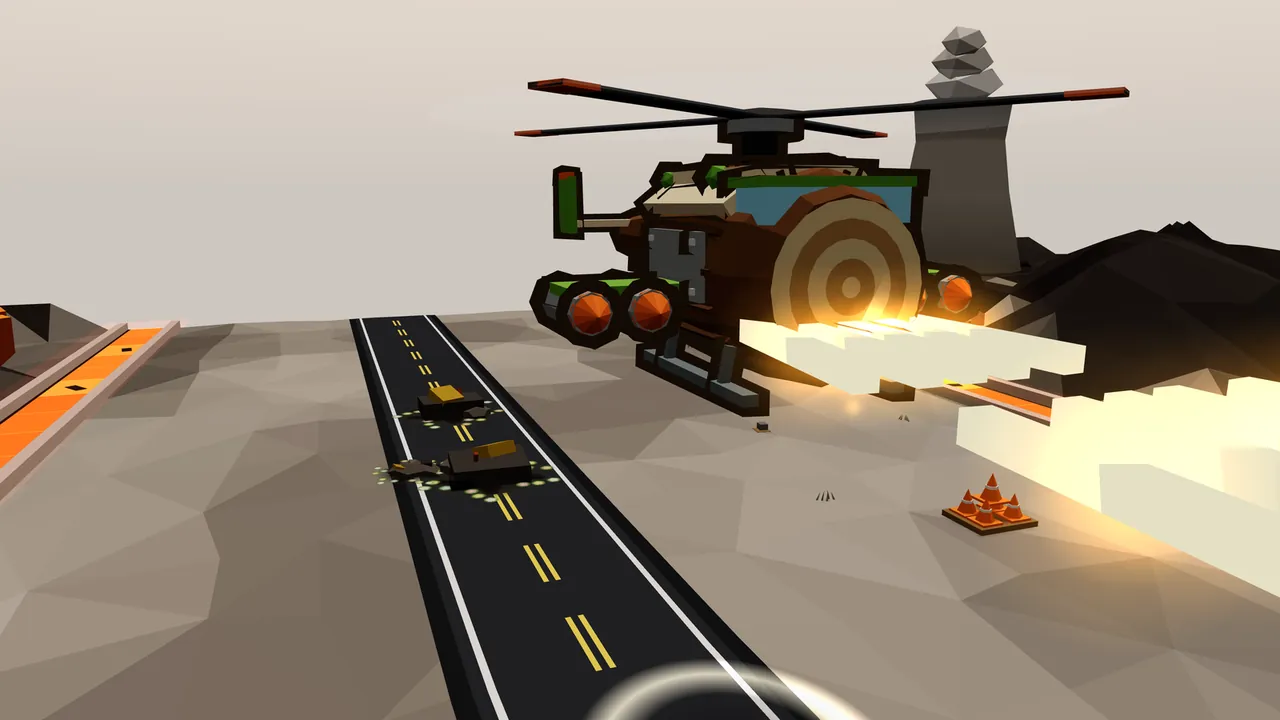
Ironbark opens after Rimeridge Glacier, the fourth world, for 90,000 Scrap. It has the most armor of the three, fires four Treetoppers a launch instead of two and has a spare bomb slot. The cost is on the card: “Heavy and slow to turn.” Its body is a wide barrel like a tree trunk, with bark ridges and steel plates, and its nose is the cut end of a log, growth rings and all, with twin guns underneath. Whatever you buy, Hatch hands it over the same way: “She’s yours. Bring her back in one piece. Or two, I can work with two.” With Ironbark, one piece is a lot easier.
A real ironbark is not one tree but several kinds of eucalyptus, all with dark, deeply furrowed bark. Instead of shedding, the dead bark builds up and soaks with a red gum called kino, and the trees are named for how that bark looks, like slag from iron making. The thick coat helps the tree come through fire and protects the buds underneath.
The wood is just as tough. The Queensland Government lists gray ironbark as a tree 30 to 50 meters tall, with reddish to dark brown heartwood that is very hard and weighs about 1,105 kilograms per cubic meter, denser than water. It sits in the top durability class: more than 40 years above ground, more than 25 in it, and it resists termites. In eastern Australia, ironbark railway sleepers lasted about 30 years, where other timbers lasted 7 to 12, and the wood went into wharves and bridges.
World 1, Greenfold Meadows, is free to play in your browser at helicorn.com, and Thistle is ready from the first mission. The full game, all six worlds, is $4.99, paid once. More about the game is on its Helicorn page.