Turbo Pudding
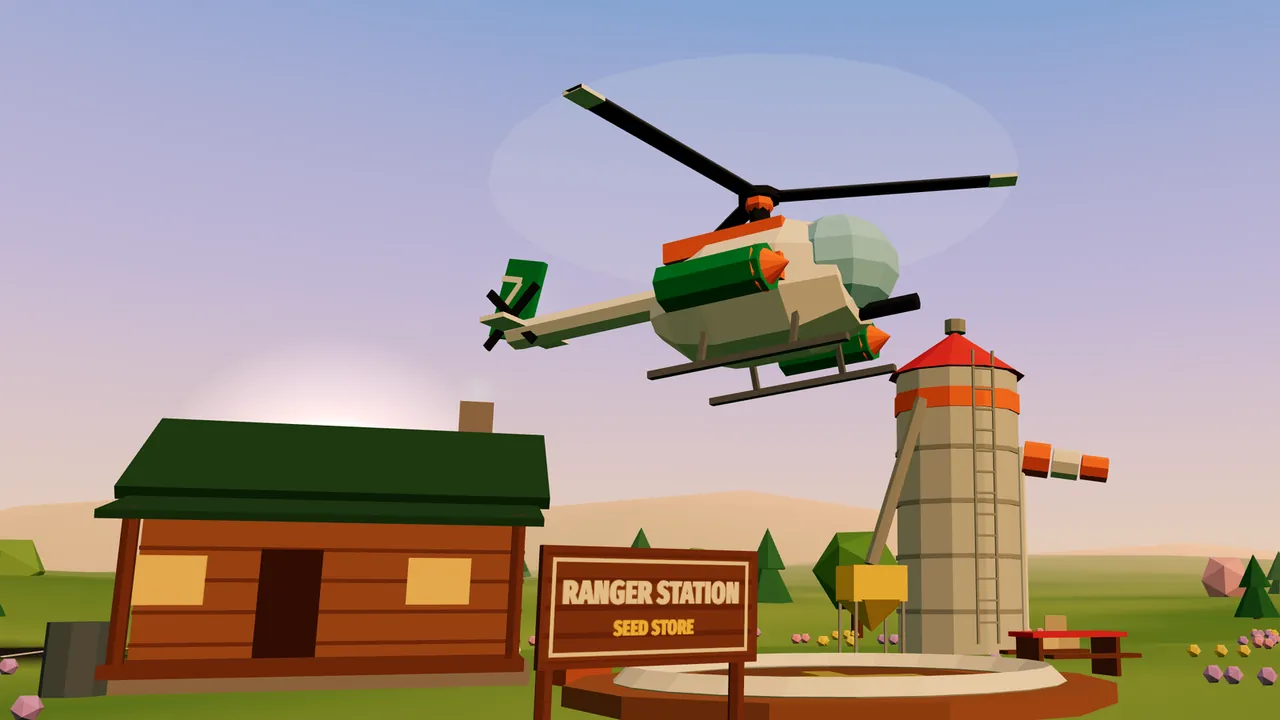
The hero of Helicorn isn’t a gunship. Thistle is a small cream-and-green helicopter, and in the closing credits she plays “Herself (retired seeding helicopter).” Before the first mission, Old Hatch says it plainly: “Cannon’s loaded. She sowed clover for thirty years. Bring her back in one piece.”
Then the Paver rolls in with its road machines and announces, “ATTENTION. THIS MEADOW IS NOW A CAR PARK.” So the old seeder gets a cannon, and Wren Ashby flies her out to put the meadows back.
A helicopter that plants things isn’t a made-up idea. People have been sowing seed from the air for about ninety years. Here are three true stories from that history.
Clover from a light plane
In 1936 a farmer in Hawke’s Bay, New Zealand, tried something new: he sowed clover seed over his land from a light plane. After the Second World War, the idea took off for real. The air force’s Tiger Moths, small biplanes built to train pilots, found a new job on the farms. The front cockpit came out, and a hopper went in, emptied with a pull of a lever.
On March 14, 1949, the air force began large trials, spreading clover seed mixed with fertilizer from the air. Private firms followed fast. By 1952 New Zealand had 38 of them, flying 149 aircraft, and 138 of those were Tiger Moths.
One of those planes, ZK-AJO, now belongs to Te Papa, the national museum in Wellington. It was built in 1941 to train pilots and worked the farms from 1949 to 1956: about 6,000 hours in the air and nearly 28,000 metric tons of fertilizer and grass seed.
Rice sown onto water
In California, rice grows in fields flooded a few inches deep. Farmers soak the seed for a day or two first, so it gets heavy, and then planes sow it straight onto the water. The seed sinks to the mud and sprouts there, and the water keeps the weeds down.
It started early. In 1930 an article ran under the headline “In California rice land seeded by airplane.” In 1937 a newspaper in the town of Willows described six planes sowing rice from 20 to 30 feet up. The big win was speed. One operator said a plane could sow 150 acres in an hour to an hour and a half, while a rig on the ground needed all day.
The first helicopters to sow a forest
Thistle’s closest real cousins flew in Oregon. In 1933 a huge fire burned through the forests near Tillamook. Fire came back at six-year intervals, again and again, until 1951. The burned land became known as the Tillamook Burn.
In 1948 Oregon voters changed the state constitution to allow $12 million in bonds to replant it, and the work began in 1949. It was the first time helicopters were used to sow seed on a large scale. Over the years they dropped more than a billion seeds over the Burn.
The crews on the ground mattered just as much. Forestry workers, prison inmates and school groups planted 72 million seedlings by hand, and kids alone planted almost a million of them between 1950 and 1973. In 1973 the old Burn became the Tillamook State Forest.
Back in Greenfold Meadows
Thistle’s home borrows a little from all three stories. The picture at the top of this post is the ranger station at dawn, with a sign that reads RANGER STATION / SEED STORE, a tin seed silo with a red roof, a ladder and a spout into a yellow hopper, and Hatch’s wooden pad by the windsock.
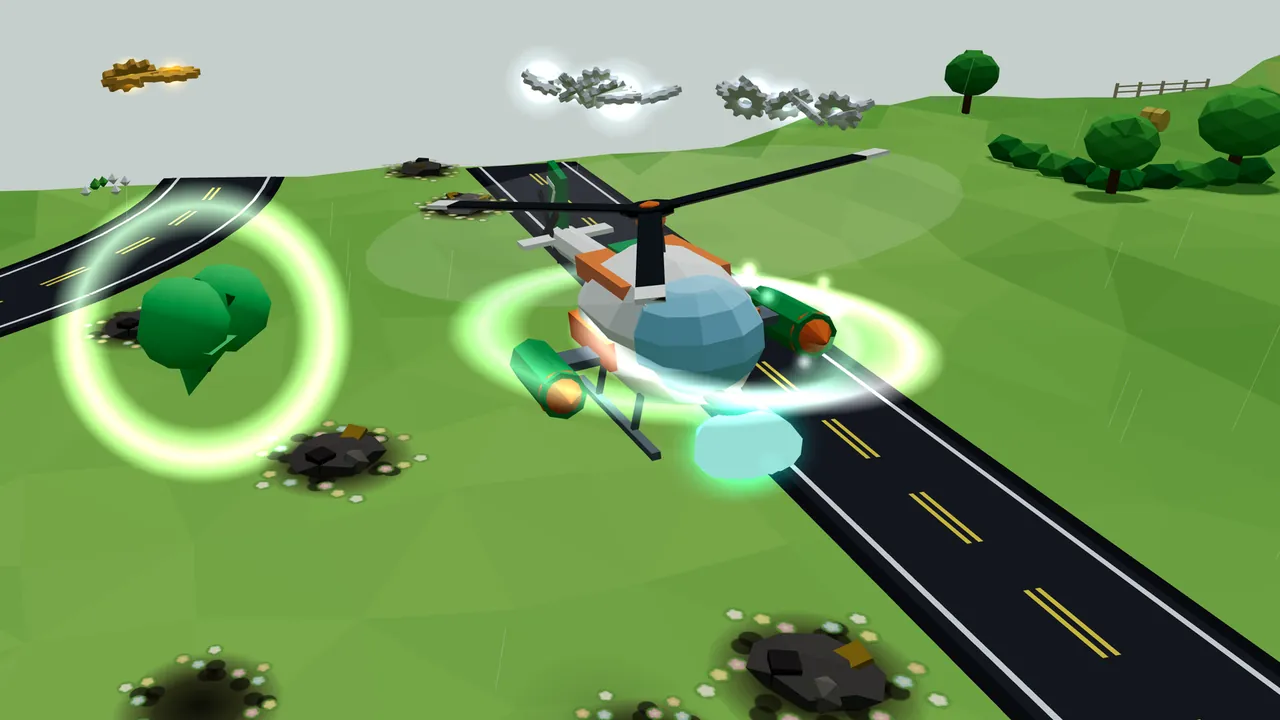
She still sows, in her way. Every machine Wren wrecks leaves a scorch mark, and two and a half seconds later the scorch is ringed with flowers. Fly back over a stretch you’ve cleared, and the grass is dotted with them.
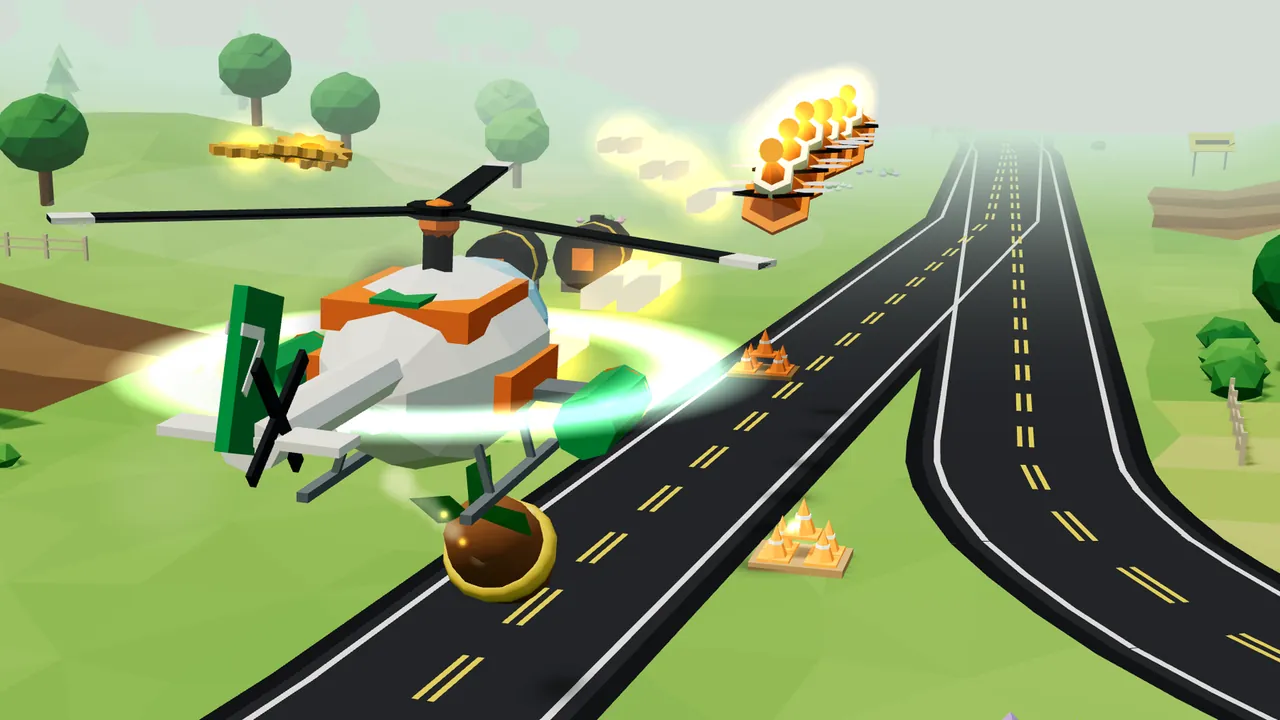
Clear Greenfold Meadows, and Hatch’s Shed starts selling a Seedbomb rack: “a cluster pod that wrecks a whole yard.” The pod looks like a fat brown seed with a gold band and a green stalk at the nose. Half a second after it drops, it splits into eight bomblets, and their craters bloom at once.
For the biggest jobs, there’s the Bloom Bomb from the Bomb Rack. It goes off in a big white-gold flash, with a shockwave shaped like a flower and a cloud of pink, white, gold and green petals. Pick up a pinecone, and you get one more. Tilly’s verdict: “Bloom!” Wren’s: “Flowers. Lots of them.”
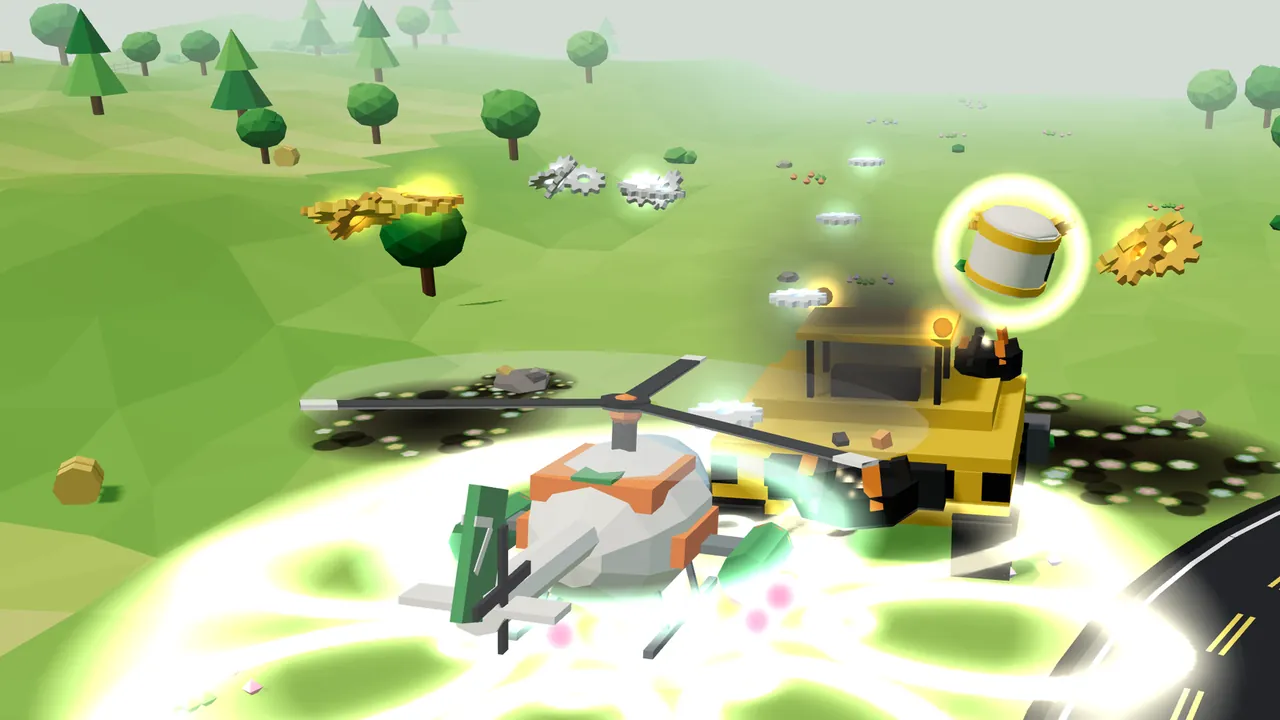
World 1, Greenfold Meadows, is free to play in your browser at helicorn.com. The full game, all six worlds, is $4.99, paid once. More about the game is on its Helicorn page.