Turbo Pudding
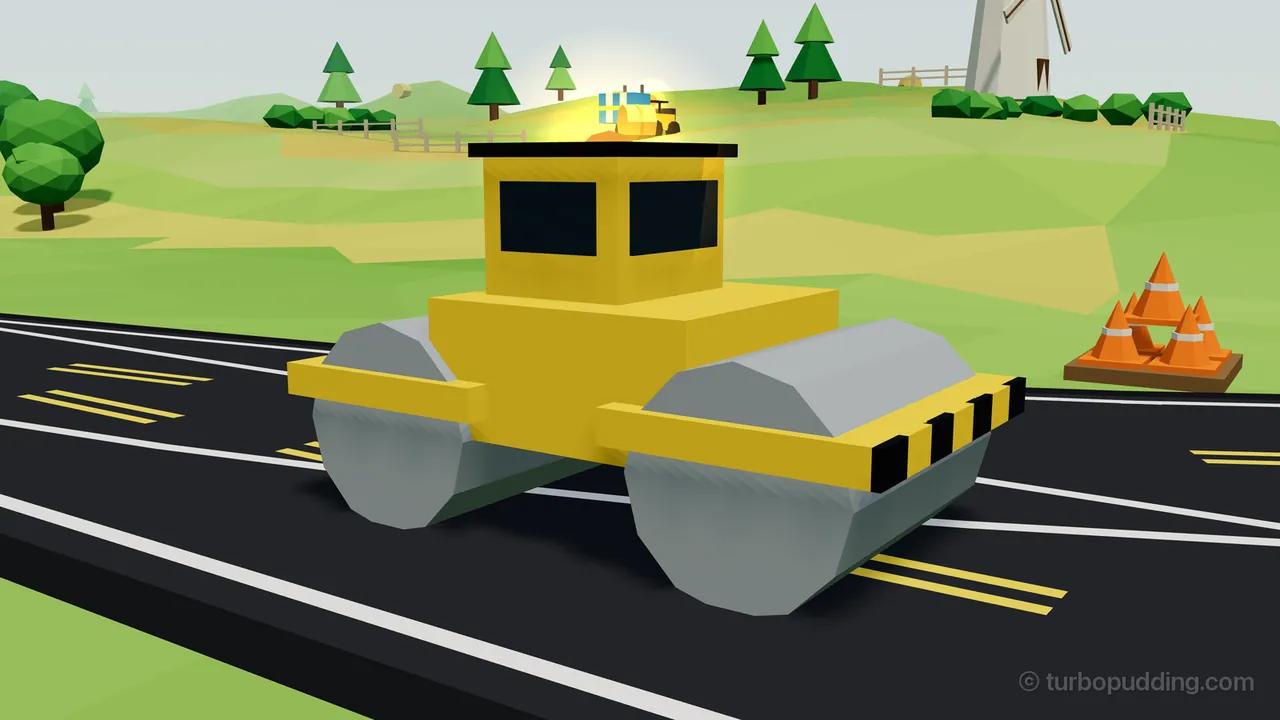
Helicorn’s first mission is called Fresh Tarmac, and the name fits. The Paver is turning the meadows of Greenfold into roads and car parks, with Dozers, Mixers, Rollers and whole asphalt plants set down in the grass. Wren, flying Thistle, sums up the plan in four words: “Less tarmac, more meadow.”
This Thursday, here’s the real story behind that word, from a Scottish road builder to one spilled barrel of tar. At the top of this post is one of the Paver’s Rollers, out on the road in Roller Rows.
A road of small stones
The “mac” in tarmac comes from a name. John Loudon McAdam was born in Ayr, Scotland, in 1756. On January 15, 1816, he became surveyor general of roads for the Bristol turnpike trust, in charge of 149 miles of road, and put his ideas to work.
Builders before him laid heavy foundations of rock upon rock. McAdam said the ground itself would carry the road, as long as a crust of stone kept the water out. His roads were almost level: one 30 feet wide rose only 3 inches from the edges to the middle, just enough for the rain to run off into ditches.
The secret was the size of the stones. The top layer used stones about three-quarters of an inch across, much smaller than the 4-inch iron wheels of the carriages. Supervisors carried scales to check them. A workman had a quicker test: he could see if a stone fit in his mouth.
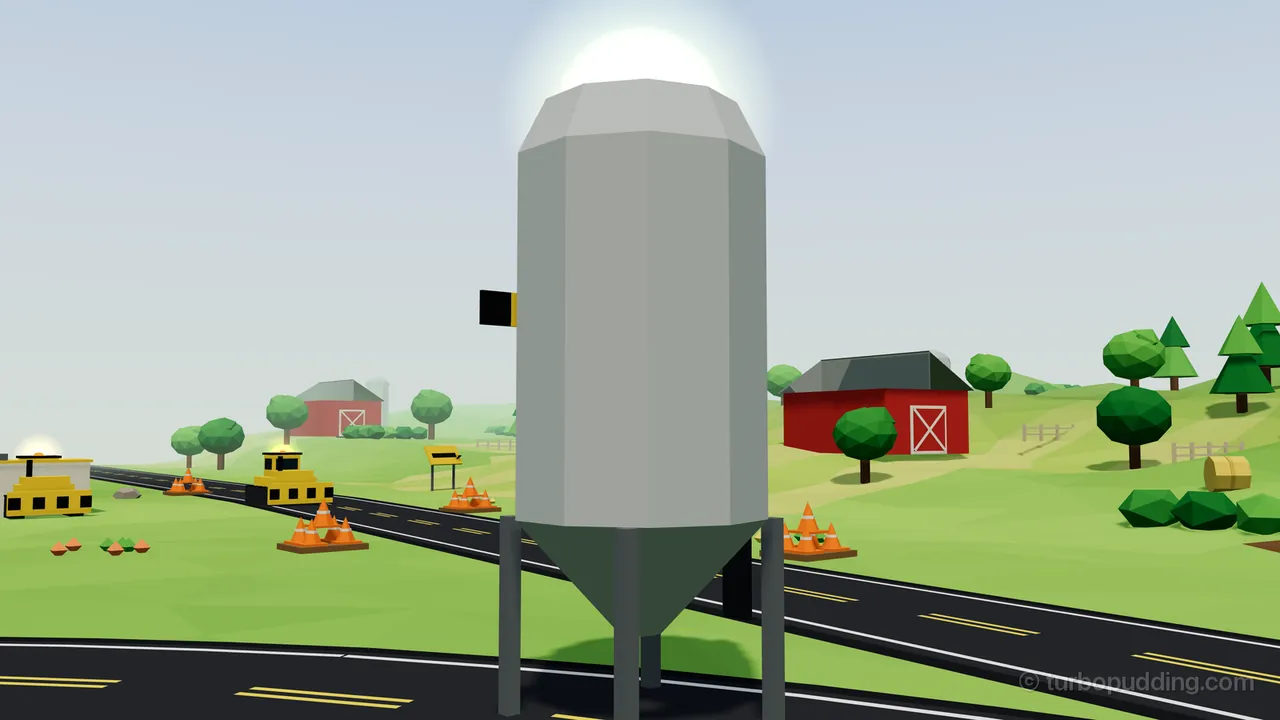
The Paver keeps its stone close at hand. In Fresh Tarmac, a tall Gravel Silo stands beside the road, one of the mission’s three gold targets, the ones worth extra Scrap.
America’s first macadam road
According to the Federal Highway Administration, the first macadam surface in the United States went down on the Boonsborough Turnpike Road, between Hagerstown and Boonsboro, Maryland. By 1822, it was the last unimproved gap on the road from Baltimore to Wheeling, and in winter, stagecoaches needed 5 to 7 hours to cover 10 miles of it.
The builders dug ditches on both sides first. Then the stones were broken “so as not to exceed 6 ounces in weight or to pass a two-inch ring.” Each of the three layers was packed with a cast-iron roller instead of being left for traffic to pack down, and the surfacing was finished in 1823.
From horses to steam
The first road rollers were pulled by horses and were probably borrowed farm rollers. A roller works mostly by its weight, so from the middle of the 19th century, heavier self-powered machines took over. The first of them ran on steam, and the name stuck: road rollers are often called steamrollers, whatever powers them.
The Paver’s Rollers keep the classic shape: a yellow body with a small cab and a wide gray drum at each end. Tilly sums them up: “Big drums, no guns, very stubborn.” A Roller takes only half damage from the front, so swing wide and hit it from the side.
One spilled barrel
Macadam had a weak spot: ruts and dust. When motor vehicles arrived, the dust became a serious problem.
The fix started with an accident. In 1901, Edgar Purnell Hooley, the county surveyor of Nottinghamshire, came across a smooth stretch of road with no ruts and no dust. A barrel of tar had spilled there, and someone had covered the mess. Hooley’s 1902 patent turned the accident into a recipe: mix tar and stone by machine, lay it, then press it down with a steamroller. In 1903, he registered “tarmac” as a trademark.
Later, bitumen, a by-product of petroleum, largely replaced coal tar. The word stayed: today people use tarmac for all sorts of paving, including modern asphalt.
How an asphalt plant works
That mixing now happens at asphalt plants, and the U.S. Environmental Protection Agency describes the steps. Crushed stone, sorted by size, waits in cold feed hoppers. A conveyor belt carries it into a big rotating drum that dries and heats it. In a drum mix plant, heated liquid asphalt goes in about halfway down the drum and mixes with the hot stone. The finished mix is over 92 percent stone, by weight.
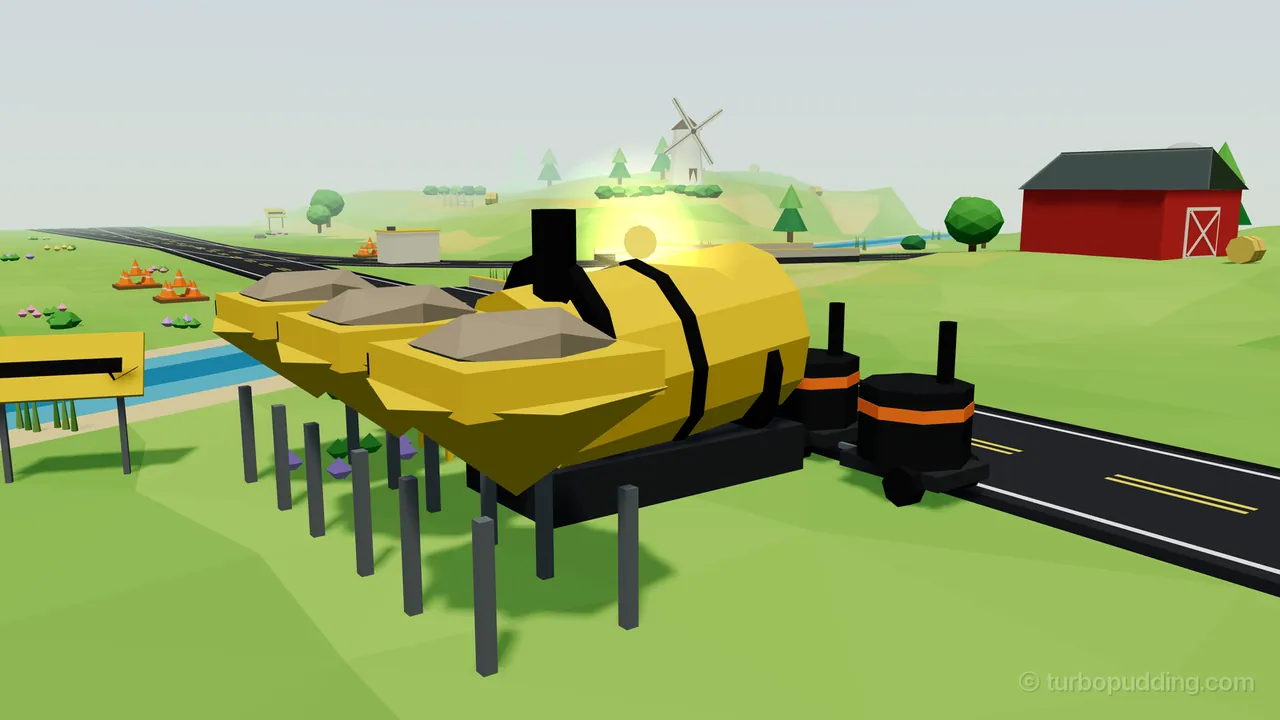
The Paver’s plants follow the same plan: three yellow Aggregate Bins heaped with stone on tall legs, a sloping Conveyor, the big yellow Drum Mixer in the middle and three black Bitumen Kettles on the other side. When Wren spots one in Fresh Tarmac, the plan is short: “Asphalt plant ahead. Unplugging it.”
Why the meadow minds
The EPA explains that forests, wetlands and grasslands trap rain and melting snow and let the water filter slowly into the ground. Roads, parking lots and rooftops don’t let it soak in, so it runs off. A typical city block makes more than five times as much runoff as a woodland of the same size.
Pavement also gets hot. In a pilot study in Arizona, asphalt reached surface temperatures of up to 152°F at midday. A meadow is a lot nicer to fly over.
World 1, Greenfold Meadows, is free to play in your browser at helicorn.com. The full game, all six worlds, is $4.99, paid once. More about the game is on its Helicorn page.