Turbo Pudding
The Thousandleaf Isles aren’t on any map. But a lot of the animals that get in Tavo’s way are very real, and some of their best tricks in the game come straight from nature.
Every creature in Jungaloo is under the Baron’s Dazzle, a pink and violet glitter. Knock it off with a fruit or a jump, and the creature sneezes and runs off about its own business. Nobody dies. Each one also shows a tell before it attacks. It’s Thursday, so here are five of them and the true stories behind their tells.
The potoo that plays a branch
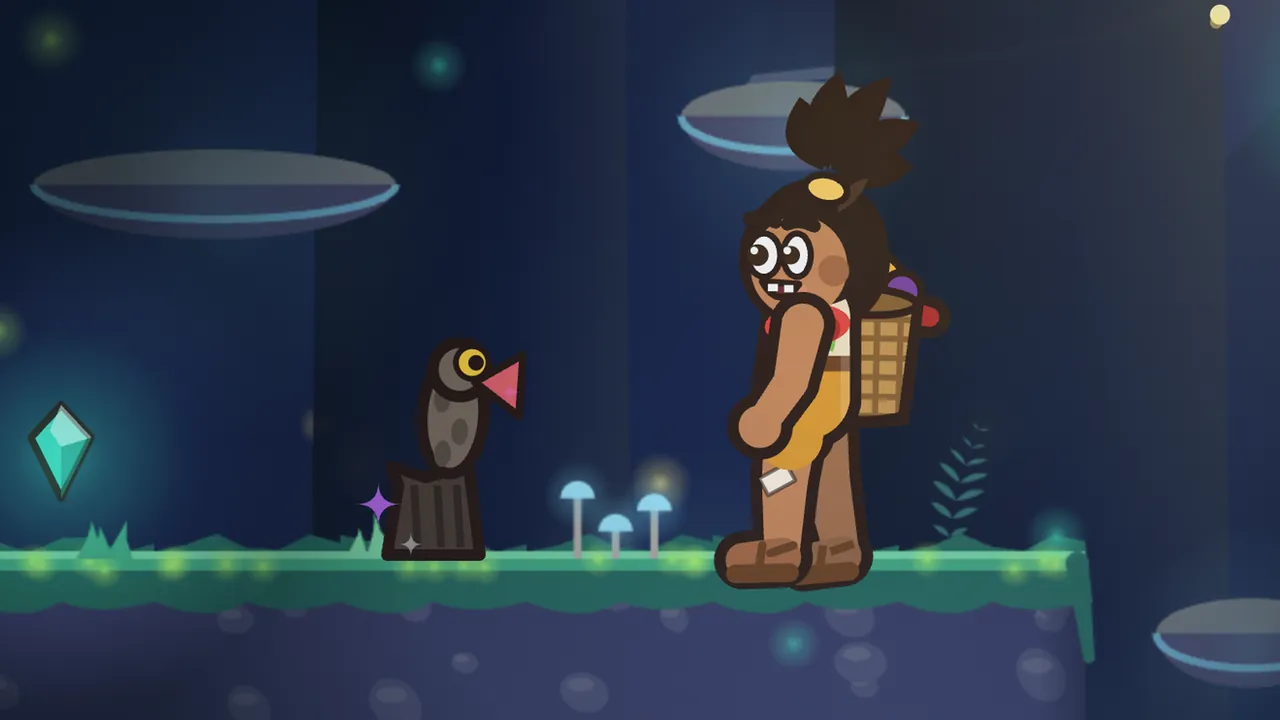
In the Glowwood, the night level, some tree stumps aren’t quite stumps. The top of a broken snag turns out to be a potoo, a gray-brown bird that sits so still you could walk right past it. When Tavo gets close, it gapes, pink mouth wide open. That’s the tell. Less than half a second later, it lunges.
Real potoos live in the forests of Central and South America. A potoo spends the day perched on the end of a broken branch, in feathers that look like bark. When it senses danger, it slowly stretches up, points its bill at the sky and freezes into one more broken stub. Small slits in its upper lids let it see movement even while it looks fast asleep. Its mouth is huge, made for catching insects in flight after dusk. And if a predator comes too close anyway, a potoo may drop the act and open its eyes and mouth as wide as they go.
The flower with arms
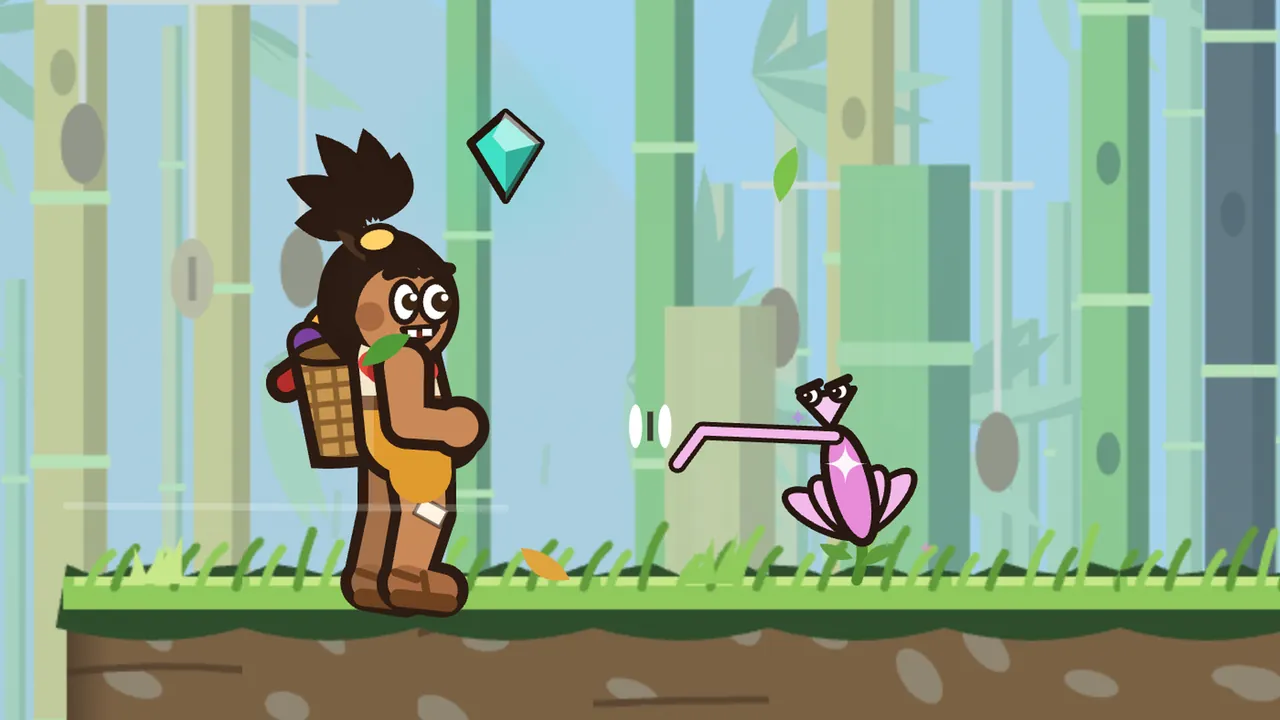
High up in Windharp Heights, the bamboo level, a pink orchid grows by the path. Look closer, and the petals are legs. It’s an orchid mantis. When Tavo comes near, the flower rises and opens two folded arms, swaying. Then it strikes.
The real orchid mantis lives in Southeast Asia, and it really does look like a flower, pink and white, with legs shaped like petals. People long thought it simply hid among flowers. In 2014, researchers at Macquarie University in Australia tested it. To bees and other pollinators, the mantis’s colors looked just like real flowers. And a mantis sitting alone, with no flowers around, drew pollinators at a higher rate than a real flower, and caught them. It doesn’t hide among the flowers. It is the flower.
The rock that puffs up
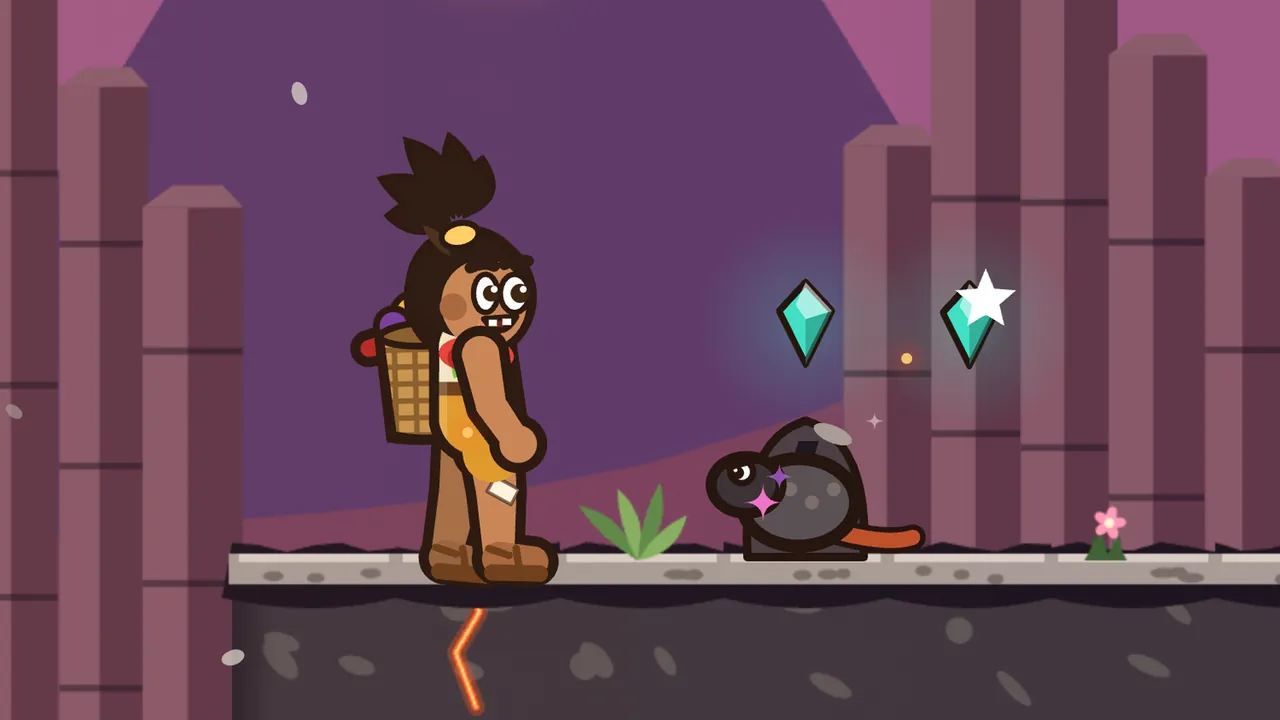
On Ember Peak, the volcano, some cracks in the gray rock have an eye in them. That’s a chuckwalla, a big lizard wedged into a cleft. When Tavo comes near, it puffs itself up in the crack, then lunges, its rust-red tail flicking. We picked that tell on purpose, because it’s the chuckwalla’s real trick.
Chuckwallas live in the rocky deserts of the southwestern United States and northwestern Mexico. When a predator shows up, a chuckwalla dives into a crack and fills its lungs with air until it’s wedged in tight. Pull all you like, it won’t budge. When the danger is gone, it lets the air out and squeezes back out.
The frog you can see through
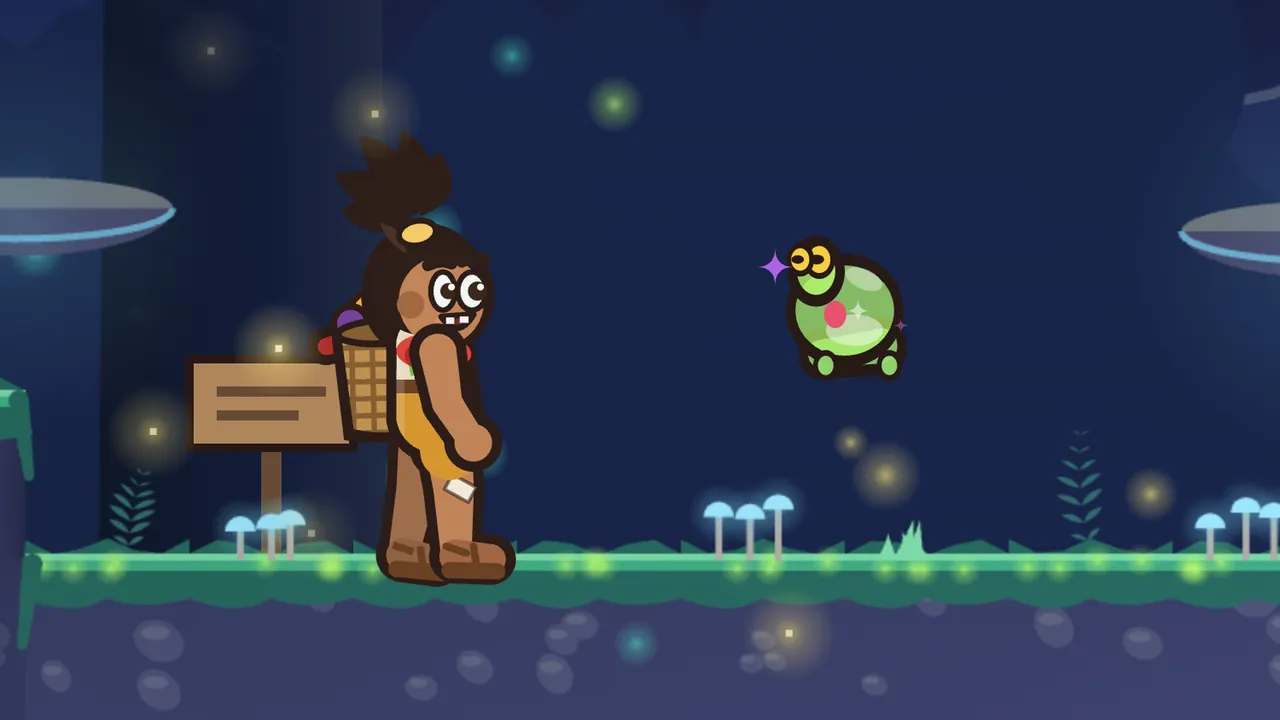
Back in the Glowwood, little green frogs hop between the glowing mushrooms. Their skin is see-through, and inside each one a small pink heart is beating. Watch the heart: when the frog crouches to jump, it beats faster, about a third of a second before the hop.
Glass frogs live in the rainforests of Central and South America, and many have see-through skin on their bellies. In 2022, scientists from Duke University and the American Museum of Natural History found an even better trick. A resting glass frog becomes two to three times more transparent by moving about 89 percent of its red blood cells out of circulation and into its liver. When the frog gets moving, the blood comes back, and so does its color.
The bird with the bottle cap
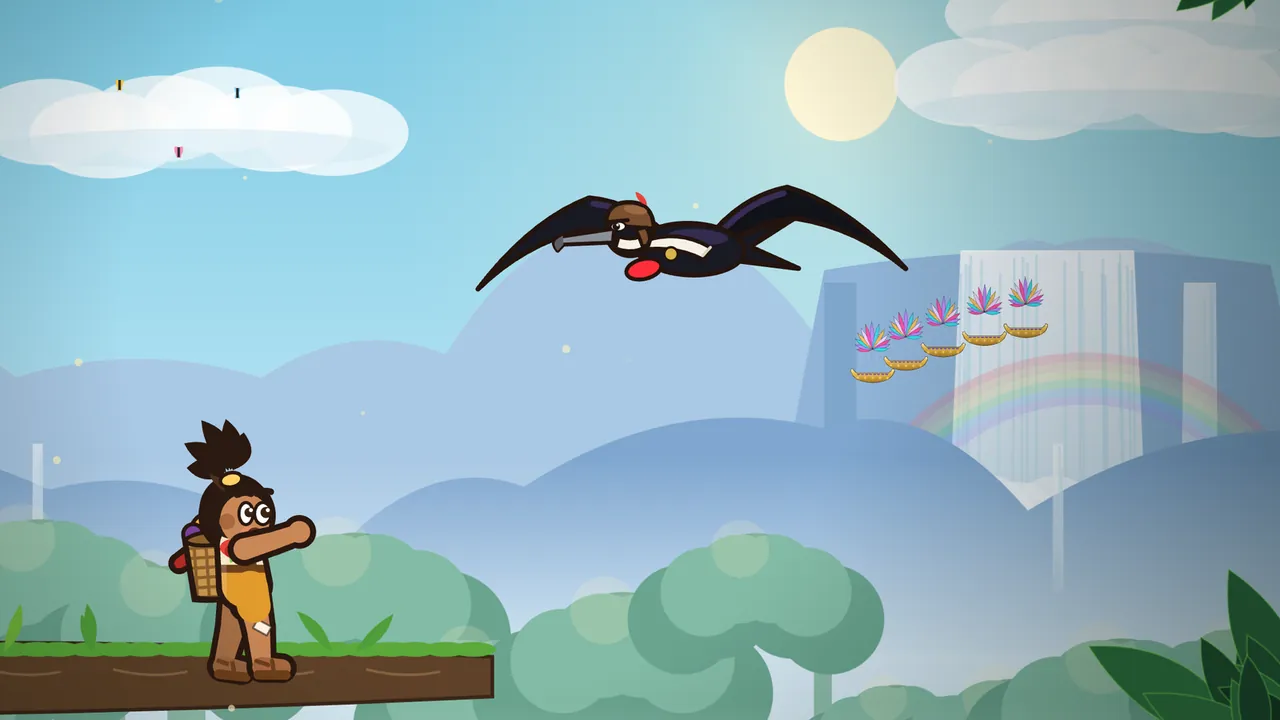
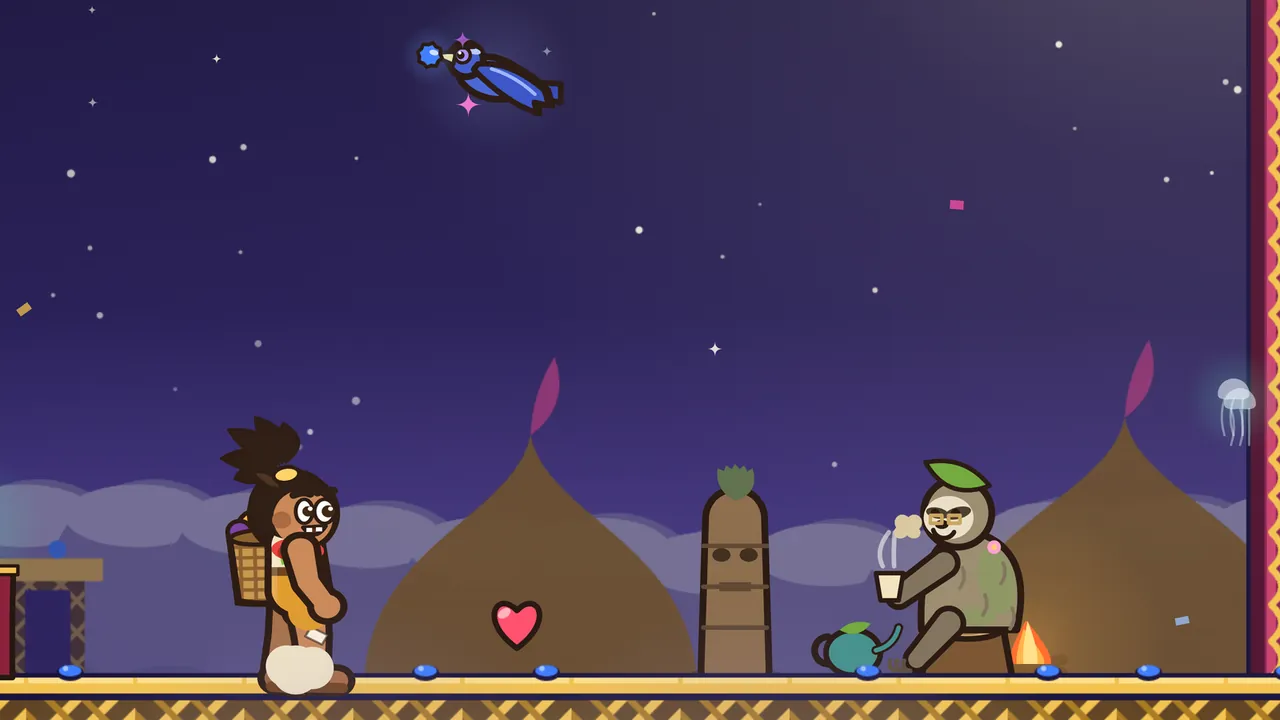
Remember the bottle cap on Captain Bellows’s chest? Above Plumehall, the Baron’s palace in the sky, glossy blue birds hover in the moonlight. They’re satin bowerbirds, and they collect blue things for the Baron’s bower. Before one dives at Tavo, it hangs in the air, flaps hard and shows off its best find: a blue bottle cap.
The real satin bowerbird lives in eastern Australia. To impress a female, the male builds a bower, a little avenue of sticks on the ground, and decorates the ground around it. He loves blue: feathers, flowers, berries and, from people, bottle tops, drinking straws and clothes pegs. Researchers have found that males strongly prefer blue over other colors. So a bowerbird with a bottle cap isn’t a joke we made up.
Nearby, on the Star Balcony, Old Lento the sloth sips tea by his campfire: “I’ve been… climbing… since Tuesday. Worth it… for the view.”
Meet them in the jungle
Levels 1–3 and the first boss are free to play in your browser at jungaloo.com, and the full game is $4.99, paid once. More about the game is on the Jungaloo page.