Turbo Pudding
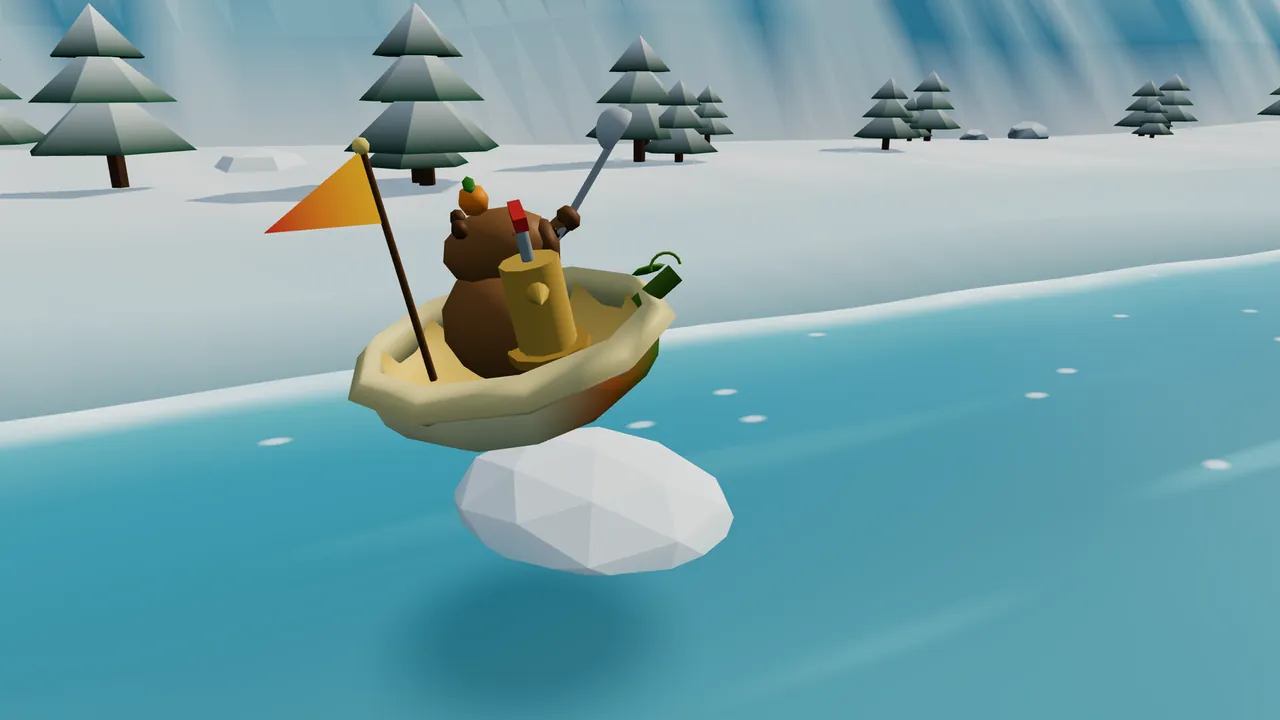
Calving Wall is the fourth leg of Glacier Gate in Kettlecrest, the last one before Frostlog Dam. It runs right under the glacier’s tongue: a tunnel of blue ice, a three-way split and a wall that drops floes from both banks. It’s Tuesday, so here is how to run it, from the start rope to the bell.
The picture at the top is Fennel at the wall itself, hopping clean over a floe in his half pumpkin.
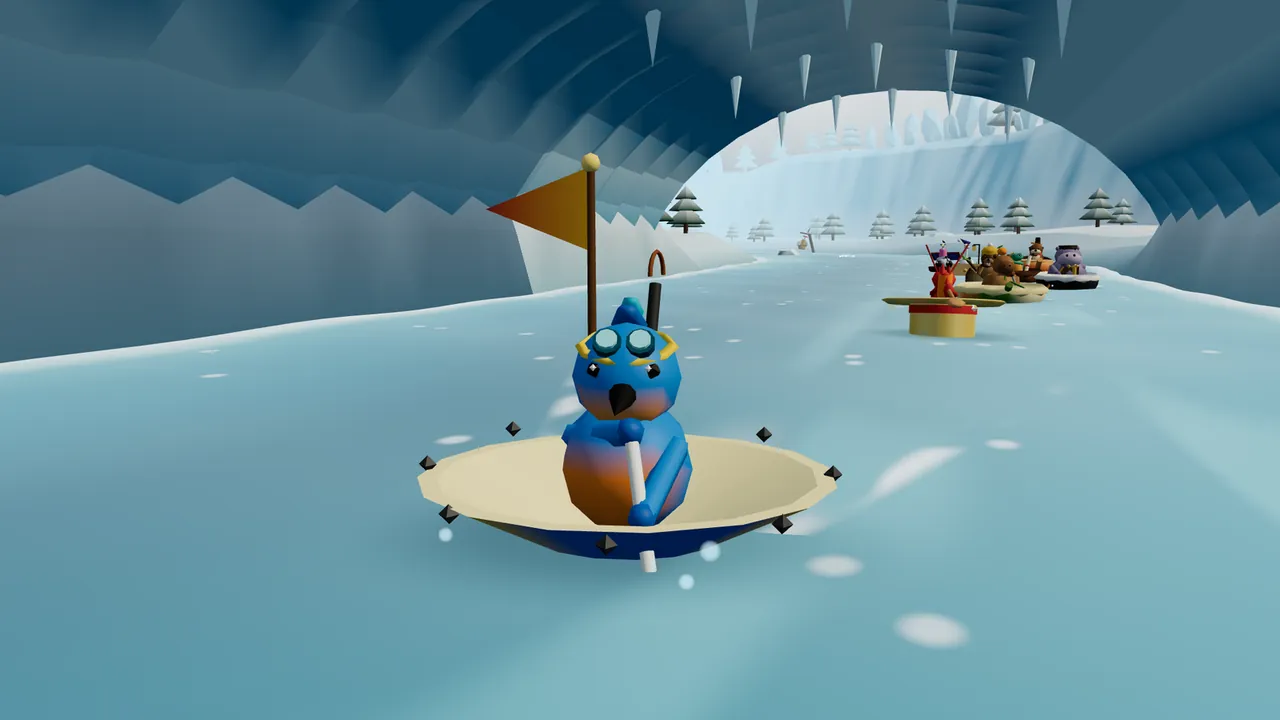
Into the ice tunnel
In the first bend, a picnic basket hangs in the branches on the left bank with a Splash Pump inside. Then the banks turn to cliffs, and the river runs into a tunnel of blue ice hung with icicles.
Narrow water makes taller surges, and in the tunnel and the stretch after it they grow bigger than at the start: a good place to catch a ride. Past the tunnel, keep to the right: slush ice covers the left side of the river, and slush slows down any boat that crosses it.
Three ways through the Braids
Then comes the Braids. The river splits around two gravel islands into three channels at once. The middle one is the river itself: the surges keep rolling down it, two rocks sit in the way, and a basket with a Ripple Rattle waits on the left side. Shake the rattle just before a surge reaches you.
The side channels are narrow. The left one has a gravel bar along one side, and its water runs faster than the water in the middle. The right one has a rock and a basket with a Tow Line.
Here is the secret. The surges don’t run in the side channels, and a boat that slides into one while riding a crest slips right off it. So if you want a side channel, drop in before the fork and take the speed with you.
The River Note for this leg says “Take a side channel,” and either one earns the pebble. The note is Sorrel’s: “The side channel is forty metres shorter. I measured. Twice.” We measured too, and we’ll let Sorrel keep that number.
Reading the Calving Wall
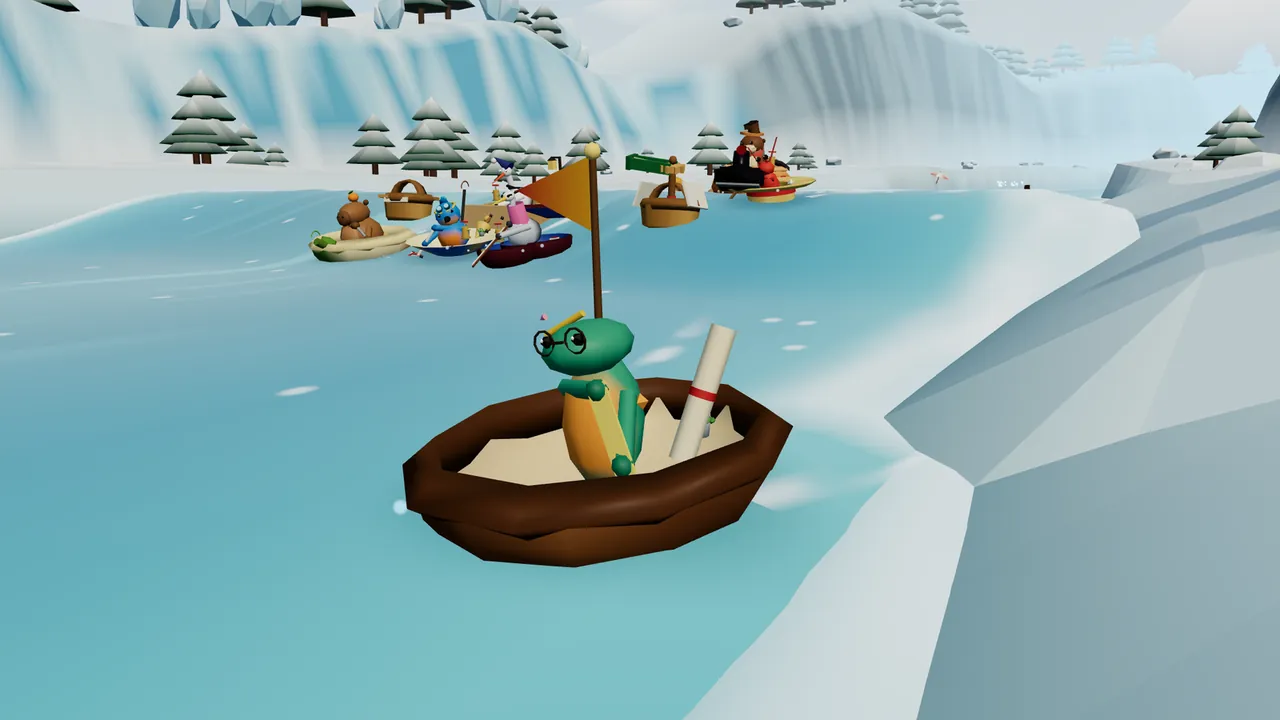
After a left bend, the Calving Wall begins. Four spots along the banks take turns dropping floes, left, right, left, right, each one every eight or nine seconds.
A floe always gives you warning. About two seconds before it breaks off, the ice on its bank glitters and you hear it crack. Then it breaks away with a plop and drifts downstream, slower than any boat. Floes start a few meters out from each bank and drift straight down their own side, so the middle stays clearest.
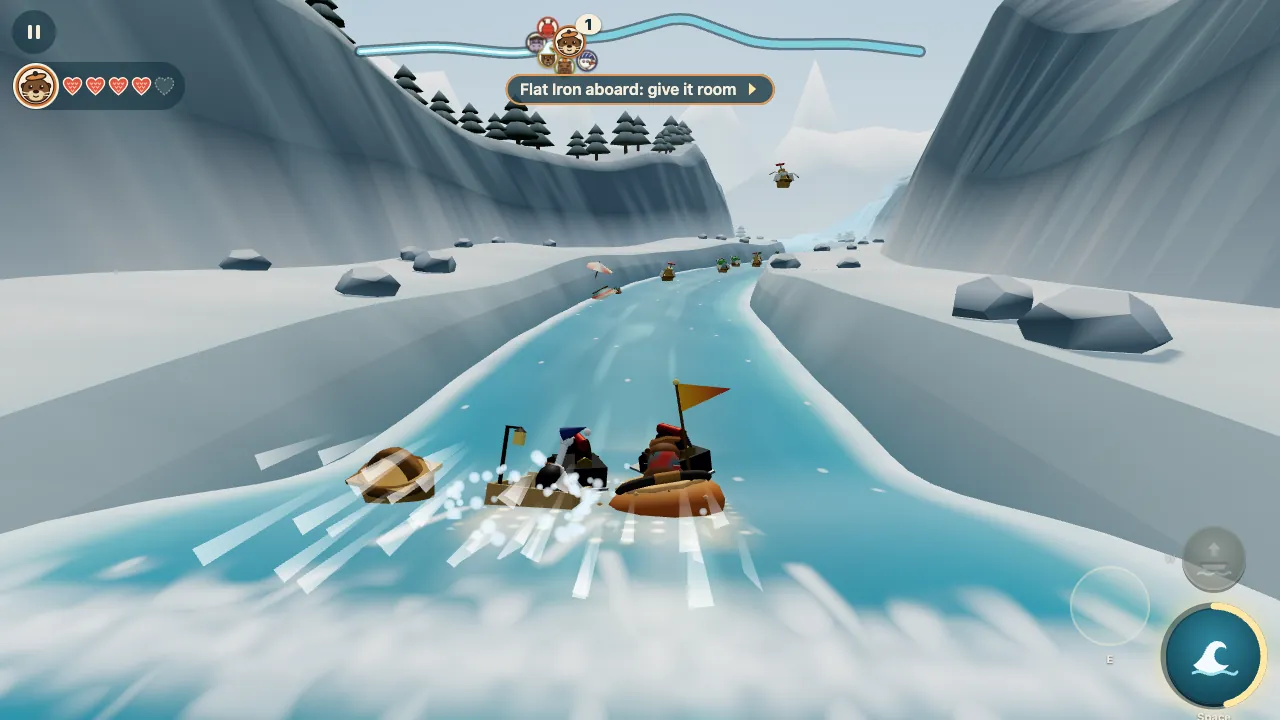
The bravest line goes right. Halfway along the wall, a basket hangs off the right bank with a Picnic Blanket inside, and to reach it you have to cross the floes on that side. If one is in your way, hop. A hop lifts the boat more than a meter for most of a second, floes pass under it, and the Hop button glows when a hop would clear something. Hit one hard instead, and it costs one of your knitted hearts. You start with three. Lose the last one, and the next knock rolls your boat over.
Spread the blanket in the bend
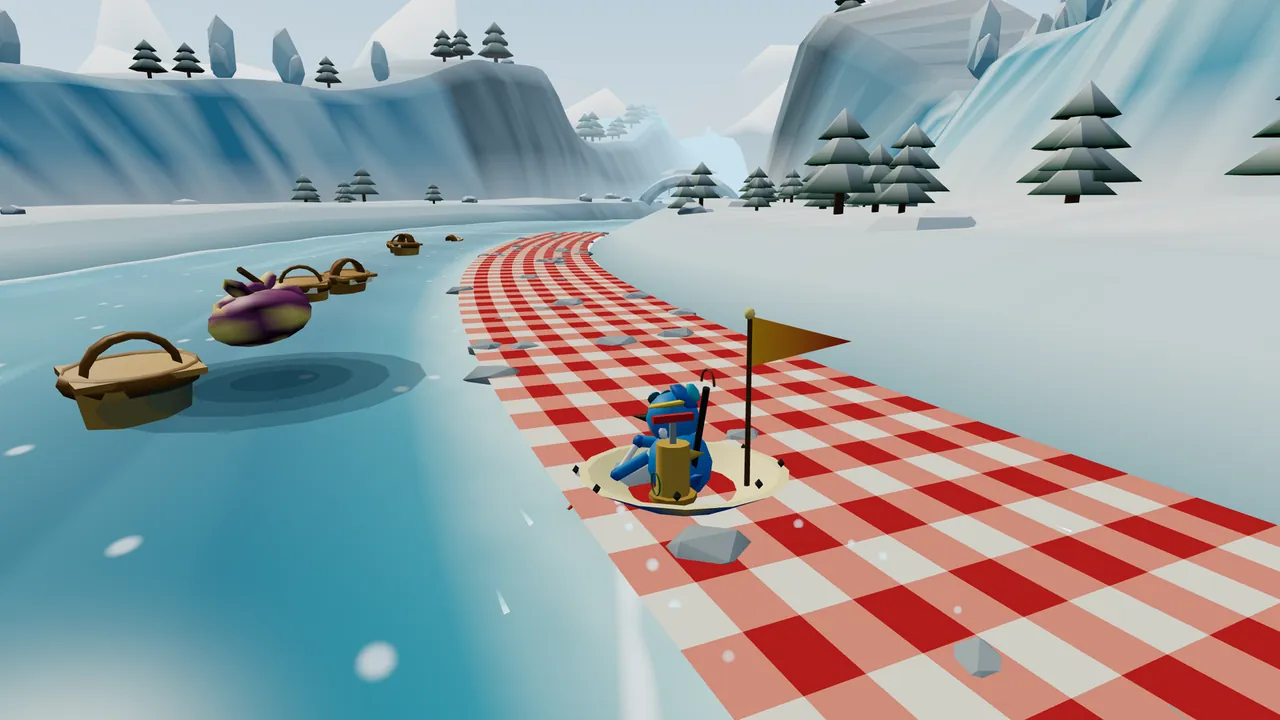
Right after the wall, the river swings to the right, and a gravel bar fills the inside of the bend. By our count, the inside line is about 20 meters shorter than the outside. On gravel, though, a boat runs at 62 percent of its speed and steers at 60 percent, and the fast water stays on the outside.
That’s what the blanket is for. With a bar ahead of you, the Use button reads “Bar ahead: spread it.” Spread it, and for six seconds the gravel under it is like open water. It works for anyone right behind you, too.
The gorge and the bell
Then the cliffs close in. The gorge is half as wide as the river at the start, and the surges there stand taller than anywhere else on the leg. Ride one under the arch of ice and drop in on the steep face: the steeper the face, the bigger the push.
Among the seracs, slush covers the right side, with a rock just left of the middle and a Splash Pump in a basket on the right bank. On the run-in, three rocks sit in a row, and a Flat Iron hangs off the left bank: six shove-proof seconds for the final sprint. Then the river widens, slows and brings you to the bell.
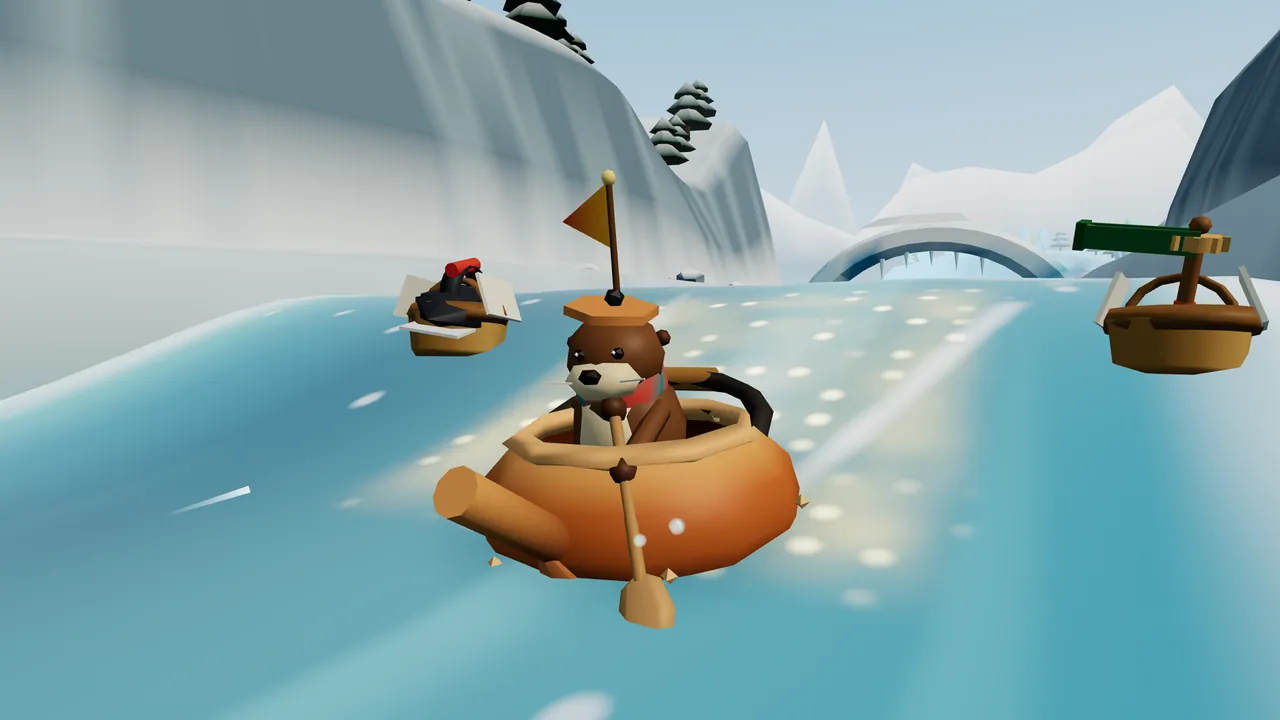
Once you know the line, try it alone. In Lone Paddle, the River Mark for Calving Wall is 94.5 seconds at High Water, 108.5 at Low Water and 86.5 in a Flood.
The first two reaches, Glacier Gate and Pinewood Rapids, Calving Wall included, are free to race at kettlecrest.com, on a computer, tablet or phone. The full game, all six reaches to the sea, is $4.99, paid once. More about the game is on its Kettlecrest page.