Turbo Pudding
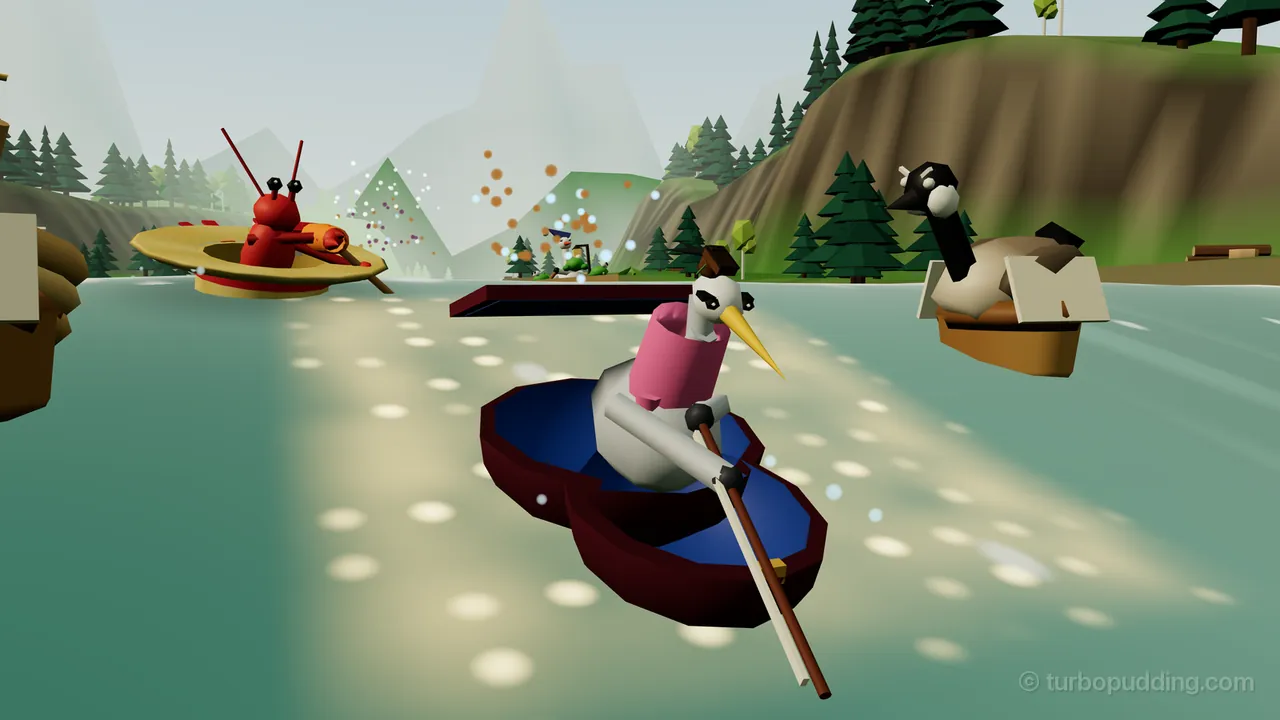
In Kettlecrest the river is the star, so we wanted the music to act like a river too: change as you go downstream, swell when the water lifts you and warn you about the next bend. Here is how it works.
Every reach has its own band
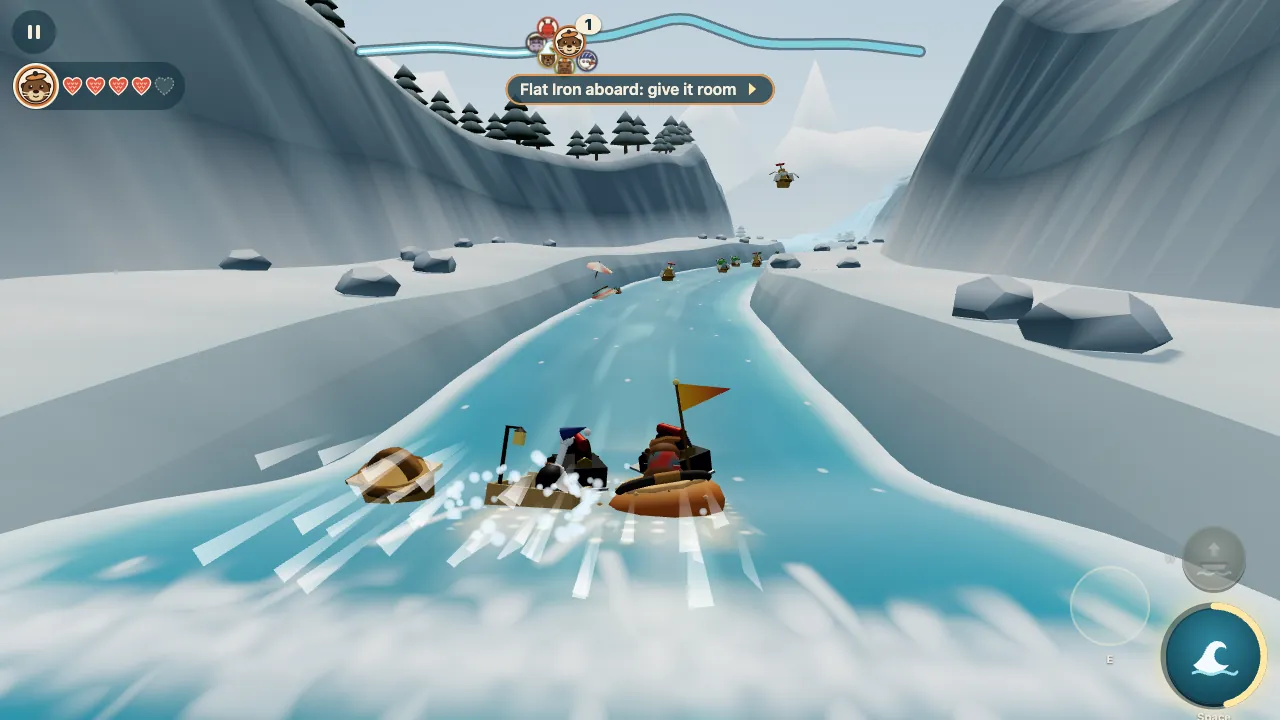
Each of the six reaches of the Long River has its own song, and every melody is our own. Glacier Gate plays “Meltwater Glass,” a slow walk on glass harmonica and chimes. Pinewood Rapids gets “Pine Needle Reel,” a fiddle over banjo rolls and a stomping floor. Chalkstep Terraces has kalimba steps over hand drums.
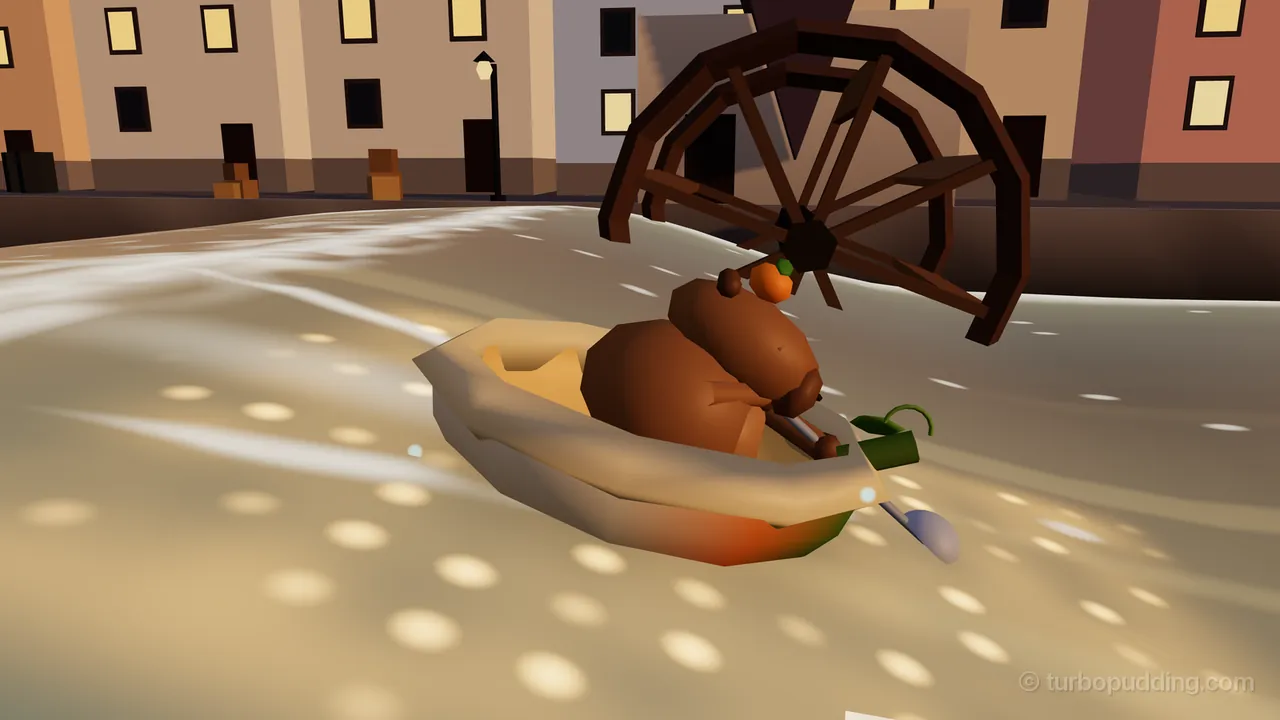
Millrace Town plays “Lamplit Canal,” a quick tune in three, like a fast waltz, for accordion and mandolin. Tangle Delta has a marimba over a lazy bounce, with frogs answering from the reeds. Bell Mouth brings a brass band on the quay and a “hey-ho” choir.
The song knows where you are
Every song has four parts. The intro, two bars of bass and soft chords, is the river before the starting rope drops. Part A is the tune, part B the second tune, and part C the tune again with everything added: a second melody line, the tune doubled an octave higher and fuller drums.
A race walks through the parts by how far down the leg you are. A plays until you have covered 36 percent of it, B until 70 percent, and C carries you to the bell. The big finish arrives when the finish is near.
A change waits for the end of a four-bar phrase, never for a lap line, so the music never jumps mid-sentence. The tempo never changes. Part C gets busier, not faster.
Riding the crest
You hear a surge before you see it. A low rumble on the notes A and E grows as the wave rolls closer, and when it passes a third of its full strength, a soft three-stroke roll on a low hand drum tells you to get ready.
While you ride the crest, the music adds a layer just for you: the notes of the chord plucked one after another, an octave up, four to a beat, and a soft cymbal swell every two bars. Drop in and the layer goes.
A voice from beyond the dam
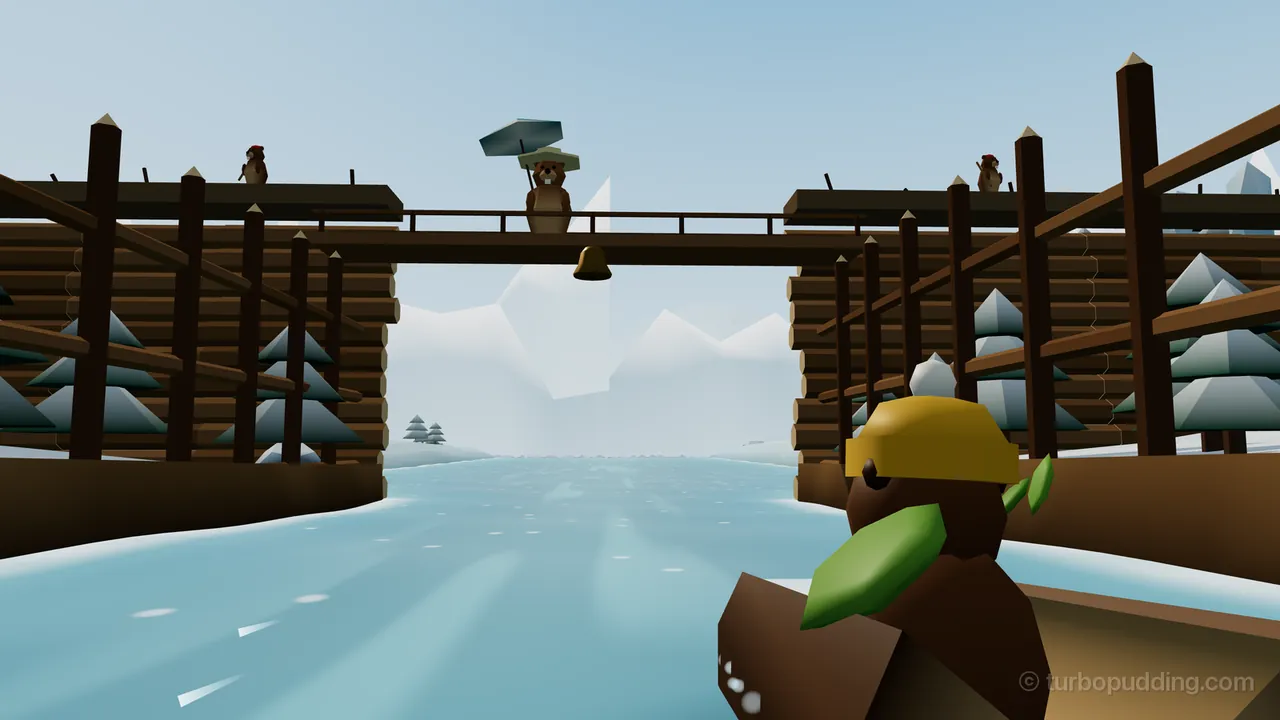
Five races are Dam Runs, each ending at one of Dame Dambury’s dams. On the last stretch, in part C, a new instrument joins the song: the voice of the next reach downstream. At Frostlog Dam you hear the fiddle of Pinewood Rapids, at Logjam Dam the kalimba of the terraces, and further down the town’s accordion, the delta’s marimba and the choir of Bell Mouth. The river beyond the dam is calling, and the bell is the way through.
Splashes on the beat
Before the river, one of our ideas for Kettlecrest had heroes bouncing down a course on giant drums, every bounce playing a note. That idea lost, but one piece of it stayed. Drop-ins, basket grabs and the finish bell ring a note that waits for the next eighth note of the music and fits the chord playing at that moment. The wait is never more than about half a second, so it still feels instant.
A clean drop plays three rising notes from the chord together with your hero’s own little tune. The finish bell rings on the note the chord is built on, so the last sound of a race always fits.
Hearing the river ahead
The river’s traps warn you. A lock lantern ticks before its board thuds down. A mill wheel creaks before its paddles churn. Ice cracks before a floe breaks off, and a log jam groans before a log rolls out, thump, thump, thump.
You hear these warnings from up to 150 meters ahead. They used to carry 110 meters, but the boats got faster, so we stretched it to keep each warning the same number of seconds ahead.
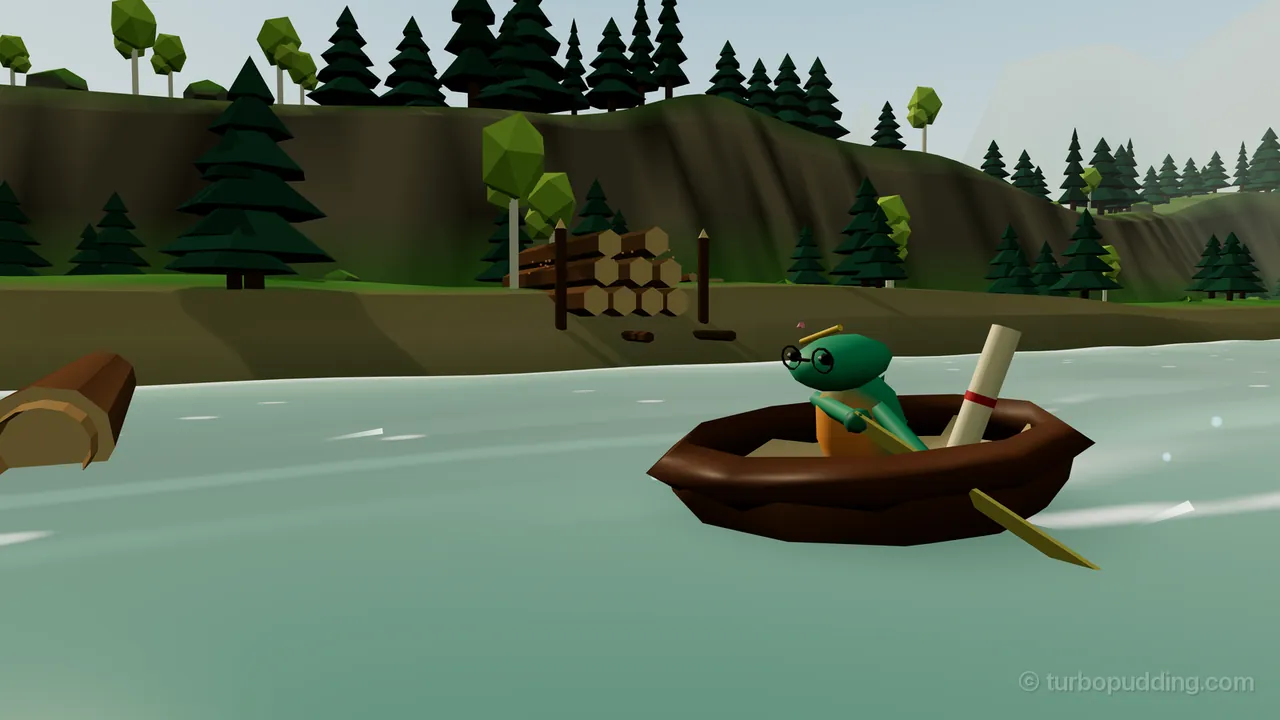
Rivals’ sounds fade with distance and go quiet beyond 45 meters, and each kind of sound plays at most once every fifth of a second. Six boats scraping one rock never turn into a drum roll.
Fixing the crackle
The game once crackled. We recorded its sound and counted 385 to 455 clicks in a single race. The cause was tiny: every new sound started at full volume for a split second before its fade-in, and one hi-hat cymbal came out 20 times too loud. Now every sound starts from silence, and the count is zero.
We also rebuilt the paddle stroke. The old one was a rising whoosh, too close to a speed boost and louder than the music. The new one is the wooden knock of the blade, water drawn back past the boat and a drip. Catching a surge now sounds like a soft swell and three bubbles rising: do, mi, sol. No engines. This is a river.
The first two reaches, Glacier Gate and Pinewood Rapids, are free to play in your browser at kettlecrest.com. The full game, all six reaches to the sea, is $4.99, paid once. More about the game is on its Kettlecrest page.