Turbo Pudding
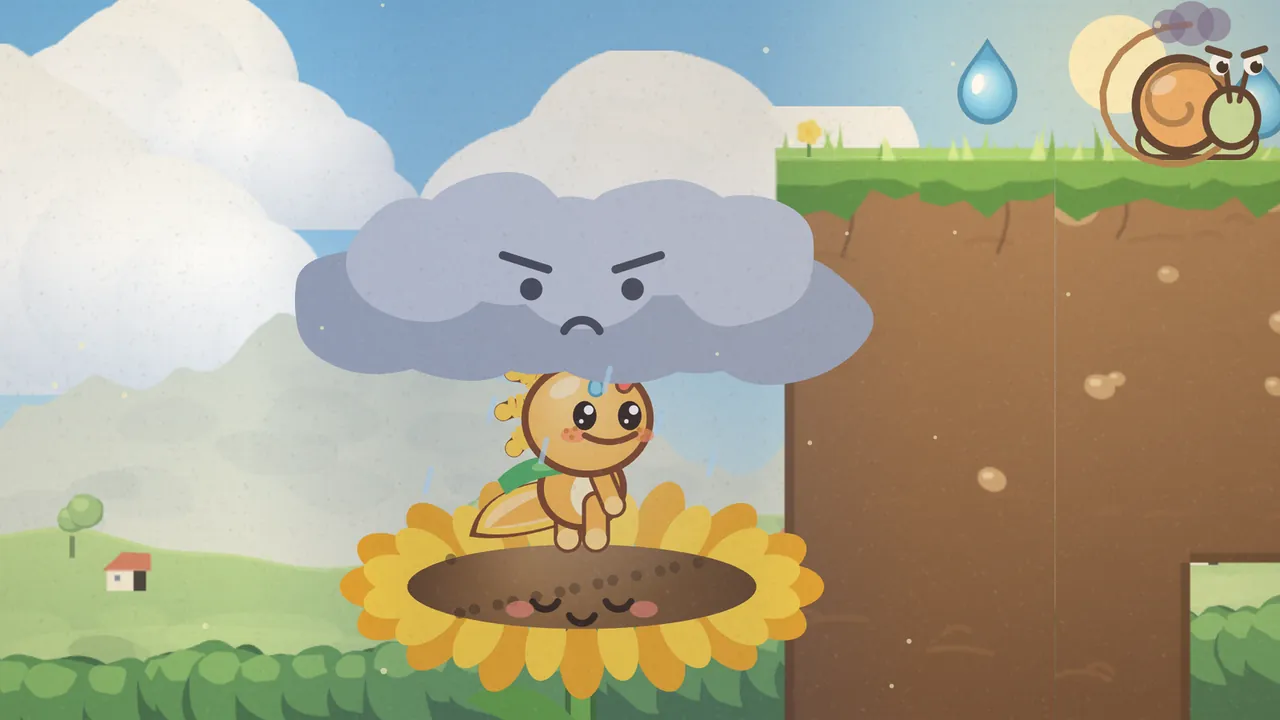
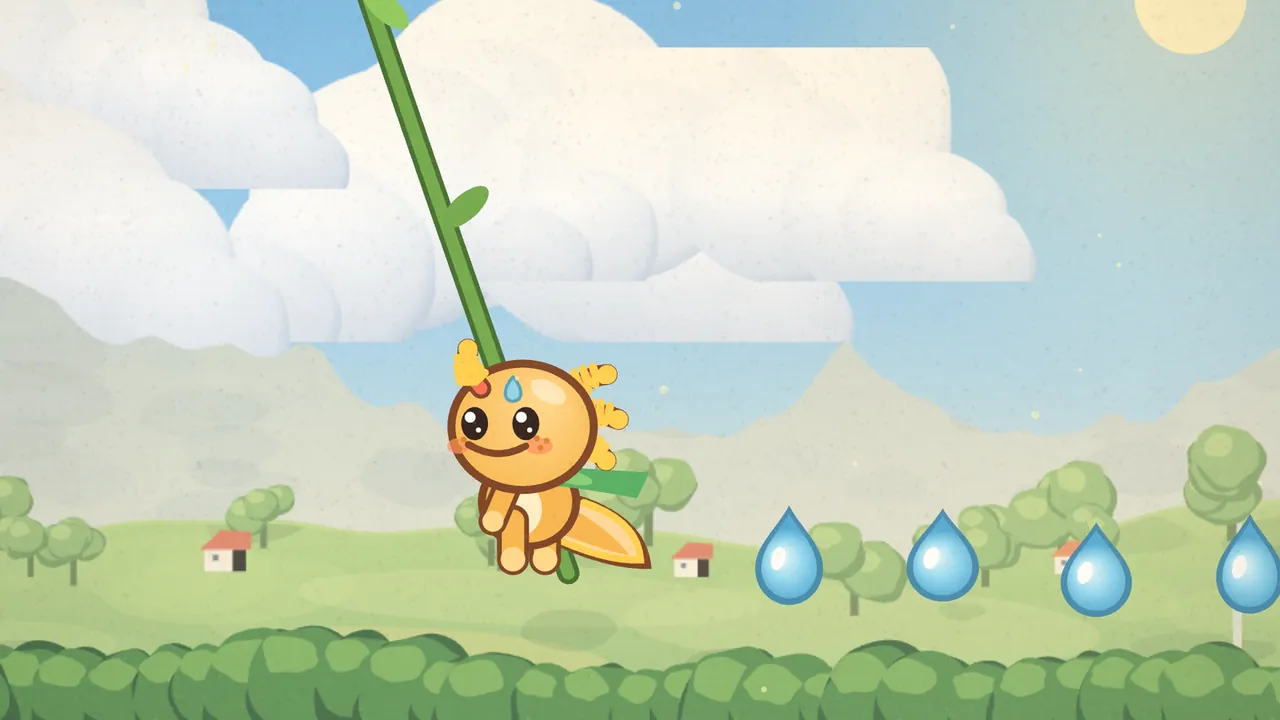
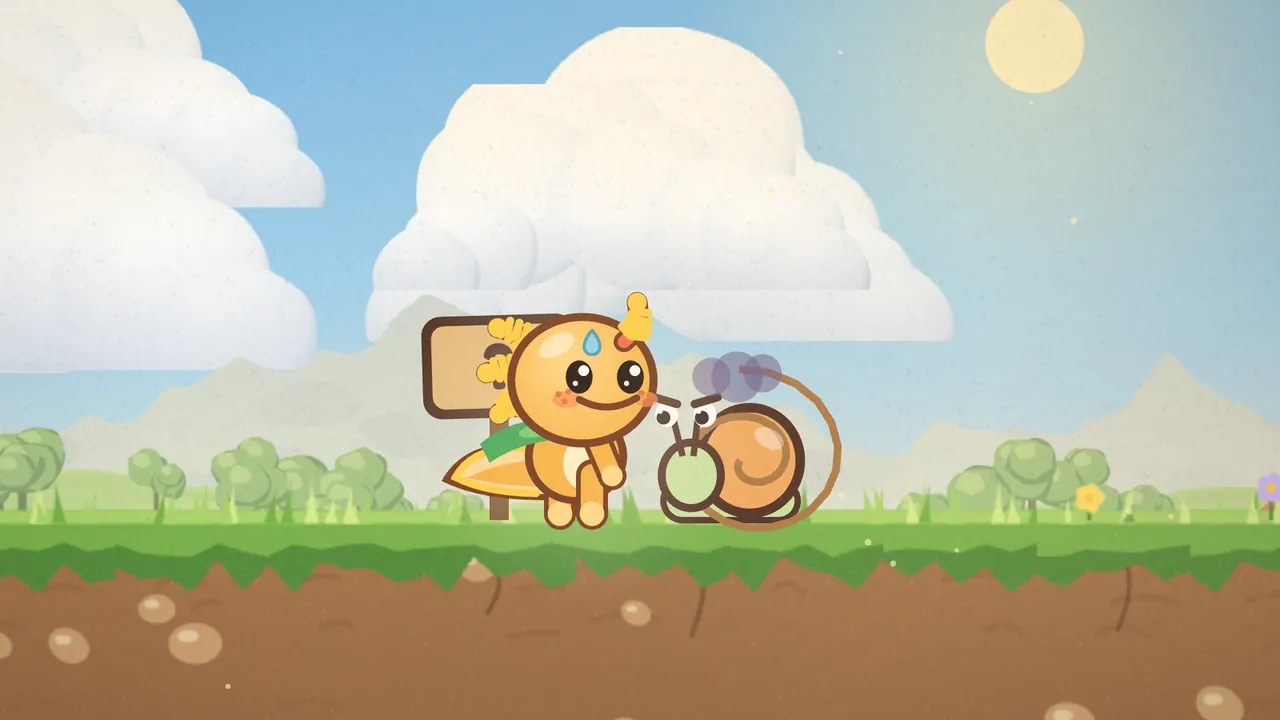
Pitterplop doesn’t load a single image file. Gilby, the clouds, the grass and every lantern are drawn by the game itself, in your browser. It’s Sunday, so we’re opening the sketchbook to show how the Whispering Meadow gets painted.
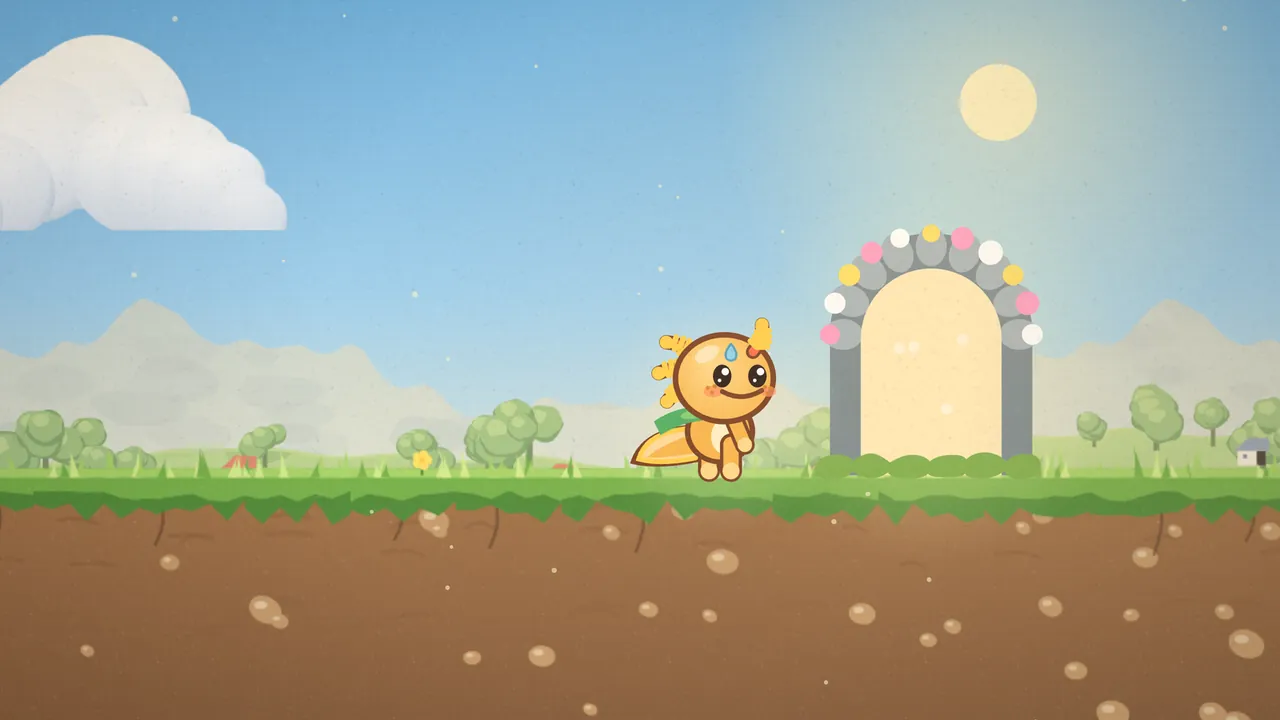
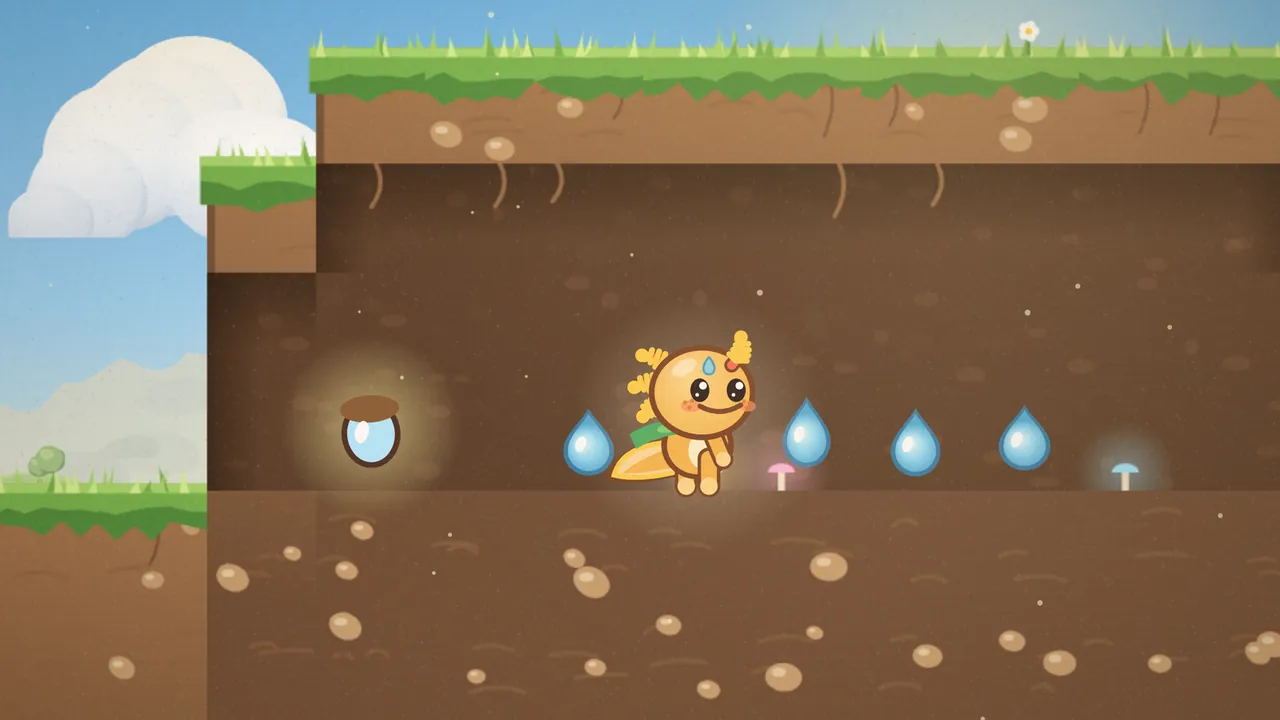
The picture at the top is the end of Dewdrop Meadow, the very first level. The round door in its stone arch is open and glowing, and Gilby is one hop away.
An afternoon in the countryside
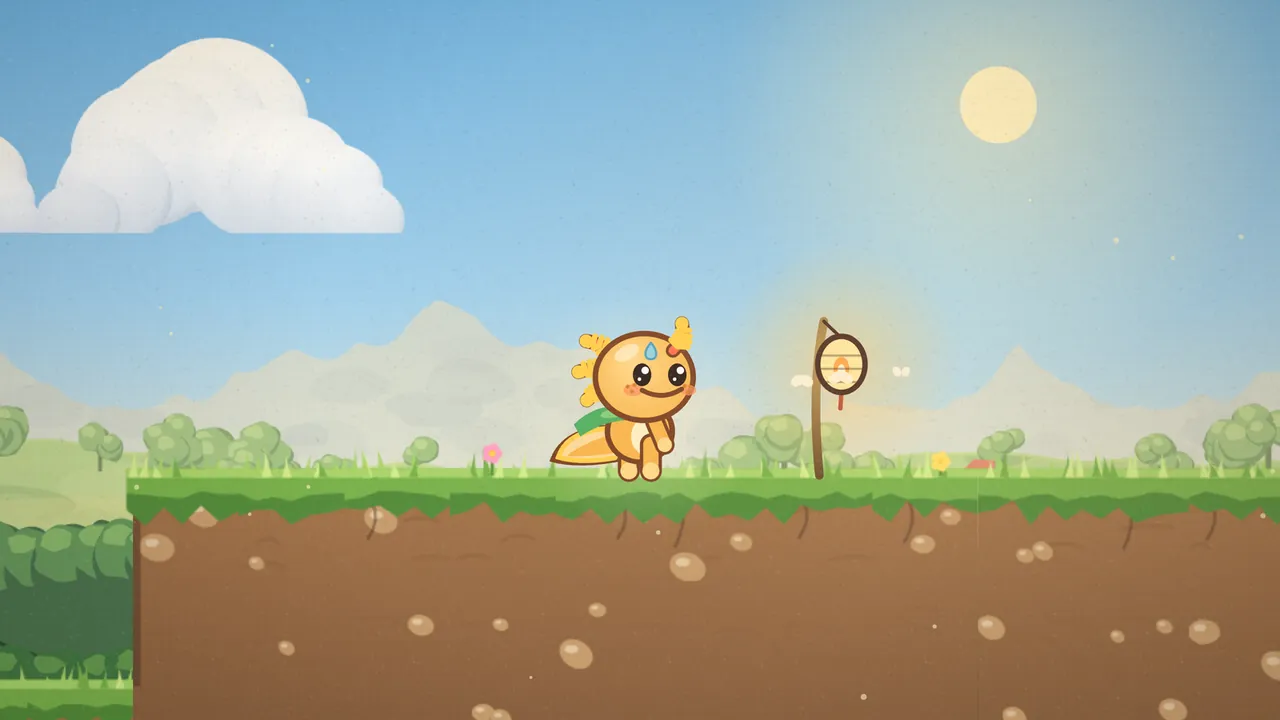
Before we drew anything, we wrote the look down in one line: the warm colors of an afternoon in the countryside. Saturated skies, big soft clouds, sunlit greens. In the meadow, the sky runs from clear blue at the top to pale cream near the horizon.
Everything is made with a handful of brushes. One draws a blob whose edge wobbles a little, like a shape cut out of paper by hand. Another lays a watercolor wash: several see-through copies of one shape, each shifted a little, so the color gathers darker at the rim, the way real paint dries. A third makes paper grain: speckles and fibers laid over the whole picture.
Clouds with folds
A cloud is a row of round puffs, tallest in the middle. Each puff is lit from the upper left, and the higher puffs are tucked behind the lower ones, which is what gives a cloud its folds. Then a cool shadow gathers along the flat underside, a warm glow settles on the sunny top, and the bottom edge melts into the sky.
To keep things fast, each cloud is painted once, when a level starts, and then simply copied across the sky as it drifts.
Four strips of scenery
Behind the meadow stand four painted strips. Farthest back are mountains with snow on their peaks. Then come hills with fields and a village of seven houses with cream walls and red, rust, orange or slate-blue roofs. Then a forest, and closest of all, bushes. The trees are round, a few blobs for the crown, darker underneath and lit from the upper left.
Each strip is 2,048 pixels long and repeats as you run. So its ridge lines are built from waves that fit the strip a whole number of times, and anything near an edge is painted at both ends. The strips also slide at different speeds: the mountains at 8 percent of the camera’s speed, the bushes at 60. That difference is what makes the meadow feel deep. Distant strips fade into the color of the horizon, the way far hills look hazy on a bright day.
The ground under Gilby’s feet
The ground is painted in square pieces, eight tiles by eight, the first time the camera comes near them. Each tile gets its own random seed and also looks at its neighbors, so the pieces fit together. The earth has thin strokes for its layers and round pebbles. Along the top runs a tuft of turf: a soft green band with drips hanging underneath, blades of grass on top and a flower here and there, white, yellow, pink or lilac.
Secret earth is our favorite trick. It sits on a separate layer that fades away when Gilby steps inside, showing a snug little hollow with roots hanging from the ceiling and tiny glowing mushrooms on the floor.
Little lights
Checkpoints are little paper lanterns on reeds. Until you pass one, it hangs dark and papery. Then a warm flame wakes inside, glowing through the paper, and a few moths drift in to circle the light.
The end of each level is a round door in a mossy stone arch with a garland of flowers across the top, and once it’s open, it glows. The keepsakes hidden in the levels come in three kinds: a pearl shell, a star seed and a crystal acorn.
The finishing pass
Last of all, the whole frame gets one more layer: warm light from the sun, a soft darkening toward the corners and the paper grain, laid on at a little over half strength. On top of that drift the motes. The meadow has floating pollen, the woods have falling leaves, and the darker places have fireflies.
Other worlds, other light
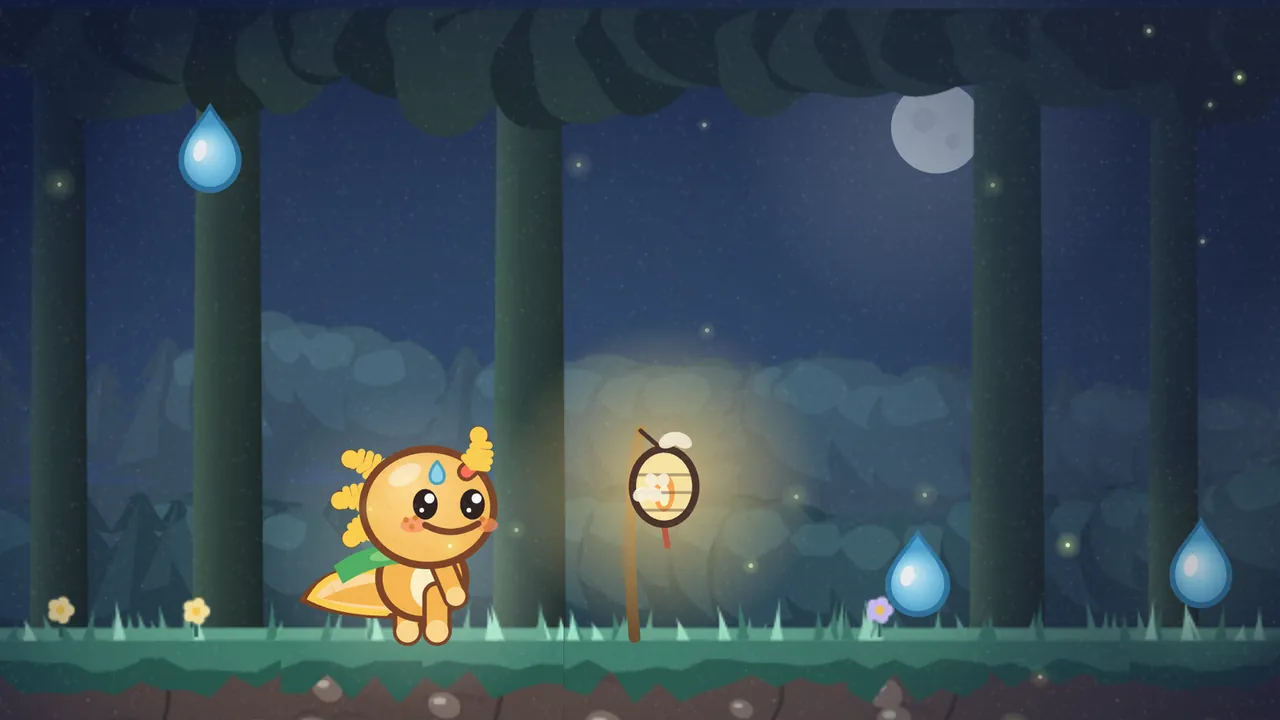
The same brushes paint Mossy Hollow, the second world, in a different light. Glowcap Hollow is the woods at dusk under a thick roof of leaves, with teal shadows, a violet sky in the gaps, a moon, glowing mushrooms in the undergrowth and fireflies all around.
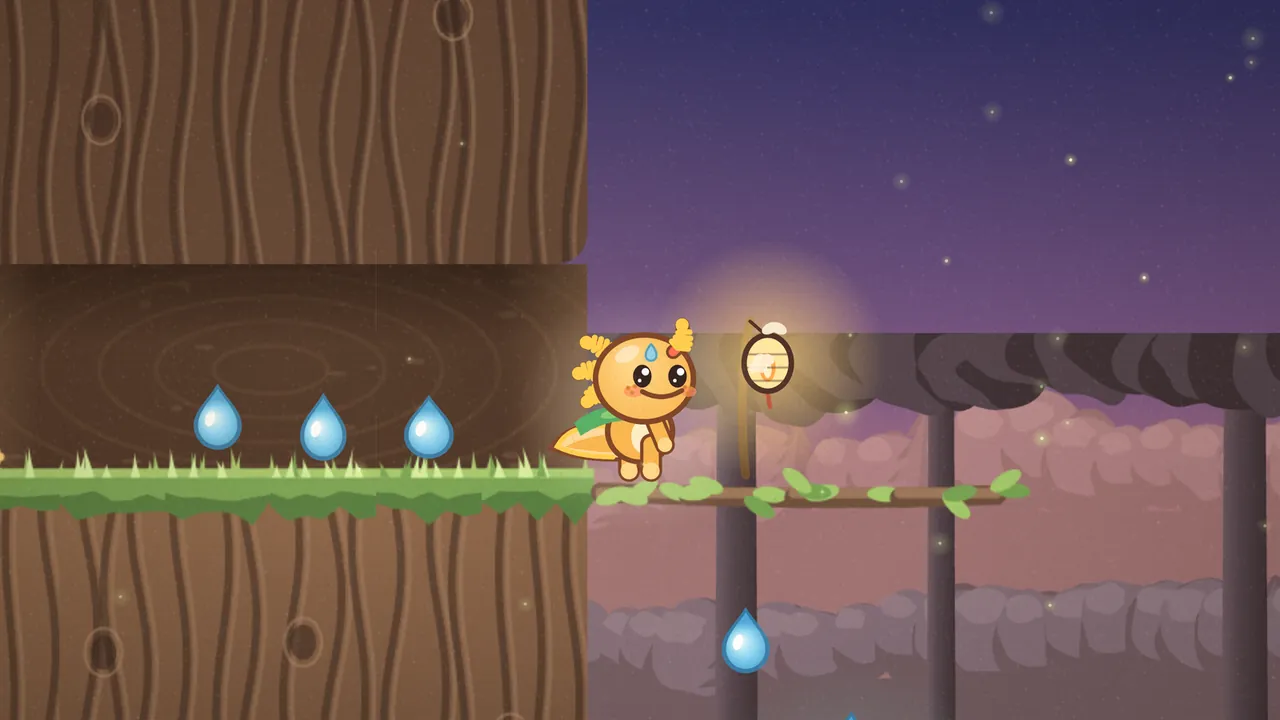
Old Oak Climb goes straight up a giant tree. Its sky is apricot going plum, the woods sink away below as you climb, and the ground is bark: deep wavy grooves that join from tile to tile into long furrows, with a knot here and there. Where the trunk opens into a knothole or a hollow, you see dark heartwood with growth rings on the back wall.
The first two levels of Pitterplop are free to play in your browser at pitterplop.com. Mossy Hollow, with Glowcap Hollow and Old Oak Climb, comes with the full game, $4.99, paid once. More about the game is on its Pitterplop page.