Turbo Pudding
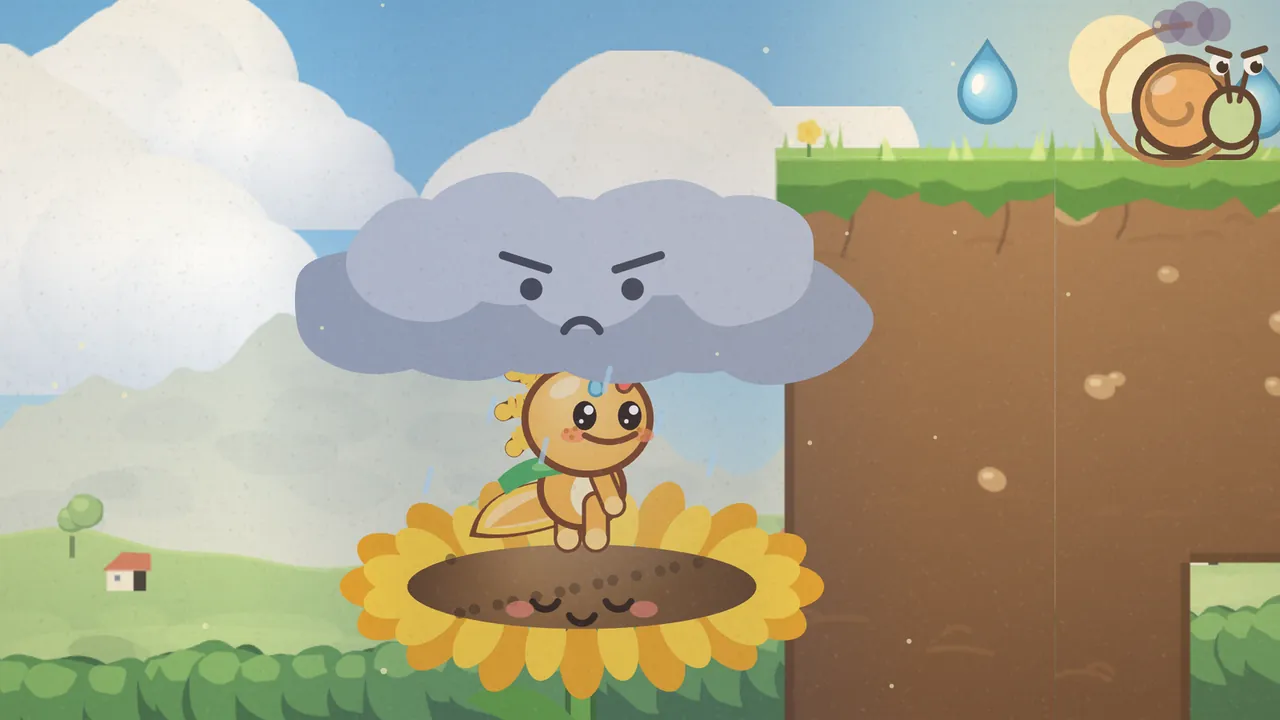
Pitterplop speaks six languages: English, German, Spanish, French, Portuguese and Russian. It opens in the first of your browser’s languages that it knows, and the globe button in the corner switches to any of the others. Gilby the axolotl keeps his name, but the boar, the badger, the moth and the hail twins all got new ones. It’s Friday, so here’s who’s who.
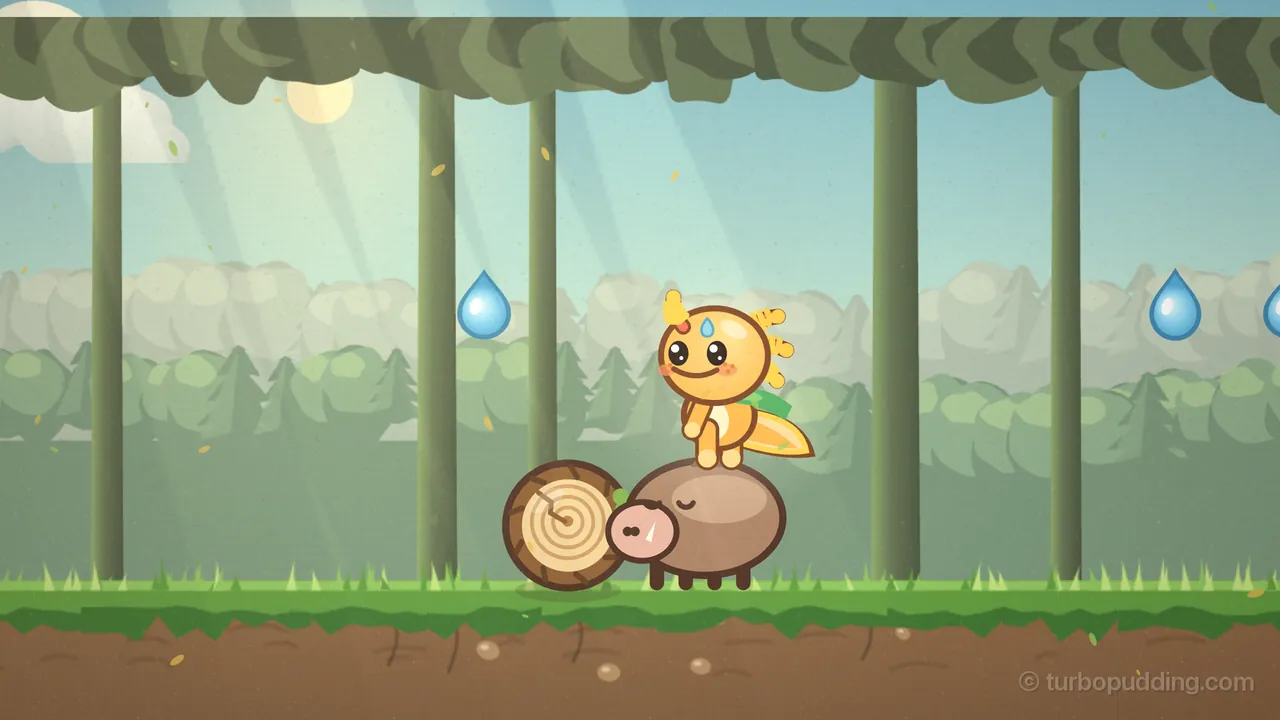
One boar, six snorts
In German, Snortle the boar is Schnaubi, from schnauben, to snort, plus the cuddly -i that German gives to pet names. French went with Renâclou, from renâcler, to snort as well. Spanish made Resoplón, from resoplar, to snort, and the -ón ending makes things big. Portuguese has Bufinho, from bufar, to huff, and -inho, the ending that makes things small. Russian built Khryupen out of khryu, the sound a Russian pig makes instead of oink.
The Russian tip about boars is the softest, calling a boar kabanchik, “little boar.” In every language, a boar shoves logs with its nose, and three hops on its back send it to sleep. A sleeping boar is a big soft wall that stops any log.
A drip and a splat
The hail twins, Pitter and Patter, are named for the sound of rain on a roof. German turned them into Pitsch and Patsch, the noise of boots slapping into a puddle. Spanish, French and Portuguese all share one pair, Plic and Ploc, the sound of falling drops. In Russian, the twins are Kap and Shlyop: kap is a single drip, and shlyop is a wet splat.
Dusty and the powder on a moth’s wings
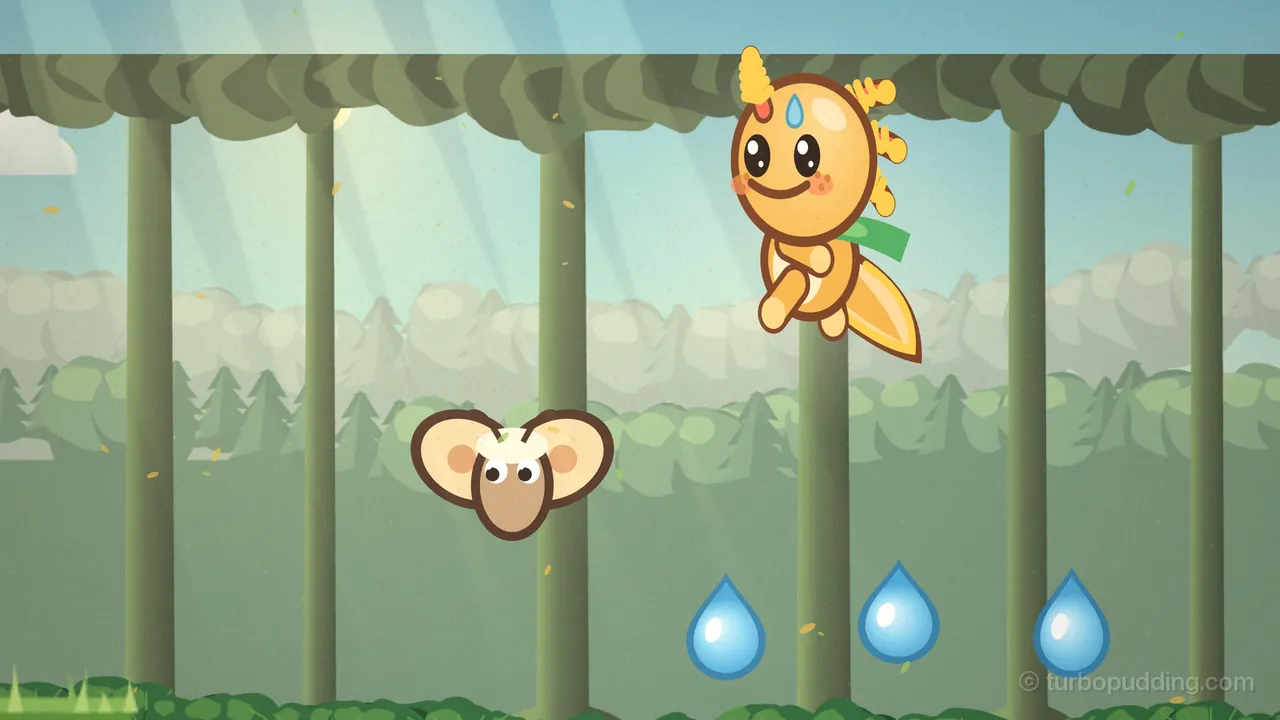
Dusty the moth is named for dust. German has Staubi, from Staub, dust. Spanish has Polvorilla, from polvo, dust. French has Poudrette, from poudre, powder, and Portuguese has Poeirinha, from poeira, dust. Russian picked Pyltsa, which means pollen and is also the everyday Russian word for the fine powder on a moth’s or a butterfly’s wings.
A splash of water washes the grumble off a grumpy moth. Moths love light, too: when a glowcap lights up nearby, they drift over and hover above it.
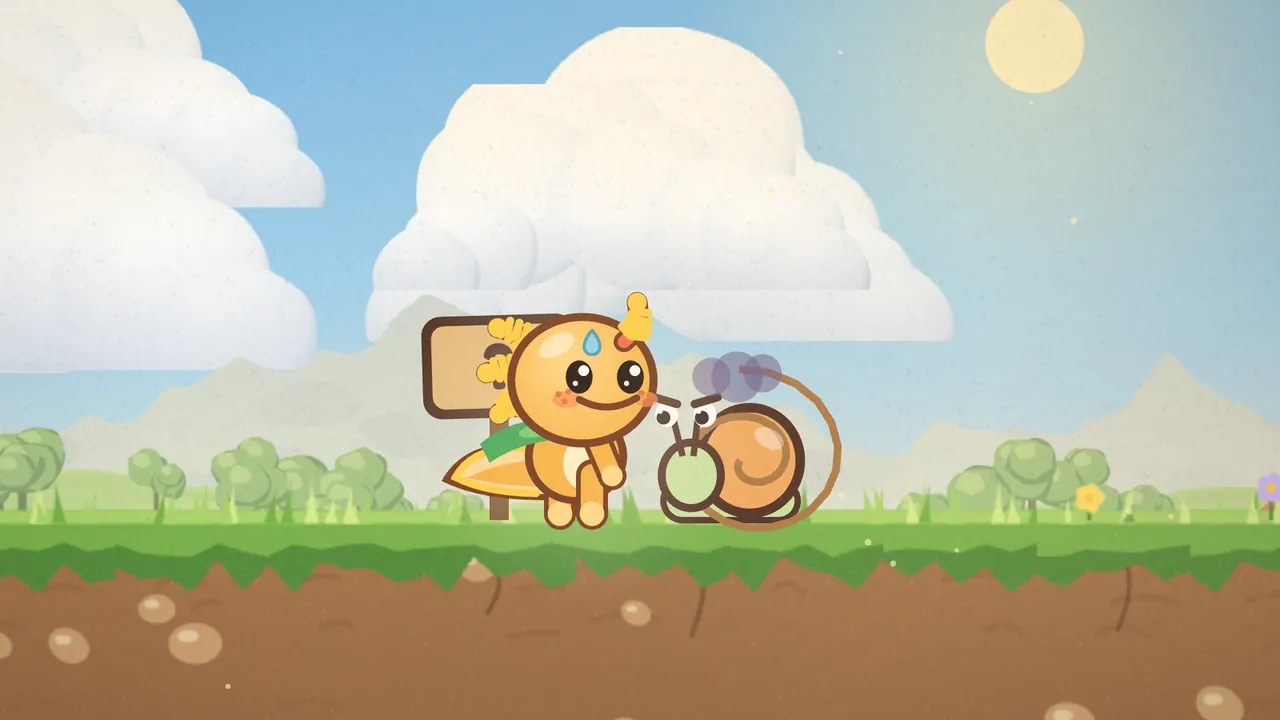
A badger named for a burr
Burdock, the badger of Burdock’s Burrow, is named for a plant with hooked burrs. Most languages kept the plant: she is Klette in German, Bardana in Spanish and Portuguese, and Bardane in French. In Russian she is Lopushikha, built from lopukh, burdock, with an ending that turns it into a lady.
The prickly Burrbits followed the same plant. They are Klettis in German, abrojitos, “little burrs,” in Spanish, and gratterons in French, after a sticky weed that clings to socks. In Portuguese they are carrapichos, “burrs,” and in Russian they are repeyki, “little burrs.”
Russian nouns change their endings, so when the goal is to calm Burdock, the line reads “Uspokoy Lopushikhu,” with -u in place of -a. Portuguese puts “a,” the word for “the,” in front of a lady’s name: “Acalme a Bardana.” So in those two languages, the game writes out the whole line for each character instead of dropping a name into it.
Who kept their name
Gilby stays Gilby in every language; Russian simply writes him in its own letters. Tansy and Sorrel keep their names in five languages. Russian is the exception again: Tansy becomes Pizhma, the Russian name of the tansy flower, and Sorrel becomes Shchavelka, a fond little form of shchavel, sorrel.
Nana Moss, the old turtle, is a grandma everywhere. She is Oma Moos in German, Abuela Musgo in Spanish, Mamie Mousse in French, Vovó Musgo in Portuguese and Babushka Mokh in Russian.
Names on the map
Dewdrop Meadow is Tautropfenwiese in German, dewdrop and meadow in one long word, and Prado del Rocío, “meadow of the dew,” in Spanish. Mossy Hollow is Moosmulde in German, a mossy dip in the ground, and Vallon moussu in French, a mossy little valley. Glowcap Hollow is the simplest of all in Spanish and French: Setas de luz and Champignons-lumière, “mushrooms of light.”
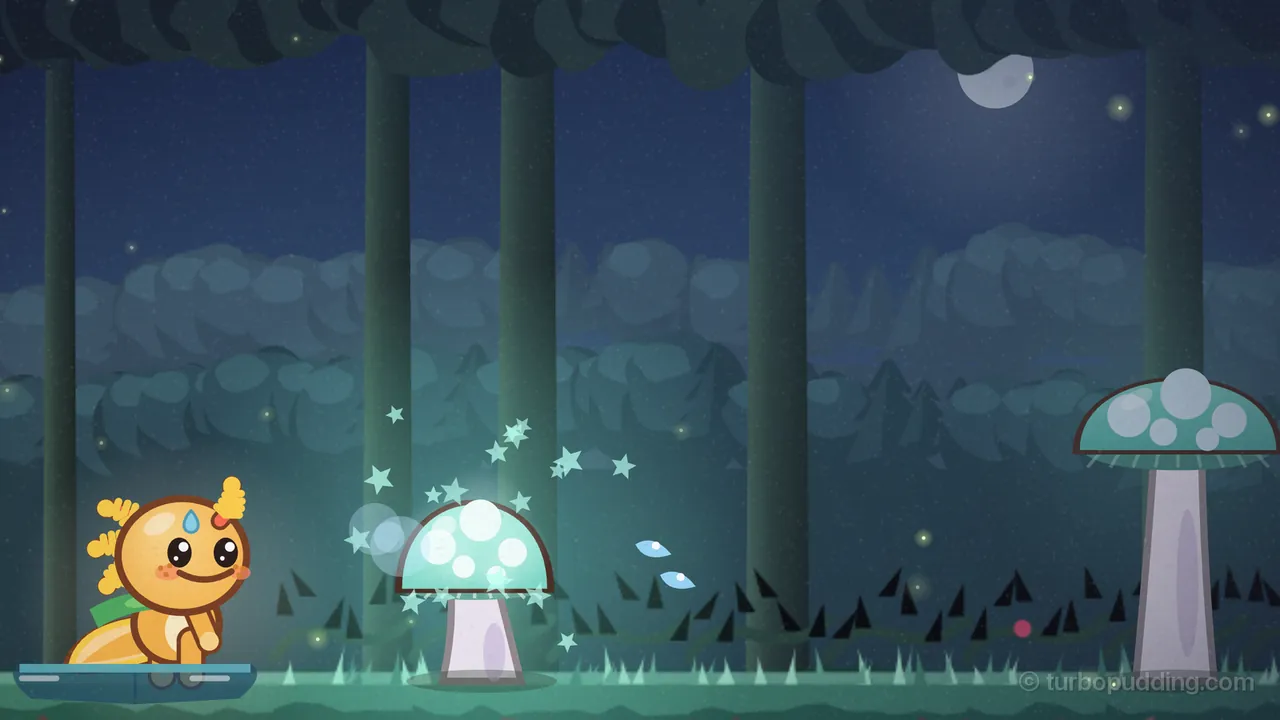
A glowcap lights up when Gilby bounces on it. A sleepy one stays shut until it gets a splash, so Gilby wades into a puddle, fills his cheeks with three drops and spits.
A lullaby in six languages
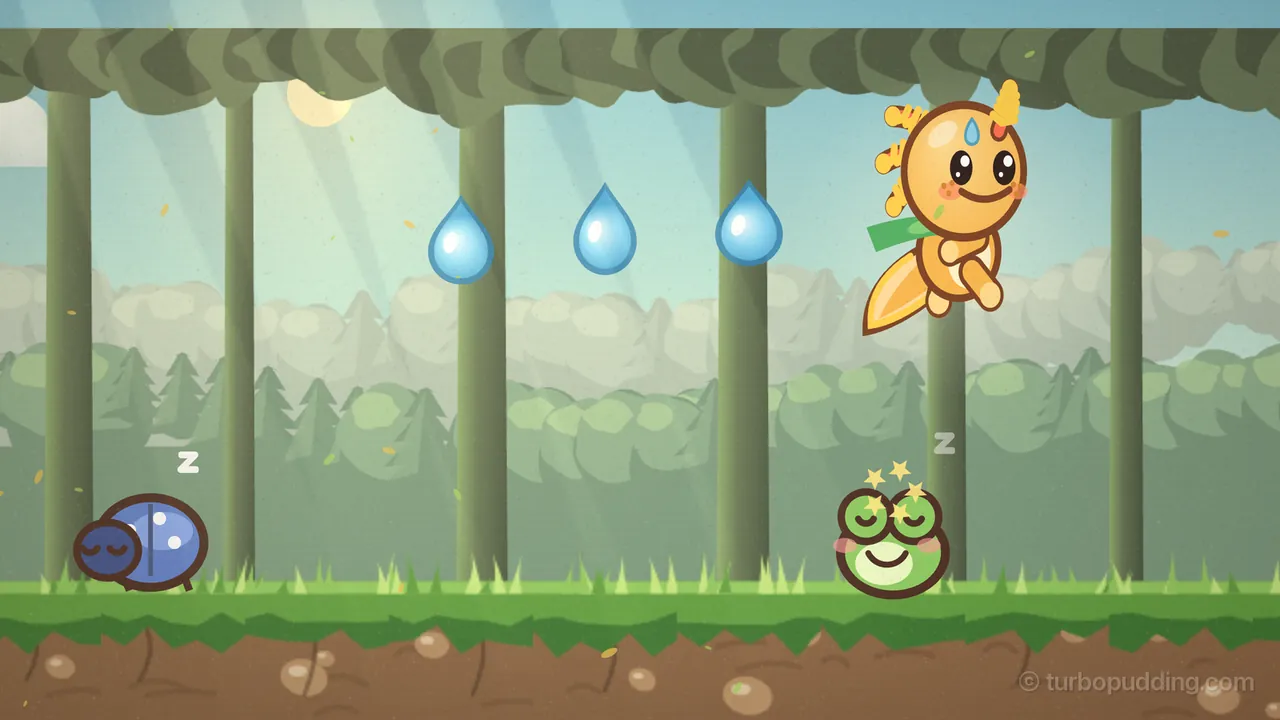
Land on a grumpy critter and it falls asleep. Bounce from one sleeper to the next without touching the ground, and four in a row earns a Lullaby! In German, that’s Schlaflied, a sleep song. In Spanish, it’s Arrullo, which means both a lullaby and the soft cooing of a dove. French says Berceuse, from bercer, to rock a baby, and sets a small space before the exclamation mark, as French typesetting does. Portuguese has Acalanto, from acalantar, to lull to sleep, and Russian has Kolybelnaya, from kolybel, a cradle.
Six in a row is a Sweet chorus! It translates word for word: Süßer Chor, Dulce coro, Doux chœur, Doce coro and Sladkiy khor.
Pick a language and play
Dewdrop Meadow and Puddle Path, the first two levels, are free to play at pitterplop.com in all six languages. The full game, with Snortle, Dusty and the hail twins in Mossy Hollow, is $4.99, paid once. More about the game is on the Pitterplop page.