Turbo Pudding
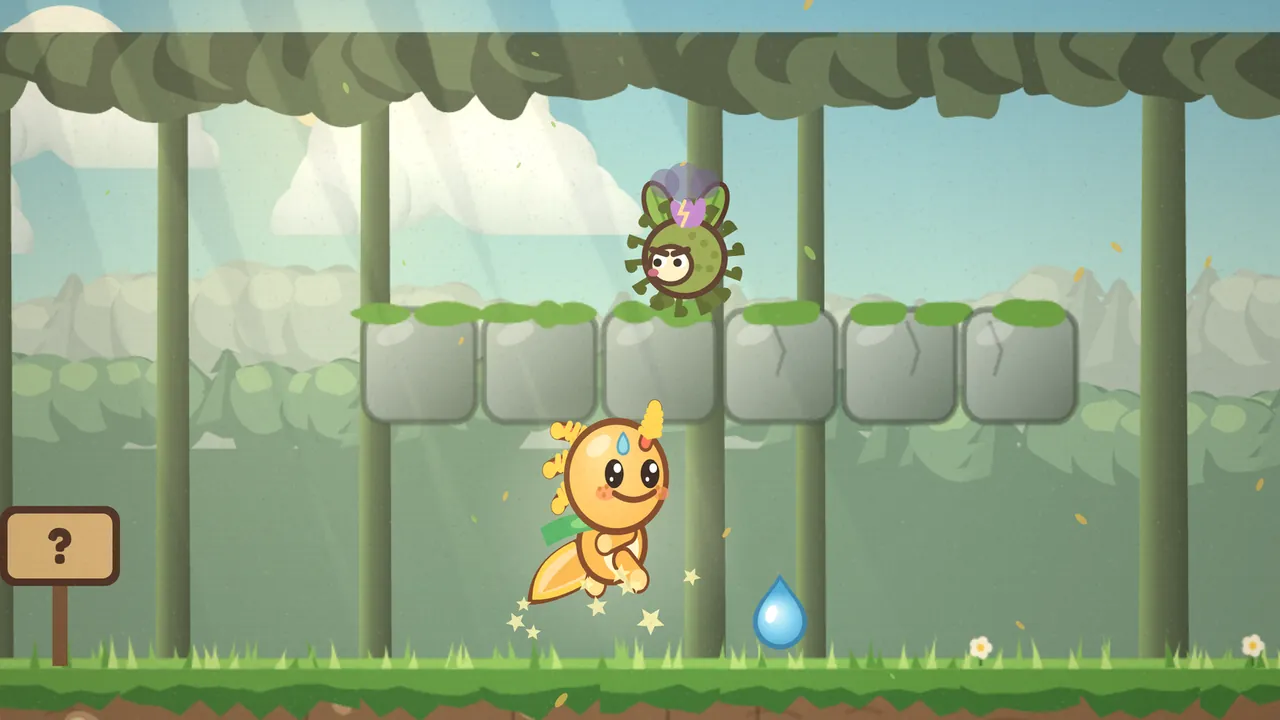
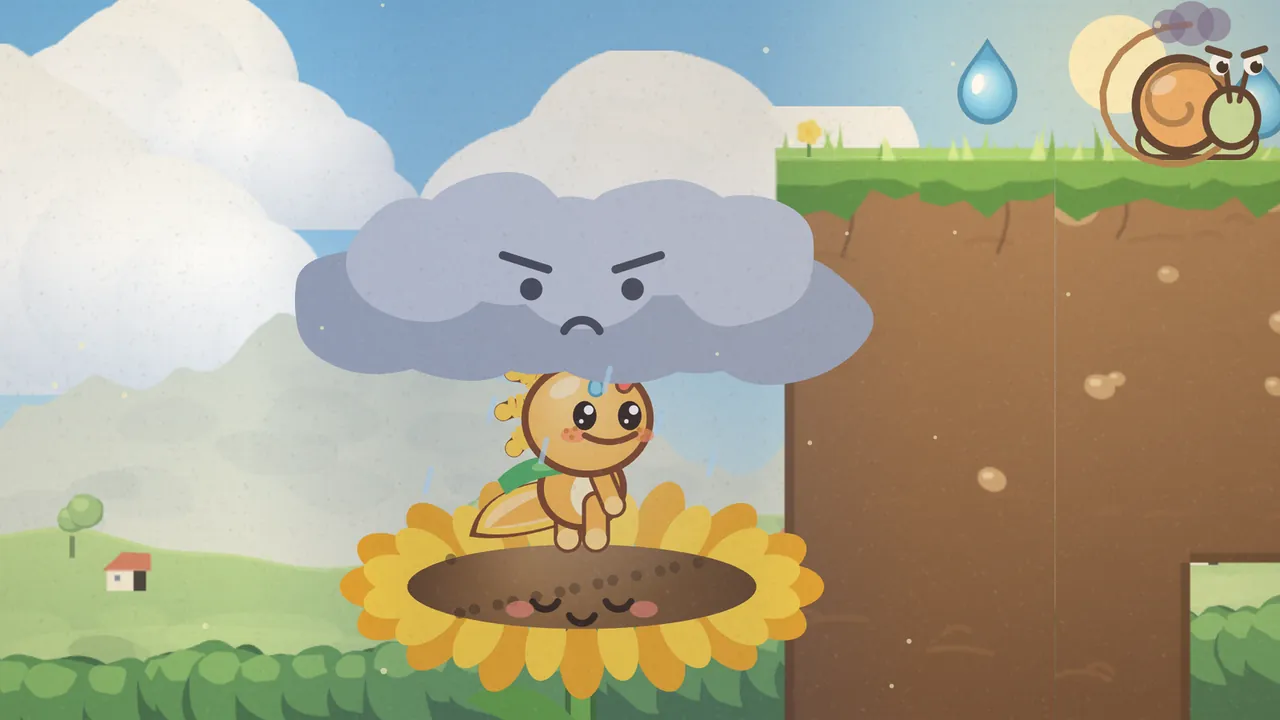
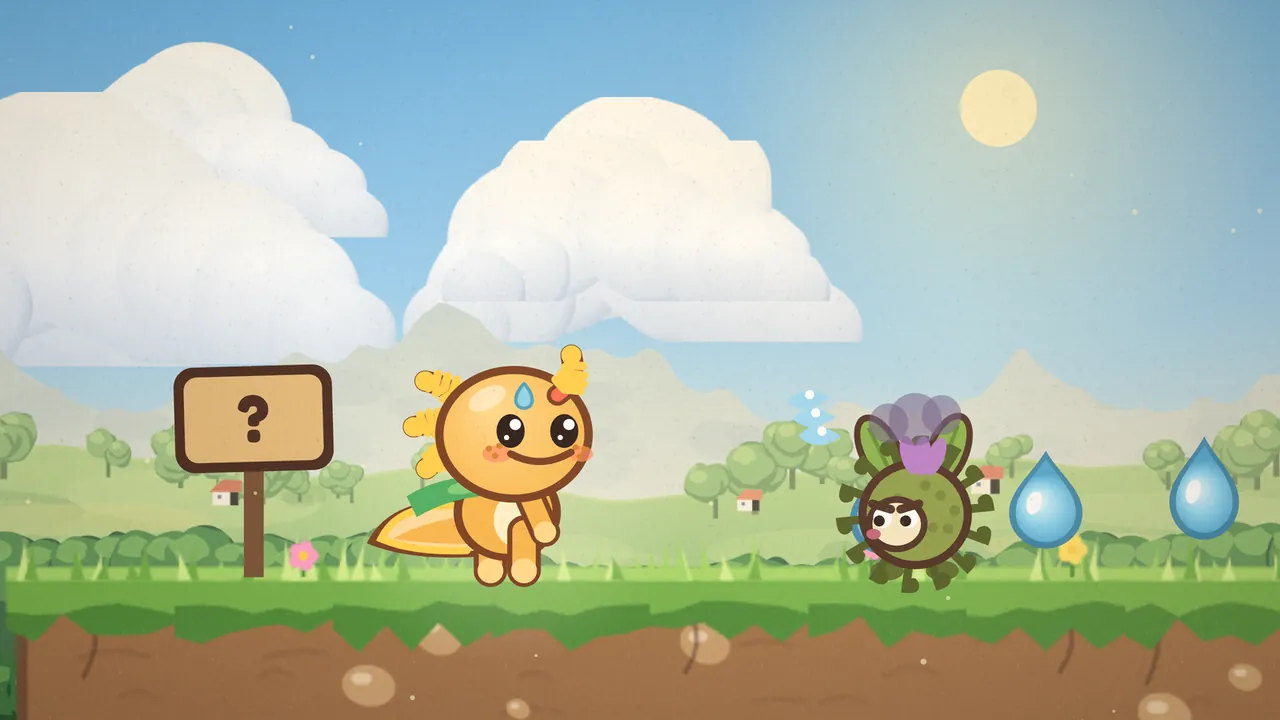
In Pitterplop, a grumble cloud has rolled over the Whispering Meadow and turned everyone cross. Gilby, a small orange axolotl, calms them down one by one. Most critters fall asleep the moment he lands on them. One doesn’t: the Burrbit. It’s a round burdock burr with leaf ears and a lilac tuft, bristling with little hooks, and those hooks are the reason you can’t stomp it.
The Burrbit comes from a real plant, and the real plant has a better story than you’d expect from a weed. This Thursday, the real story behind the burr.
A burr with feet
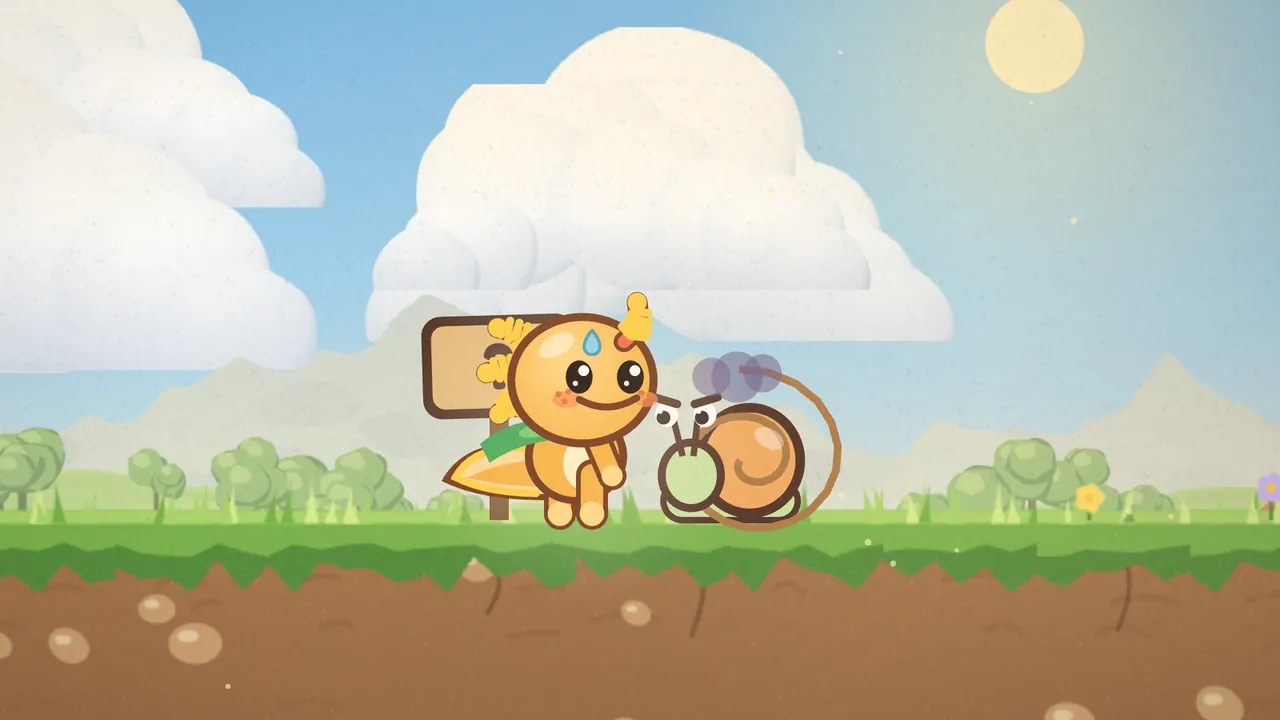
Burrbits walk slowly and carefully, and they turn back at every ledge. Jump on one and Gilby gets pricked. A wooden sign in Hedgerow Hush gives the two ways around it: “Prickly Burrbits can’t be stomped. Bump them from below, or give them a splash!”
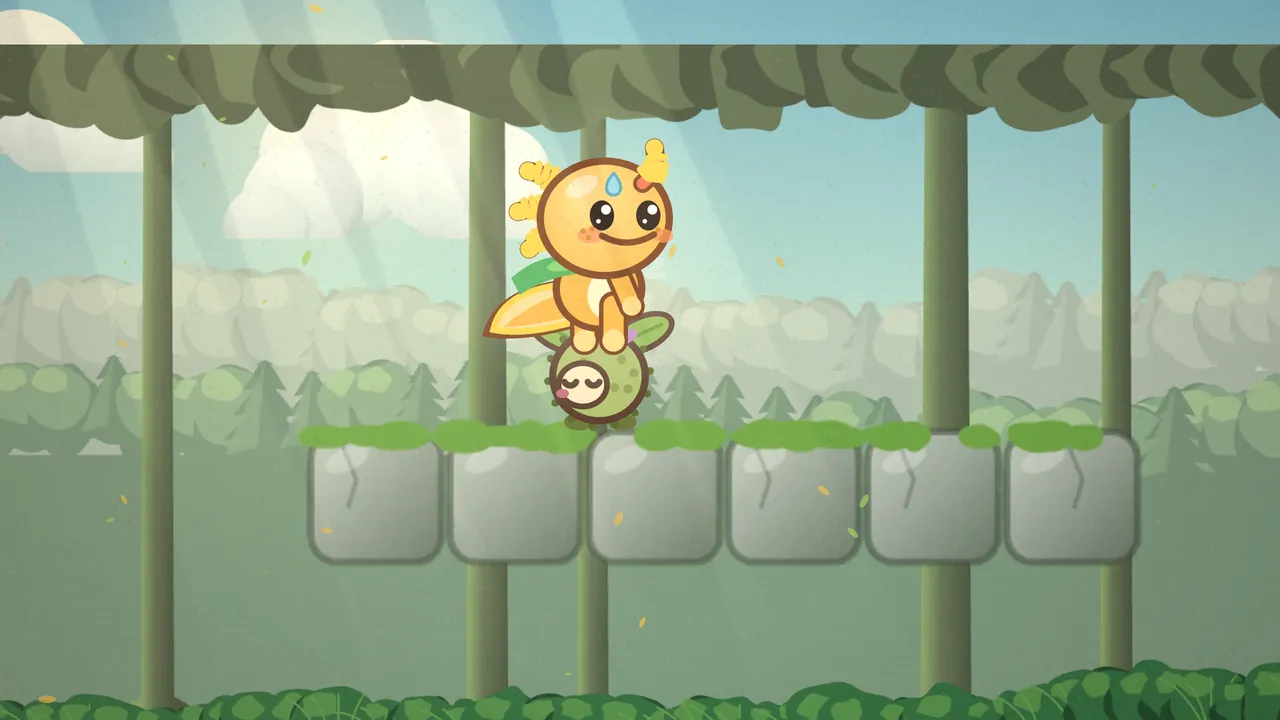
Bump the stone a Burrbit is standing on, and it pops up and falls asleep. Spit puddle water at it, and the grumble washes off. The hooks fold flat, the tuft flops over, and the Burrbit is soft as a pom-pom. In our code there’s a one-line rule for it: spines are spines, and only a splash folds them down.
Meet the real burdock
Common burdock is a plant native to Europe. In Colorado, where it now grows too, the state Department of Agriculture lists it as a noxious weed, and its fact sheet describes the plant in detail.
Burdock lives for two years. In the first year it stays low to the ground, a rosette of large, heart-shaped, thickly hairy leaves. In the second year it sends up a coarse, branching stem 3 to 10 feet tall. Its flowers grow in clusters at the ends of the branches, pink to purple. At the base of each flower are many spines, and the spines often end in a hook. When the flower dries, the flower and its spines together become the bur. Burdock flowers and sets seed from July to October, and it likes roadsides, ditch banks, pastures and fence rows.
Animals mostly leave it alone: in the first year there are those hairy leaves, and in the second year there are spines and burs.
Put the plant next to a Burrbit and you can read one off the other. Big green leaves for ears. A pink-purple tuft on top. A green ball of hooks underneath, fourteen of them, each with a small curl at the tip. And where do Burrbits stomp about? Next to a ditch in Sprouting Steps and along the hedgerow in Hedgerow Hush.
Why burs hitch rides
Those hooks are how burdock travels. A bur catches in the fur of a passing animal and goes along for the ride. Colorado’s fact sheet notes that burs get tangled in livestock fur, and that’s how the plant spreads over large areas. A burr isn’t trying to be annoying. It’s just trying to get somewhere.
A dog, a hunt and a microscope
Now the best part. In the 1940s, in the Canton of Vaud in Switzerland, an engineer named George de Mestral came home from a hunt with his dog. Small green balls were stuck to his trouser legs and to the dog’s fur. They came from a burdock plant.
He couldn’t stop thinking about how they held on, so he looked at them under a microscope. The secret was tiny elastic hooks. He spent years in his workshop turning that into a fastener: one strap covered in hooks, another covered in loops, and the two grab each other. His children helped with the first tests at home by walking over a specially made floor mat in specially made socks.
On 22 October 1951 he filed a Swiss patent for the fastener, and it was granted in 1954. Today hook-and-loop straps close wallets, bags and shoes, and the cuff wrapped around your arm when a doctor checks your blood pressure. They even went to the Moon in 1969 with Apollo 11, on the astronauts’ suits and equipment. So every time a strap goes rrrip, a little burdock burr is taking a bow.
A badger called Burdock
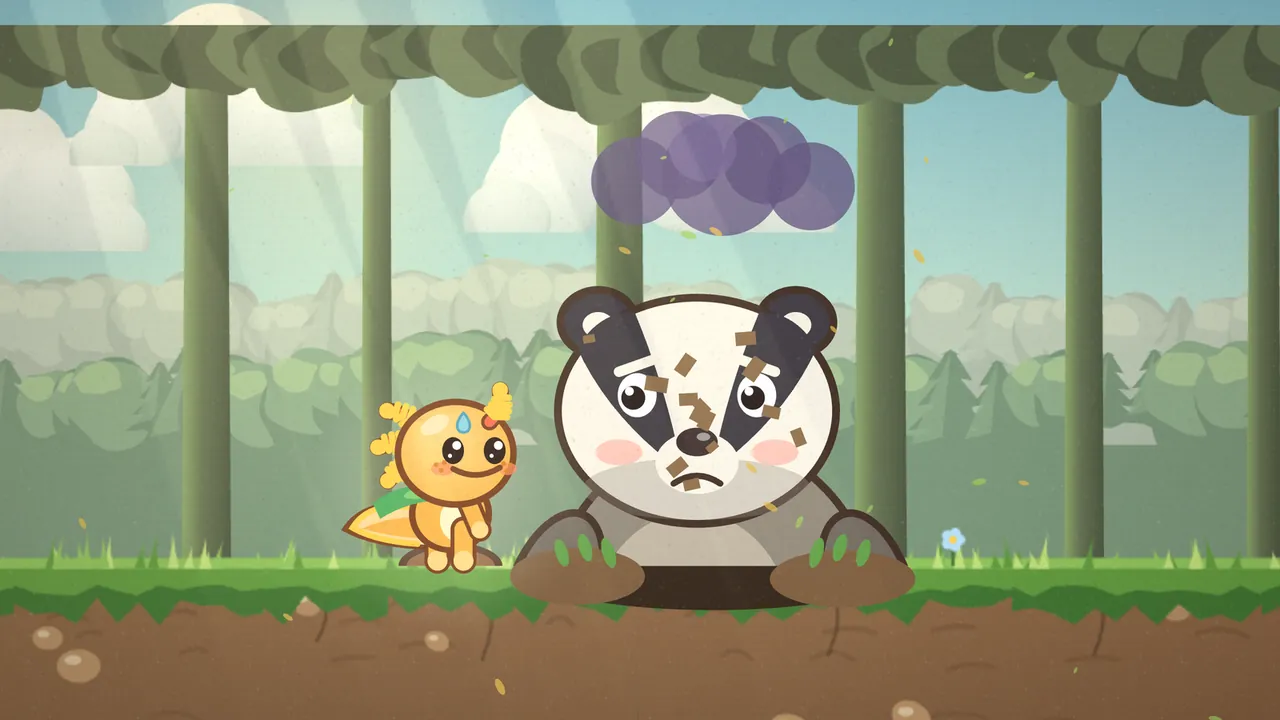
The plant gave its name to one more character. At the end of the first world, in a clearing at the edge of the woods, lives Burdock, a big soft badger with a striped face and a huge grumble cloud on her head. Cracks in the ground warn you where she’s about to pop up. Her first words to Gilby are “WHO stomps on my roof?! Off my lawn!” We’ll let you find out the rest in Burdock’s Burrow.
Go and find a Burrbit
Burrbits wait a little further along the trail. The first two levels of Pitterplop are free to play in your browser at pitterplop.com. The full game is $4.99, paid once. More about the game is on its Pitterplop page.