Turbo Pudding

Tirra and Lee are fledglings: young birds who have left the nest but can’t fly yet. At the start of Tirralee, a storm blows them from the top of the Skyward Tree all the way down to the roots, and they have to climb home on foot, stub wings flapping on every jump. It’s Thursday, so here’s the real story. Real birds go through this stage too.
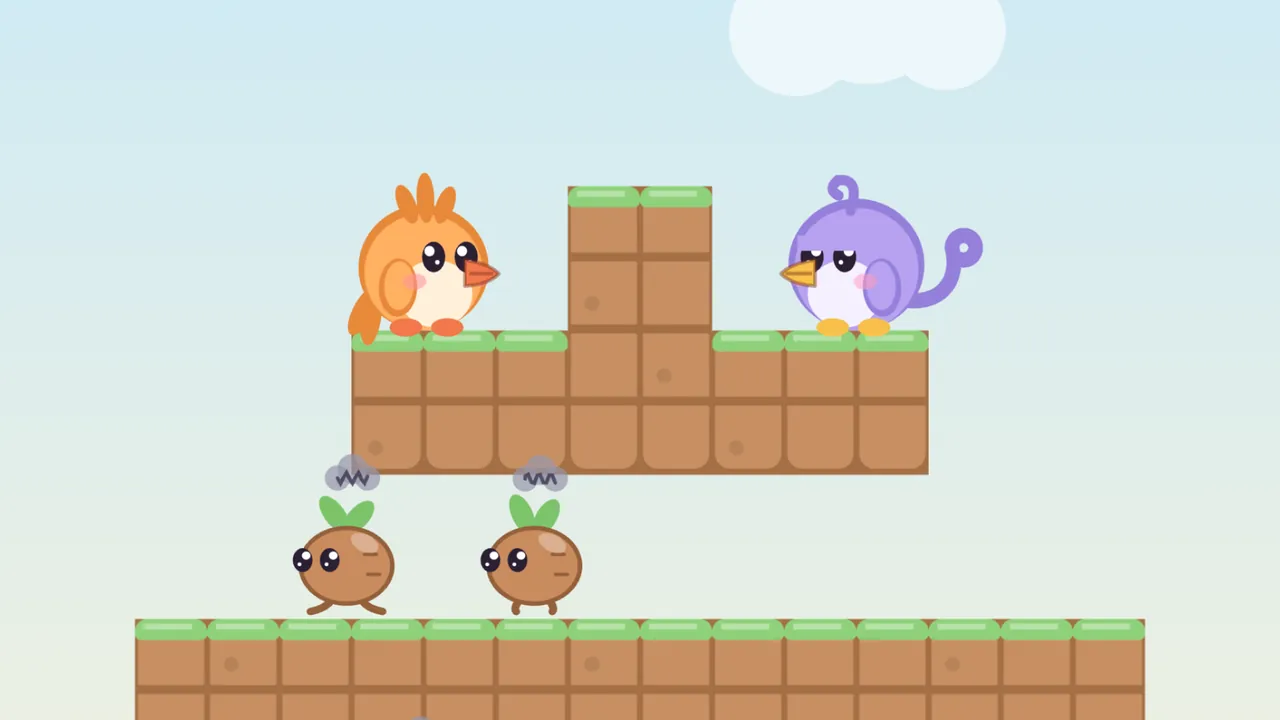
The picture at the top is the Butterfly room, the first room of level 2, out in the meadow. Both fledglings are in the air at once, and it almost looks like flying. It isn’t. It’s two very good jumps.
Out of the nest, not yet in the air
Fledging is the stage in a bird’s life between hatching and flying. A fledgling is a young bird that has just left the nest but still depends on its parents for food and care. In many species, the parents keep feeding their fledged young or lead them to food.
Boston’s Animal Care and Control explains what that looks like. A fledgling is about two weeks old, with feathers and a tail only about half an inch long. It hops around on the ground, because learning to fly takes a few days, and it takes about two weeks to learn to eat on its own. The city gets a lot of calls about “injured” birds that can’t fly, and they’re usually just fledglings. If a young bird looks healthy and active, the advice is to leave it alone.
Tirra and Lee are at just that stage. Their wings are little stubs that flap when they jump and help them float back down, and the fall is slow enough to steer.
Flapping uphill
Not being able to fly doesn’t make the wings useless. Chukar partridge chicks hatch without flight feathers. The feathers appear after about a week, and the chicks fly at about three weeks. In between, they run up steep slopes with their wings flapping. Scientists call it wing-assisted incline running. On their legs alone, the chicks managed slopes up to 45 degrees. Steeper than that, they flapped, and they reached slopes of 105 degrees, steeper than a wall. Chicks whose wing feathers had been trimmed couldn’t get nearly as high.
Other birds do it too. Young Australian brushturkeys, fresh out of the egg, have managed slopes of up to 110 degrees, steeper than the adults, who top out around 70. Some scientists even think the first bird wings started out this way, helping small feathered dinosaurs run up cliffs and tree trunks.
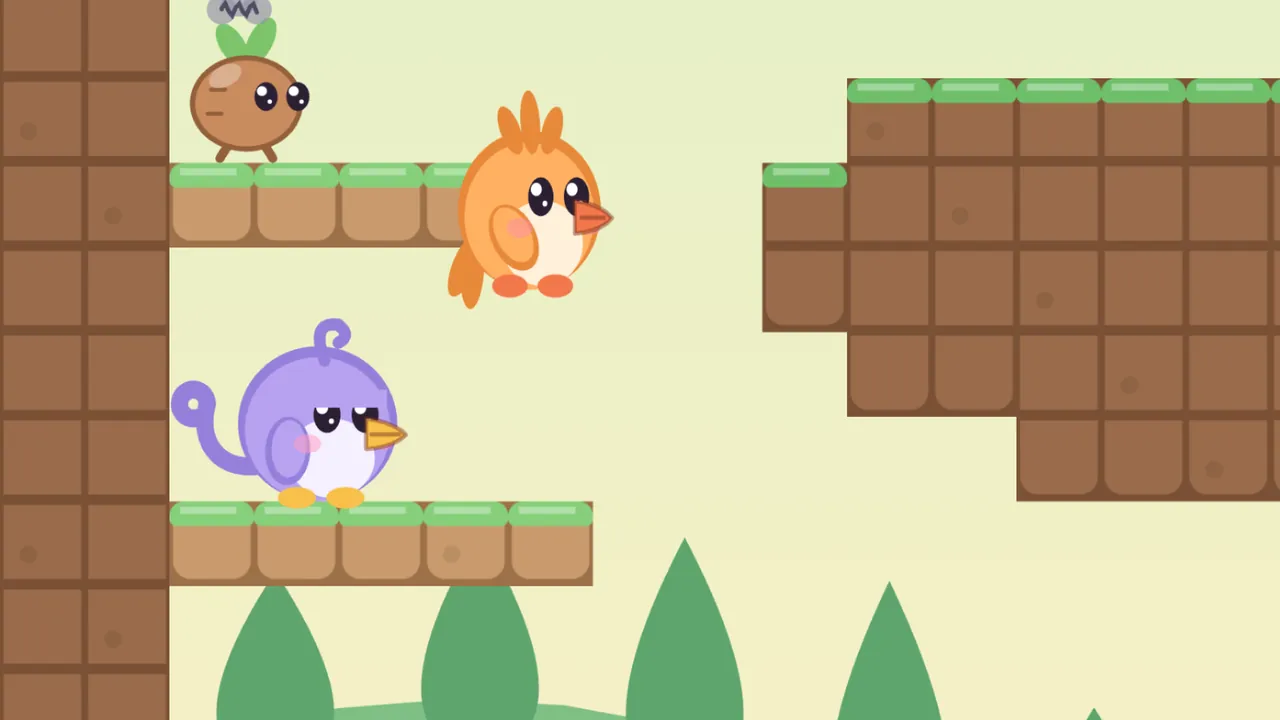
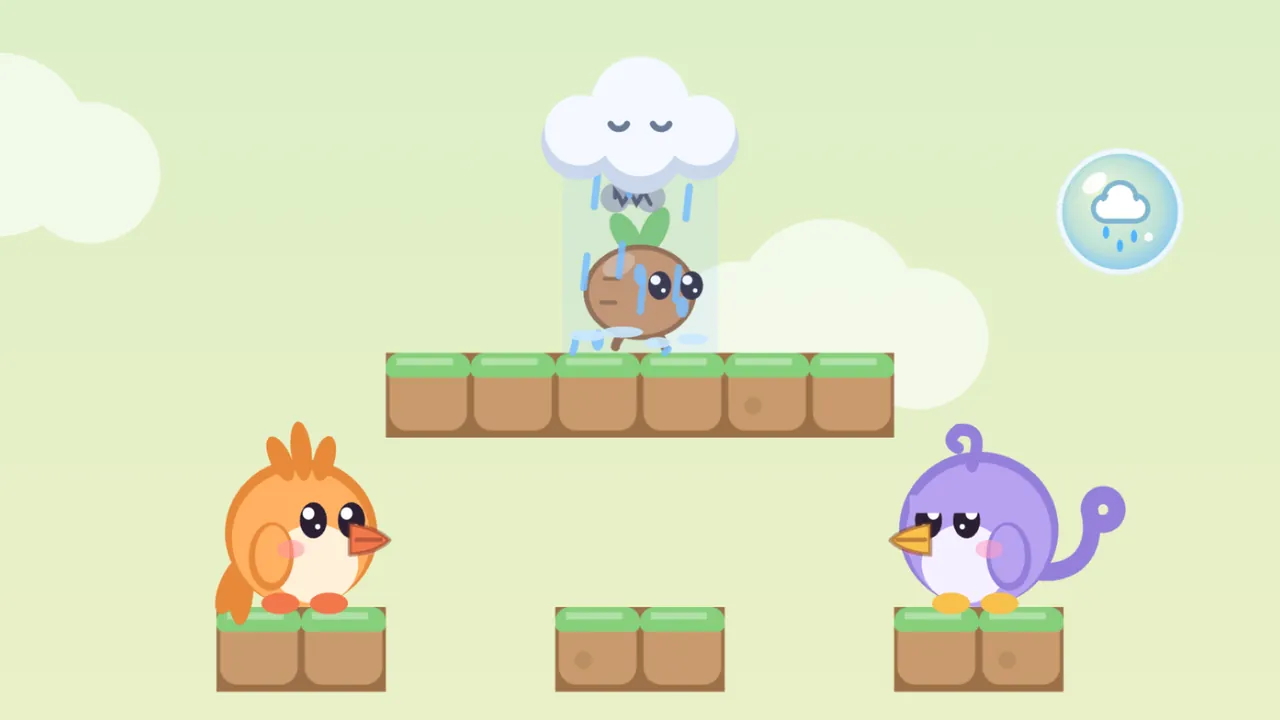
Tirra and Lee climb much the same way. The Skyward Tree has no stairs, so every ledge is a jump, wings going. When a jump isn’t enough, Lee’s big, slow bubbles help: hold jump, and you bounce from bubble to bubble up toward the next ledge. And between rooms, the Tree’s own updraft carries the two of them up, each hanging on to a dandelion seed.
Jumping before flying
Some chicks leave home even sooner. The ancient murrelet fledges two days after hatching. The chick runs from its burrow to the ocean, toward its parents calling from the water, and they look after it at sea for several weeks. Guillemot chicks leave their cliffs before they can fly, too. A parent leads the chick to the edge, and the chick launches itself off, trying to fly as far as it can before it crash-lands on the sea.
Tirra would fit right in. Tirra is brave, impatient and curious, the kind who jumps first and thinks later, and dreams of flying higher than anyone. Lee is afraid of heights and climbs to the top anyway.

Learning the song
For songbirds, growing up also means learning to sing, and it happens in two stages. First, the young bird listens to its father or another adult of its kind and memorizes the song. Then it practices until its own singing matches what it remembers. The first tries are a jumble of sounds called subsong, a lot like a baby’s babbling. Bit by bit, the song takes shape, and after two or three months, depending on the species, it settles into its final form. Young birds pick up small details from their fathers, and as those details are passed down, they add up to local dialects.
People have known that birds learn their calls since at least 1773. In experiments where young birds were raised by another species, a linnet learned to sing like a skylark.
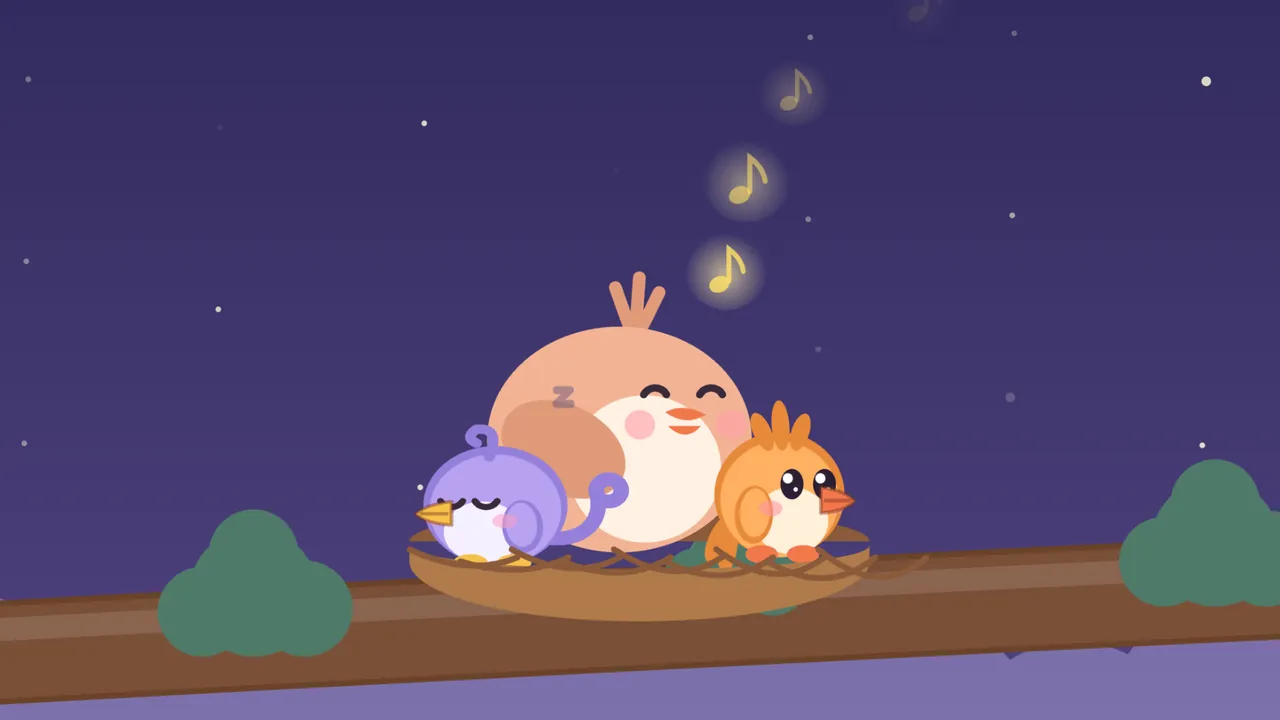
In Tirralee, the song is the whole story. The game opens with Mama singing in the nest: “Sleep now, Tirra. The Tree is singing to you.” Then the old cuckoo clock strikes thirteen, and the Tree’s song breaks off. The spirits of the Tree have lost their songs, too, and the fledglings put the Song back together one note at a time. The fifty rooms of the Tree hide one golden note each.

The first two levels, the whole meadow, are free to play in your browser at tirralee.com. The full game is $4.99, paid once. More about the game is on the Tirralee page.