Turbo Pudding
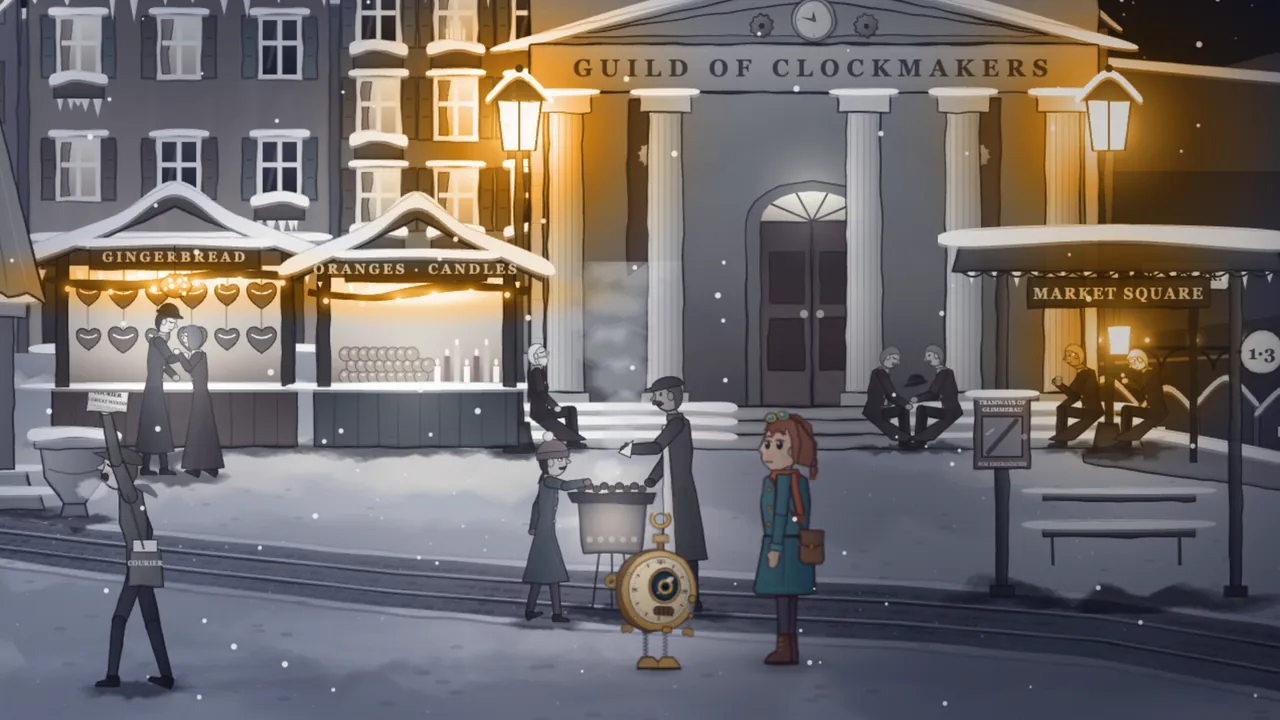
Across the square from the Great Clock of Glimmerau stands a pale stone hall with six columns and wine-red doors. Over the columns it says GUILD OF CLOCKMAKERS. Mira’s grandfather, Anselm Holt, is one of its Masters, and Mira, at fifteen, is his apprentice. As she puts it: “When Grandpa was made a Master there were forty of them. Now there are seven.”
Glimmerau and its Guild are made up. Clockmakers’ guilds were not. Here is the real story behind the hall, the stairs and the portraits.
A guild of their own
The word clockmaker is old. In English it turns up as “clokkemaker” around 1390, about a century after the first mechanical clocks. Guilds just for clockmakers came much later, around the sixteenth century.
The best known is in London. Many of its clockmakers belonged to the companies of other trades, such as the Blacksmiths. From 1620 they tried to set up a guild of their own, and the Blacksmiths objected. On 22 August 1631, King Charles I granted them a royal charter. He was ruling without Parliament at the time, and selling charters was one way to raise money.
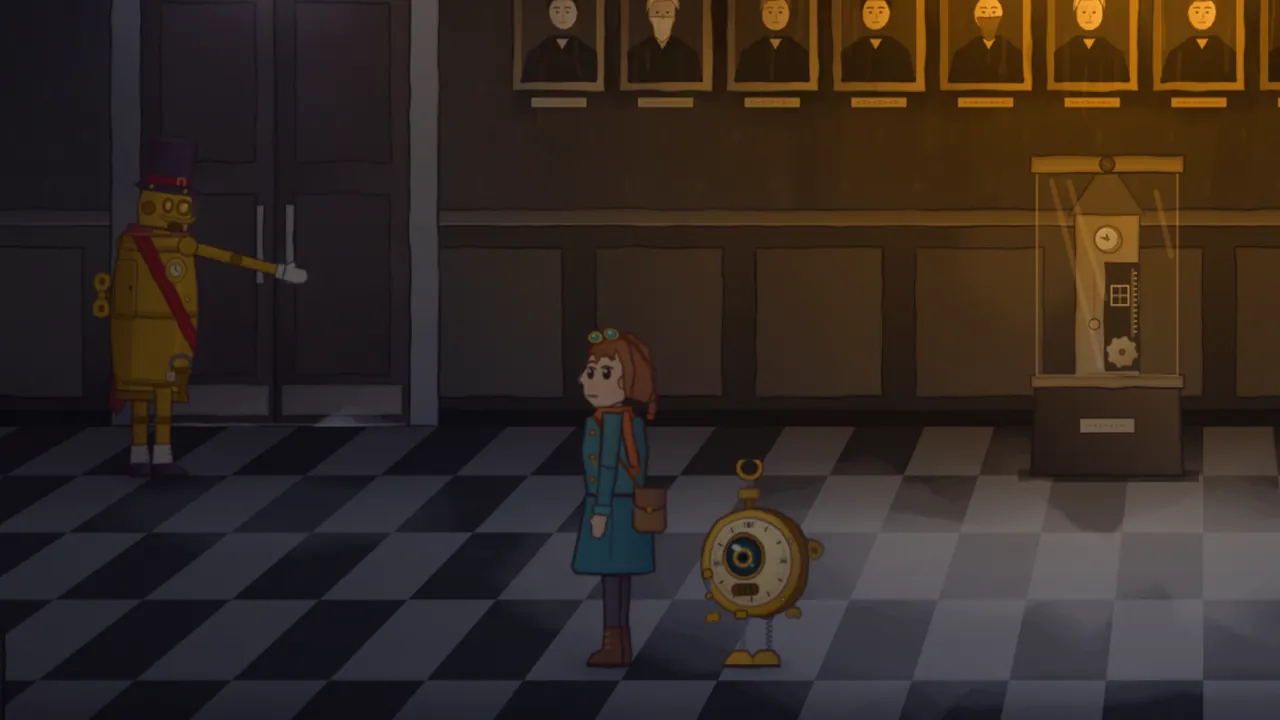
The charter created the Worshipful Company of Clockmakers, with power over the trade in the City of London and for ten miles around. It was run by a Master, three Wardens and a group of assistants, called the Court. Its motto is in Latin, Tempus Rerum Imperator: “Time, the ruler of all things.” Glimmerau’s motto, painted over the doors of its portrait hall, is shorter: “We keep the hours.”
Seven years to learn
Most crafts were learned the same way: you were bound to a master as an apprentice. In England, the Statute of Artificers of 1563 made a seven-year apprenticeship compulsory for the skilled trades. In some guilds, apprentices couldn’t even marry until they became full members.
Glimmerau’s Guild remembers that pecking order well. Mira has been inside the hall twice, “both times in my best shoes.” The portraits are no comfort: “Five hundred years of Masters on the walls, and not one of them looking at me.” And the curved stair up to the Provost’s office has a reputation. “Grandpa says these stairs were built to humble apprentices. They work.”
Paid by the day
Most guilds had three ranks: apprentice, journeyman and master. A journeyman had finished training and worked for a master for wages. The word comes from the French journée, a whole day, because a journeyman had the right to be paid for each day’s work. Most never became masters at all.
In German-speaking lands, journeymen were sometimes expected to spend three years on the road, the Wanderjahre, going from town to town and working in different shops. A few carpenters and other craftsmen still keep up the tradition today.
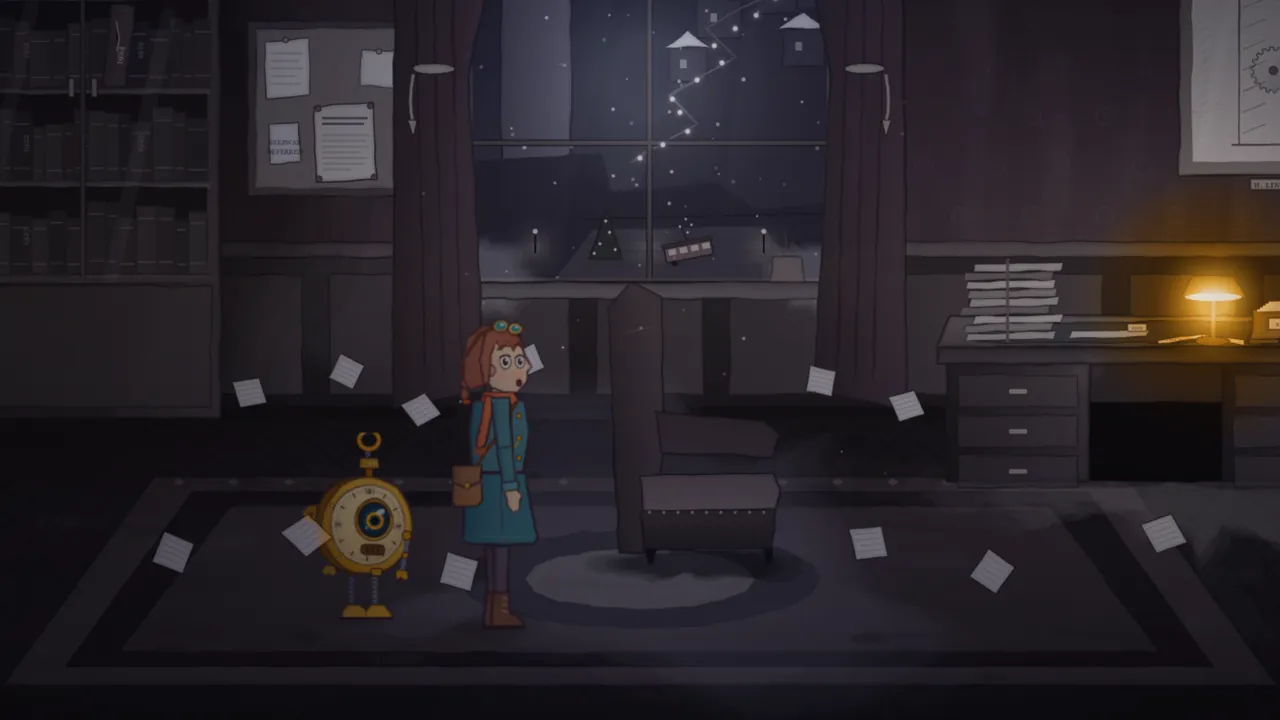
Guild members also dressed the part. The London companies are called livery companies, and the word livery first meant a special form of dress, later the dress that showed you belonged to a trade. More than a hundred of them still exist in the City of London. Glimmerau’s Provost would approve. Among the papers hanging in midair in his office is a six-page “Memorandum: on the correct length of a Guild cloak.”
The masterpiece
Today a masterpiece is any great work. It started as something far more practical. In the old guilds, it was the piece an apprentice or journeyman made to prove he was ready to be a master. If the guild accepted it, the guild kept it.
The earliest known record of the word, in the form “masterstik”, is in the guild rules of Aberdeen in Scotland, from 1579. The rules could be very exact. Between 1531 and 1572, a goldsmith in Nuremberg who wanted to become a master had to make a cup shaped like a columbine flower, dies for a steel seal and gold rings set with stones. Anyone who failed could still work for others, but not as a master.
The Guild Hall in Glimmerau keeps a model of the Great Clock under glass, “cut open down one side.” Mira is proud of it: “Grandpa built the lift for it when he was an apprentice.” The case carries the Guild seal. Touching it is a fineable offense, and Mira tells us Grandpa has paid that fine twice, both times for her.

Where the real clocks went
The London clockmakers didn’t just make clocks, they collected them too. Their museum was founded in 1813. From 1874 to 2014 it was housed at Guildhall, and since 22 October 2015 it has been at the Science Museum in London, where anyone can visit.
The company itself still exists. Its list of Masters now includes Diana Uff in 2005, Joanna Migdal in 2020 and Jane Pedler in 2023. Glimmerau got there first, in its own way. The statue in its square is Hesper Lind, who, Mira tells us, “built the Great Clock in fourteen twenty-seven and founded the Guild.”
Visit the Guild Hall
Chapter 1 is free to play in your browser at tomorrowago.com. Mind the stairs. More about the game is on its Tomorrow Ago page.