Turbo Pudding
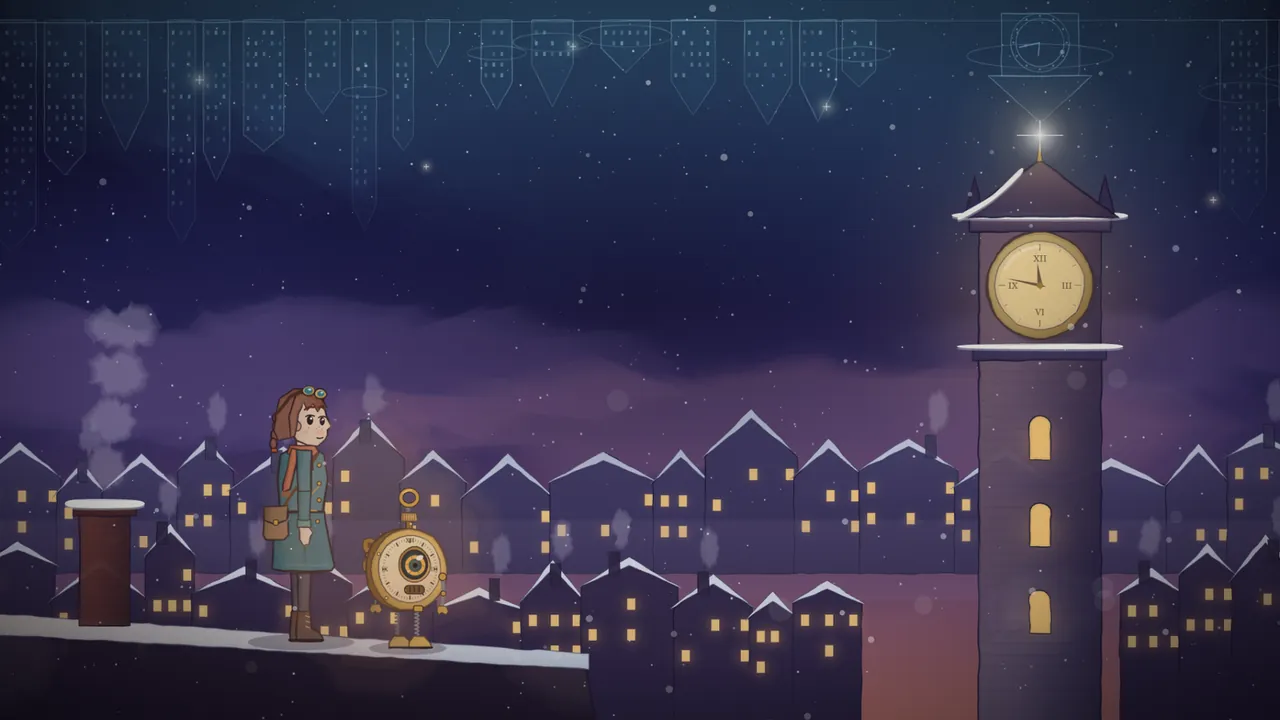
Glimmerau, 21 December 1927. It’s Winding Night, and at 11:47 every clock in town stops. The snow hangs in the air, the tram stops halfway round the bend, and only two things keep moving: Mira, the clockmaker’s granddaughter, and Tik, the little robot from her grandfather’s workbench.
Here is a look into the sketchbook: how the town, the robot and even the game’s name came to look the way they do.
One room sets the style
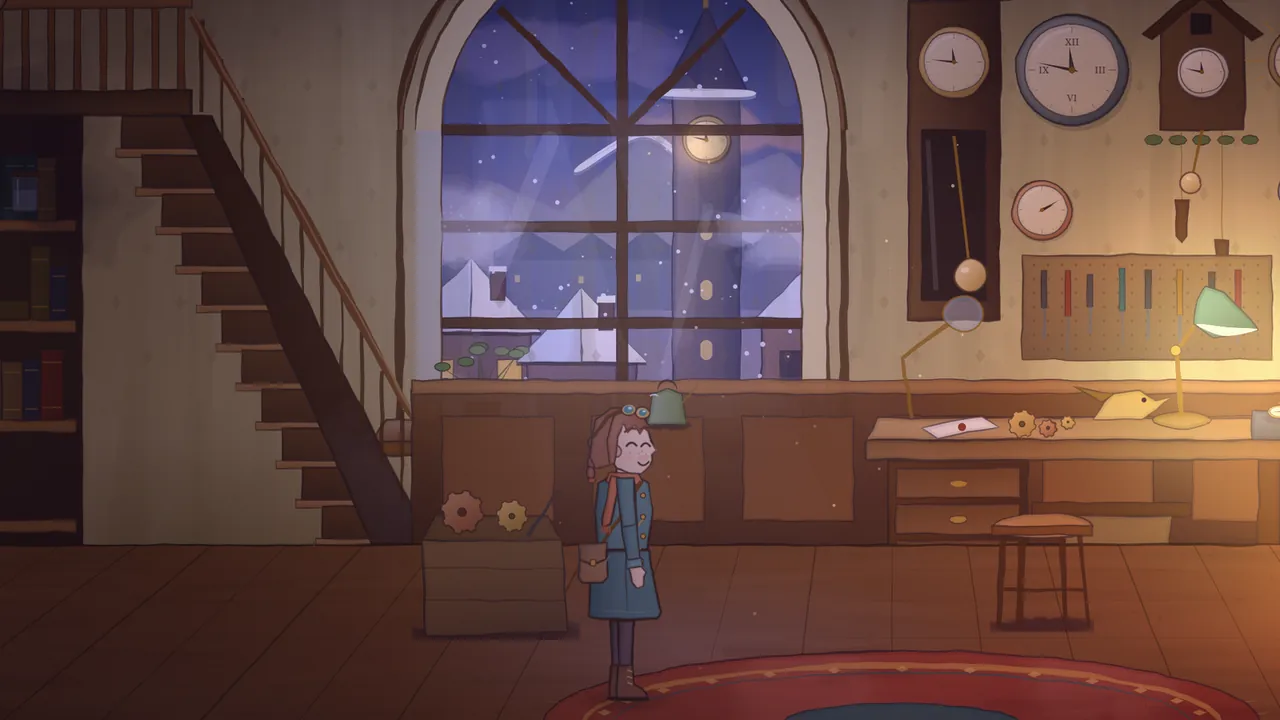
The first place we painted was Grandpa’s workshop, and it became the style frame for the whole game: every scene after it had to match. It’s a tall old room with a gallery on the left, a great arched window onto the town and the Great Clock, a wall of clocks over the workbench and a potbelly stove. Warm lamps inside, blue dusk outside.
Mira was drawn to stand out in exactly that light. She is fifteen and her grandfather’s apprentice. Her coat is a deep teal, picked because it reads against snow and lamplight alike. Add a rust scarf, brass goggles pushed up on her auburn hair, a tool satchel and lace-up boots.
Painting a stopped minute
The hardest picture in the game isn’t a place. It’s a moment. When time stops, we didn’t want a new set of paintings. We wanted the same town, held still.
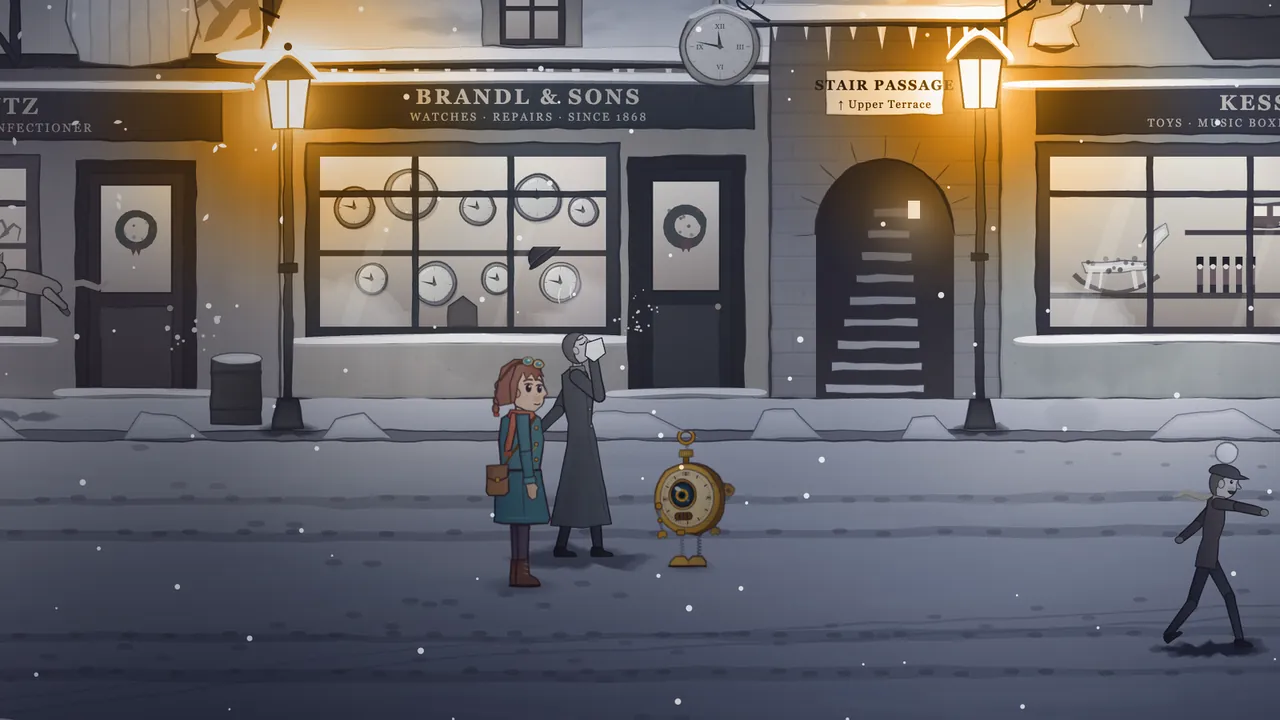
So at 11:47 the color drains out of the world over a couple of seconds, a cold blue settles over everything, and every snowflake stays exactly where it was. Only Mira and Tik keep their color. They are the only things in town still moving, and you should be able to see that from across the street.
There is one more exception, and it’s our favorite. Glimmerau is lit by glimmer lamps, and in Mira’s words they have “no gas pipe, no wick. A Guild master put a spark of himself in it before I was born, and it’s been glowing out of sheer stubbornness ever since.” Anything with an ember of its own keeps burning gold in the gray.
A face that lives in one eye
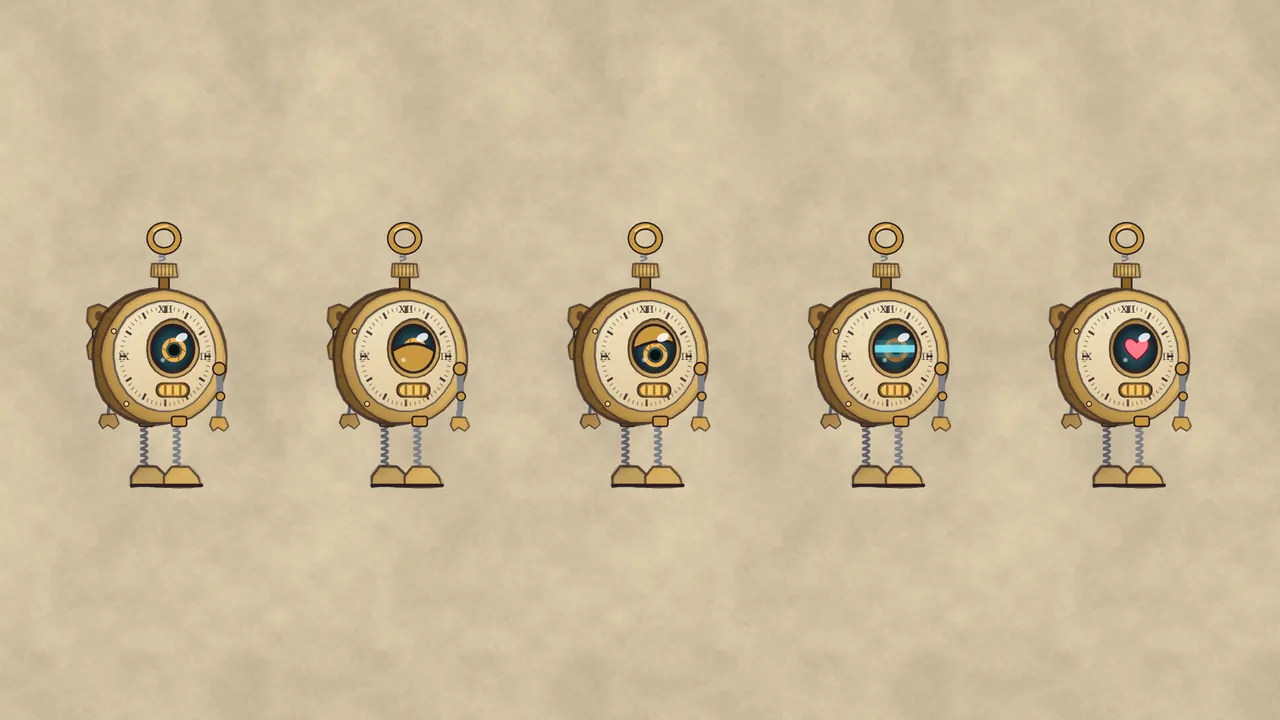
Tik is a walking pocket watch the size of a cat. He has a brass case and a cream dial, a crown and bow on a spring for an antenna, a wind-up key turning on his back, thin arms and short legs with dome feet.
His whole face lives in one lens eye with an iris shutter, and a little mouth grille glows when he speaks. With only an eye to act with, that eye has to do everything: it opens wide, closes happily, droops when he’s sad, and sweeps a bright line across the world when he scans it.
Tik comes from 2427 and talks in short, happy words. His first ones to Mira are “Hel-lo.” and then “You. Warm. Moving.” When he scans the frozen workshop, his verdict is just as short: “World. Stuck.”
A town that changed its name
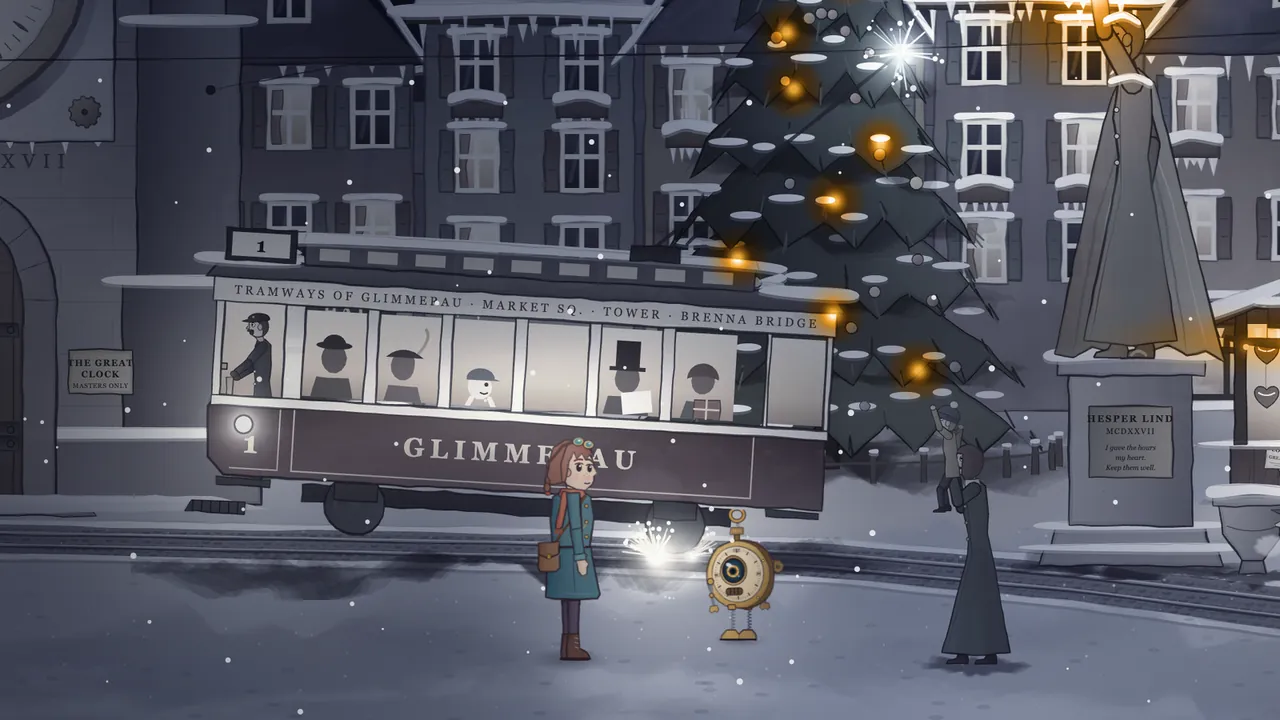
In the first sketches, the town was called Vellmar. Then we found out there is a real Vellmar in Hesse, Germany. So the town became Glimmerau, a name that suits a place lit by glimmer lamps.
It got smaller on the way, too. Vellmar was a city; Glimmerau is a town, and Mira’s lines changed with it. At the workshop window she now says: “Glimmerau under snow. The Great Clock’s lit up — it’s the one thing in this town that never sleeps.”
The title, and the painting at the top
The game’s working title was The Stopped Hour, with the line “A clockmaker’s granddaughter. A robot of brass. Five hundred years between them.” It became Tomorrow Ago, and the line became the one on our page today: “Two friends. Five hundred years apart. One broken hour.”
The picture at the top of this post is the title painting. It shows Glimmerau on the night time stopped: Mira and Tik on a snowy roof, the Great Clock at 11:47, and, hanging upside down in the sky like a reflection in dark water, the same town five hundred years later, its clock tower’s spire almost touching ours.
Chapter 1 is free to play in your browser at tomorrowago.com. More about the game is on its Tomorrow Ago page.