Turbo Pudding
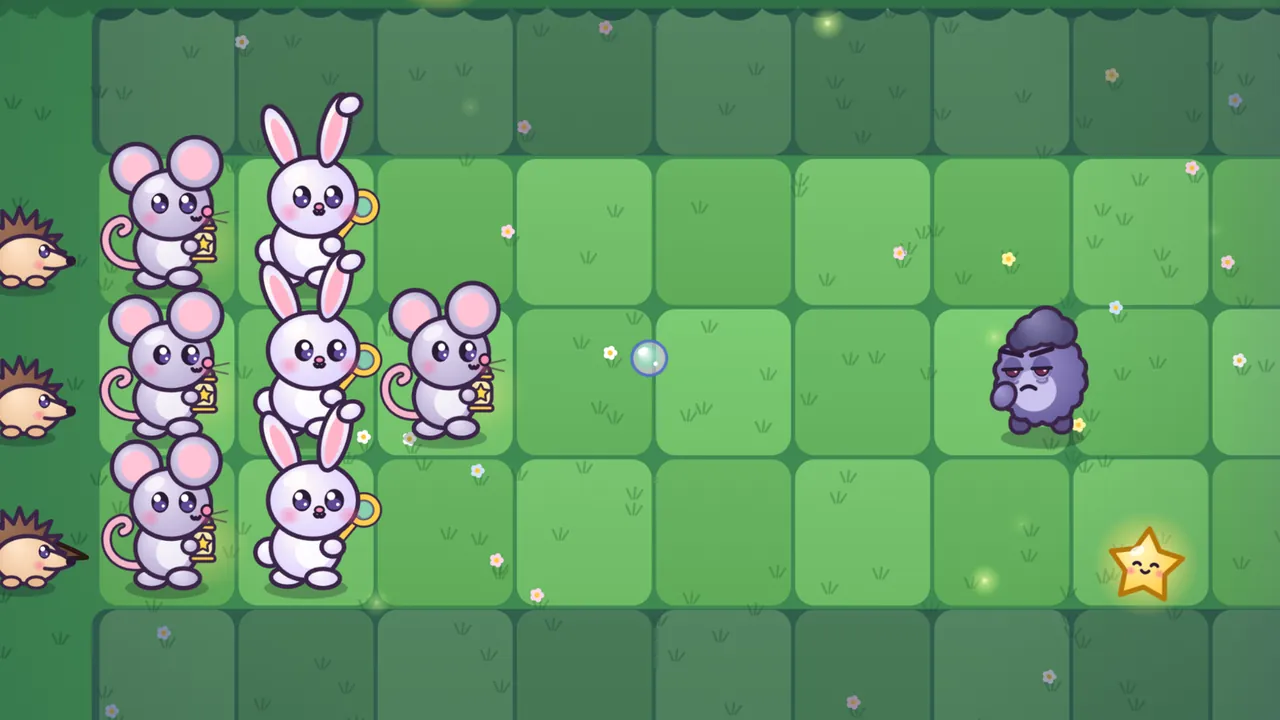
Fluffenders is a cozy lane-defense game for ages 4 and up. Grumps who haven’t slept in a week walk across the lawn toward the burrow, and you plant Fluffs in their way to tuck them back in. This dev diary is about one question we kept asking while tuning its twenty nights: what does “fair” mean when the player is four?
Easy to win, hard to perfect
Our rule: winning a night should be easy, and winning it perfectly should take skill. The stars do that job, with help from the Rollys.
Every row of the lawn has one Rolly, a hedgehog who waits by the burrow. When a Grump gets too close, the Rolly curls up and rolls down the row, and the row is safe again. The stars count how many Rollys you needed. None, and the game says “Perfect! No Rolly needed.” One gets “Great! One Rolly helped out.” More, and you still win, with one star and “Phew! Try again for 3 stars.” A child can win with hedgehogs rolling everywhere. A grown-up chasing three stars has to keep them all at home.
One new thing per night
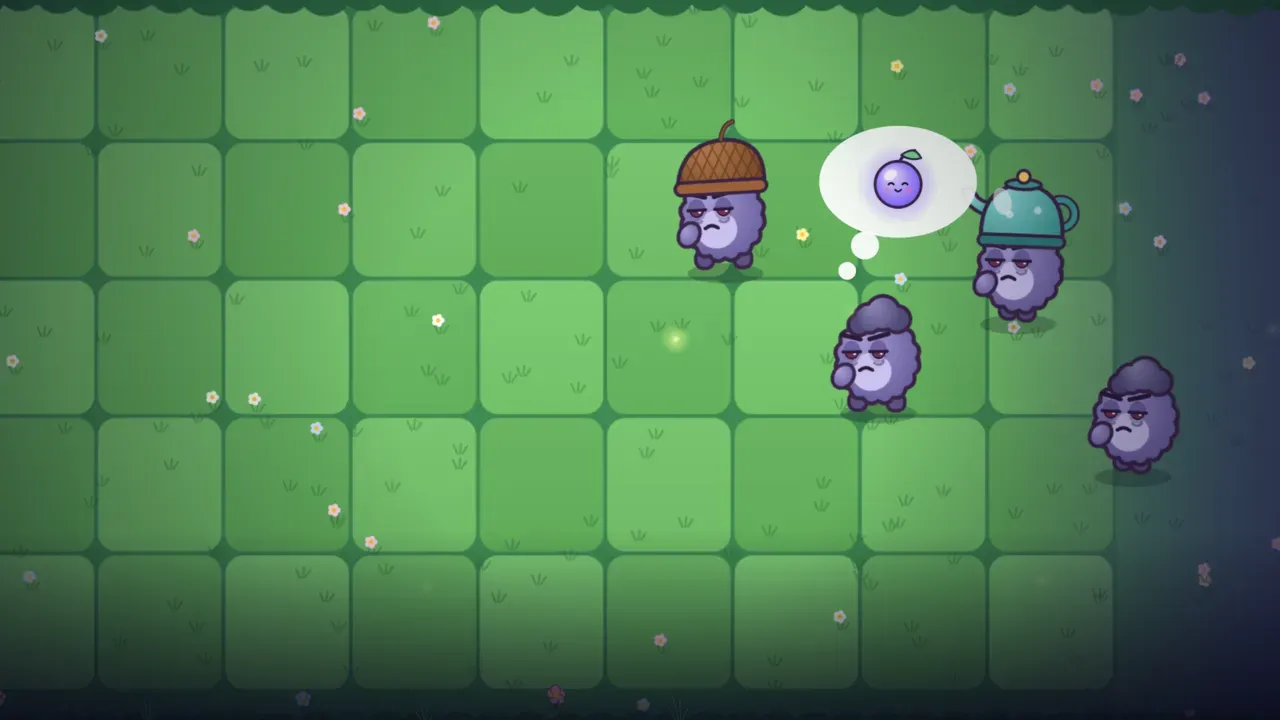
Each night teaches one new thing. A new Grump never arrives in a crowd. It comes alone, in a calm wave, with a “New Grump!” card that says what it does. On night 9, seven calmer waves come first, and then the Kettle Grump walks in by itself. Its card is honest: “Wears a whole tea kettle. Very tough, so bring lots of friends.”
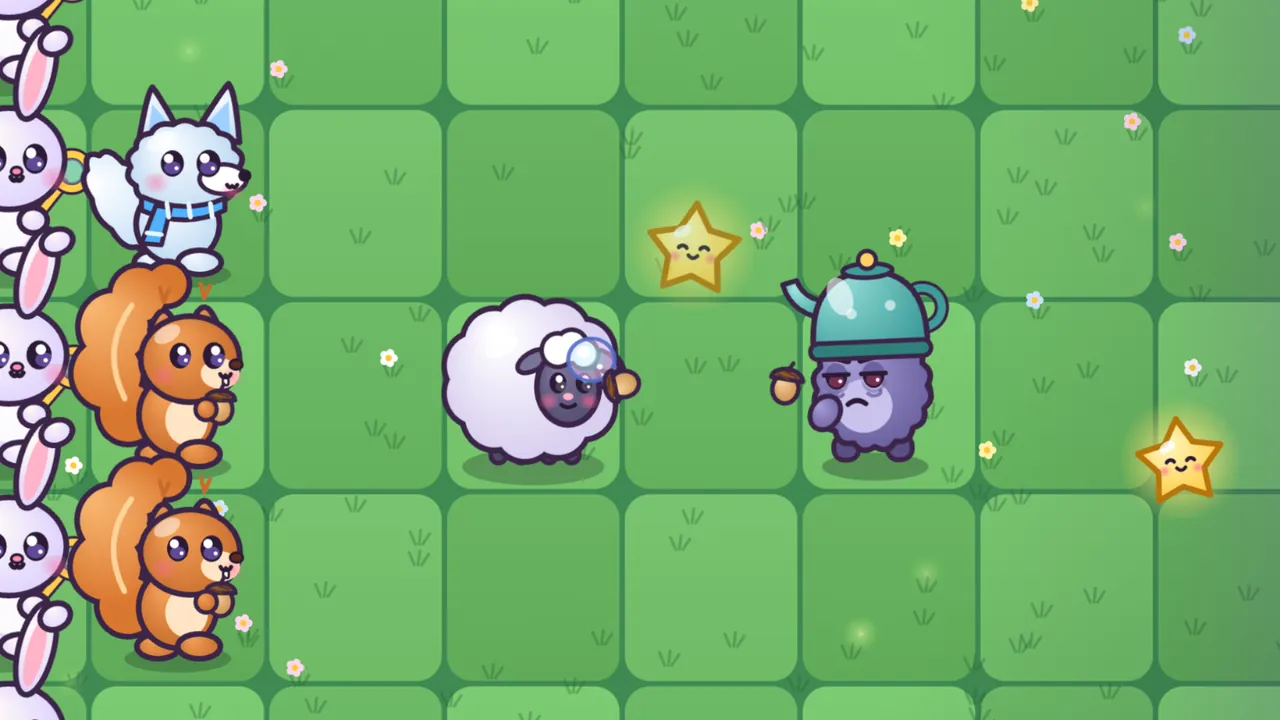
The Kettle used to arrive on night 8, right after the Pogo Grump and the Pillow Grump: three introductions in a row. One night later, it left night 8 for plain practice.
It wasn’t the aim, it was the stardust
We checked the nights with test runs, using players modeled on a careful grown-up, a relaxed one and a young child. The young child reacts slowly, sometimes plants in a random row and misses about a quarter of the stardust drops. Before tuning, that player never won nights 6 to 9.
Our first guess was aim, and it was wrong. When the young player picked up every drop, its wins on night 4 jumped from 13 to 68 percent. Planting in sensible rows didn’t help at all.
Stardust is what you spend on Fluffs. It falls from the sky, Twinkle Mice make more, and each drop fades after nine seconds on the grass. A grown-up grabs them all. A four-year-old is busy watching the Grumps.
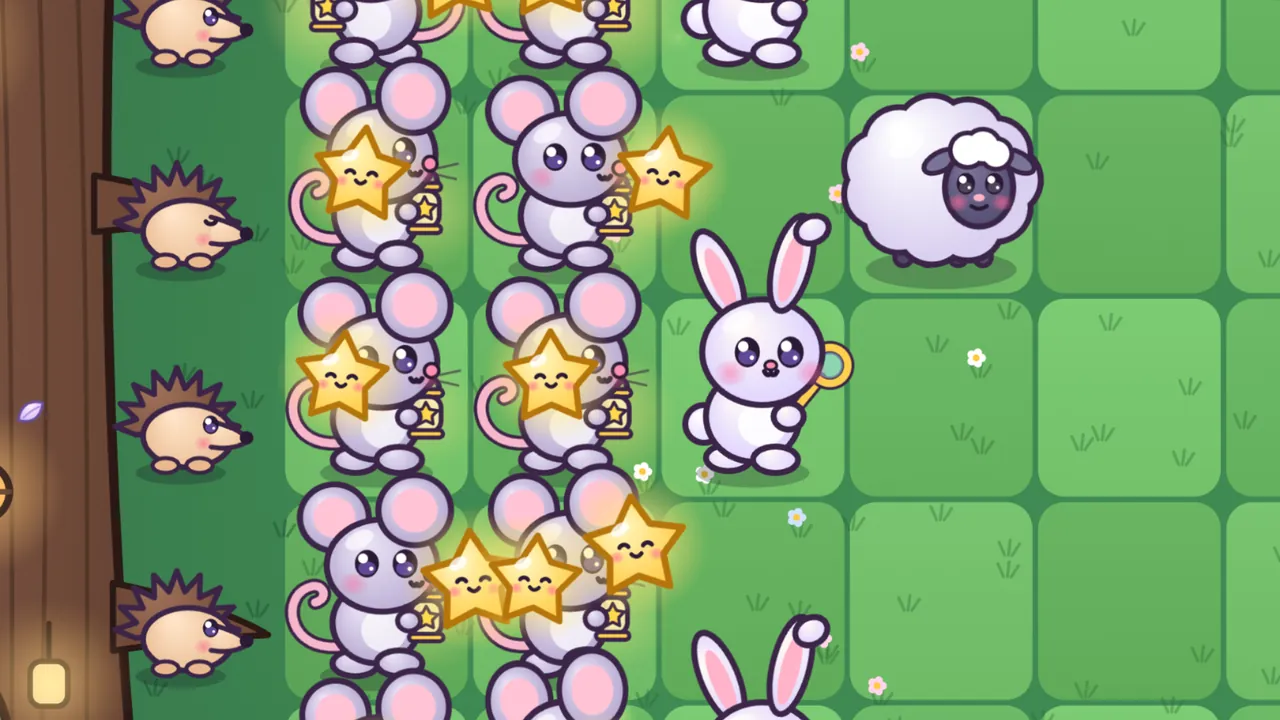
So the fix was stardust. Every night used to start with 50. Now the regular nights of the first chapter start with 125 to 575. On nights 2 to 4, the first wave waits 27 to 30 seconds, and the first waves are single Grumplets, so the first shooters are ready before anything tough shows up. Night 6 also lost two of its six Pogo Grumps.
A gift from the Rolly
The test runs showed one more pattern: a Rolly saved a row, but there was no stardust left to rebuild it, so the next Grump there ended the night. Now a rolling Rolly shakes six drops of stardust off its spines, 150 in all. Only a Rolly brings the gift, and a Rolly already costs a star, so a three-star player never sees it.
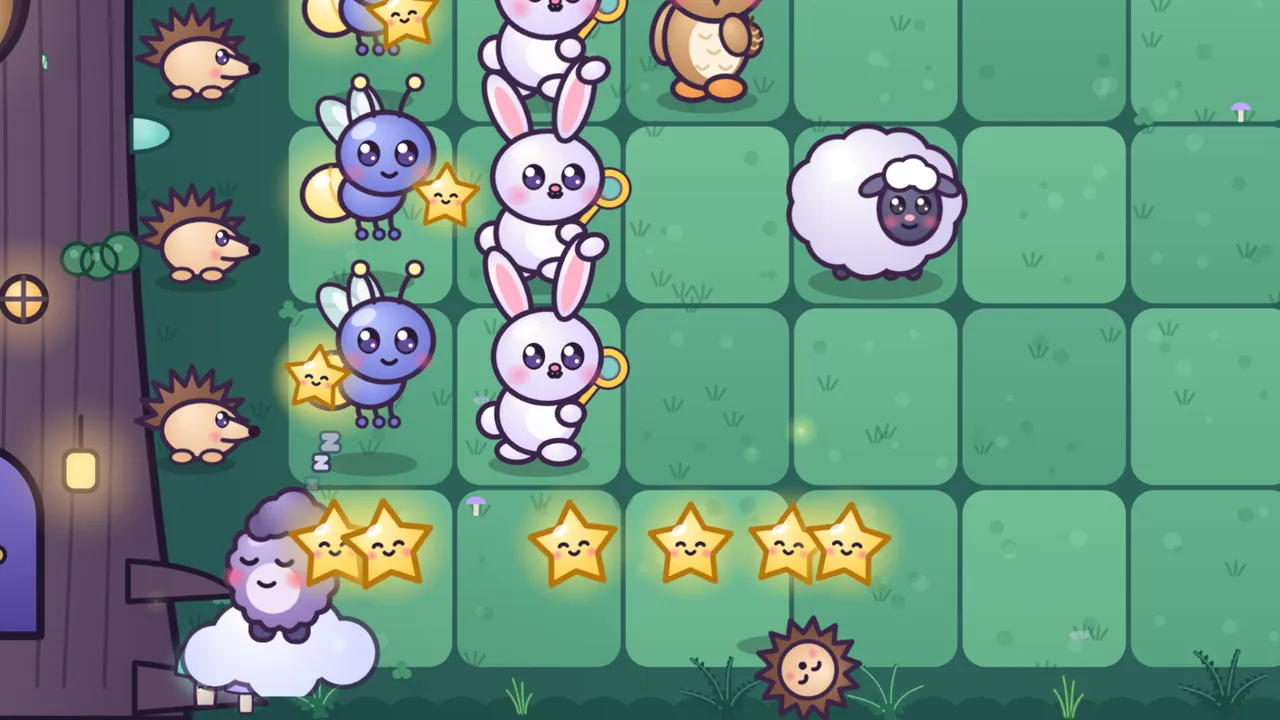
The row gets a short rest too. The next wave almost never comes down a row whose Rolly just rolled, and the one after comes down it half as often. After all of this, the young player won night 6 in 84 test runs out of 100, up from none.
A sawtooth, not a staircase
Hard nights never come in a row. Each chapter starts easy, climbs and peaks at its boss, with breathers along the way. On night 5, you bowl Rollys at the Grumps. Night 13 is calmer practice with the new Pinecone Owlet. Night 15 is Tuck-a-Grump, where a tap tucks in any Grump that pops out of a hole. Night 19, deep in the misty woods, is the hardest of all twenty.
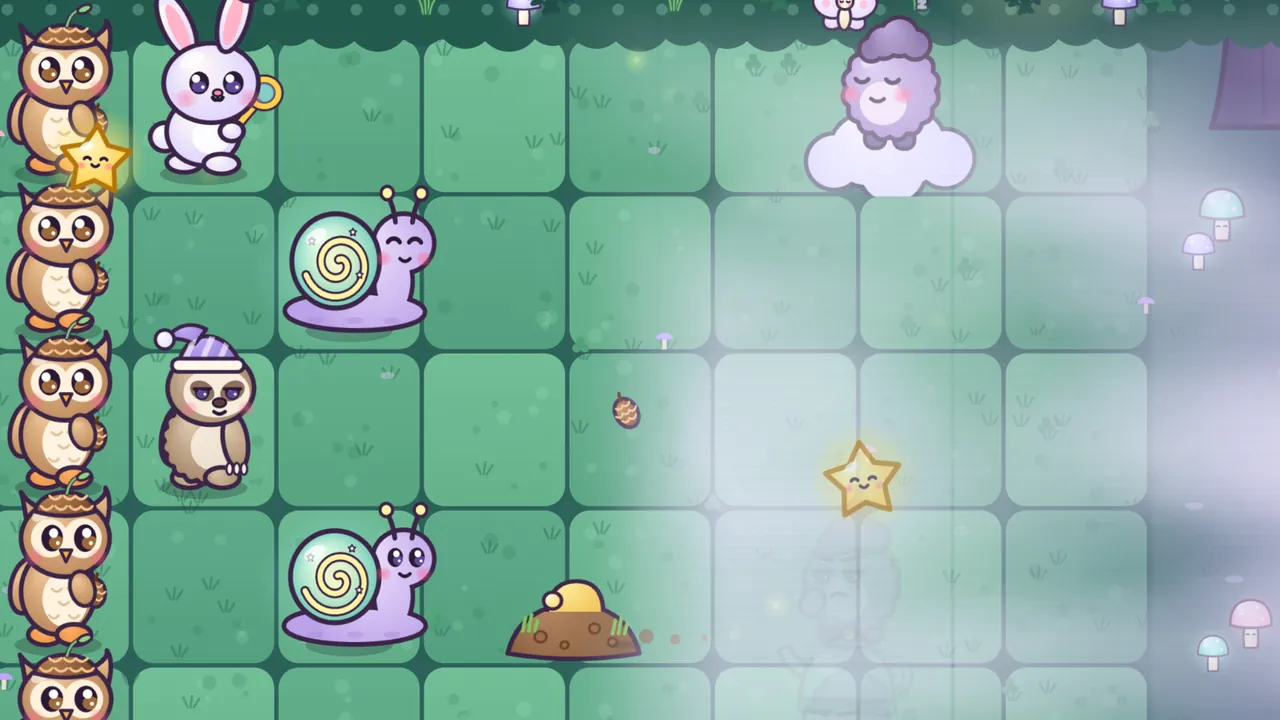
The first boss needed the opposite fix. On night 10, Fluffs arrive on a conveyor belt, and it used to drop one every four to six seconds, so nothing ever threatened anyone. Now a card comes every 9 to 11 seconds, and the boss feels like a boss.
Granny Hoot’s help
After two losses in a row on the same night, a small sky-blue button with Granny Hoot’s picture appears under the big gold “Try again.” Her help starts the night with 100 extra stardust, and the first Rolly that rolls away comes home once. Stars are counted as usual, and “Try again” stays the big button, so the choice is the child’s.
For the very youngest, the settings also have an “Auto-collect stardust” switch, and the drops gather themselves.
Play the first two nights
The first two nights of Fluffenders are free to play in your browser at fluffenders.com. The full game, all twenty nights, is $4.99, paid once. More about the game is on its Fluffenders page.