Turbo Pudding
The Thousandleaf Isles aren’t real, but many of their animals are. Under the Baron’s Dazzle, most of them make trouble, and every troublemaker gives a tell first. It’s Thursday, so here are five of them, one friend and four troublemakers, next to the real thing.
Socks, a very shy bush
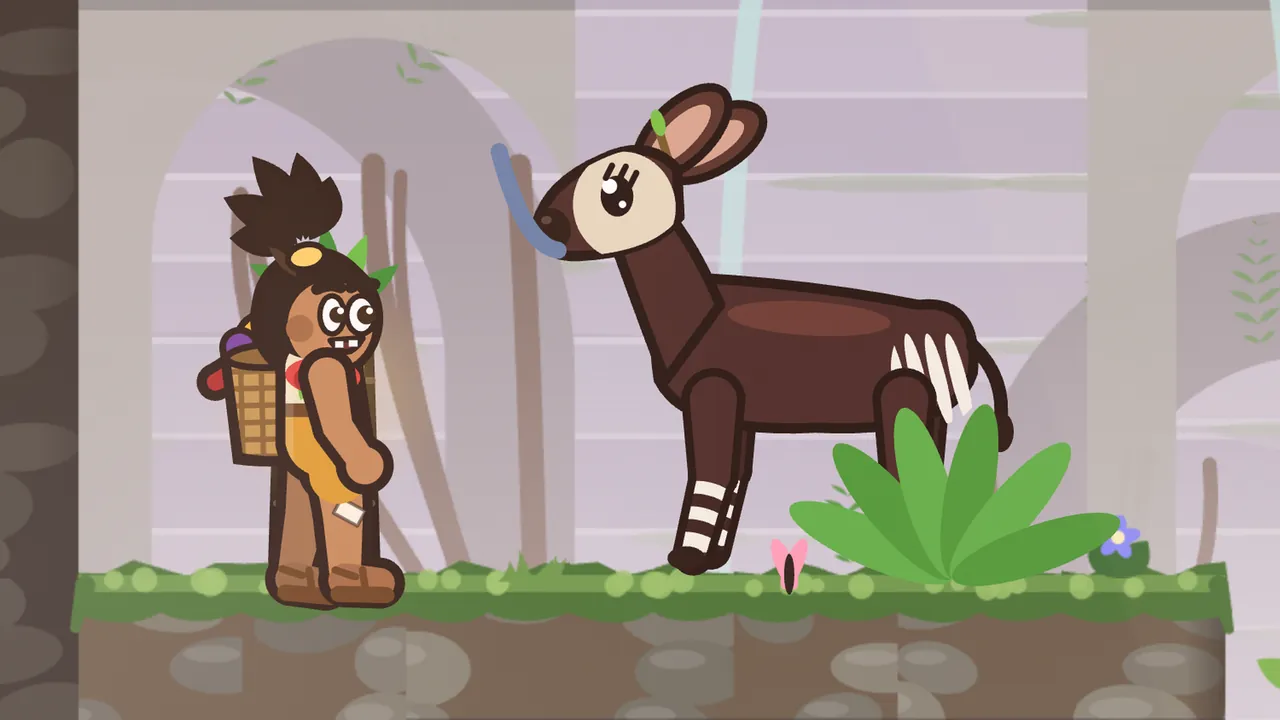
In Mossgate Ruins, Tavo finds an okapi trying to hide behind a fern much smaller than he is. “Oh! S-sorry. I’m not here. I’m a bush,” says Socks. Tavo isn’t fooled: “You’re an okapi.” Socks thinks it over: “…A very shy bush.”
Socks is the strong friend. Tavo rides on his back, where a throw becomes a ram that breaks cracked stone. Socks did warn him: “If I get scared, I might… run. Through things. Sorry in advance.” His big ears show how he feels: down when he’s shy, up when he’s scared and forward when he’s made up his mind. Now and then, a long tongue comes out for a quick lick.
The real okapi lives only in the rainforests of the northeastern Democratic Republic of the Congo, and its closest living relative is the giraffe. The white stripes on its brown legs help it disappear among dense leaves. Harry Johnston, who first got okapi specimens for science, never saw a live one, only pieces of striped skin and a skull. In 1901, the okapi was first described as a new kind of horse, but the skull showed it was a relative of the giraffe. Its tongue is long and dark, long enough to clean its own eyes and ears. We made Socks’s tongue blue.
The pangolin that rolls
Socks isn’t the only local in Mossgate Ruins. There’s also a pangolin, and we drew its coat of overlapping scales like a pine cone. Its tell is easy to spot: it curls up into a ball and shivers for a little over half a second. Then it rolls at Tavo. While it rolls, a thrown fruit just bounces off. If it hits a wall, it sits up, uncurled and dizzy.
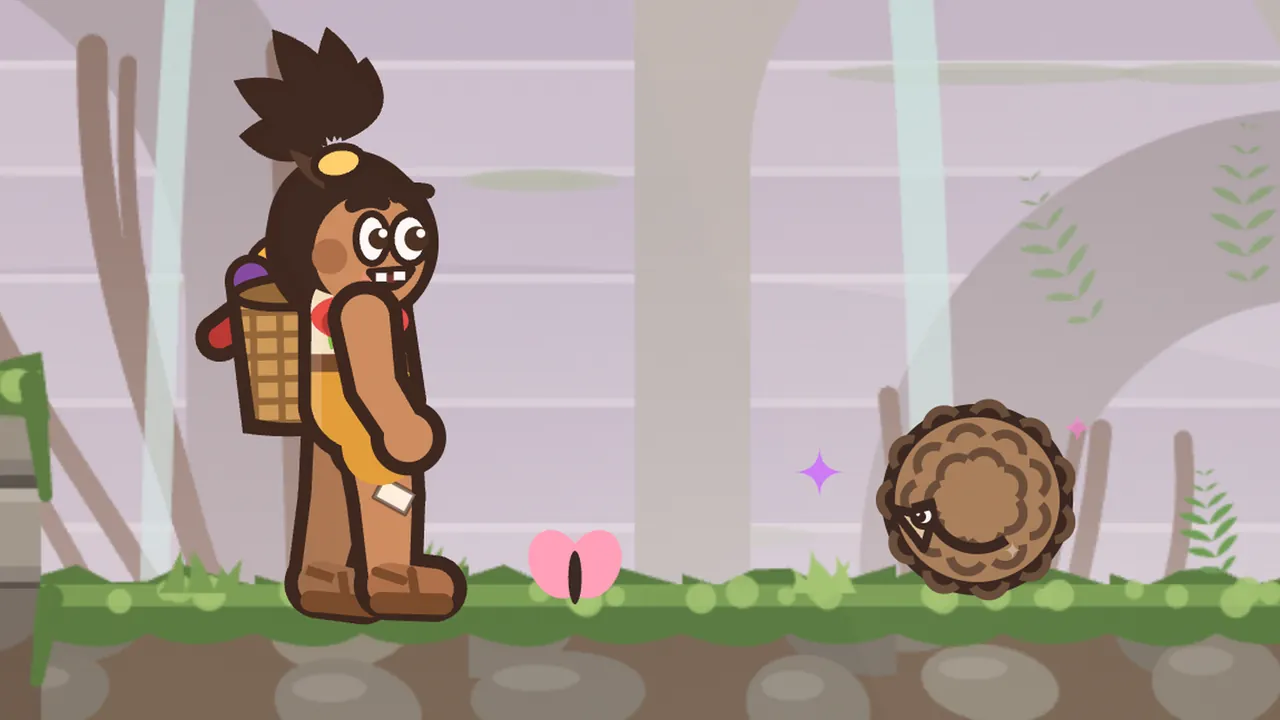
The curling up is real. Pangolins live in Asia and Africa, and their scales are made of keratin, the same stuff as fingernails. When threatened, a pangolin curls into a ball and tucks its face under its tail, so the scales work as armor. Real pangolins don’t roll at anyone, though. They’re night animals that eat ants and termites with very long, sticky tongues. The U.S. Fish and Wildlife Service calls them the world’s most heavily trafficked mammal, and in 2025 it proposed listing seven pangolin species as endangered.
A kinkajou with a fig
The Glowwood is a night level, and its kinkajous have honey-gold fur, huge night eyes and a long tail that curls around their perch. When Tavo comes within range, a kinkajou winds its arm back with a fig in its paw. That’s the tell. A little under half a second later, the fig is on its way.
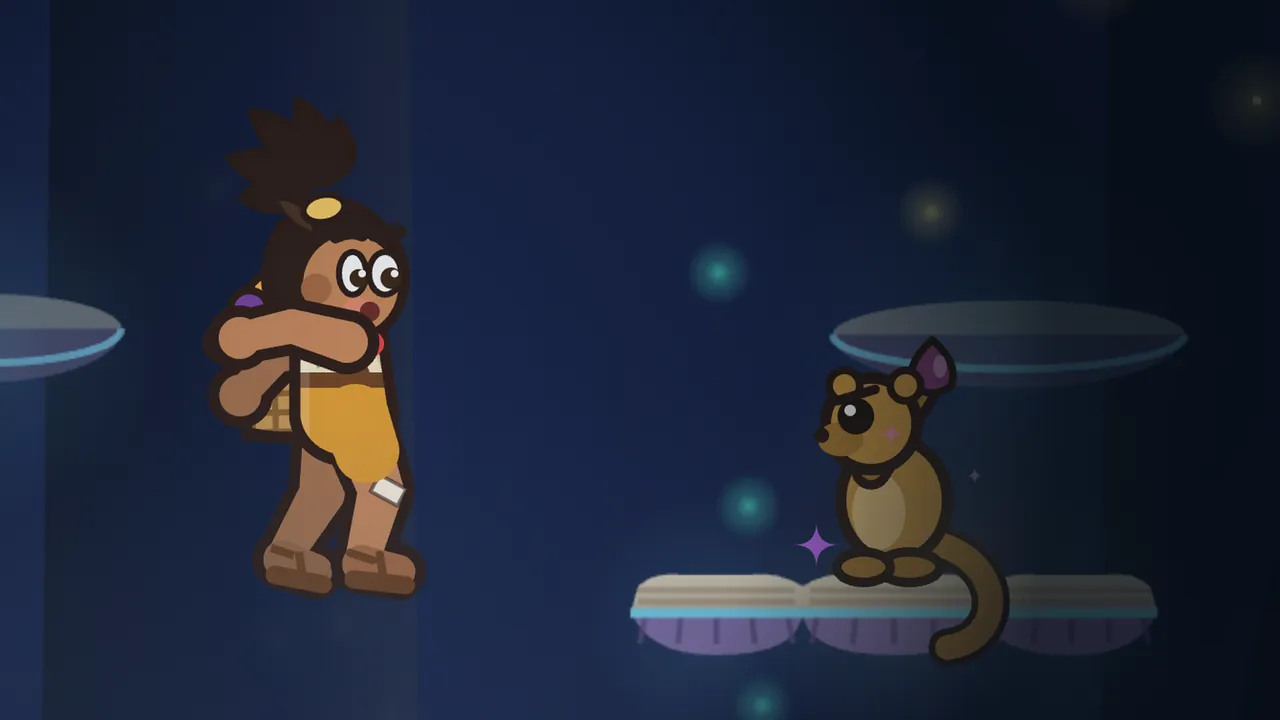
Real kinkajous live in the rainforests of Mexico and Central and South America. They’re in the raccoon family, and while they’re classified as carnivores, about 90 percent of what they eat is fruit, especially figs. A kinkajou holds a soft fruit in its front paws and scoops out the pulp with its tongue. Its grasping tail works like a fifth hand for climbing, though never for food. As far as we know, none of them throw.
Blue on purpose
At Thunderveil Falls, a little blue frog with black spots keeps watch on a ledge between the pools. It’s a blue poison dart frog. Before a hop, it crouches and puffs out its pale throat for about a third of a second, and then it leaps at Tavo.
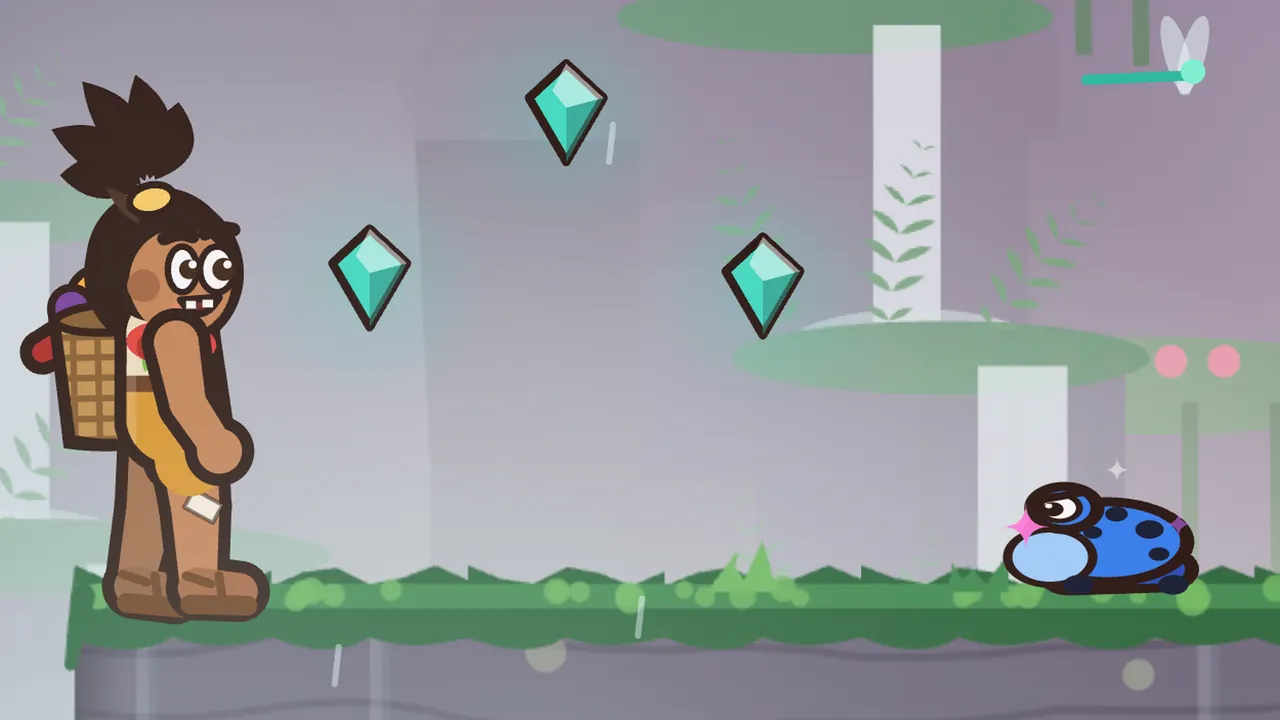
The real frog lives in small patches of forest surrounded by the Sipaliwini Savanna in southern Suriname. Its bright blue warns predators about the poison in its skin, and each frog’s black spots are its own, like a fingerprint. The poison most likely comes from the insects these frogs eat in the wild. At the Smithsonian’s National Zoo, where they get crickets and fruit flies, poison frogs aren’t poisonous at all. Despite the name, only three species are known to have been used on hunting darts, and the blue one isn’t among them.
“To-KAY!”
Inside Hollowheart, the great tree, some knotholes in the bark have two orange eyes in them. Get close, and a blue head with orange spots pops out and shouts “to-KAY!” That’s the tokay gecko’s tell. Less than half a second later, it lunges.
We didn’t make up the shout. According to the National Zoo, the male tokay gecko’s loud “to-kay” call, repeated several times in a row, gave the gecko its name. Tokays live across Southeast and East Asia and are among the largest geckos alive, with males up to about 16 inches long. Their grip is so strong they can hang on to a wall by a single toe.
Meet them in the jungle
Levels 1–3 and the first boss are free to play in your browser at jungaloo.com, Hollowheart included. The full game is $4.99, paid once. More about the game is on the Jungaloo page.