Turbo Pudding
Jungaloo is a classic jungle platformer: lianas to swing on, pits to clear, glittered creatures in the way and five bosses between Tavo and Princess Orla. We wanted it to work for two very different players. One grew up on tough platformers and wants the old thrill. The other might be playing a platformer for the very first time, maybe on the same couch.
So instead of one difficulty, the game has three ways to play and a handful of small switches. Here is how they came together.
The default: endless tries
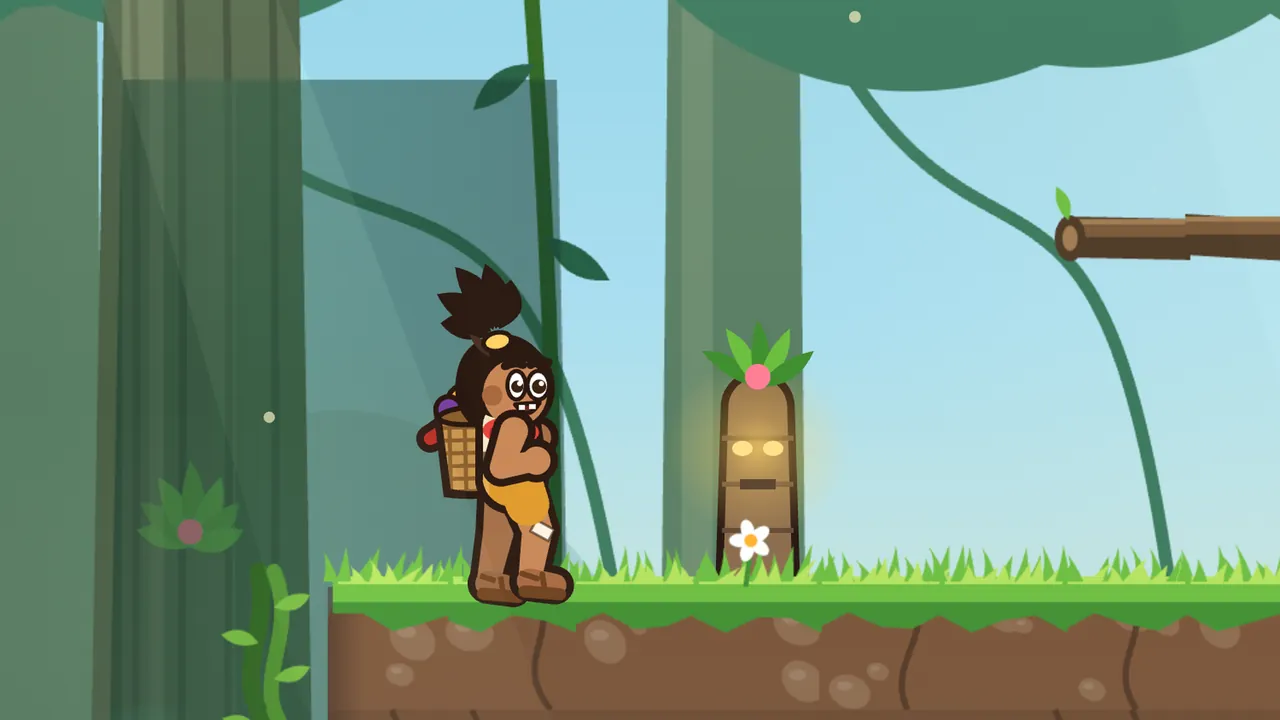
The standard mode, Adventure, has no lives at all. A fall puts Tavo back at the last checkpoint, a carved wooden totem. When he touches one, its eyes light up and the crown of leaves on top unfurls. Every totem heals three hearts and tops up the fruit basket to ten.
Most levels have a clock, but it only decides the speed medal. Running out of time costs the medal, never a life. We liked the idea of a clock you can race when you feel like it and ignore when you don’t.
Old Lento keeps an eye on you
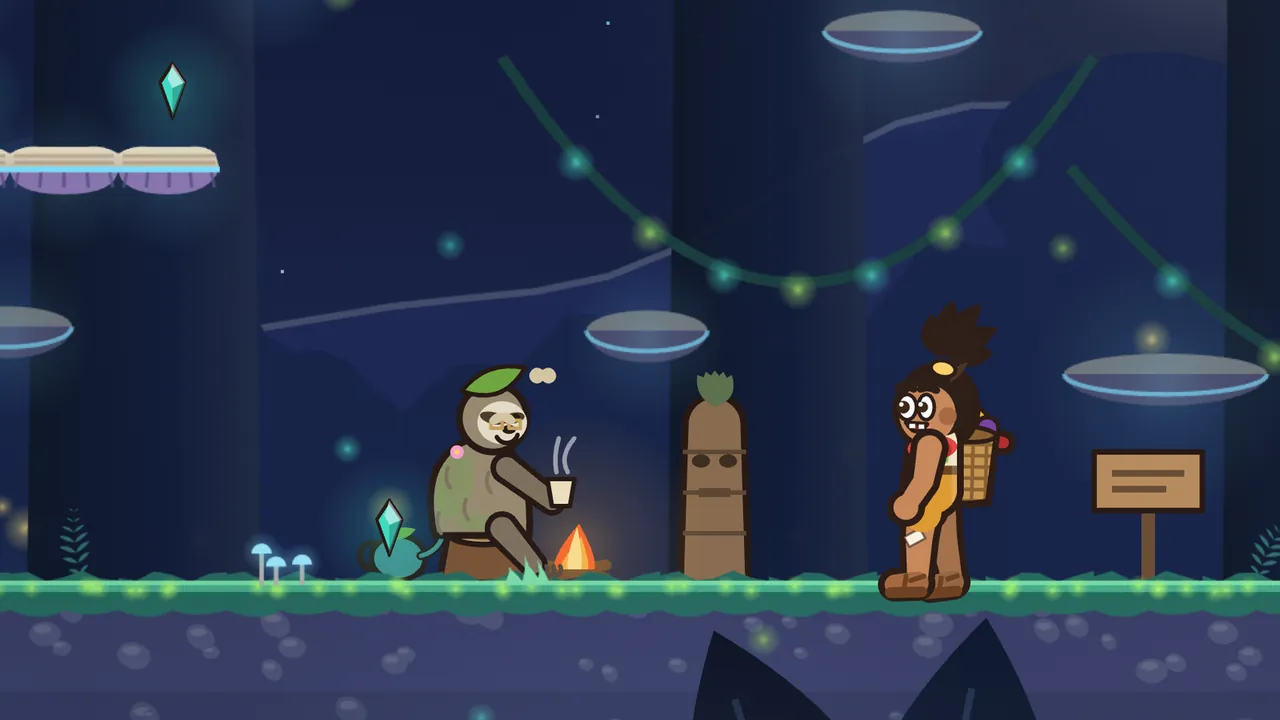
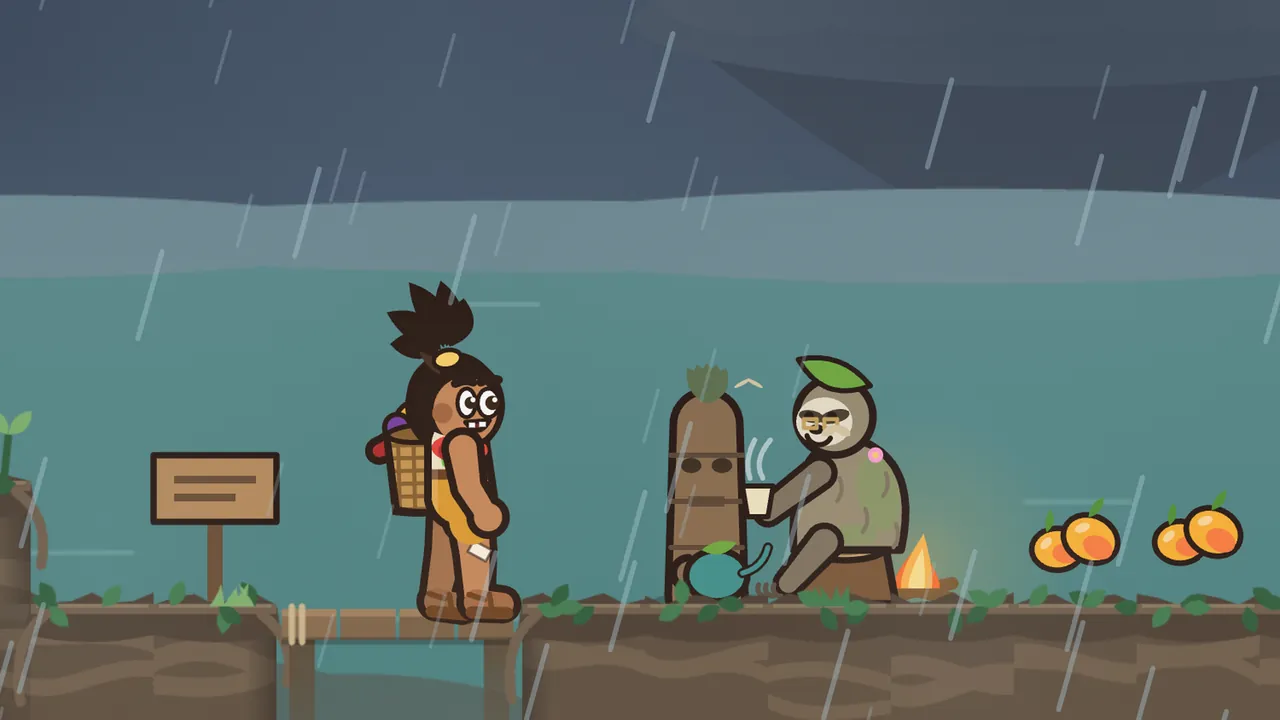
Beside some of the totems sits Old Lento, a sloth with a leaf on his head and a cup of tea, dozing by a small fire until you come near. He talks the way a sloth would: “Bamboo… bends… and doesn’t break. Be… bamboo.”
He is also our safety net. If Tavo falls three times from the same totem, Lento offers to lend him a golden heart, which takes the next blow instead of a real one. After six falls, he offers to carry Tavo on to the next totem. Both are offers, never orders. You can walk right past.
We set those numbers on the low side on purpose. Jungaloo’s levels are long, and a lot of our players are young. Help that shows up early and asks politely felt better than help that waits until someone has already given up.
Danger you can see and hear
A rule we set early: color is never the only way to tell that something hurts. Every deadly liquid in the game, whatever its color, has a flat surface, bubbles that burst and wisps of steam rising from it. Plain water has waves and glints instead.
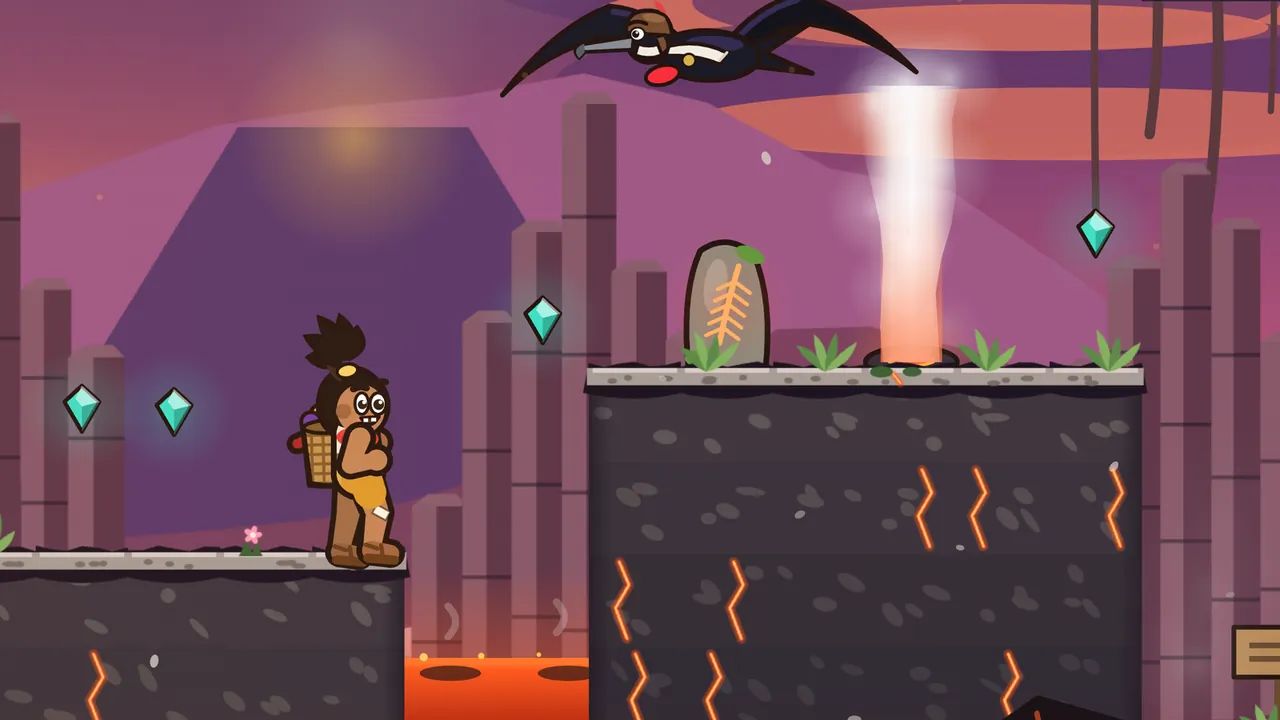
The steam vents on Ember Peak, the volcano level, work the same way. Before a jet, the vent hisses and thin wisps curl out of it. Then a tall white column shoots up, with a pink-orange root where the steam leaves the rock, so the part that hurts is plain to see. We checked the art through a filter that shows the game the way people with red-green color blindness see it, and everything could still be told apart by shape.
Comfort, for anyone who wants it
Comfort is a switch in the settings, and it is also right there in the pause menu, so you can turn it on mid-level the moment a stretch gets frustrating. Here is what it changes:
Five hearts instead of three, and no clock.
A soft landing. A fall into a pit, or a touch of lava, puts Tavo back on the last firm ground he stood on, a heart less, instead of back at the totem. The exceptions are rising lava and chase scenes, where the ground behind him is gone.
Lento helps sooner. The golden heart comes after two falls, the lift after four.
Gentler bosses. They need fewer hits. The first boss takes six instead of eight. Every moment when a boss is open to a hit also lasts 30 percent longer.
A slower world, if you like. Game speed can go to 90, 80 or 70 percent. The world slows down, but the music keeps its tempo.
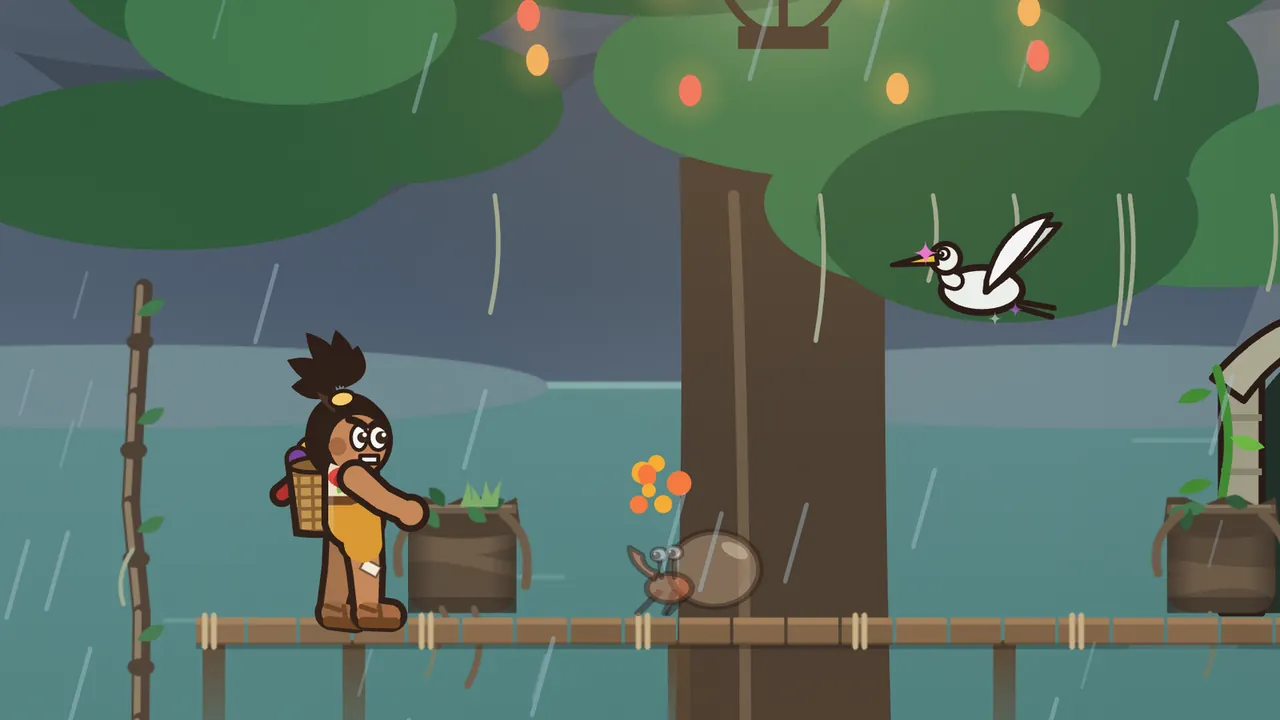
Throwing by itself on touch screens. On a phone or tablet, fruit flies at a creature ahead on its own. The creature has to be within 20 degrees of straight ahead, no more than six tiles away, with nothing solid in between, and the throws come at most every half second, so the basket doesn’t empty itself.
Classic, for the old-school thrill
At the other end is Classic lives: five lives a level, like the old days. Run out, and Tavo rests at camp and starts the level again. Whatever you found along the way stays found. Classic and Comfort can’t be on together, which seemed only fair.
The small switches
A few more settings help different hands and eyes. Hold Jump can become a tap: tap once for a long jump, and tap again in the air to let go. Reduce flashes and screen shake each have their own switch, and music and sound effects each have their own volume.
Try it your way
Levels 1–3 and the first boss are free to play in your browser at jungaloo.com, and the full game is $4.99, paid once. More about the game is on the Jungaloo page.