Turbo Pudding

It’s Wednesday, so here’s a page from our dev diary. Before any Jungaloo level reaches you, a test program plays it first, moving Tavo with the very same code you play with, just without a screen. Our rule is short: a level doesn’t go into the game until the checker says OK. And anything new, like a tide or a step that vanishes, goes into the checker first and only then into a level.
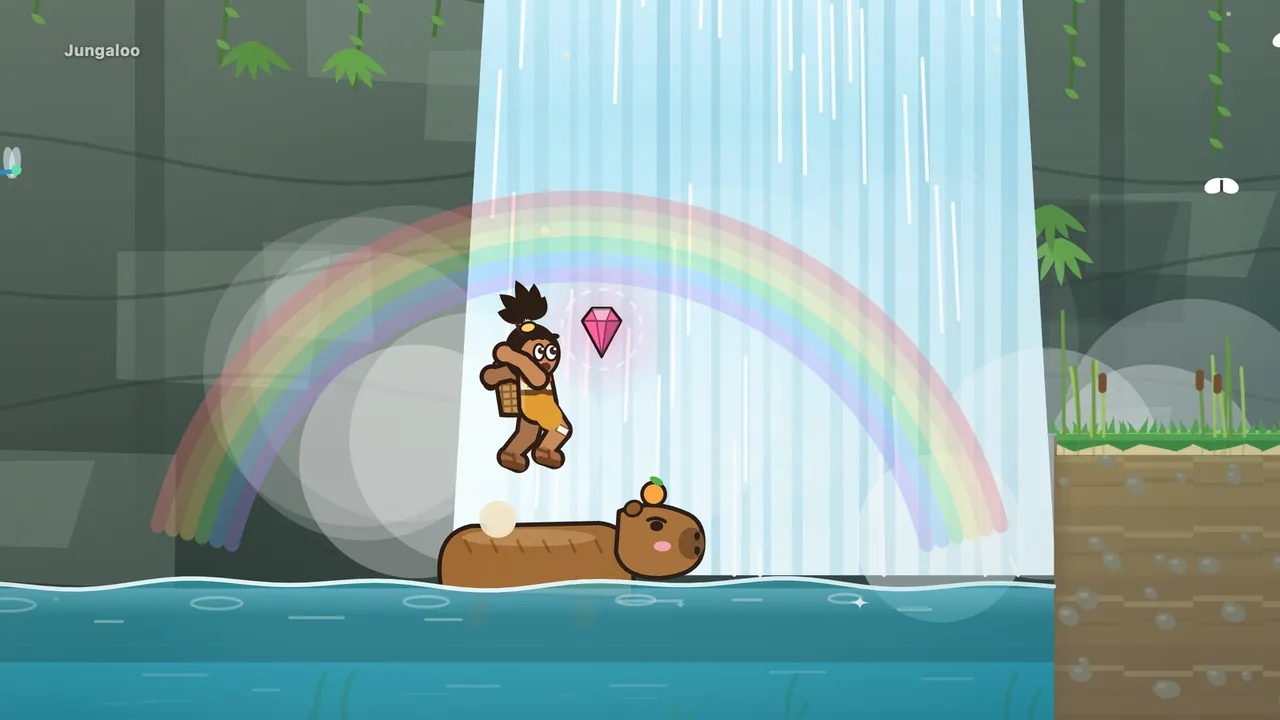
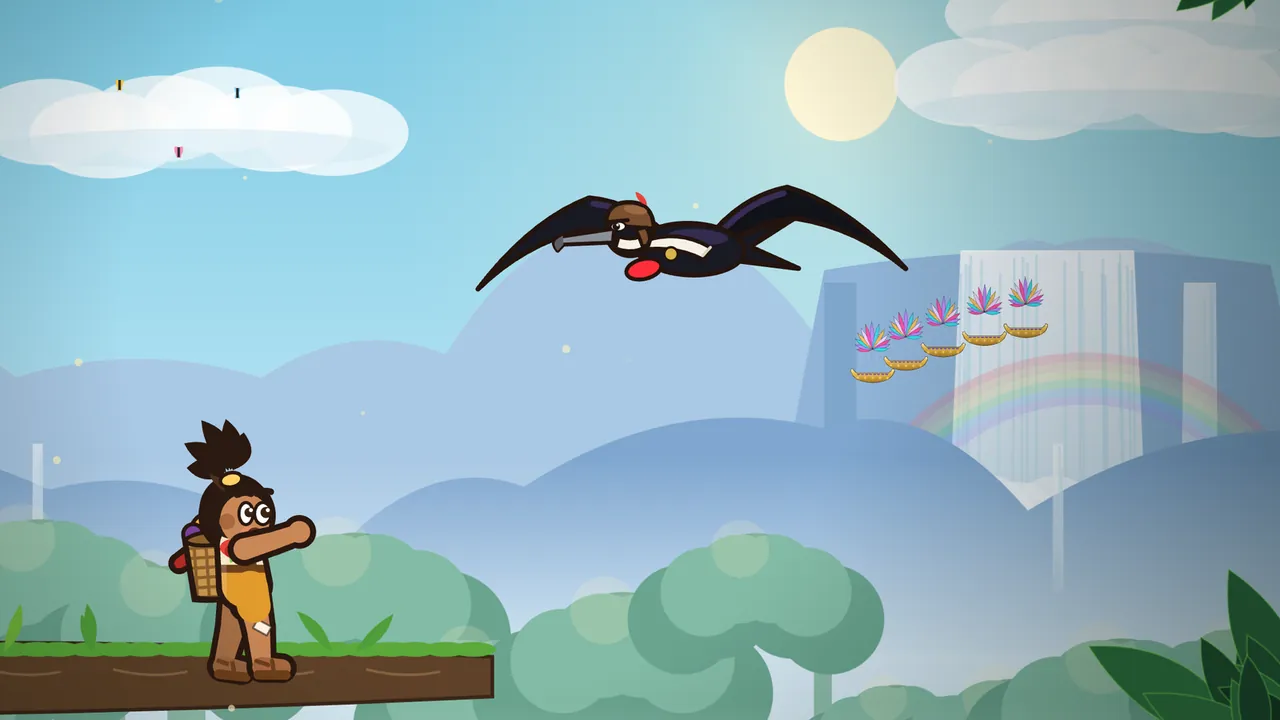
The picture at the top is Plumehall, the last level, where cloud steps come and go under the moon. More on them below.
Every place, every move
The checker starts by finding every place where Tavo can rest: on the ground, on a vine, on a liana or in the water. From each one it tries a whole list of moves: walking off the edge, short, middle and full jumps with and without a run-up, jumping straight up and drifting, dropping through a branch, climbing, jumping off a vine and swimming out.
A move that touches thorns or poison, or falls into a pit, doesn’t count. Then come the questions. Can Tavo reach the exit from the start and from every checkpoint flower? Which gems are out of reach, and are there still enough for the level’s quota? Every secret room gets the same questions, asked from its door.
Tidewood Mangroves has the most places: 1,949. All ten levels take about eleven seconds. Foes aren’t part of this run; they get a test of their own.
Let go at the right moment
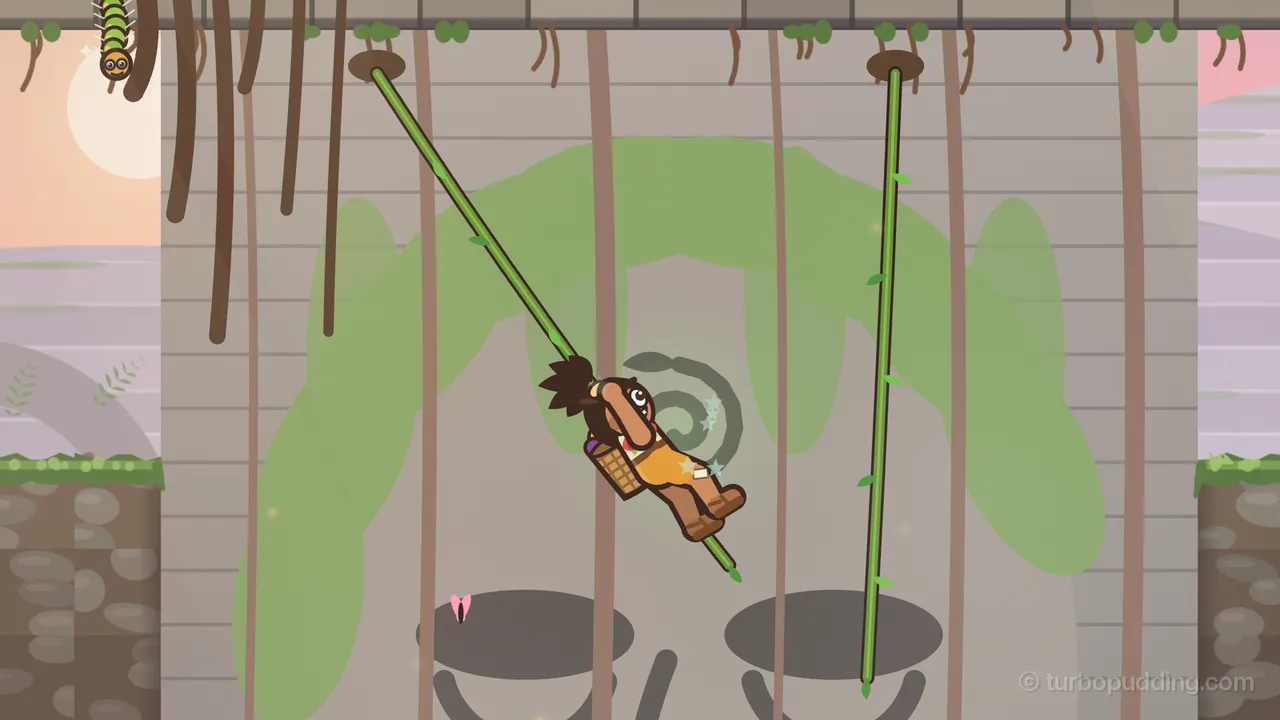
A liana is the trickiest place to start from, because the jump depends on when you let go. So the checker swings and lets go at five angles in each direction, ten tries from every spot on every liana.
Mossgate Ruins brings Socks, the okapi, who carries Tavo on his back and rams cracked stone. There the checker tries every place on Socks’ back too. A broken stone stays broken, and the level is explored again until nothing more breaks: 90 cracked stones and 205 places on his back.
When the sea comes in
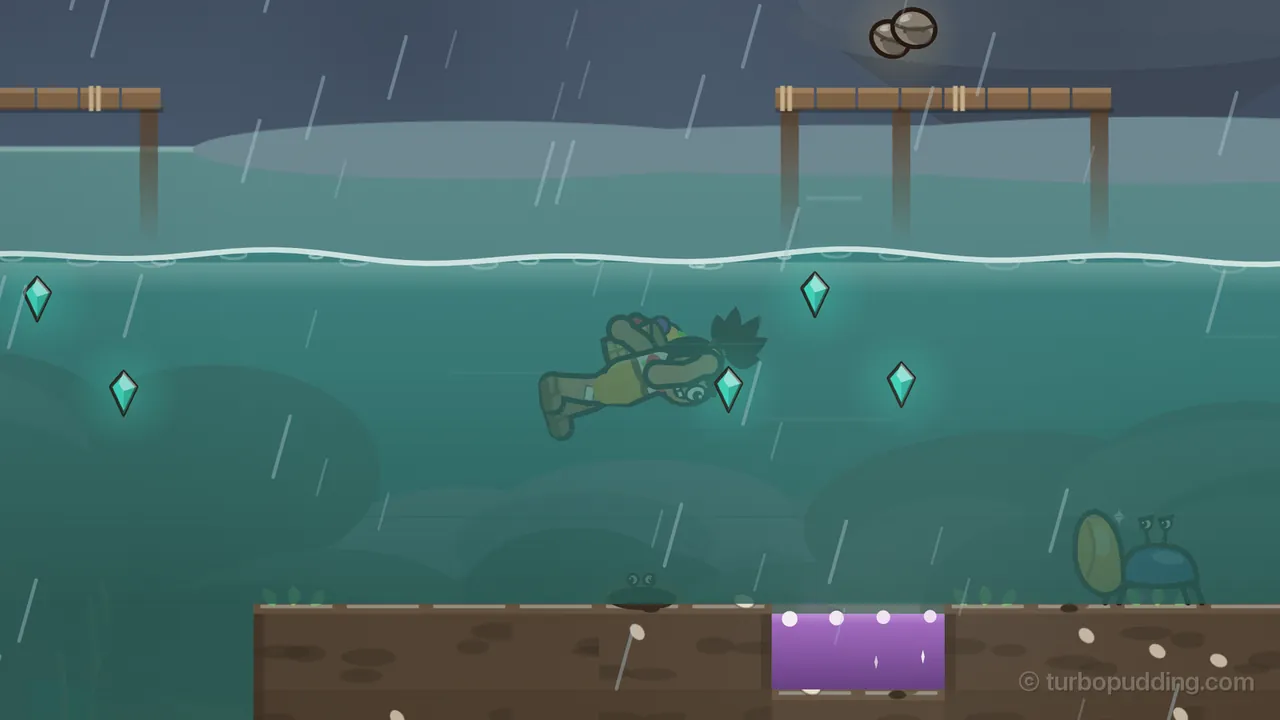
In Tidewood Mangroves, the water moves. One tide takes 14 seconds: five at low water, two rising, five at high water and two falling. A sign in the level puts it simply: “Low tide: walk. High tide: swim.”
So every place there is really two, one at low water and one at high, and each gets one more move: wait. The sea comes in or goes out over Tavo exactly as in the game, and he ends up wherever the water leaves him.
Racing the lava
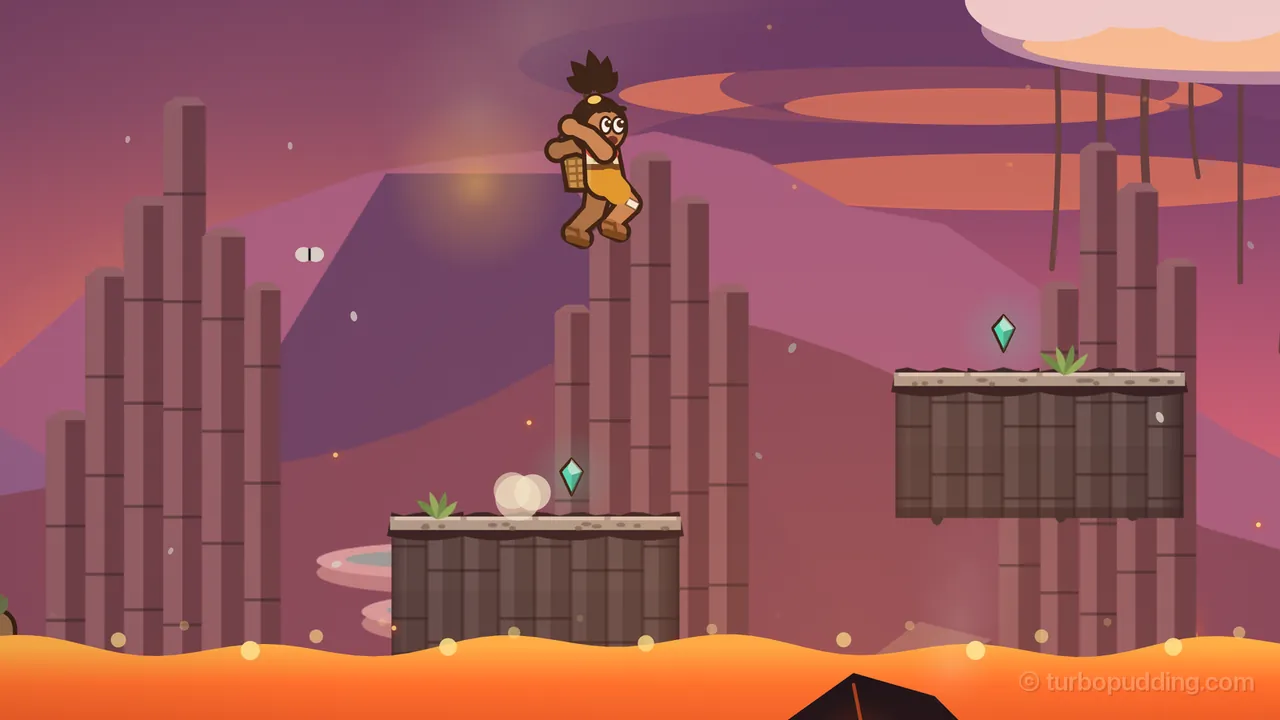
Rising lava gets a race. The checker times every move, each one from a standstill, so it is slower than you will be. If its closest call is ever under half a second, the level fails.
On Ember Peak, the tallest race is the Lava Well. From where the lava starts, the checker gets out with 3.9 seconds to spare at its closest call, and from the checkpoint flower inside, with 3.5. After a fall, the lava drops back to four cells under the flower and waits a second and a half.
Steps that come and go
Back to the picture at the top. Plumehall is full of vanishing steps, each one there for three or four seconds out of every six, all on one clock. The sign says: “Cloud steps come and go. Jump when the outline glows!”
So the checker times everything: a move onto a step must land while it’s there, and a move off must leave before it goes. One wave of six steps appears three quarters of a second apart, and our rule is that a player who takes a full second per step still has two seconds to spare. The real numbers run from four seconds down to 2.75.
Fair foes and real thumbs
From the fourth level on, every walking foe’s whole beat, not only its spot, stays three cells clear of the main path’s landings and of the edges of deep drops. To find the beat, the test lets each foe walk for a minute while Tavo floats above it, so it never rushes or turns toward him.
The last test pretends to be a phone held sideways, running at 60 frames a second, a slightly uneven 60, then 120, 90, 144 and 30, the rate a phone drops to when it saves battery. Every tap on Jump must lift Tavo and every tap on Throw must throw, including the first taps after the whole way in from the title screen.
Levels 1–3 and the first boss are free to play in your browser at jungaloo.com, and the full game is $4.99, paid once. More about the game is on the Jungaloo page.