Turbo Pudding
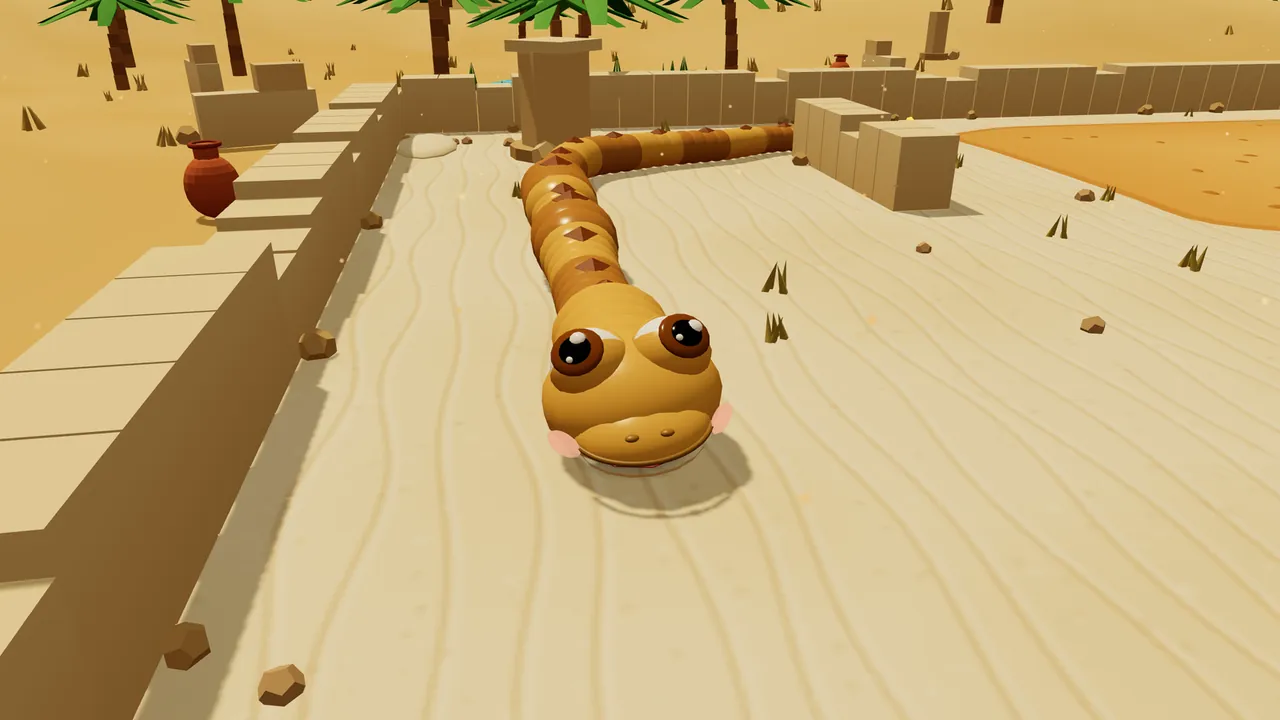
In the Sunstone Dunes, the third world of Lassoodle, Milo hears someone shouting from inside a pyramid: “HELLO? Anybody? I’m stuck in a JAR!” That’s Sandy, a loud treasure hunter, who joins the team once the world is done. Sandy is sand gold with brown diamonds down the back, and the tail ends in a little rattle. It’s Thursday, so here’s the real story behind those details: real rattlesnakes, from Yosemite to Death Valley.
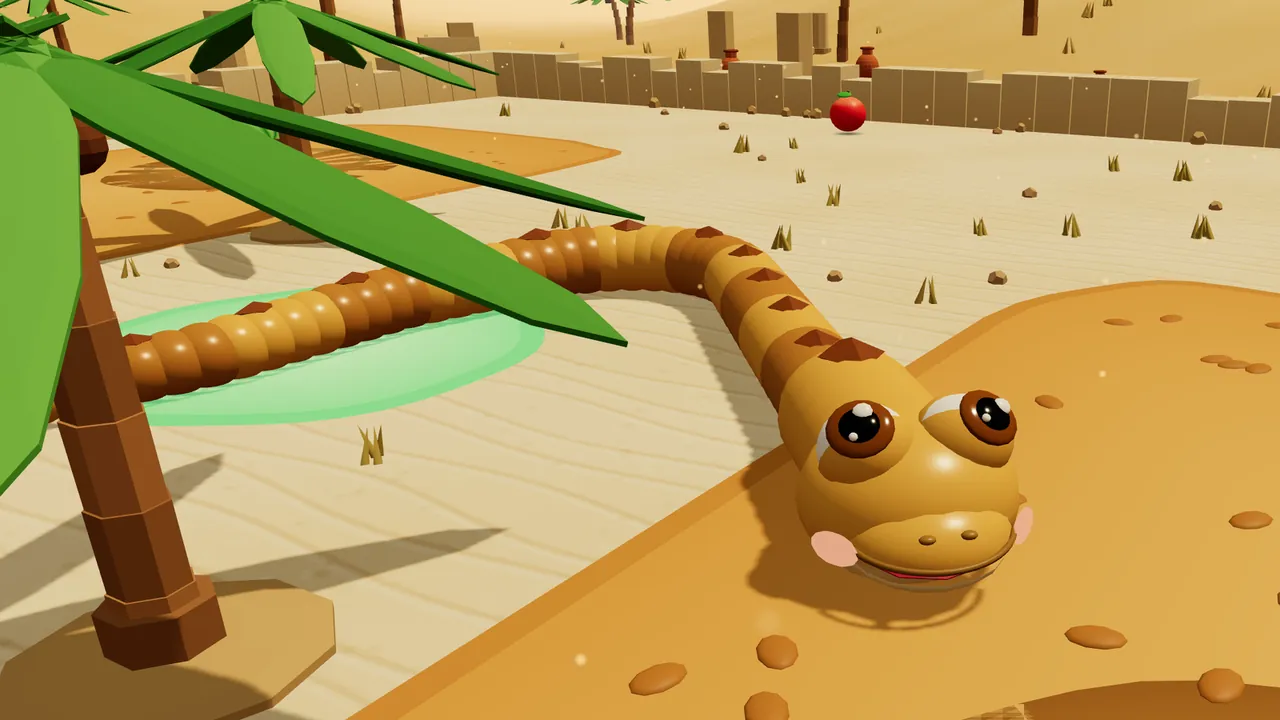
The picture at the top is Sandy on a path of rippled sand in Mirage Oasis, between two low walls of old ruins.
Only rattlesnakes rattle
According to the National Park Service, rattlesnakes are the only snakes in the world with a rattle. It’s made of loosely jointed segments, and Yosemite National Park explains what they are: hardened keratin, the same stuff as your fingernails.
Every time a rattlesnake sheds its skin, it gets one more segment. That’s why counting them won’t tell you how old the snake is, only how many times it has shed. Old segments also get brittle and break off. A baby rattlesnake isn’t even born with a rattle. About two weeks after birth it sheds for the first time and gets a single piece, called a button. It takes several months of growing before there are enough pieces to buzz.
And when it buzzes, it’s fast. Yosemite’s rangers give a rate of 20 to 100 times per second, depending on temperature. Warm snakes rattle faster. They also say rattlesnakes rarely rattle at all, even around predators. Most of the time they just keep still and hope nobody notices them.
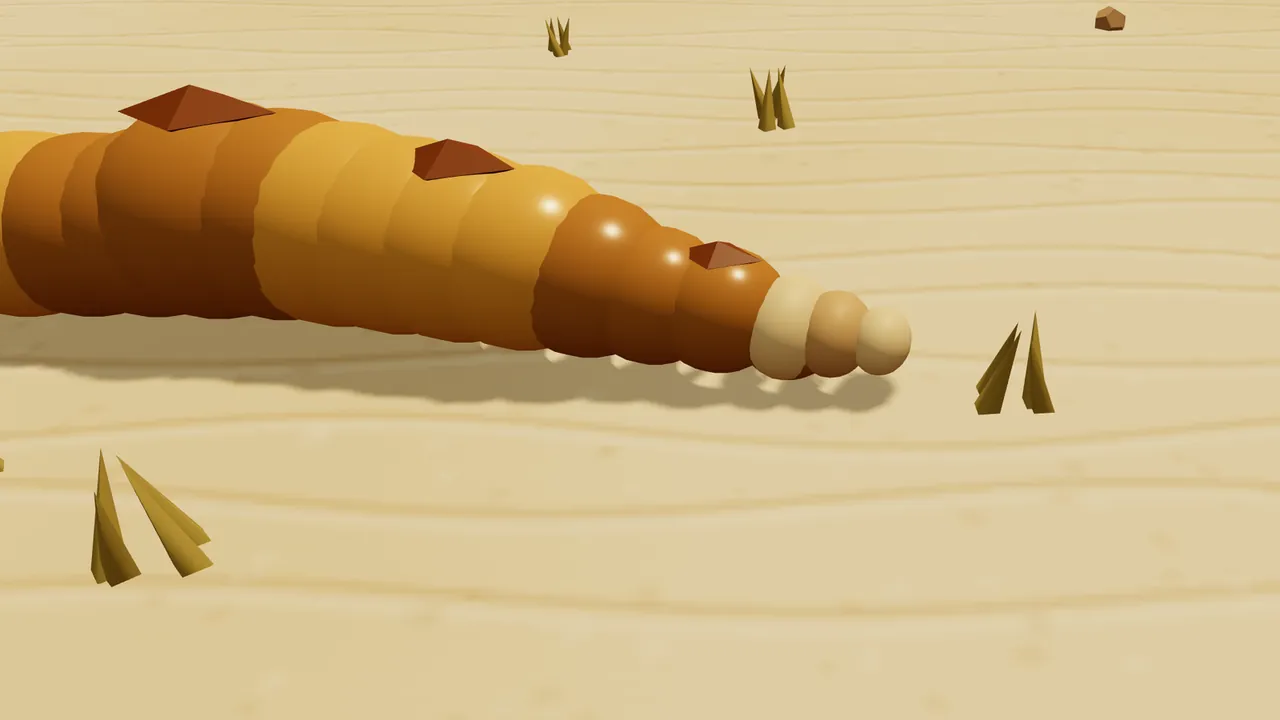
Sandy’s rattle
Sandy’s rattle has three beads, cream, tan and cream again, getting a little smaller toward the tip. While Sandy slithers along, it gives a small, lazy wiggle the whole time. Hold the boost, and it shakes hard and fast, like a real one in warm weather.
Sandy’s portrait keeps it even simpler: there, the rattle is three little cream ovals at the end of the tail.
The diamonds on the back
Sandy’s brown diamonds come from a famous neighbor. Saguaro National Park in Arizona is home to six kinds of rattlesnakes, and the park describes one of them, the western diamond-backed rattlesnake, as the largest rattlesnake in the western U.S. It gets its name from the diamond-shaped markings on its back. A big one can be 90 inches long, which is seven and a half feet.
Sandy grows in a different way, with every bite of fruit: an apple adds one bead, berries two and a melon three. In Endless, a snake can grow to 150 beads.
Full speed in sand
In the Sunstone Dunes, patches of soft sand slow every snake down to a little more than half speed. Quicksand is slower still, and it pulls you toward its middle. Sandy’s perk is simple: full speed in sand. Quicksand still gets Sandy, though. Nobody is that good.
Real desert rattlesnakes have their own trick for sand. The sidewinder is named for its sideways gait, and Saguaro National Park describes how it works: the snake throws a loop of its body in the direction it wants to go, pulls the rest of its body to the loop and repeats. Less of the body touches the ground, so it slips less on loose sand. Death Valley National Park adds a bonus: the less time any part of the body spends on the hot sand, the cooler the snake stays.
The sidewinder leaves J-shaped tracks behind. In the heat of the day it often does what Death Valley calls “cratering,” shifting from side to side until almost its whole body is under the sand. It’s small for a rattlesnake, usually a foot and a half or less, and it has little “horns” over its eyes.
Loops are a desert thing
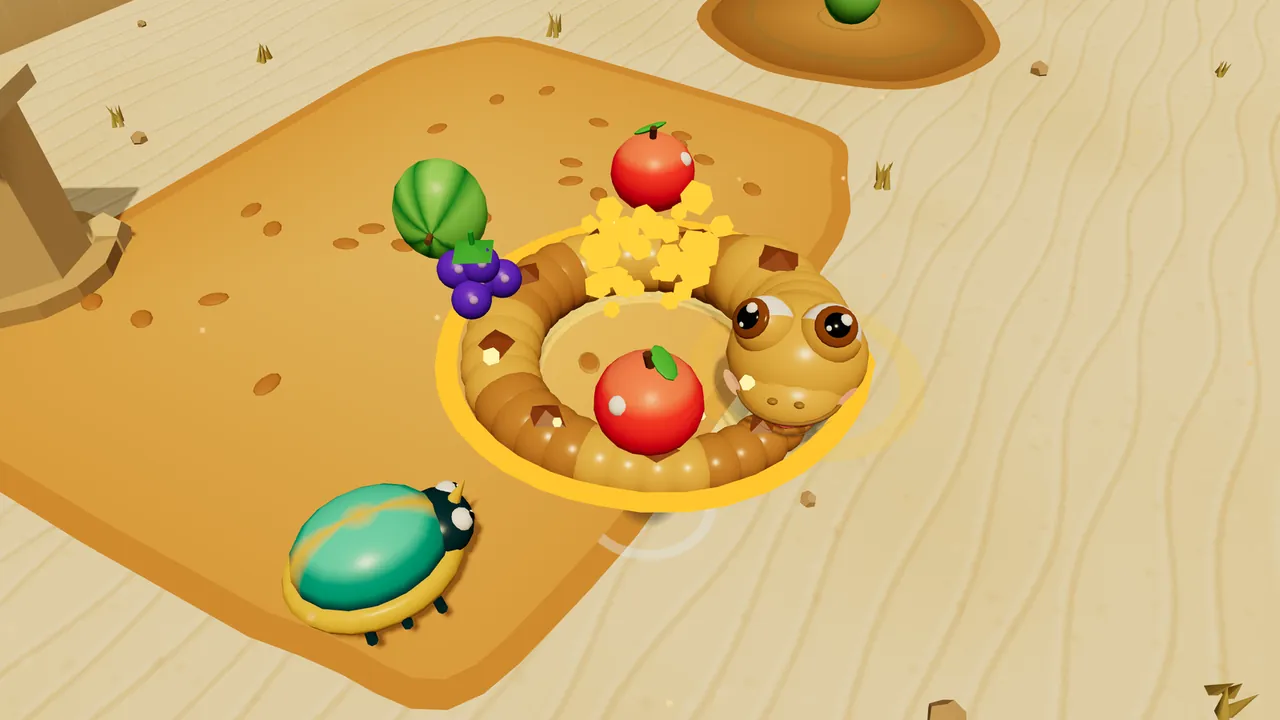
So a snake that gets around by throwing loops lives in the real desert, and a snake that wins by closing loops lives in ours. In Lassoodle, when your head touches your own body, the loop closes and catches everything inside. In Scarab Dunes, a loop around a walking scarab pays out a shower of fruit.
One last real-world rule from Saguaro’s rangers: if you ever see a real rattlesnake on a trail, stay at least 10 feet away and let it be.
World 1, the Sunny Orchard, is free to play in your browser at lassoodle.com. The full game, all six worlds and the Sunstone Dunes among them, is $4.99, paid once. More about the game is on its Lassoodle page.