Turbo Pudding
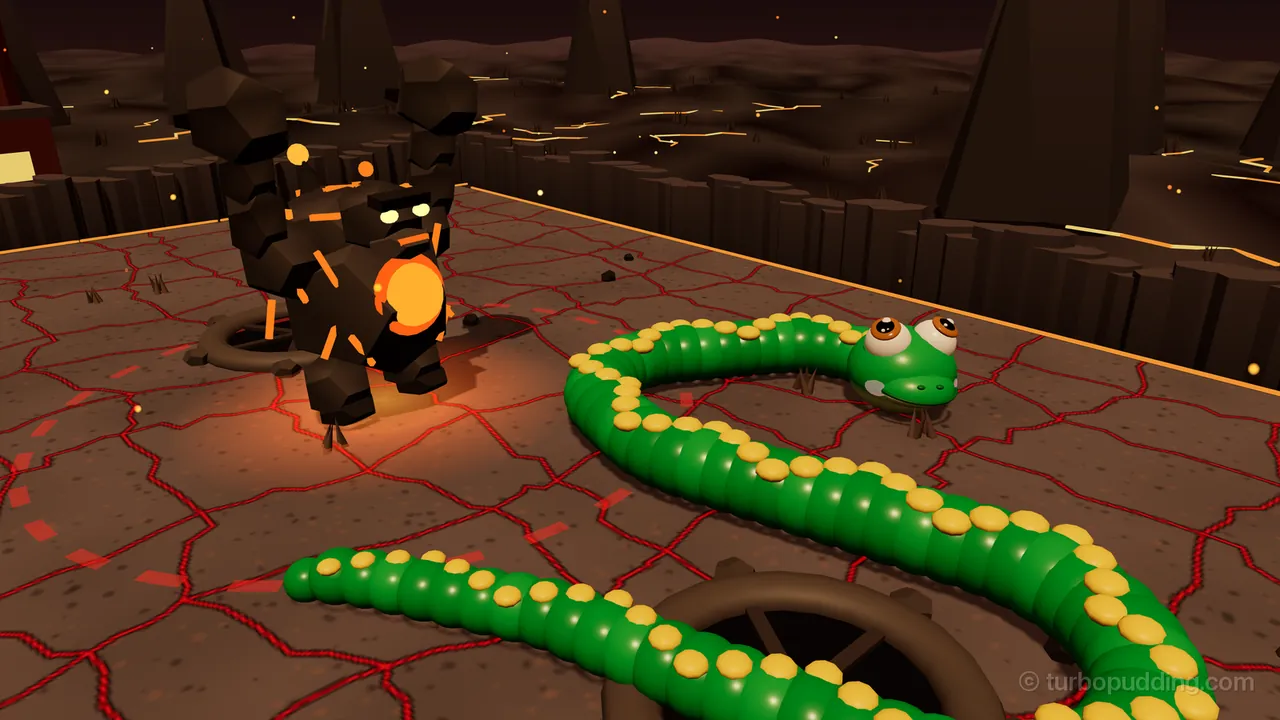
Ember Forge, the fifth island of Lassoodle, is all lava rivers, hot rocks and hotter tempers. The floors glow, the slimes leave fire behind them, and at the end a Magma Golem stomps after Milo. To beat him, you cool him down: lure him onto a steam vent, and while his core is cooled, throw your loop.
It sounds like pure cartoon logic. It isn’t. In 1973, the people of a small island in Iceland pointed hoses at a real lava flow and pumped seawater onto it for five months. The lava slowed, stopped in places and turned to stone. This is that story.
A volcano wakes up next to a fishing town
Heimaey is the only island with people living on it in Vestmannaeyjar, a chain of volcanic islands off the south coast of Iceland. Its town, also called Vestmannaeyjar, was the country’s premier fishing port. On the morning of January 23, 1973, an eruption began right next to it. The new mountain it built is called Eldfell.
Within a few hours, most of the town’s 5,000 people had been taken to the mainland on ships and aircraft. Then the lava started moving toward the harbor, and the harbor was what kept the town alive.
Firemen against the lava front
On February 7, two weeks into the eruption, the lava was dangerously close to the harbor entrance. Firemen from the town’s fire department started spraying seawater on the front of the creeping lava, and it soon seemed to help. Bigger pumps were ordered, and on March 1 a pumping dredge called Sandey arrived.
Sandey pumped about 400 liters of seawater a second up onto a lava tongue 30 meters (about 100 feet) high, roughly 0.4 million metric tons of water in all. The result was easy to see. That tongue of lava never moved again, even when more lava piled up and pushed against it.
The Wanderer
The strangest moment came when part of the new mountain’s crater wall broke loose and rode north on the moving lava. People gave it a name that means The Wanderer. It crept over the lava field aiming straight for the harbor entrance, and stopping it became Sandey’s job.
Forty-three pumps and 12 km of pipe
By the end of March, lava had covered one fifth of the town. Then 32 fully equipped pumps arrived from the United States. Once they were running, the lava edge facing the town moved only a little, then stopped.
The crews learned as they went. Water that ran off the lava before it could turn to steam wasn’t as useful as hoped. From March on, pipes were laid right on the red-hot lava, with water pouring out of the ends and dripping from the joints. In all, they used 43 pumps and more than 12 km (7.5 miles) of pipe. The cooling ended on July 10, 1973. By then about 6 million cubic meters of seawater had gone onto the lava and turned about 4 million cubic meters of molten lava into solid rock.
Why water stops lava
Basalt lava flows most easily at 1,000 to 1,200 °C (1,832 to 2,192 °F). Once it cools to 800 °C (1,472 °F), it firmly sets and stops flowing. The hottest flowing lava measured on Heimaey was about 1,080 °C (1,976 °F).
Water takes heat away fast. Each cubic meter of water that turns to steam cools about 0.7 cubic meters of lava. At 100 liters a second over 6,000 square meters of molten lava, a solid layer about 1 meter thick forms in a day. When the front stiffens, the lava behind it backs up and swells instead of rolling on.
There is a catch. Rock is a poor conductor of heat, so a solid, unbroken slab of lava 10 meters thick can stay hot inside for years, even with its surface soaked. The water wins at the edges, not in the middle.
Back in Ember Forge
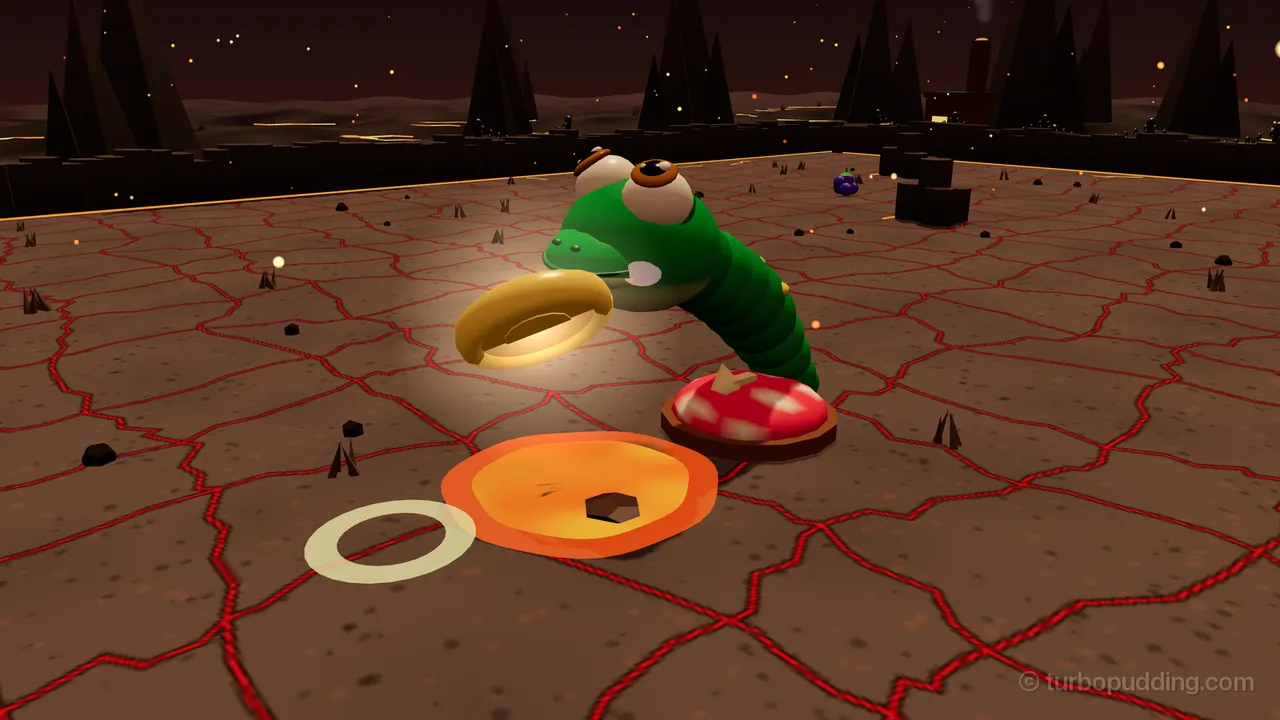
The game borrows the idea with a wink. In Ember Ring, the lava creeps in from the walls in four steps, and each edge glows before it moves. You have 77 seconds to stay alive in a yard that ends up 15 meters across. Pip says it plainly: “The lava is closing in! Stay in the middle!”
The Magma Golem is the hot one. Four round steam vents sit in his arena. When he steps on one, it hisses and blows, the steam cools his core, and he goes crusty and gray and stands still for a few seconds. That’s your window to loop him. Granny Moss has the plan: “Stand so a vent lies between you, dear.”
On Heimaey, about one-third of the town was lost before the eruption ended, but the seawater probably kept the damage smaller. The U.S. Geological Survey calls it the most extensive lava-cooling operation ever attempted.
World 1, the Sunny Orchard, is free to play in your browser at lassoodle.com. The full game, all six worlds and Ember Forge among them, is $4.99, paid once. More about the game is on its Lassoodle page.