Turbo Pudding
In Tomorrow Ago, you can try anything on anything. Take an item from your pockets and hold it up to a lamp post, a stove or a stranger, and see what happens. Most of the time, nothing does, and that’s where Mira comes in. We didn’t want a buzzer or a flat “You can’t do that,” so every wrong try gets an answer in her own voice. It’s Friday, so here are some of our favorite ways Mira says no.
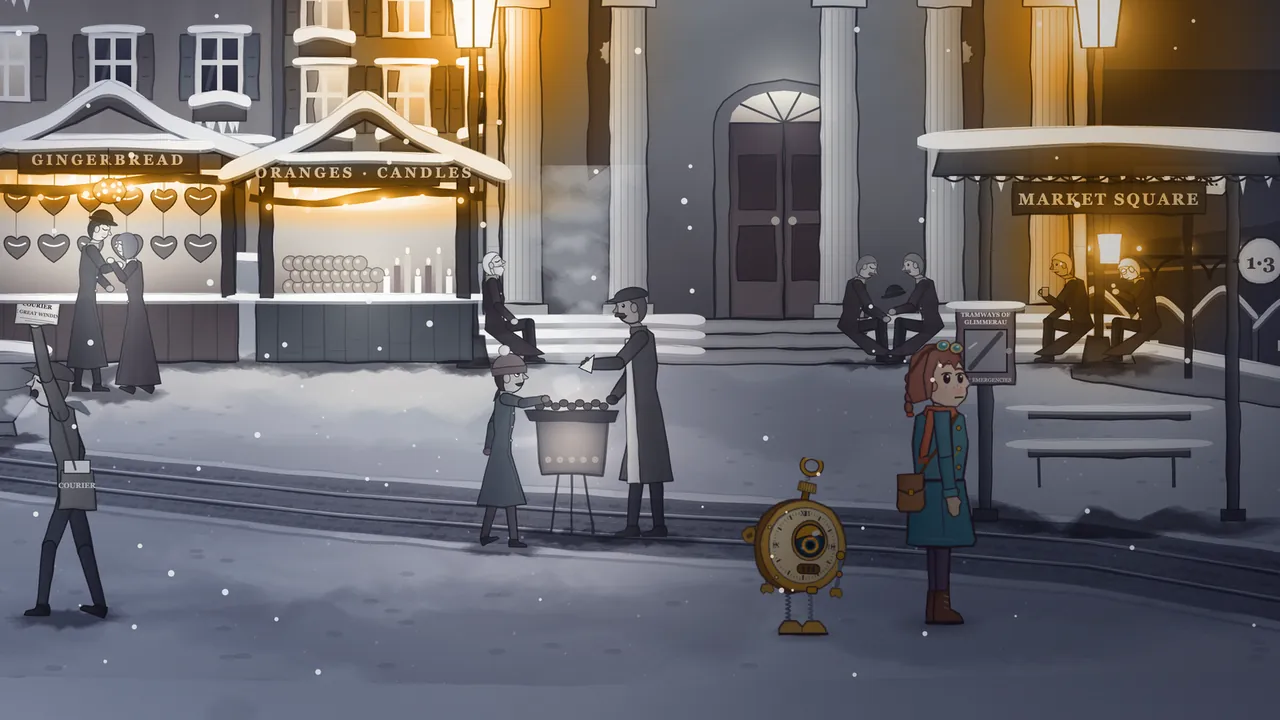
The picture at the top is the market square at 11:47, the minute every clock in Glimmerau stopped. The chestnut man holds out a cone to a girl in a beanie, the Masters of the Guild sleep on the steps of their hall, and only Mira and Tik are still moving.
A line for any occasion
Mira keeps a few spare lines for the times nothing special is written. Use the wrong thing, and she might say “I’d rather not” or “Grandpa would have words about that.” Put an item where it doesn’t belong: “Nope. Not even in 1927.” Or: “I could try, but it would only sulk.” Try to join two things that don’t fit, and she reminds you, “I’m a clockmaker, not a magician.”
The spare lines take turns, so the same one never comes twice in a row. Even looking has one: “Nothing special. Which is special, in its own way.” And if you look at Mira herself, she sums herself up: “That’s me. Fifteen, oil under my nails, and a scarf Grandpa says is ‘aggressively orange.’”
Home, where the stove is
Grandpa’s workshop is the first place you try things, and Mira knows every inch of it. Offer the stove something, and she says, “I’m not cooking that.” Try the wrong thing on the Vienna regulator, the tall clock on the wall: “That’s not a key. Grandpa would weep.”
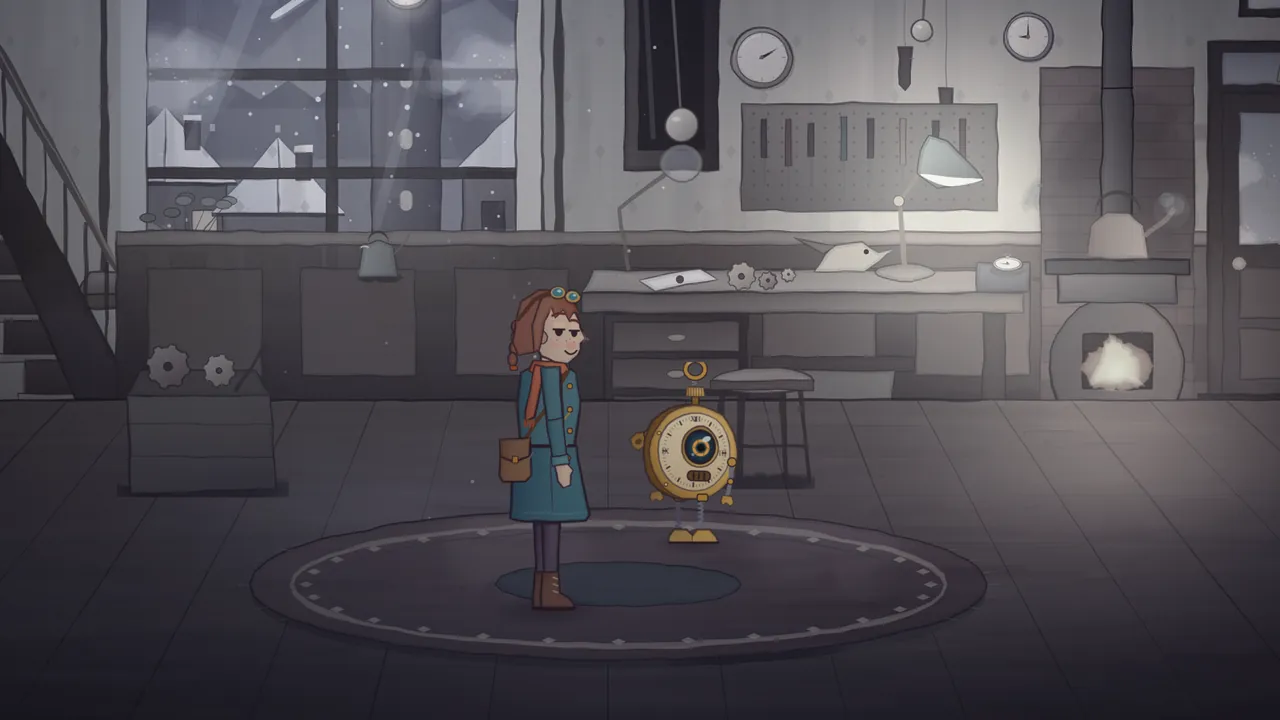
Then there’s Tik, the pocket watch with legs. Before he wakes up, Mira has a theory about him: “He’s asleep. Or switched off. Or whatever little brass people do.” Once he’s up, you can offer him anything in your pockets, and Tik always asks the same careful question: “Not... food?”
Out on the square
The square is full of people stopped mid-moment, and Mira won’t treat them like furniture. Offer the couple under the mistletoe anything: “I’m not putting things on frozen people. Not on these two.” Offer the newsboy the wrong thing: “He sells newspapers. Not whatever that is.” The chestnut man gets the same: “He sells chestnuts. He doesn’t buy junk.”
The rest of the square gets a word, too. The stone urn at the statue’s feet: “I’m not burying that in a flowerpot.” Tram No. 1, caught jumping its rails: “The tram doesn’t need that. It needs a miracle. Or a very big crowbar.” And the Masters asleep on the steps: “They need sleep and soup. I’ve got neither.”
Upstairs, with the Provost
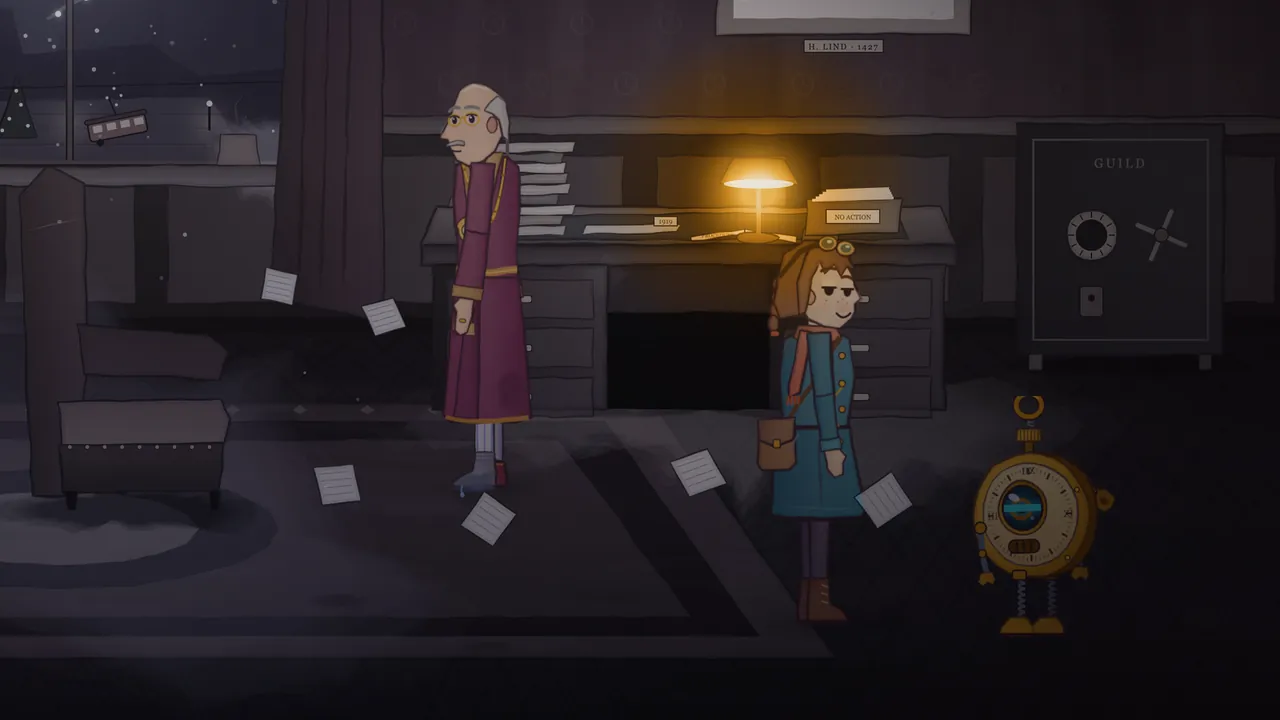
Upstairs in the Guild Hall, the sign on the Provost’s door sets the tone: “Provost A. Crane. Knock, then wait. Then knock again.” Try the wrong thing on that door, and Mira answers in kind: “That’s not a key. That’s an opinion.” Inside, hold something out to the Provost himself, and he looks it over sternly: “Is that evidence? It looks like the contents of a pocket.” The big safe in the corner turns down everything, and Mira knows why: “Safes don’t respond to optimism.”
Down in the tower
At the foot of the Great Clock, Mira is at her most protective. This is Grandpa’s machinery, and she won’t hear a word against it. Try the oil can on the lift’s gearbox: “Grandpa’s gears don’t need oil. Grandpa’s gears need respect.” Offer the gears on the floor something from your pockets: “They’re gears. They’re not interested in my pocket.”
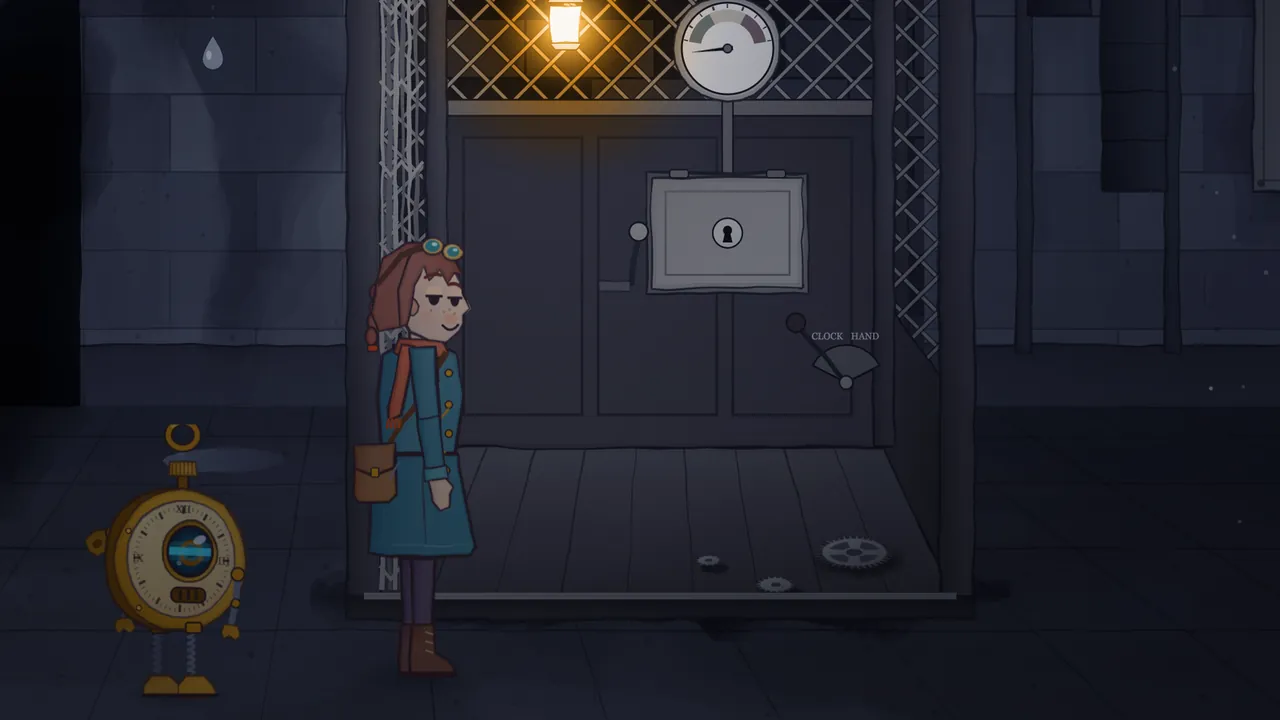
And the drop of water hanging halfway down from the roof gets a line of its own: “I’m not catching a drop. It’ll just hang wherever I put it, making a point.” Tik, as usual, keeps it short: “Drop. Not dropping.”
None of these lines changes a thing. A wrong try never costs you anything, and there’s no way to break the game by trying silly things. They’re there because trying silly things is half the fun of a point-and-click game, and Mira deserves the last word.
Tomorrow Ago is free to play in your browser at tomorrowago.com. More about the game is on the Tomorrow Ago page.