Turbo Pudding
Tomorrow Ago has a waltz, a ticking workshop, a doorkeeper who talks like a gramophone and a sheet of paper that stops in mid-air. None of it comes from a sound file. Every note, tick and voice is built by the game in your browser while you play, out of a few simple waves and a bit of hiss. So there’s no sound to download, and every note is ours. It’s Wednesday, so here’s how Glimmerau gets its sound.
One waltz, many coats
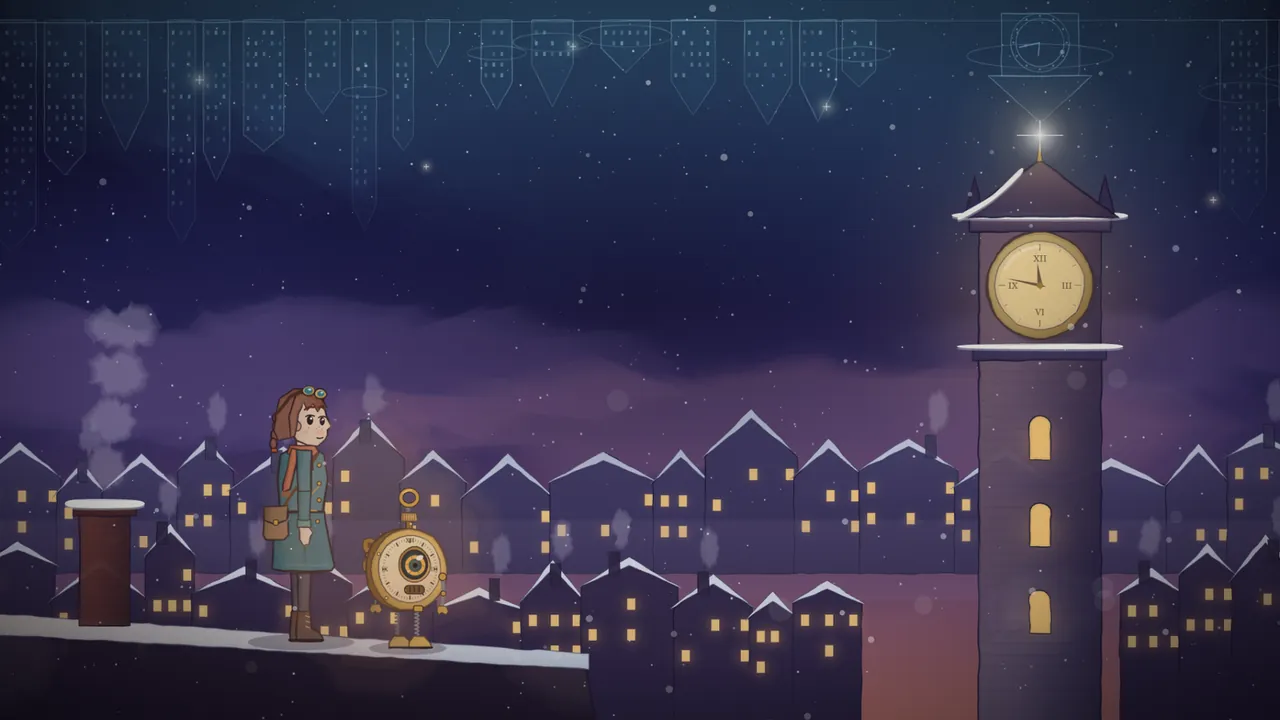
The game’s tune is called Heart of Hours. It’s a waltz in D minor, three beats to the bar, and it ticks. On the title screen, a music box plays it slowly over soft strings, a cello and a slow bell. In Grandpa’s workshop, the music box plays it faster, over a harp and plucked strings, with a soft tick on every beat.
We write the songs into the code like a score: notes, held notes and rests, six steps to a bar. Some parts aren’t written out at all. A celesta makes up its own line over the chords. On some beats, it picks a note from the chord close to the one it played last, and each time through the song, the line comes out different.
The minute the music stops
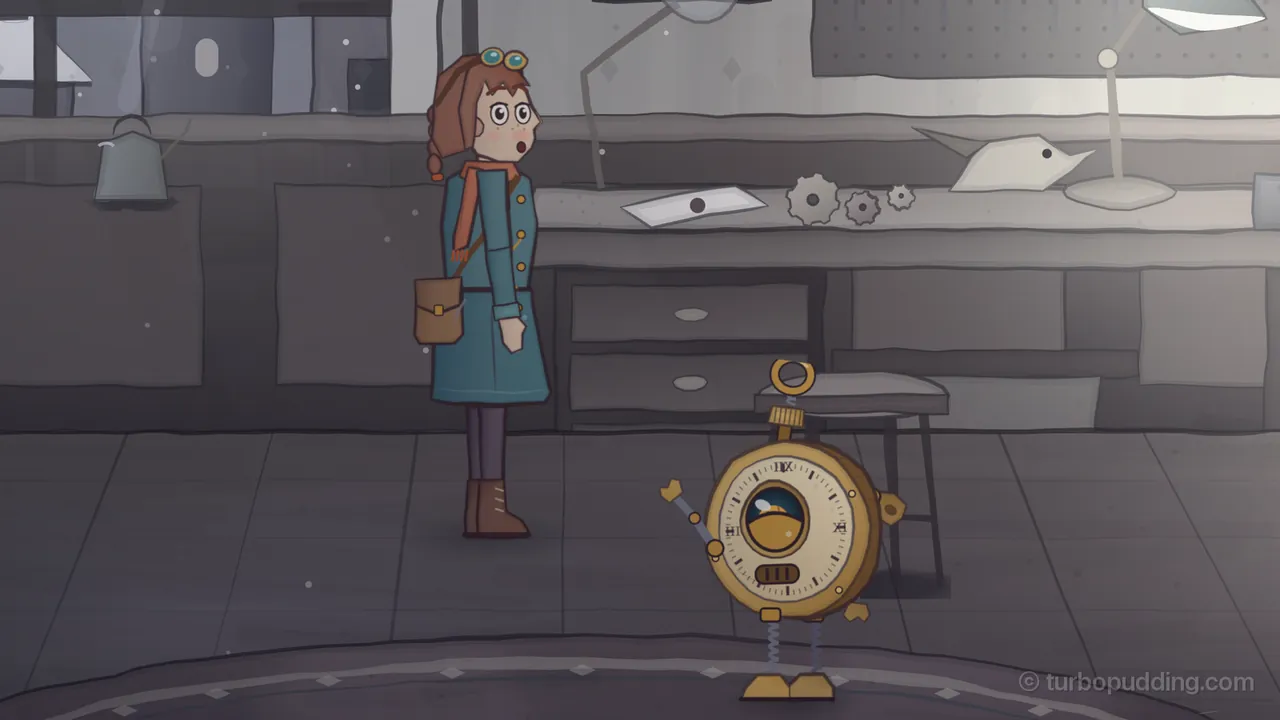
At a quarter to twelve, Mira winds Grandpa’s regulator. “Eleven forty-five. On the dot.” A clock chimes. Then the music stops, a far bell rings twice and the room shakes.
Before that, the workshop is busy: the regulator ticks every second while a smaller tick runs twice as fast, the stove crackles, the old house creaks every 10 to 22 seconds, the wind gusts outside and a bell rings far across town. After, there’s no wind and no fire. There’s a low hush and one lonely tick from the workbench, about every 1.1 seconds, a little slower than a clock. “Every clock in the shop is holding its breath,” Mira says. Then come two ticks, and she adds: “Except one.” That hush follows her out into the frozen town.
When Tik wakes up, the waltz comes back, changed. It’s the same tune, now in D major, with glass and a celesta shimmering around it. Our notes call it “something new in the world.” Tik’s first word is a question: “...Tik?”
Voices without words
Nobody in Glimmerau speaks out loud, yet everyone has a voice. While a line types out, its speaker “says” it in syllables, roughly one for every three letters. The pitch wanders a little from syllable to syllable. A question rises at the end, and anything else drops. Feelings move it too. Happy lines sit a little higher, and sad or tired ones sit lower and go 20 percent slower. Excited or scared lines speed up by the same. A period gets a longer pause than a comma.
Each character has their own settings. Mira talks at 12 syllables a second. Tik’s syllables are buzzier and slide up or down, and the grille under his big lens eye glows while he talks. Provost Crane has a voice well over an octave below Mira’s, and he’s the fastest talker in the game, at 13 syllables a second.
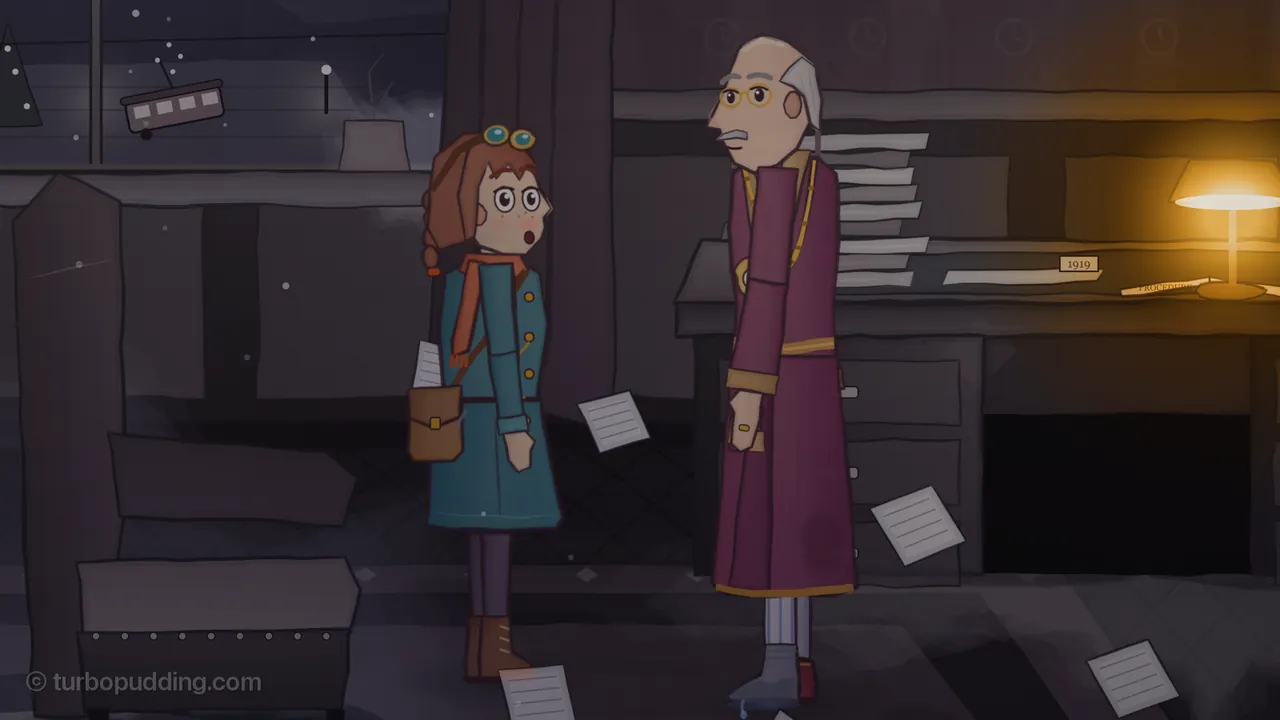
The paper has a sound of its own. When the Provost lets go of a sheet, it stops in mid-air, and so does its sound: a short rustle, cut off, and one high, glassy note that hangs on.
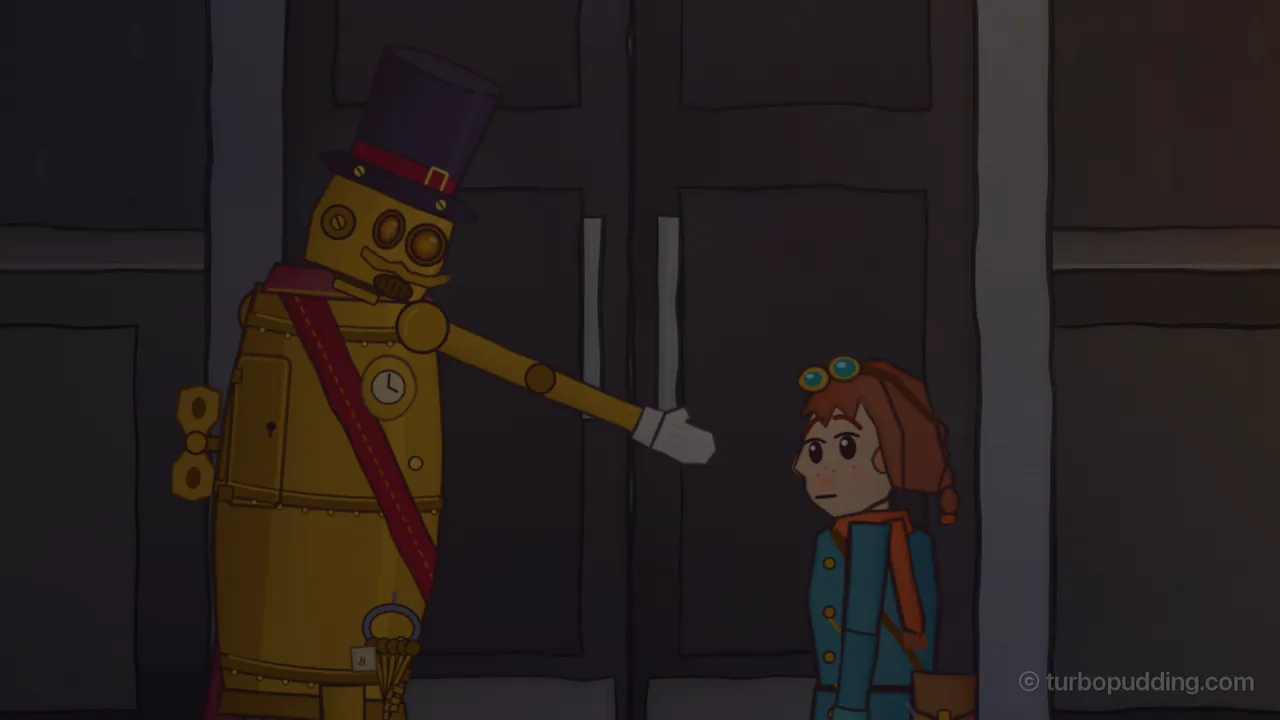
Barnaby, doorkeeper of the Guild of Clockmakers since 1801, has a gramophone grille under his brass mustache. So his voice comes through a horn: narrow, warm, with a little scratch under it. He speaks at 7 syllables a second, the slowest in the game. When his spring runs down, you hear that too: a whine that slides from high to low over 2.4 seconds and ten clicks, each a little further apart than the last.
The only waltz on the river
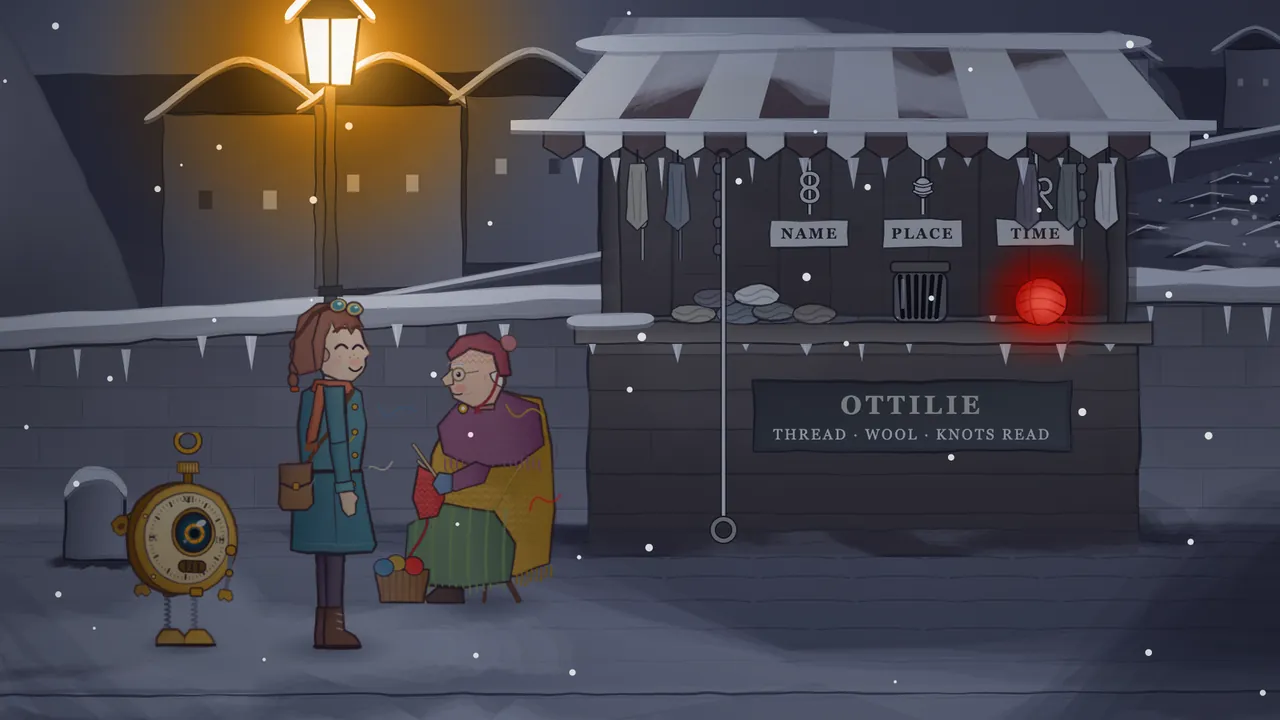
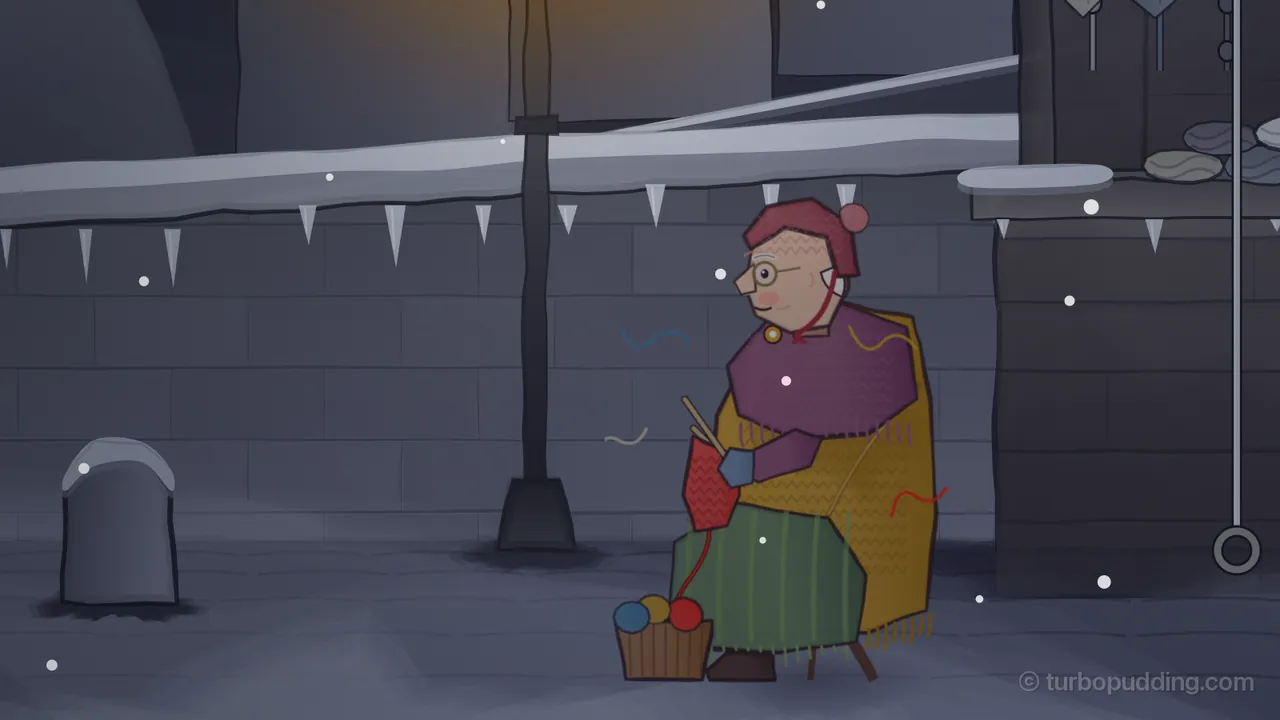
On Brenna Bridge, the river has stopped in glassy ridges, and the spray of the weir hangs over it in beads. Old Ottilie, 83, hasn’t stopped. She’s the only other thing on the river that moves, needles going and loose threads drifting around her. So the bridge gets music of its own: a slow waltz in A minor on a harp and a clarinet. Our notes say it’s “a little crooked, like a hand-knitted thing.”
Four channels and one wooden hall
All of it runs through four channels: music, sounds, ambience and voices. In Settings, Music, Sounds and Voices each get a slider, and the ambience follows Sounds. Then a compressor evens out loud and quiet, and a limiter keeps the loudest peaks in check. Last comes a soft echo, 2.6 seconds long and darker at the end, so the whole town sounds like one wooden hall.
Picking something up plays four rising notes on the music box. At the foot of the Clock Tower, a deep hum hangs in the lift shaft, and the tick slows to one every 1.6 seconds.
Listen for yourself
Tomorrow Ago is free to play in your browser at tomorrowago.com. Turn the sound on. More about the game is on the Tomorrow Ago page.