Turbo Pudding
Apart from its little app icons, Tomorrow Ago doesn’t ship a single picture file. Every wall, window, clock and snowdrift in Glimmerau is painted by the game itself, in code, when you walk into a scene. Instead of pictures, we made a paintbox: a few marks and a few rules.
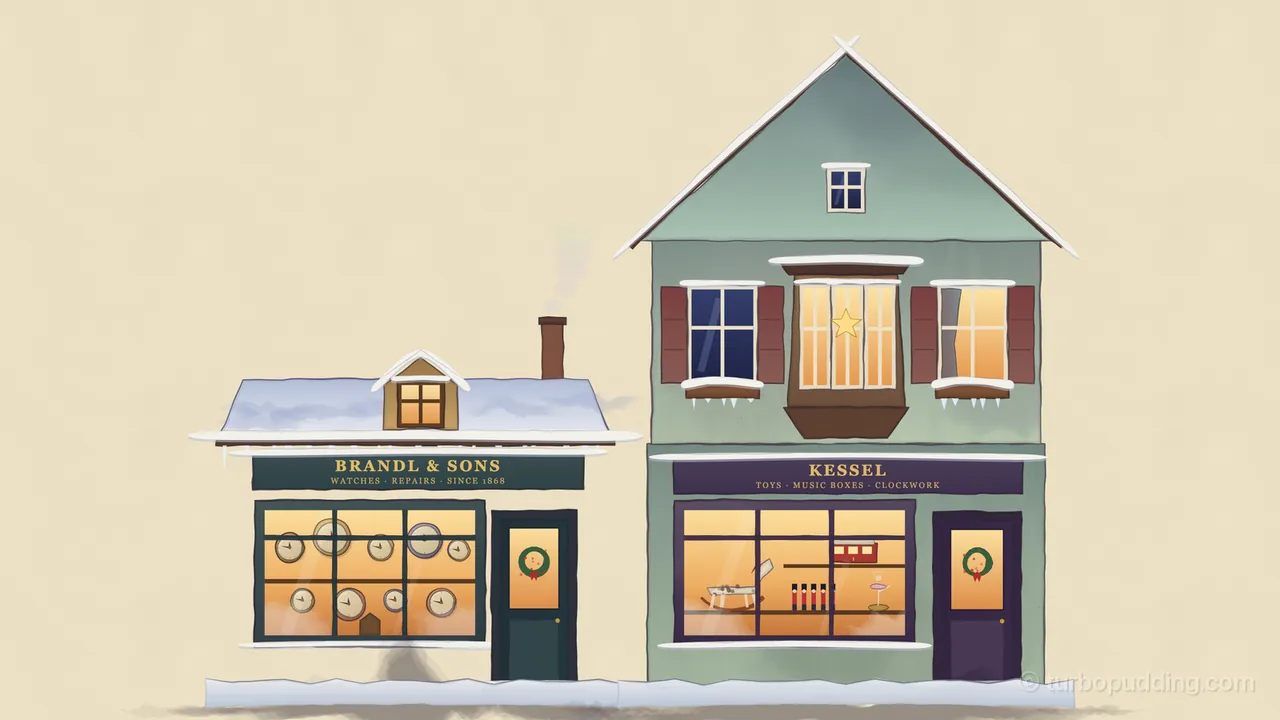
This Sunday, we open it. At the top are two shops from Clockmaker’s Lane, Brandl and Sons and Kessel’s toy shop, painted on their own, with the rest of the lane left out.
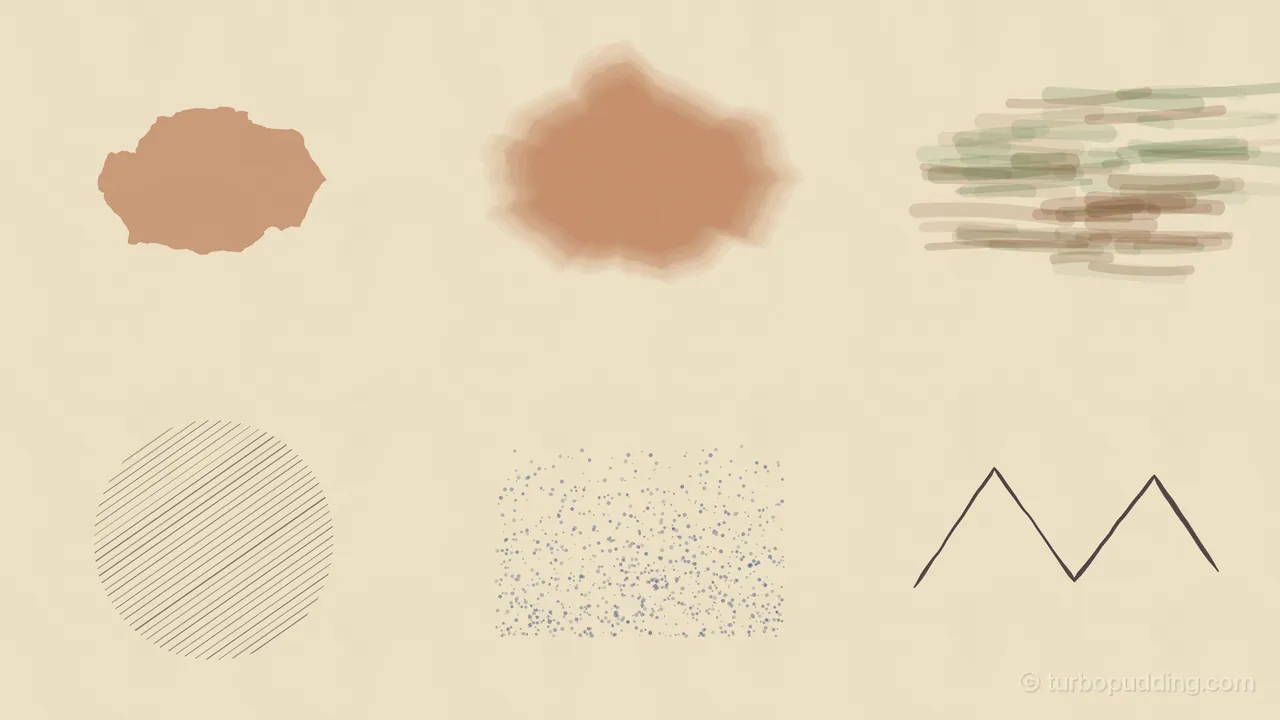
Six marks
Everything in the game is painted with six marks. The first is a flat wash: a ragged shape filled with color. On its own it looks like a paper cutout. So the second mark, for soft things such as sky blots, leaves, glows and shadows on snow, is many thin glazes of the same shape, each only 4 to 7 percent strong. Each glaze is a little bigger or smaller than the last, so the edge feathers like wet paint. The usual number is fourteen.
The other four are dry-brush strokes for big surfaces like plaster, boards and sky; pencil hatching in the shadows; a fine speckle of pigment, the grain real watercolor leaves when it settles; and the ink line. The line is a ribbon that breathes, thicker in the middle of a stroke and thin at both ends, with a second, lighter pass just off the first, like a pencil line the ink didn’t quite follow.
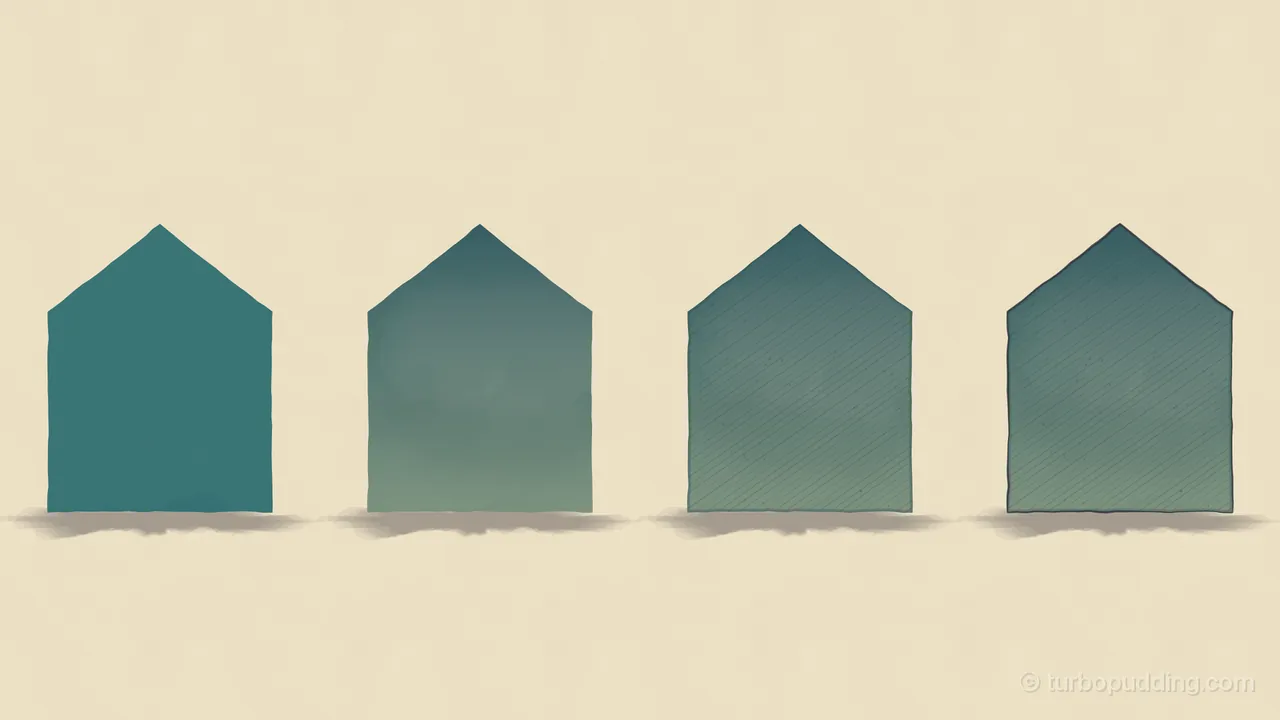
One shape, four passes
Almost every shape in the game gets the same four passes, in the same order. The first is a flat wash at about 94 percent strength. The second adds soft blooms, where the color pools lighter or darker as in wet paint, plus light from one side and shade from the other. Bigger shapes get more blooms, up to four. The third pass adds the specks, the hatching where it’s wanted, and a darker rim just inside the edge, where pigment collects as a wash dries. The last pass is the ink.
Two rules keep the colors honest. Shade is never mixed toward gray. It’s mixed toward a deep ink violet. Light is mixed toward warm paper instead of white. So a shadow stays full of color, and a lit side stays warm.
The same wobble every time
No hand draws a perfectly straight line, so the game doesn’t either. Every line is cut into short pieces, and each point is nudged sideways by a smooth wobble, the way a hand drifts. Shapes get the same treatment: their edges are split and pushed in and out several times over, until they look ragged.
A hand that wobbled differently every time would make the lane shift a little whenever you came back. So every painting starts from a fixed number, and every wobble comes from it. Clockmaker’s Lane comes out exactly the same on every visit and every device.
There are no blur tricks, which run slowly in some browsers. Every soft edge is plain shapes laid over one another.
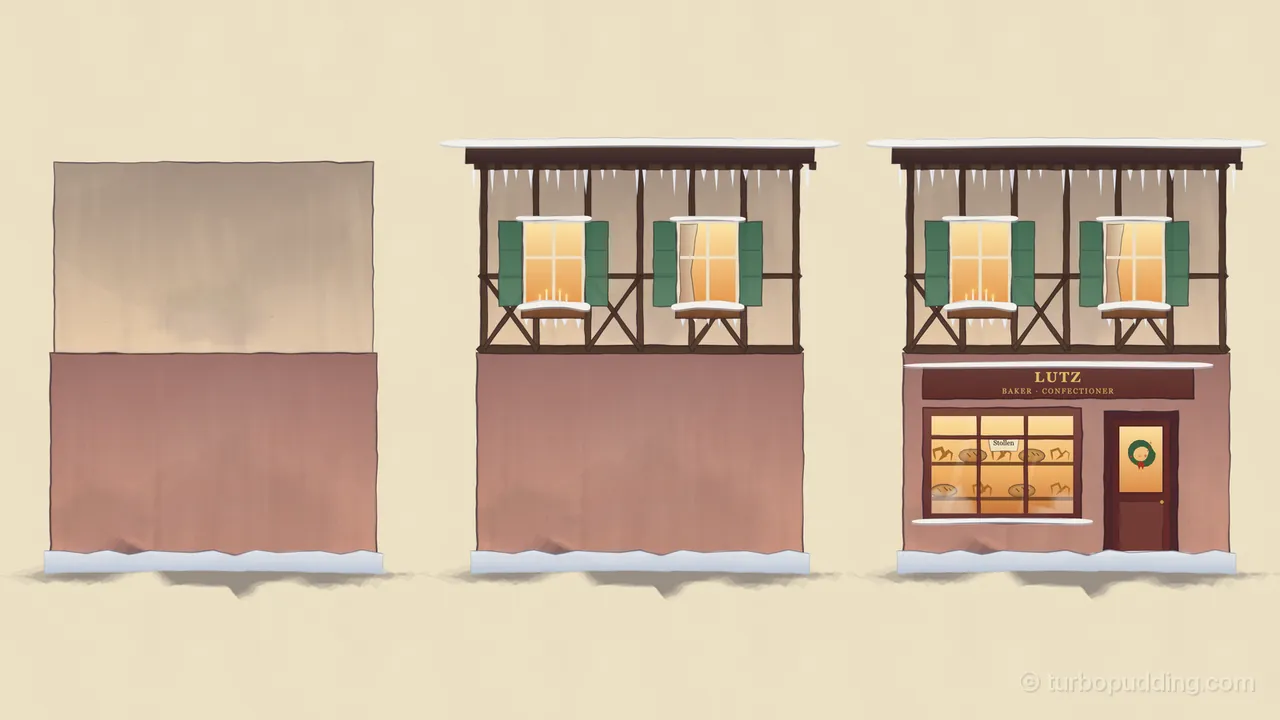
A house in three steps
The Lutz bakery shows how a whole building comes together. First the walls: rose plaster below, pale cream upstairs, with dry-brush strokes across them and a faint damp patch near the foot of the wall. Then the timber frame of posts, rails and braces, the eaves board with its rafter ends and icicles, and two shuttered upstairs windows, one with candles and one with a curtain, each with a window box under a cushion of snow.
Last come the shop sign in gold letters, the shop window lit from inside with frost creeping in at its bottom corners, and a door with lit glass, a wreath, a brass knob and a snowy step.
Snow, icicles and smoke that stopped
Along every sill, roof and step, snow sits as a soft white lip with a blue underside. Icicles hang under eaves and window boxes. Chimney smoke, on a night when time stands still, is a column of soft puffs that stopped rising. You can see one standing over Brandl’s chimney in the picture at the top.
Mira puts it best, looking at the workshop door from the lane: “Home. The lamp is still lit, and it’s the only thing in Glimmerau that isn’t pretending to be a painting.”
A shelf of shared things
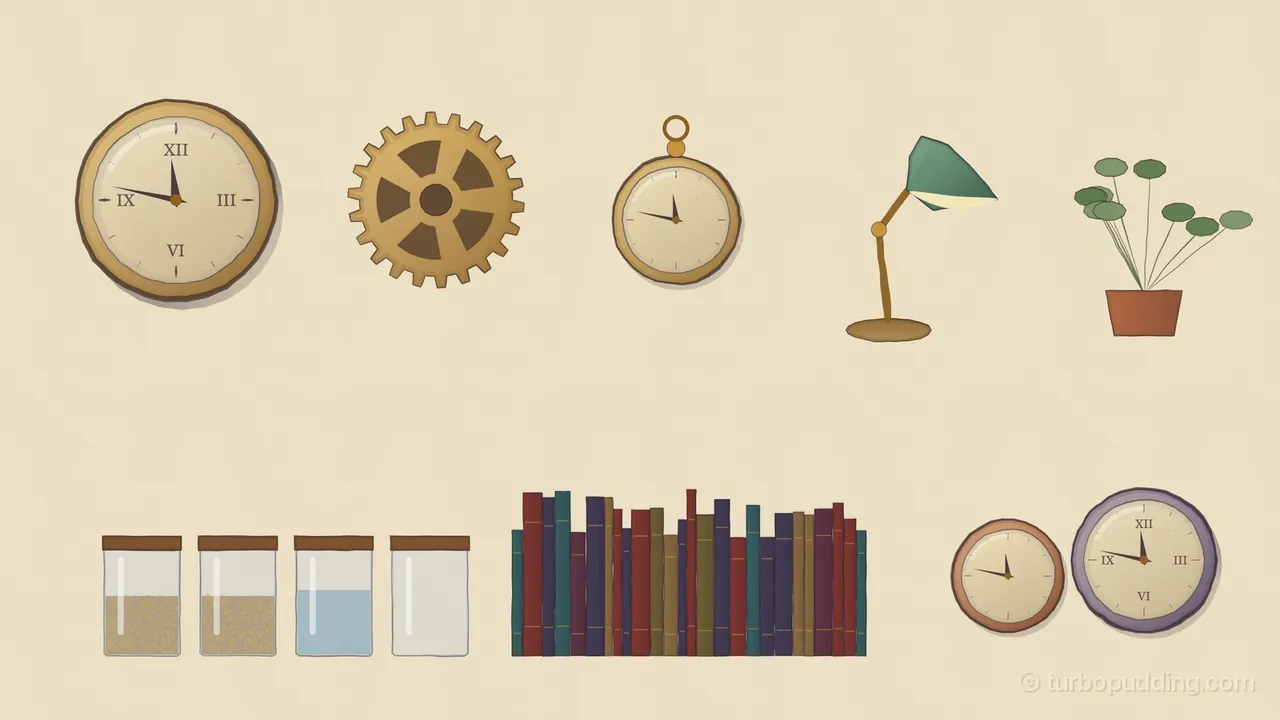
Clocks, gears, jars and books turn up all over town, so every scene borrows them from one shared kit. A painted clock casts a small shadow on the wall behind it, and unless a scene asks for a different time, its hands are drawn at 11:47. In Brandl’s shop window, all nine clock faces on show say 11:47.
The jars come with screws, tiny gears, water or nothing at all. Books stand in a row with gold bands across their spines, and now and then one lies flat. There are winter herbs in a copper pot and a desk lamp with a green glass shade.
Tomorrow Ago is free to play in your browser at tomorrowago.com. More about the game is on its Tomorrow Ago page.