Turbo Pudding
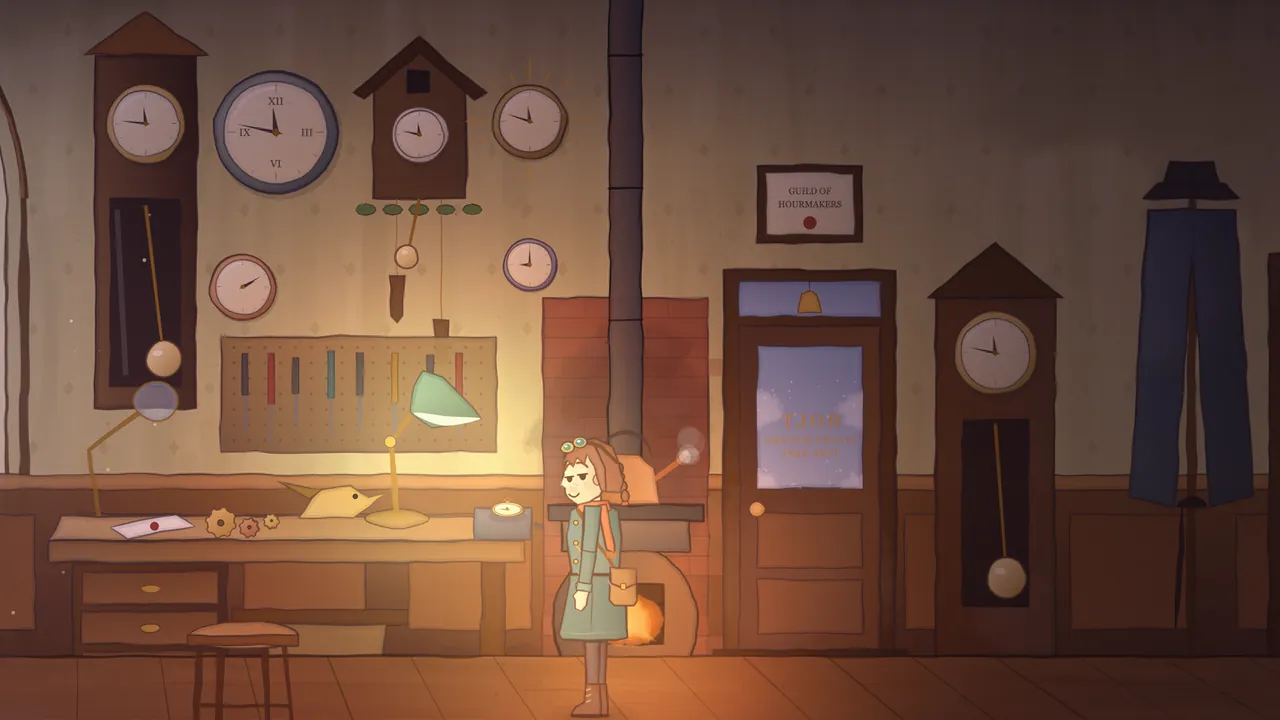
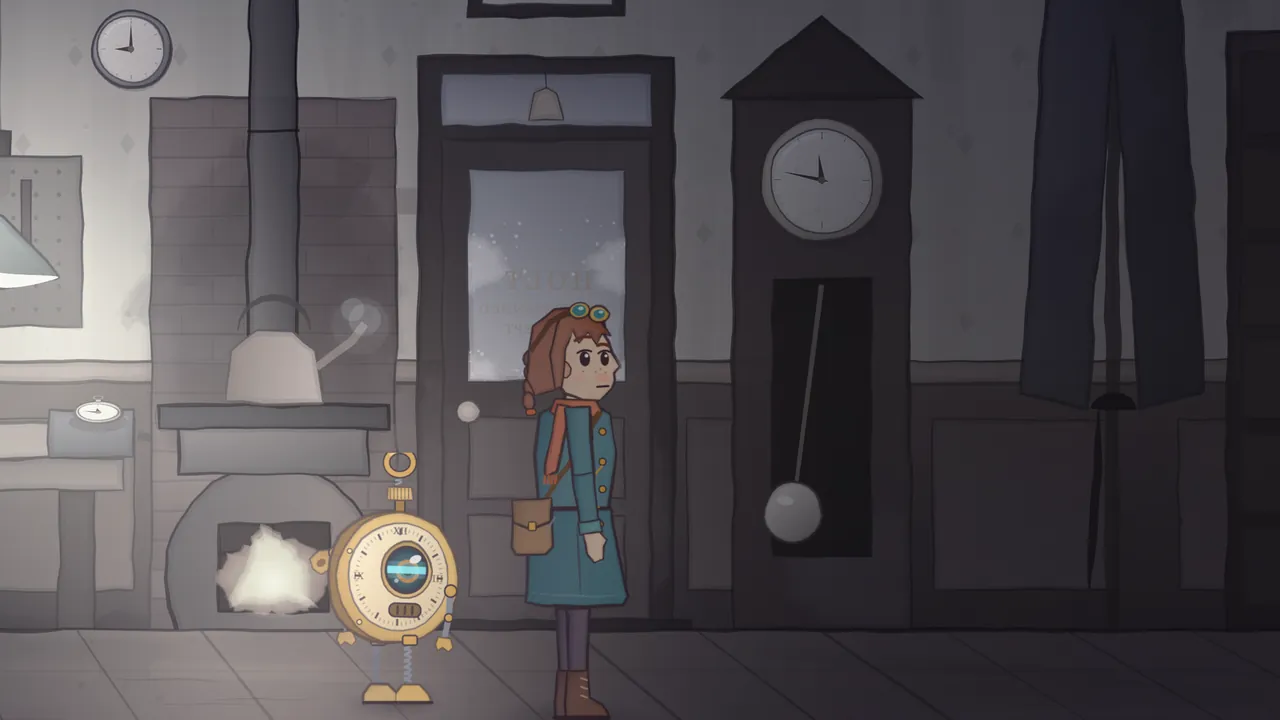
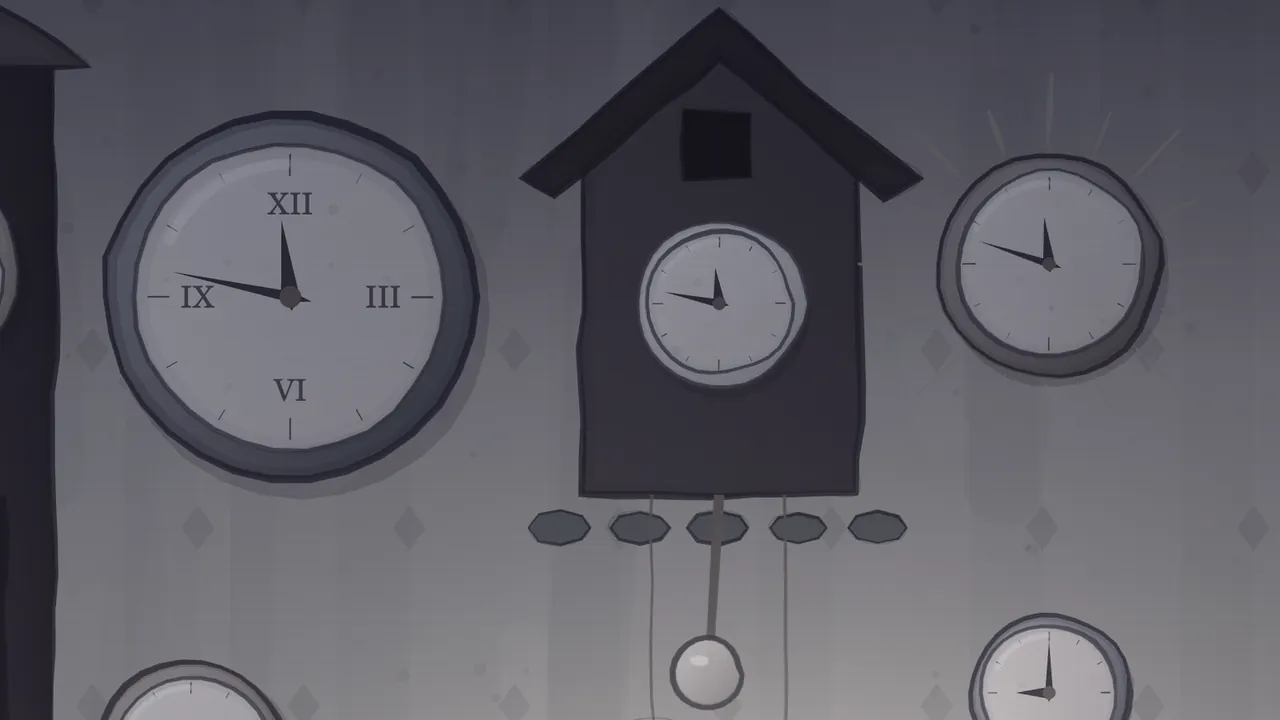
Tomorrow Ago begins in a clockmaker’s workshop on 21 December 1927, and the wall over Grandpa’s workbench is covered in clocks: a Vienna regulator, a round station clock, a cuckoo clock and a sunburst clock. A tall longcase clock stands by the door. Glimmerau is made up. These clocks are not. It’s Thursday, so here’s the real story behind them, starting with the picture at the top: the workshop just before the Great Clock stops.
Born on Christmas Day
Three of Grandpa’s clocks keep time with a pendulum. The pendulum clock was invented by the Dutch scientist Christiaan Huygens on 25 December 1656, and he patented it the next year.
Before the pendulum, a good clock could drift by about 15 minutes a day. With one, it drifted by about 15 seconds, and the minute hand, once rare, became common from around 1690. In Mira’s time, the pendulum clock was still the most precise timekeeper in the world, and it stayed that way until the 1930s.
So when the Great Clock stops at 11:47, Mira sees it on her own wall: “The pendulums. The fire. Every clock in the shop is holding its breath.”
Slow, stubborn and honest
The longcase clock by the door is, in Mira’s words, “Grandpa’s very first clock. ‘Slow, stubborn and honest,’ he says. Like him.”
The first pendulum clocks swung through 80 to 100 degrees, far too wide for a case. Around 1658 came the anchor escapement, which cut the swing to 4 to 6 degrees, so a long pendulum could hang inside a tall, narrow box. Most longcase clocks use a seconds pendulum, about a meter long: each swing takes one whole second. Slow, as Grandpa says. English clockmakers were building them by 1680, and in 1680 one cost about a year’s rent for an average working family. The name grandfather clock came much later, from an 1876 song by the American songwriter Henry Clay Work, “My Grandfather’s Clock.”
Never a second wrong
Over the bench hangs Grandpa’s favorite, the Vienna regulator. Mira sums it up: “Eight-day movement, never a second wrong. He talks to it when he thinks I’m asleep.”
A regulator is a clock built to be more accurate than the clocks around it. Shops and railroad stations hung one on the wall and set all their other clocks by it. In Vienna, around 1800, clockmakers came up with a style of their own: plain pendulum clocks in tall cases with glass on three sides. They looked so much like lanterns that the Viennese called them lantern clocks.
Most ran for eight days or a whole month on one winding. An eight-day clock needed winding once a week, while cheaper 30-hour clocks had to be wound every day. Some 30-hour longcase clocks were even made with fake keyholes, so guests would think the family could afford the more expensive kind.
Saved from the scrapyard
Next to the regulator hangs a big round clock with Roman numerals. “The clock from the old Glimmerau station,” Mira explains. “Grandpa saved it from the scrapyard. He saves everything that ticks.”
Railways are a big part of why we all agree on the time. Before the railways, every town kept its own local time, set by the sun. In England, Oxford ran five minutes behind London and Bristol ten, a real headache for a train timetable. In November 1840, the Great Western Railway became the first to run on London time. In 1846, Nottingham gave its town clocks a third hand, so they could show local time and London time at once.
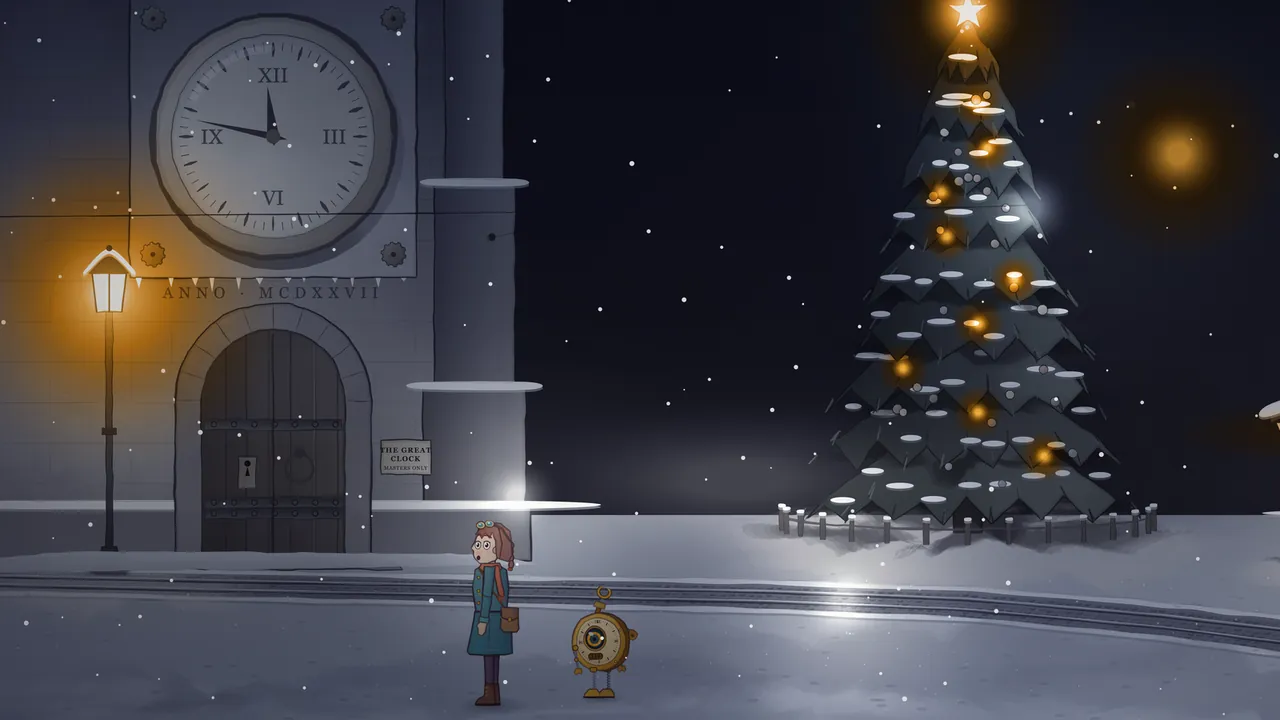
Glimmerau has no such trouble. The Great Clock on the square, Mira says, hasn’t missed a minute in five hundred years: “Grandpa says it isn’t the clock that keeps the town’s time. It’s the other way round.”
A railway house with a bird inside
Grandpa’s cuckoo clock is a little house with a pointed roof, a row of carved leaves under it and two weights hanging below. Nobody knows who built the first cuckoo clock. The first known description is from 1629, of a clock in Dresden with a cuckoo that called the quarter hours. By the middle of the 1700s, small workshops in the Black Forest, in southwestern Germany, were making cuckoo clocks out of wood, and from the 1850s they were famous around the world.
The house shape came from the railway. In 1850, the clockmaking school in Furtwangen held a competition for new clock cases. The architect Friedrich Eisenlohr, who had designed buildings for the new Rhine valley railway, took a railway guard’s house and put a clock dial on its front. Within a few decades, that railway-house clock pushed out almost every other style. So the cuckoo and the station clock on Grandpa’s wall are closer relatives than they look.
A minute ahead
That leaves the sunburst clock. Grandpa says it runs a minute fast “to keep us optimistic.” Look closely: the station clock and the cuckoo say 11:47, and the sunburst says 11:48. Even with time stopped, it stays a minute ahead.
Tomorrow Ago is free to play in your browser at tomorrowago.com. More about the game is on its Tomorrow Ago page.