Turbo Pudding
A point-and-click adventure spends a lot of its time standing still. Someone talks, you read, you look around a room and decide where to click. In Fernevale, that quiet time is where most of the small work goes. This diary covers four systems that keep a painted room from turning into a postcard.
Nobody turns into a statue
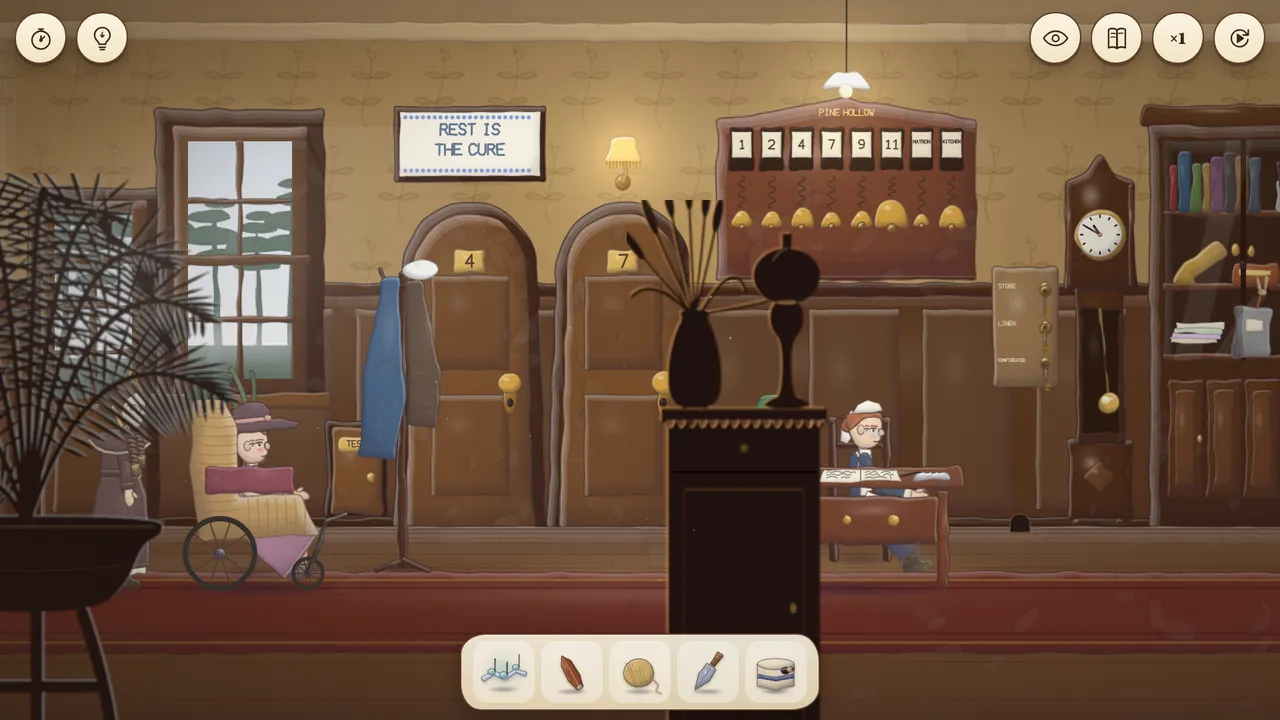
Without help, whoever isn’t speaking simply stands there. A long talk would look like two cardboard figures taking turns. So the director, the part of the game that runs each conversation, has a rule. When a stretch of dialog runs more than four lines with no stage direction in between, now and then one of the listeners does something small between the lines.
The moves are tiny and never a story beat. The game doesn’t wait for them, they never play while you skip, and nobody who is walking, already busy or holding a pose gets one. They also fit how a person is placed. Standing, Daina might think, bite a finger, tie her plait, look at her hands or glance back over her shoulder. Sitting, she sticks to her hands, her plait and a thoughtful pause. Anyone lying down gets nothing at all, so a sleeper stays asleep.
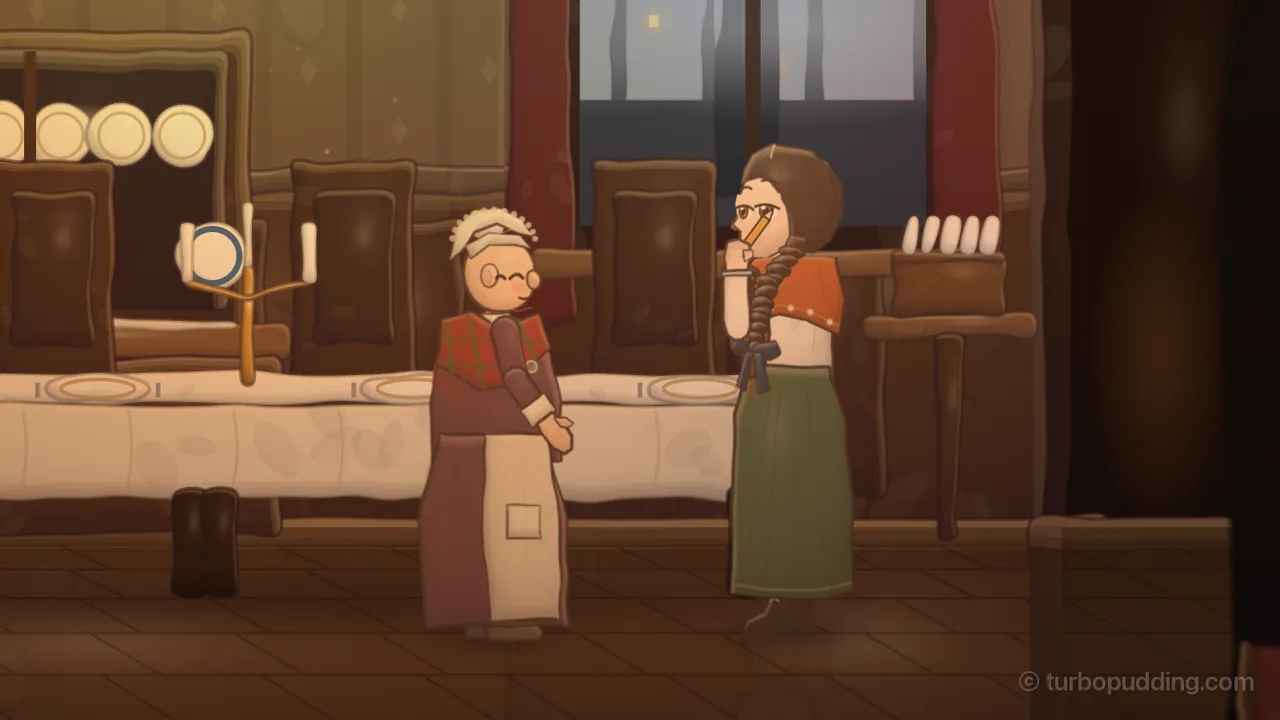
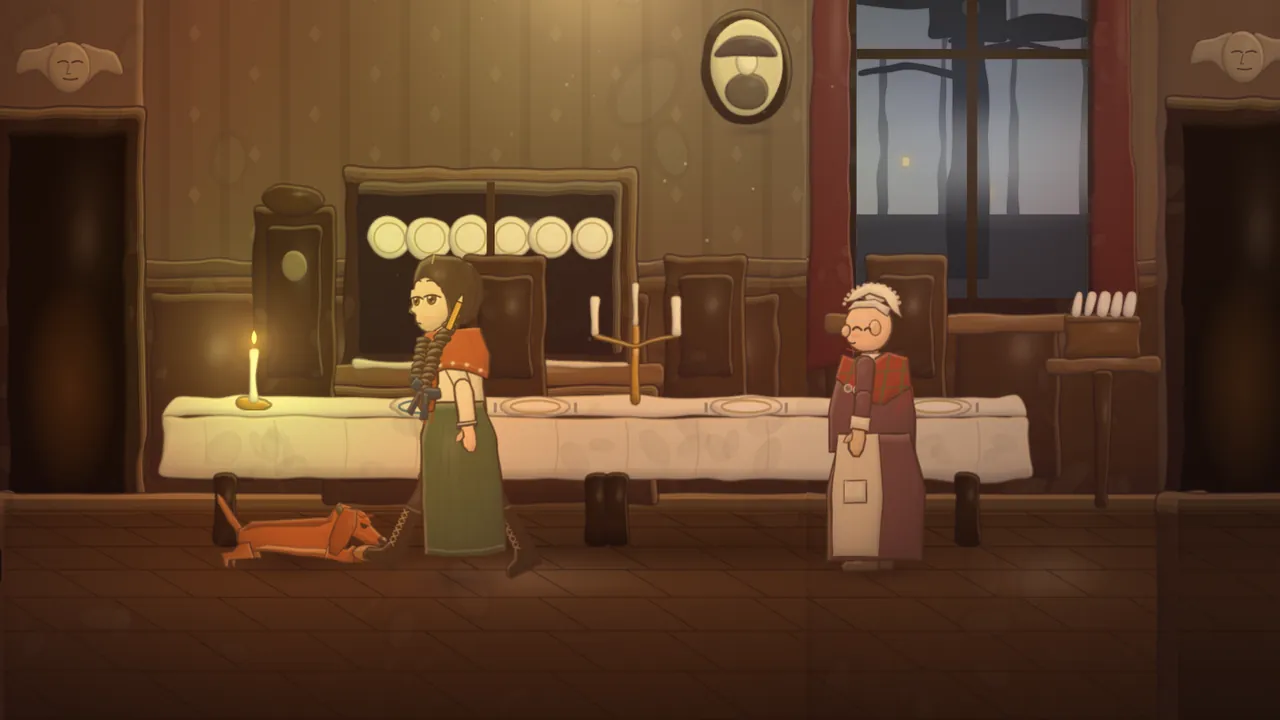
Everyone has a short list of their own. Father clicks his pocket watch shut, and when he sits down, he winds it. Omīte lifts her spectacles off their chain and onto her nose, or pushes her mouth to one side and looks at the ceiling. Dr. Fell polishes his pince-nez or peers over it. Sister MacRae checks her watch and clicks her tongue. Mr. Hatch lifts his cap, chews a stem of grass and squints. Mrs. Bunce raises her lorgnette. Duksis the dachshund wags all over, and the owls in the garden blink and ruffle their feathers.
Light is only numbers
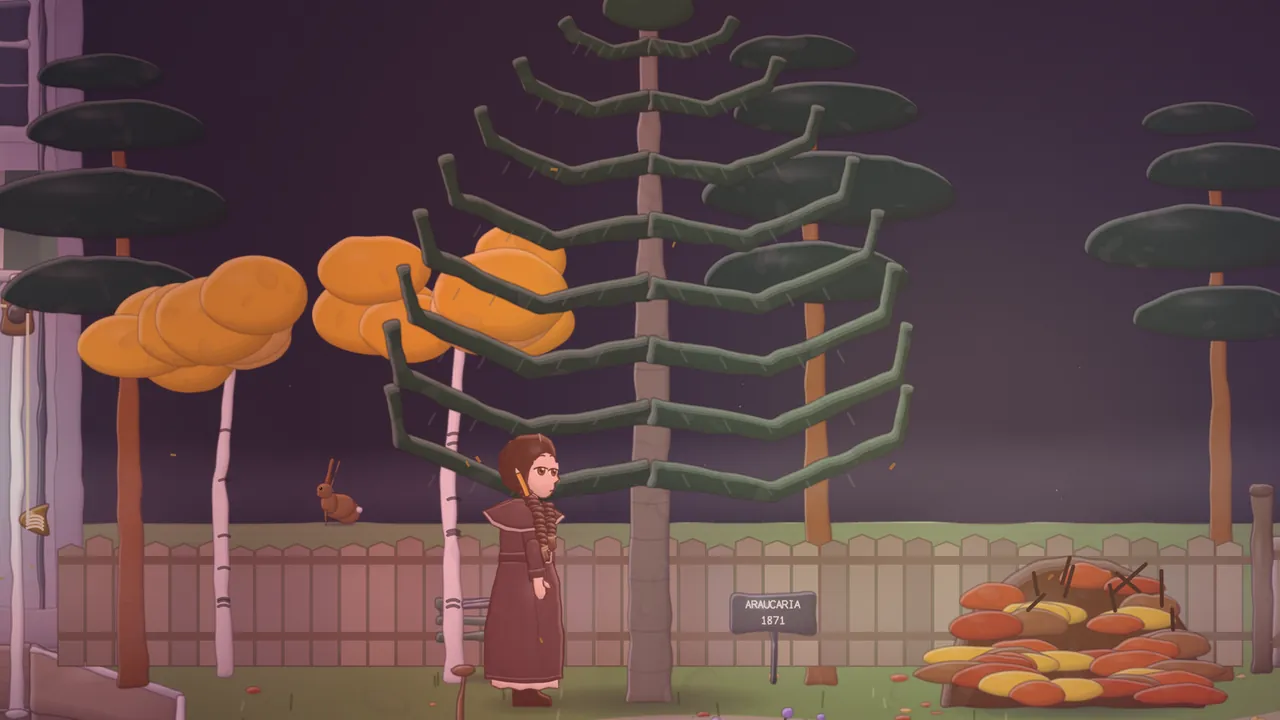
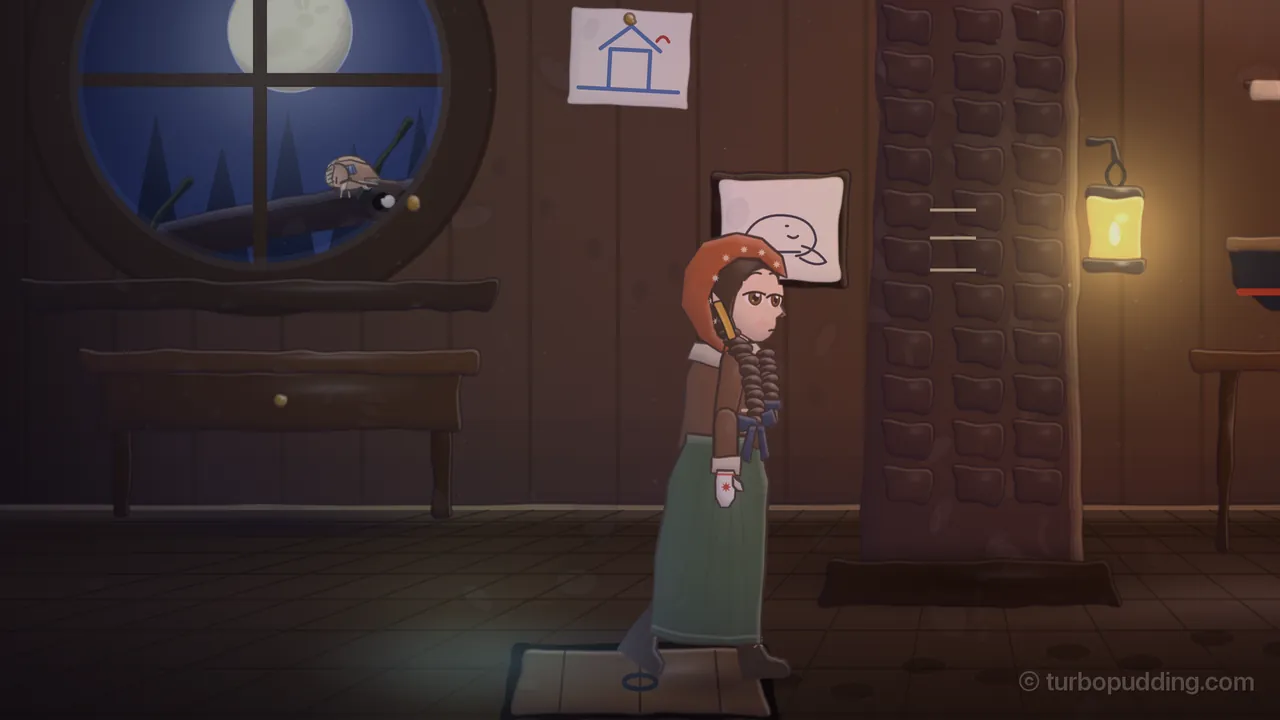
Every scene is painted once and then lit by a grade, a short list of numbers laid over the picture. A grade can wash the frame with one or two colors and add a tinted vignette. For night scenes it darkens the whole picture with an ambient color, and every lamp, candle and window cuts its own pool of light back out of that dark. People get a thin rim of light on one side, so they sit inside the room instead of on top of it.
Because a grade is only numbers, the game can slide from one to another over a few seconds at no cost. Chapter 5 tells a single Monday in four pictures that fade one into the next. The light moves with them: pale daylight in the middle two, then a two-second slide into dusk as a huge moon climbs out of the pines and frost creeps onto the glass.

The dreams use the same tools: a cold, misty night in gray, blue and green, and a warmer version with gold mist when Daina dreams the same wood at sea in chapter 7.
Memories as old photographs
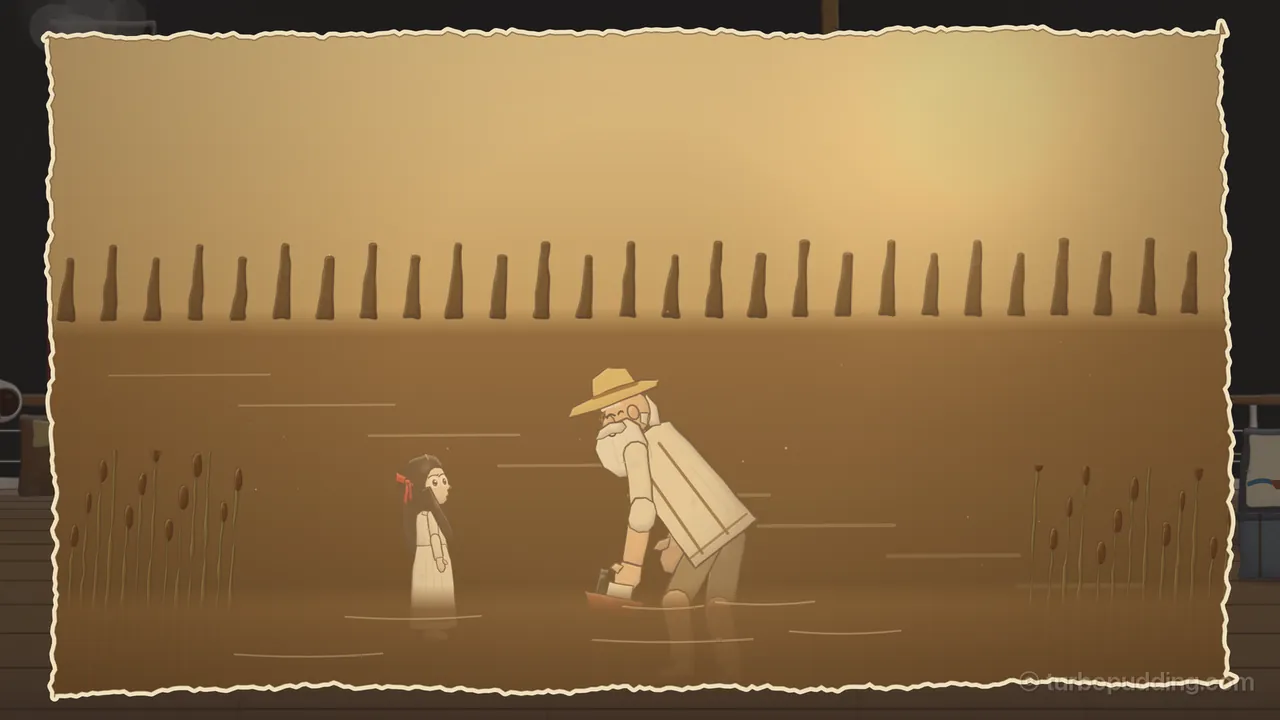
Daina’s memories appear as flashes: small scenes of their own, laid over the room like old photographs. A flash eases in over 0.7 seconds, shrinking from the full screen to a little smaller and tilting a hair, while the room behind it dims to half. The edge is torn paper, wandering in and out with fine fibers along it, and the whole print breathes very slightly while it is up. A warm sepia grade does the rest. Two memories come in full color.
The room under the photograph isn’t running while you look. When a flash starts, the game freezes the room into a single picture, so there are never two live scenes on screen at once, which keeps things light enough for a phone. The room’s own sounds stop too, and a music box plays one line of the game’s song instead. On the cover, Opi stands knee-deep in a river and sets a little wooden steamer on the water while young Daina watches. When the flash ends, you are back in the same spot.
Walking around the furniture
Every room has a walk area: an outline of the floor with holes cut out wherever furniture stands. When you click, Daina takes the shortest route. The game looks only at the corners she might have to bend around and searches between them with A-star, a standard pathfinding method. Click outside the floor, on a wall or the sky, and she walks to the nearest point she can actually stand on.
In Opi’s treehouse, the pine runs straight up through the middle of the room, so the floor outline has a notch at the foot of the trunk and Daina walks in front of it, not through it. The lantern she hangs on its hook throws gold on one side of the room, and the moon in the round window lights the other side turquoise.
See it for yourself
The prologue and chapters 1–2 are free to play in your browser at fernevale.com. Stay through a long talk and watch the listeners. The full game is $9.99, paid once. More about the game is on its Fernevale page.