Turbo Pudding
There isn’t a single audio file in Fernevale. Every note, every owl, every creaking board and every snore from the hatbox is made by your browser while you play. It’s Wednesday, so here is the dev diary: how one old song became the whole soundtrack, and how the characters talk without saying a word.
Opi’s song
Daina’s grandfather Opi used to sing her a song about a forest across the sea. It starts with the words “Aiz jūriņas,” “beyond the little sea,” and it has four lines of four bars each, in waltz time. The words are our own, written in the style of a Latvian daina, a short folk song. The singing is in Latvian, and only the English shows on screen. The first line goes: “Beyond the sea, the little sea, / a wood that no one planted.”
You hear it from Daina herself in the first chapter. At dusk in Ward Seven she sits down to draw her dream, and without quite deciding to, she starts to sing. “Opi’s song. I haven’t sung that since I was eleven.” The rest of the song is something she has to find.
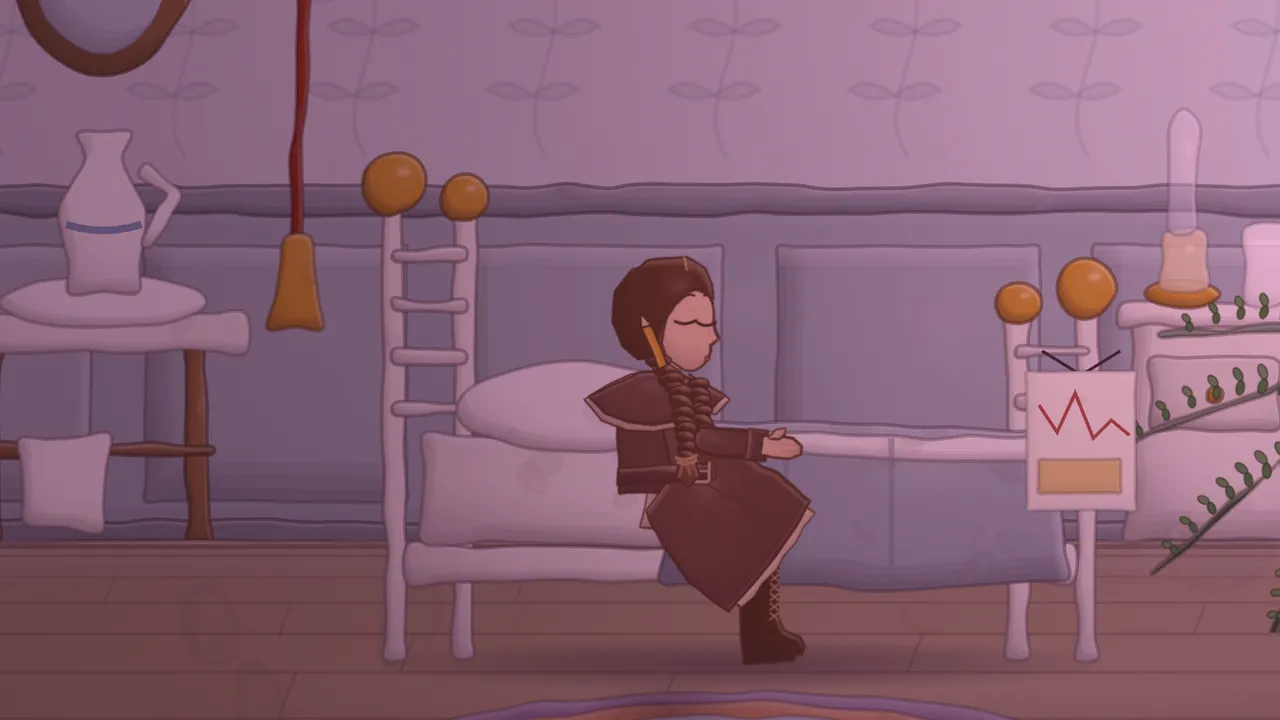
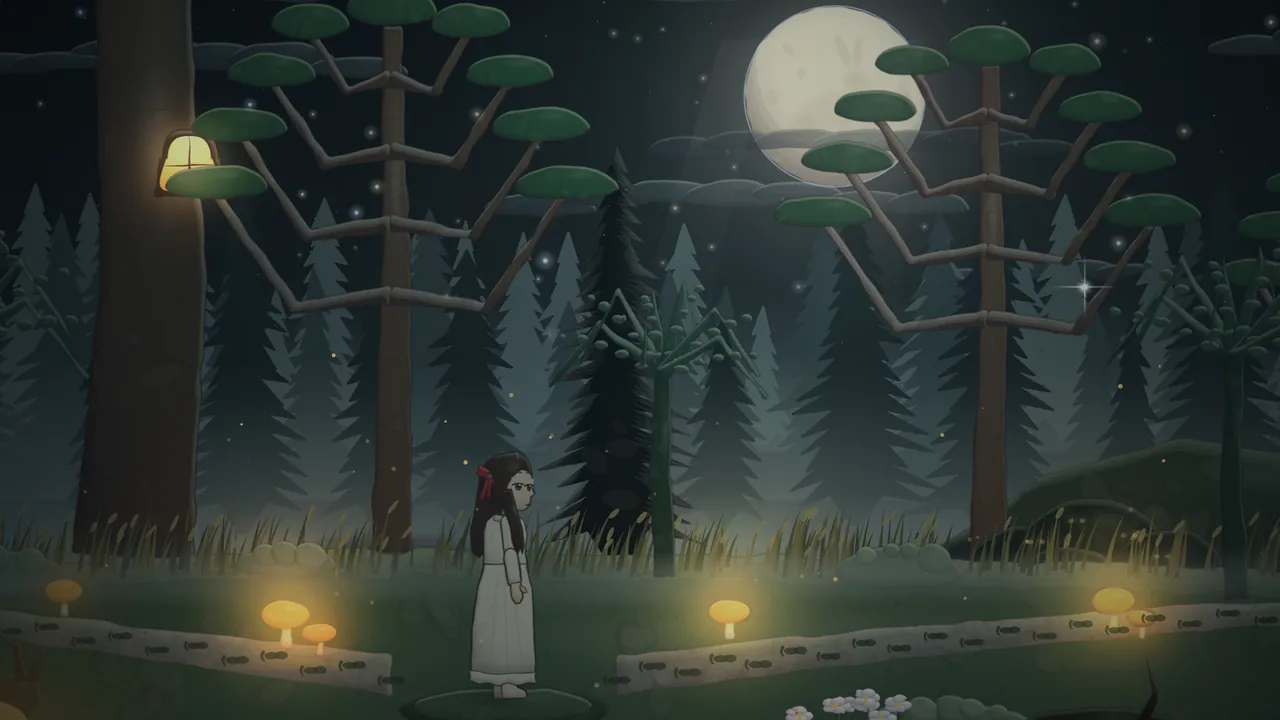
Every other track is built from the same material: a flute sings the tune on the title screen, a singing saw takes it in the dream forest, and a music box plays one line when Daina remembers something.
A tune with no B in it
Here is the trick that holds it all together. The melody never touches the note B, so the chords underneath get to decide what it means. Put a B flat in the harmony, and the song sounds like home: Riga, family, a memory. Put a B natural there instead, and the very same notes sound like the forest, old and a little strange. One tune, two moods.
A band for every room
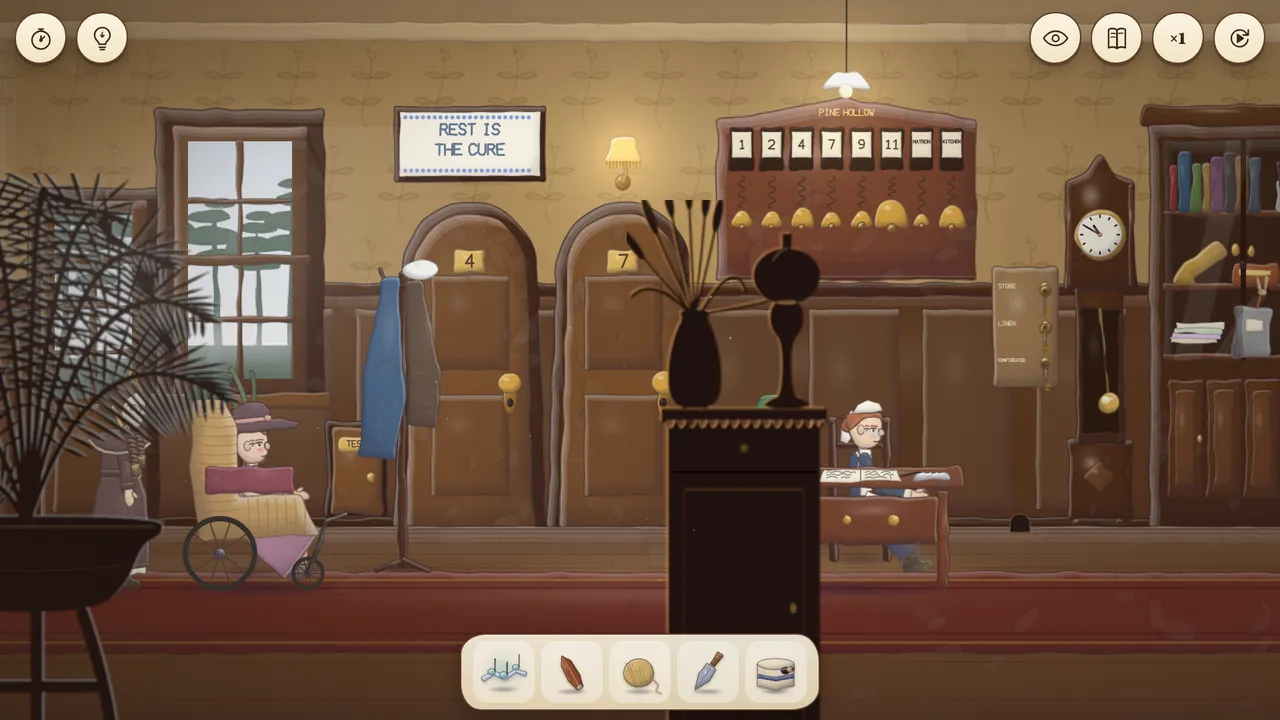
The sanatorium has no song at all, because nobody at Pine Hollow remembers it. By day it gets a polite waltz in F, a piano going oom-pah-pah and a clarinet that is a little too calm. In the second half, the clarinet slips in two notes that don’t belong to the key, an E flat and a D flat. That’s a worry the grown-ups don’t hear.
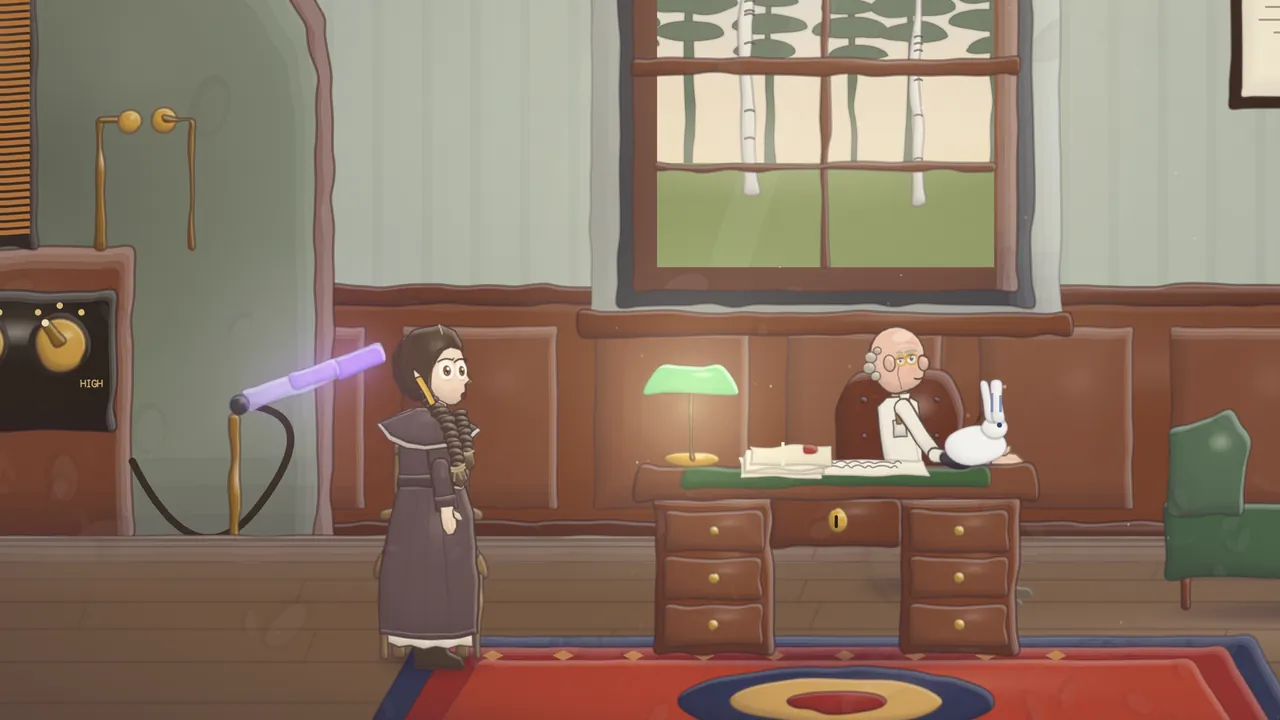
Dr Fell’s consulting room gets an organ figure that turns over and over like a barrel organ, with wood blocks and finger snaps keeping time, while his apparatus hums on one low note and crackles.
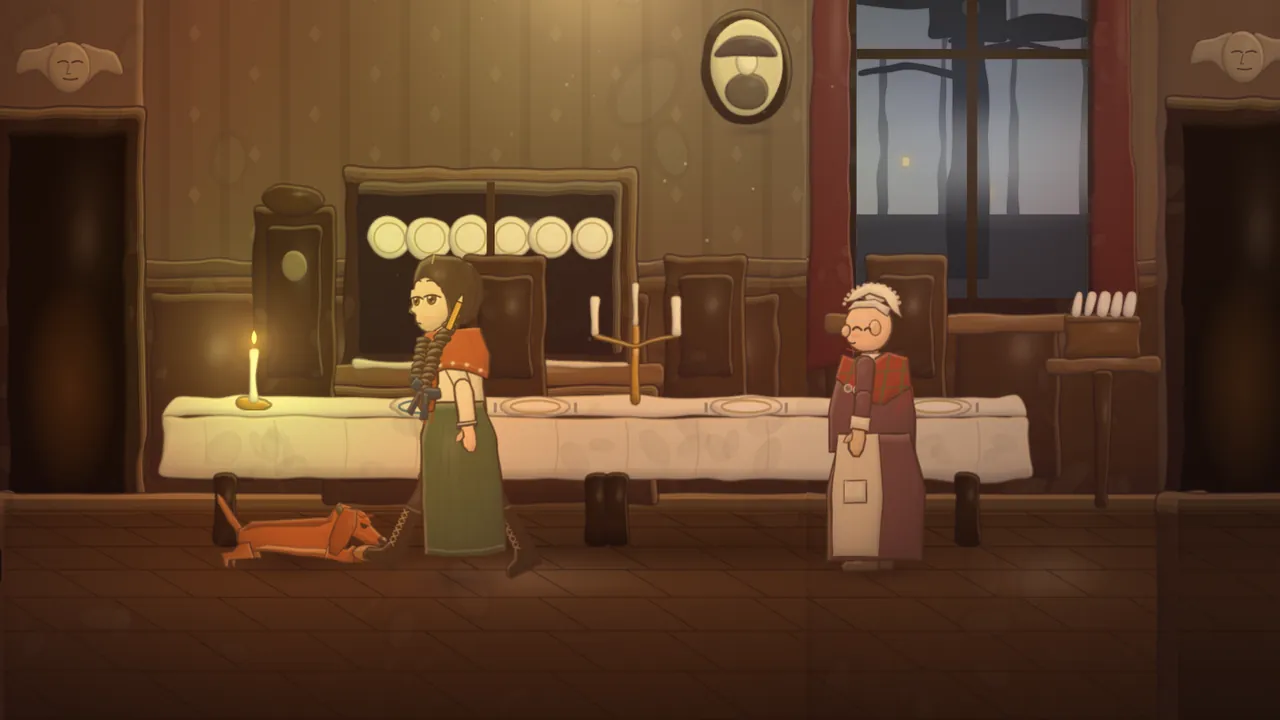
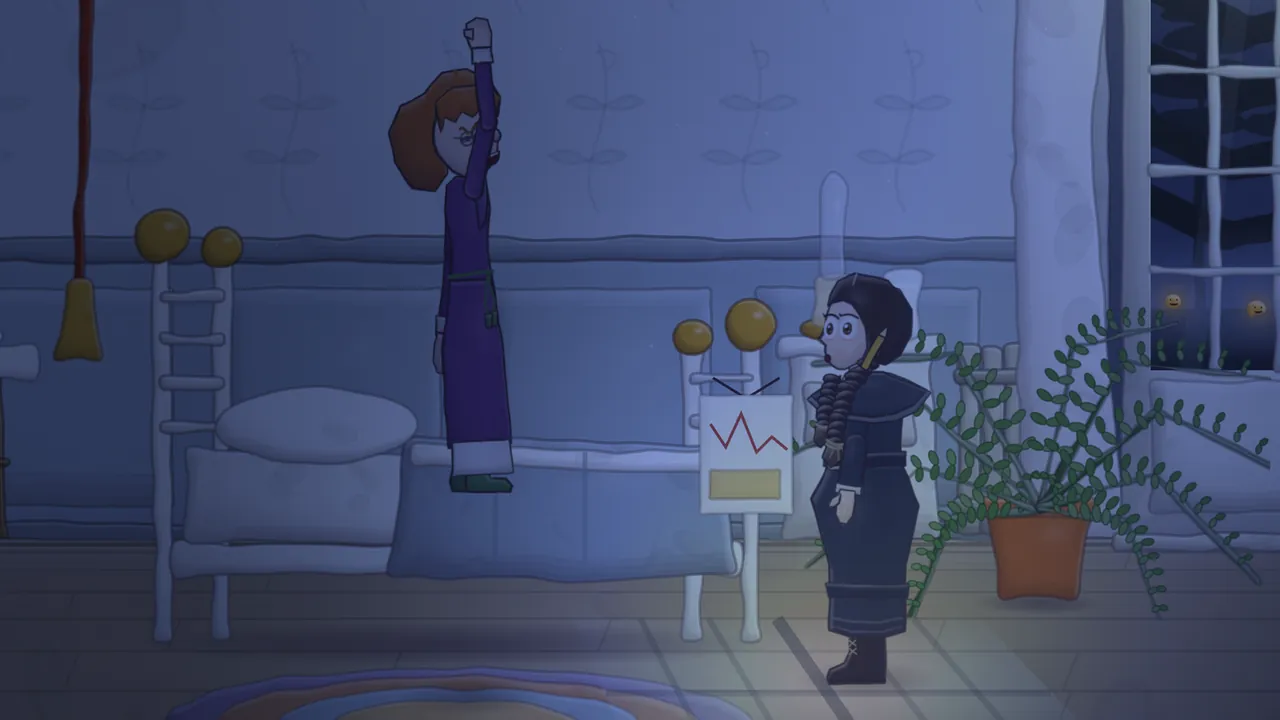
The night of the escape is our favorite. Plucked strings, spoons and a banjo play on tiptoe over a tuba that is trying very hard to whisper. It’s swung, so the whole thing sneaks along with a waddle.
A puzzle you solve by ear
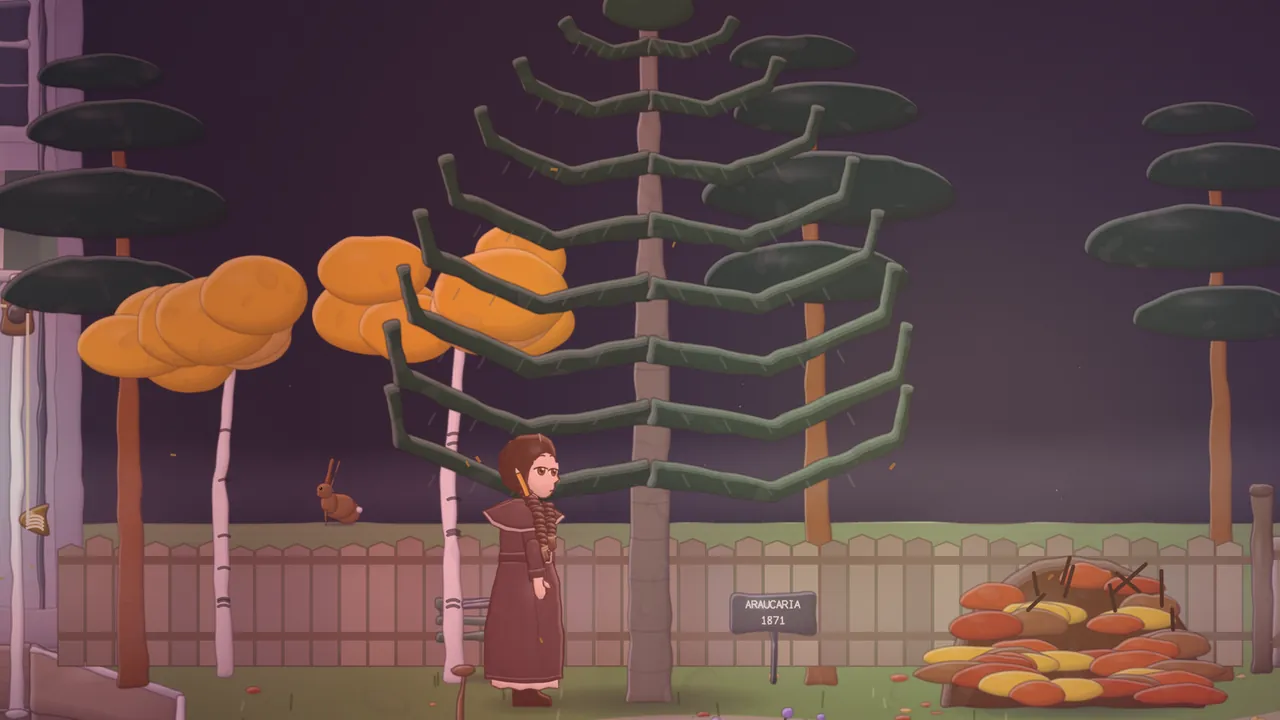
In the garden that night, two tawny owls sit in the pines. Win calls them the Night Committee. Nobody spells out the rule, but you can hear it. Daina puts it this way: “She asks, he answers. Like Omīte and Opi.”
Real tawny owls do exactly this. The female calls a sharp “ke-wick,” and the male answers with a long “hoo-hoo.” The famous “tu-whit, tu-whoo” is really the two of them together. Try it on the owls, and Daina has a comment ready: “That’s from a poem. Owls don’t read.”
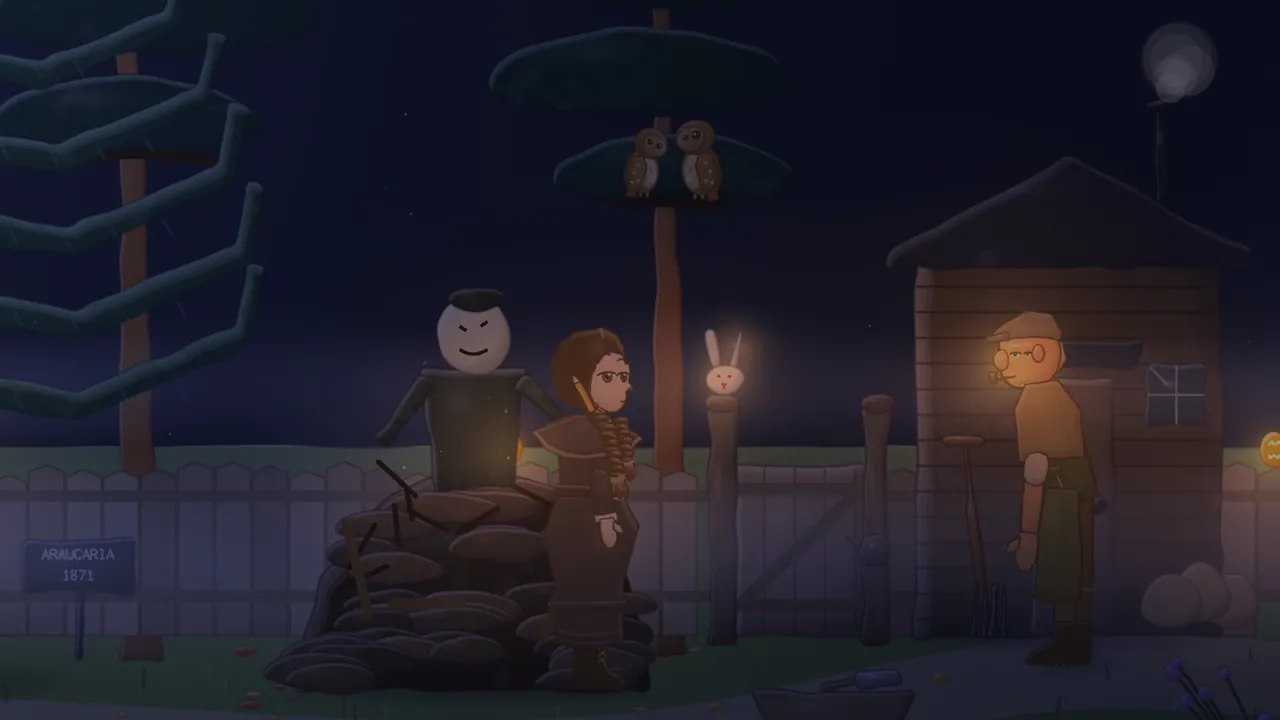
Get it right, and Win Ashby’s window flies open. Her fanfare is a kazoo, and she shouts over the whole garden: “VOTES! FOR! WOMEN!”
Voices without words
Fernevale has no voice acting. While a line types out, the character murmurs: quick syllables with real vowel sounds, on a pitch of their own. A question climbs at the end, an exclamation comes out louder and quicker, and an ellipsis slows down and fades. The game draws a different mouth for each vowel, so the lips move with the sound.
Everyone has a habit. Daina sometimes lets out a short “hm” before a dry remark. Dr Fell gives a falling “hm-hm” when he’s thinking. Sister MacRae says “tsk.” Mrs Bunce, the highest and quickest voice, often starts with an “ooo.” Every one of Win’s lines ends going up, as if it were a slogan, which it usually is.
Built for a phone speaker
Plenty of people play on a phone, so the music is written for a small speaker. When Daina sings, a soft kokle, a Latvian plucked zither, doubles the tune, so the melody carries even when her voice gets lost. The singing saw and the wooden whistle never go below the D above middle C, because a phone speaker loses the bottom. The plucked strings are an old trick: a burst of noise sent around a short loop, a little softer each time, until it rings like a string.
A script renders every track and sound effect without playing it aloud and flags anything that clips or comes out silent.
Listen for yourself
The prologue and chapters 1–2 are free to play in your browser at fernevale.com. Turn the sound on. The full game, all seven chapters, is $9.99, paid once. More about the game is on its Fernevale page.