Turbo Pudding
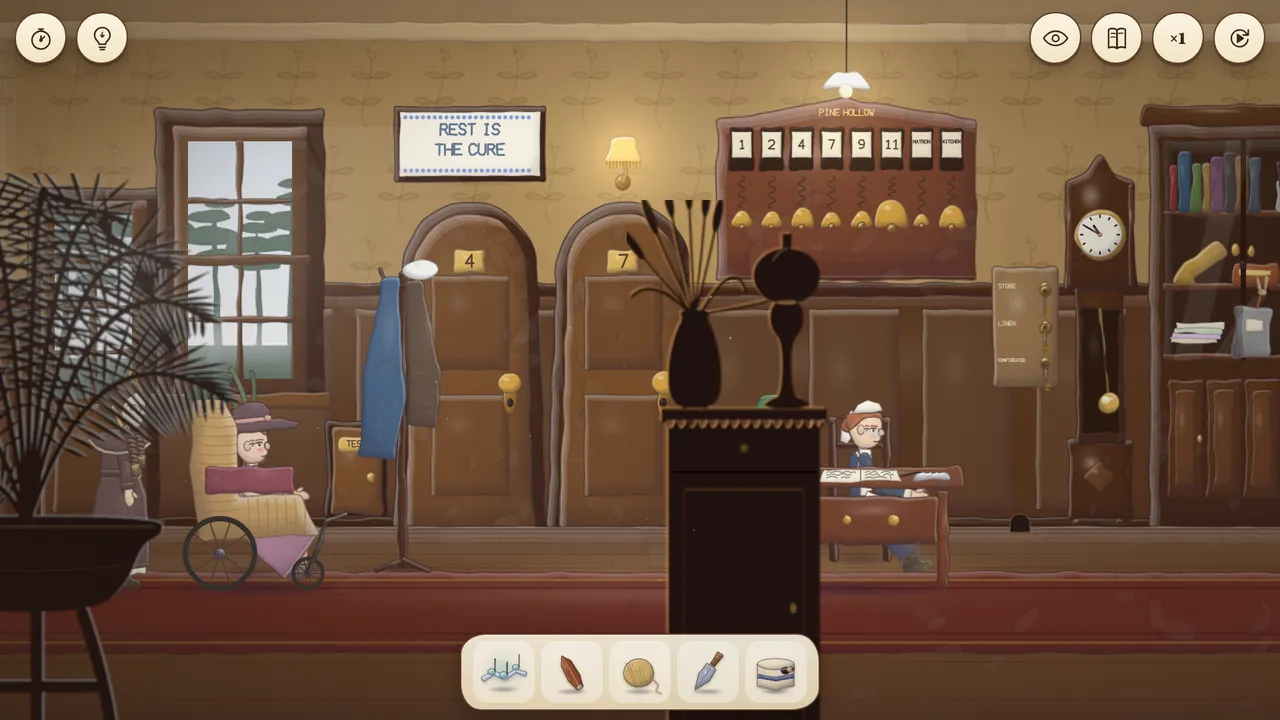
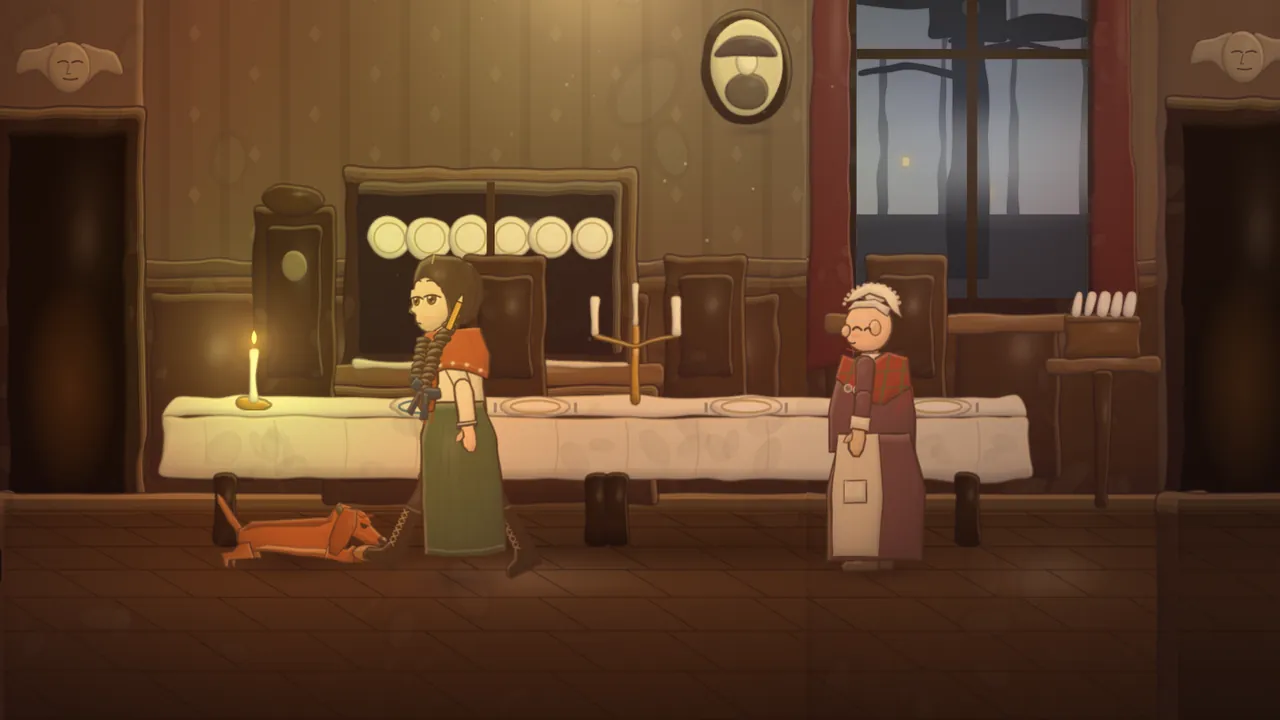
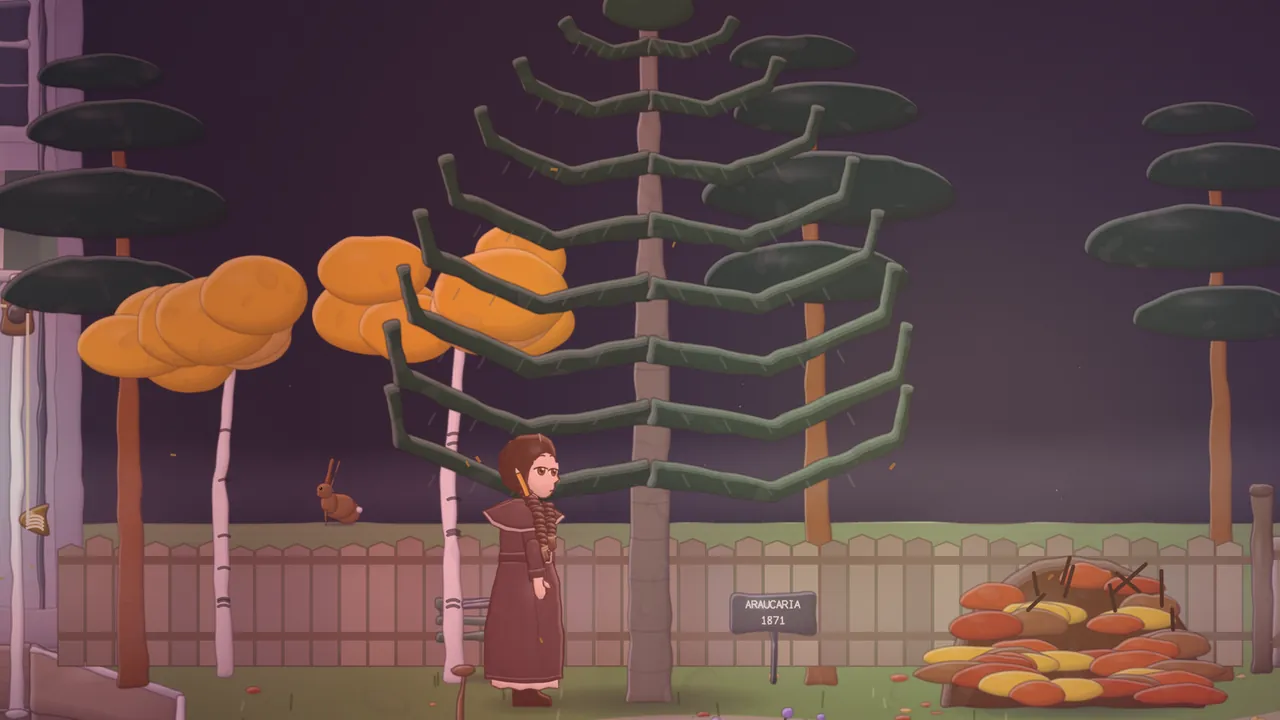
Fernevale starts in a sanatorium in Surrey, but Daina doesn’t stay there long. The later chapters take her home to Riga, across Courland by motorcar and over the whole Atlantic to Brazil. For this Screenshot Saturday, here are six places she passes through, one frame each.
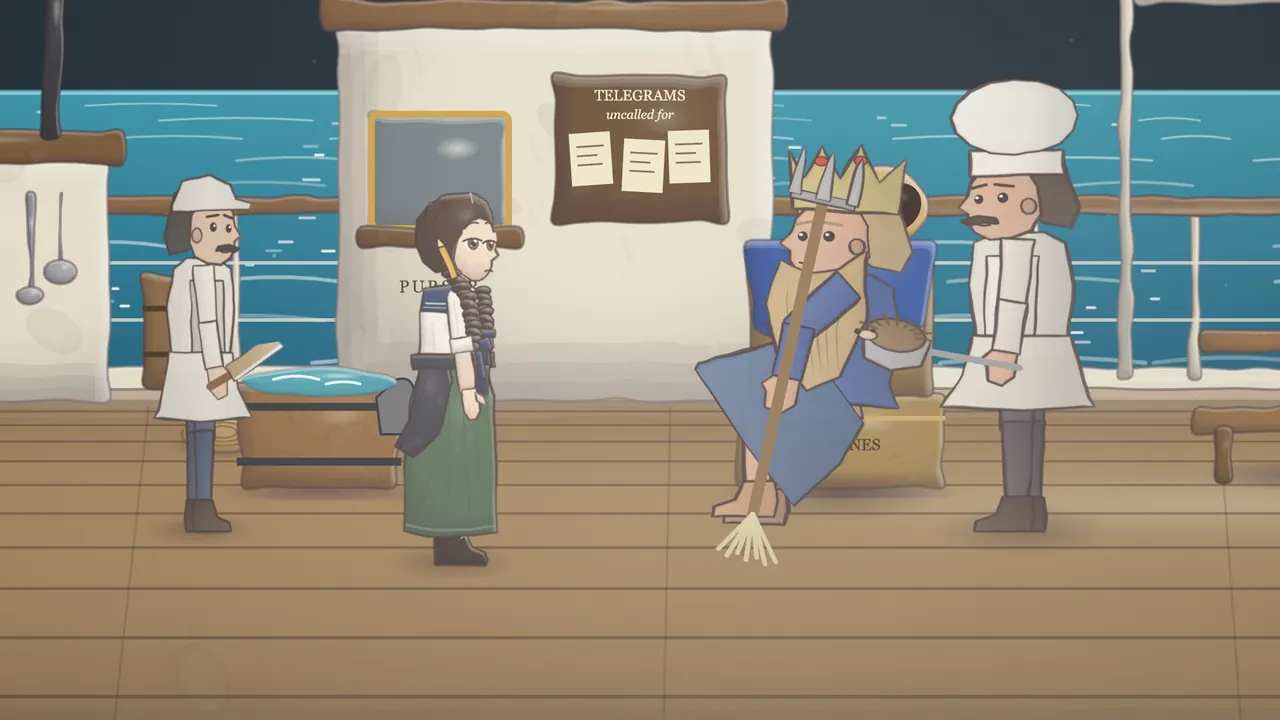
The picture at the top is chapter 7, Crossing the Line. It’s white noon on 1 December 1911, near the equator, on the third-class stern of the Südstern. Somebody has rigged a tub of seawater and a throne of crates, and nobody will say what for. Then Pudding, Daina’s hedgehog, slips out of his hatbox and follows his nose to the galley, and the cook comes up the ladder with Pudding sitting in his ladle, wet and offended. “Hedgehog in the galley!” the cook shouts. “Who ordered hedgehog?” Daina: “He ordered himself.”
Behind the cook comes Neptune’s court: a King in a rope beard and a tin crown, with a mop for a trident, and a Barber with a wooden razor. The King wants a toll, or a shave. Daina has no money, so she has to think of something else. Her verdict on His Majesty: “Neptune has the second mate’s eyebrows.”
Riga customs: two calendars
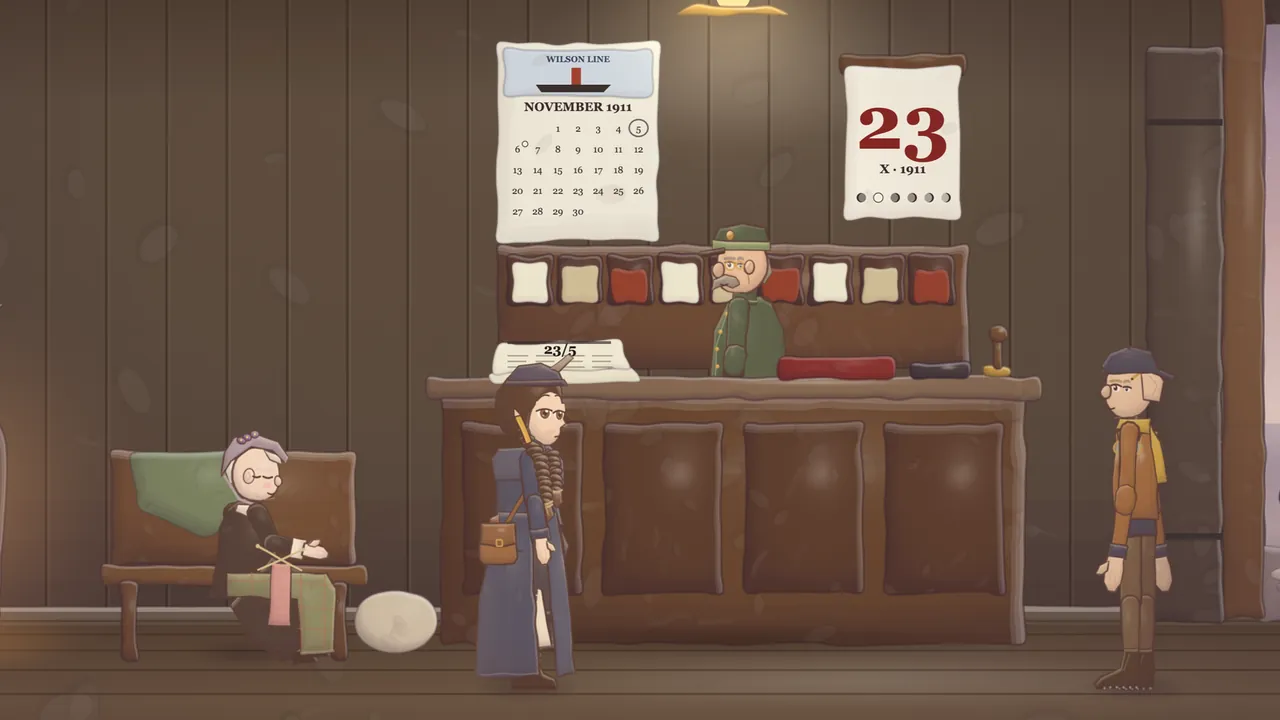
Chapter 3 is called Old Style, and the name is a clue. Daina steps into a plank customs shed on the Riga quay at dawn, with frost on the boards and an orange stove inside. “Home,” she says. “It’s smaller than I remembered. And exactly the right size.”
Behind the high counter sits Kalniņš, the customs officer, in a green cap and pince-nez. Two calendars hang on the wall behind him, and they don’t agree. The steamship line’s calendar says November 1911, with the 5 circled in pencil. The tear-off block says 23 and October. Riga keeps the old style, thirteen days behind the ship’s calendar, so by the paper on the wall, Daina hasn’t arrived yet. Kalniņš explains: “In body. On paper, you are somewhere off Gotland.”
The garage: asleep at his post
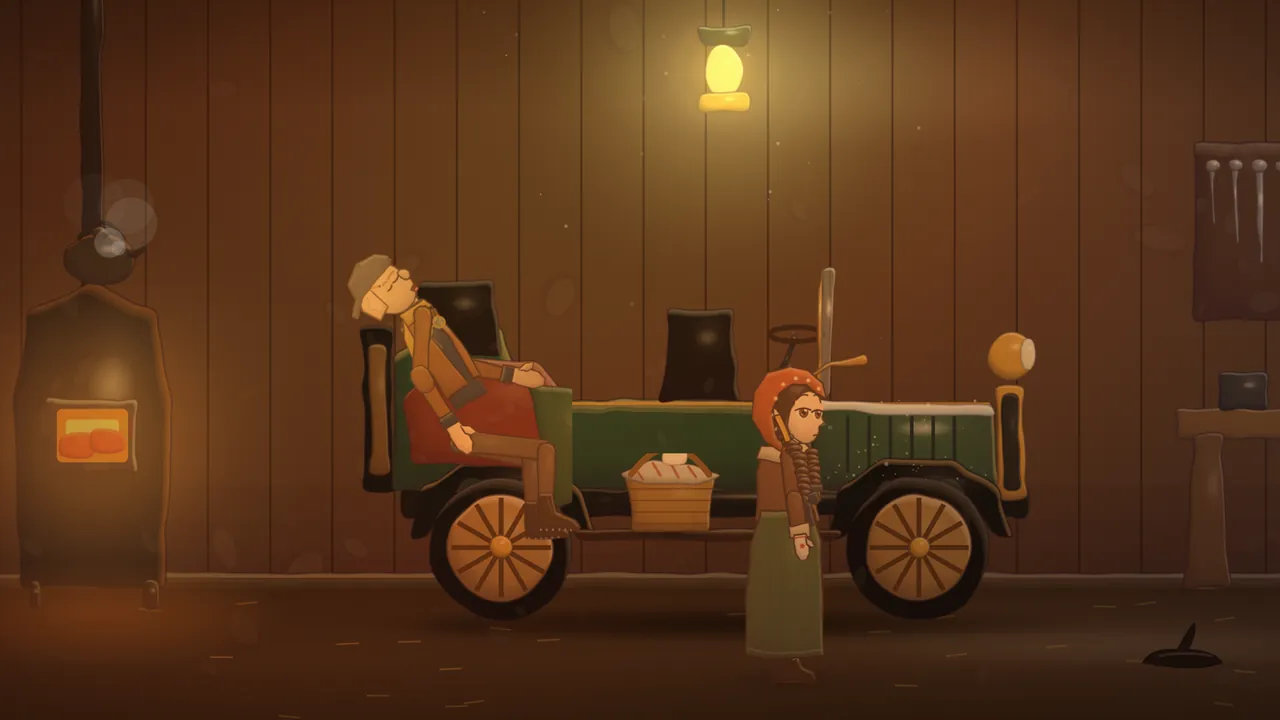
Chapter 6, Second Gear, begins at night in a plank garage “warm as a loaf.” A pot-bellied stove glows red with bricks in its mouth, which are Teo’s foot-warmers. The green Russo-Balt waits under a paraffin lamp with frost on its hood. And Teo, the chauffeur who is supposed to be guarding it, is asleep in the back seat. Daina’s summary: “Guarding the car. Asleep in it.”
She needs to get to Libau, on the coast, before eight. The car has to be warmed up first, and so does Teo. Call his name, and all he says is “...magneto...” Her grandmother Omīte’s basket already sits on the running board, with a cloth over it and a note on the knot. “She knew before I did.”
Libau: a cow in the air
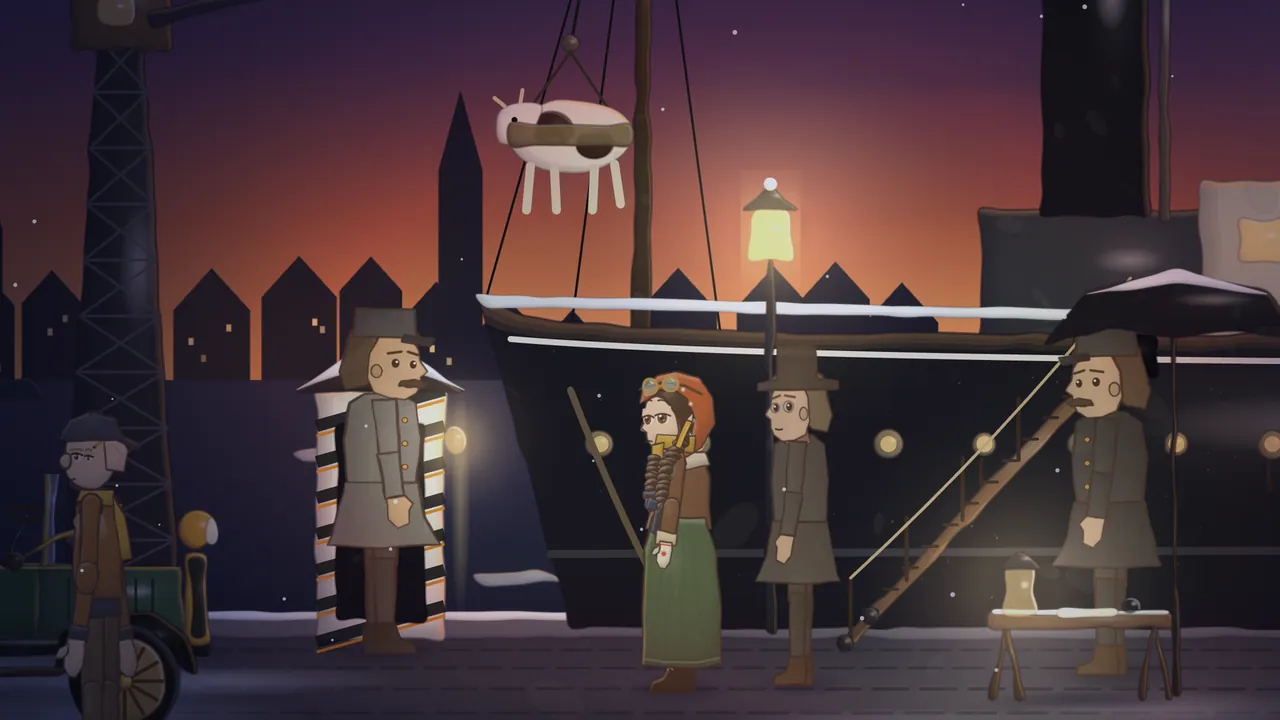
The same chapter ends on the quay at Libau at dusk, with snow grains in the lamplight. A small black steamer for Hamburg has its smoke up, and a crane is swinging something aboard. It’s a cow, in a sling. “A cow, craned aboard,” Daina says. “She looks how I feel.”
A gendarme stands in his striped box, and Daina sees “a cuckoo clock.” And at the foot of the gangway stands Vītols, her father’s clerk, with her father’s list in his hand, reading every face that goes by. Teo, meanwhile, is kicking a tire “that owes him money.”
The ford: the river wins
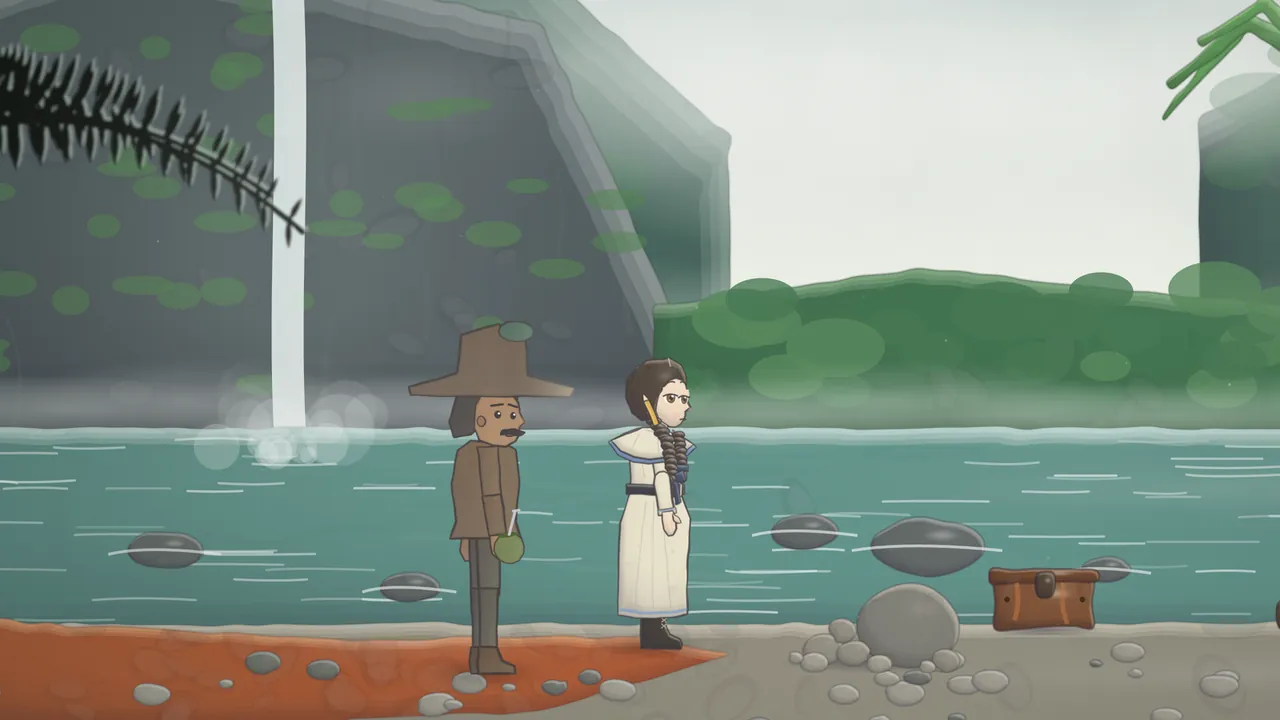
By chapter 9, The Mountain with a Hole, Daina is up in the mountains of Brazil, in a linen dress, with Bento and his mules. It’s 27 December, and the trail runs down to a river below a waterfall. The way across should be a ford. Daina tries it: “Knee-deep. Then thigh-deep. Then no.”
Bento looks at the sky and gives the forecast in six words: “Rain by three. River by four.” There’s a ferry here, if it works. Watch the stones by the water, too. Something there is laughing at her boots.
The pass: a rock with a hole
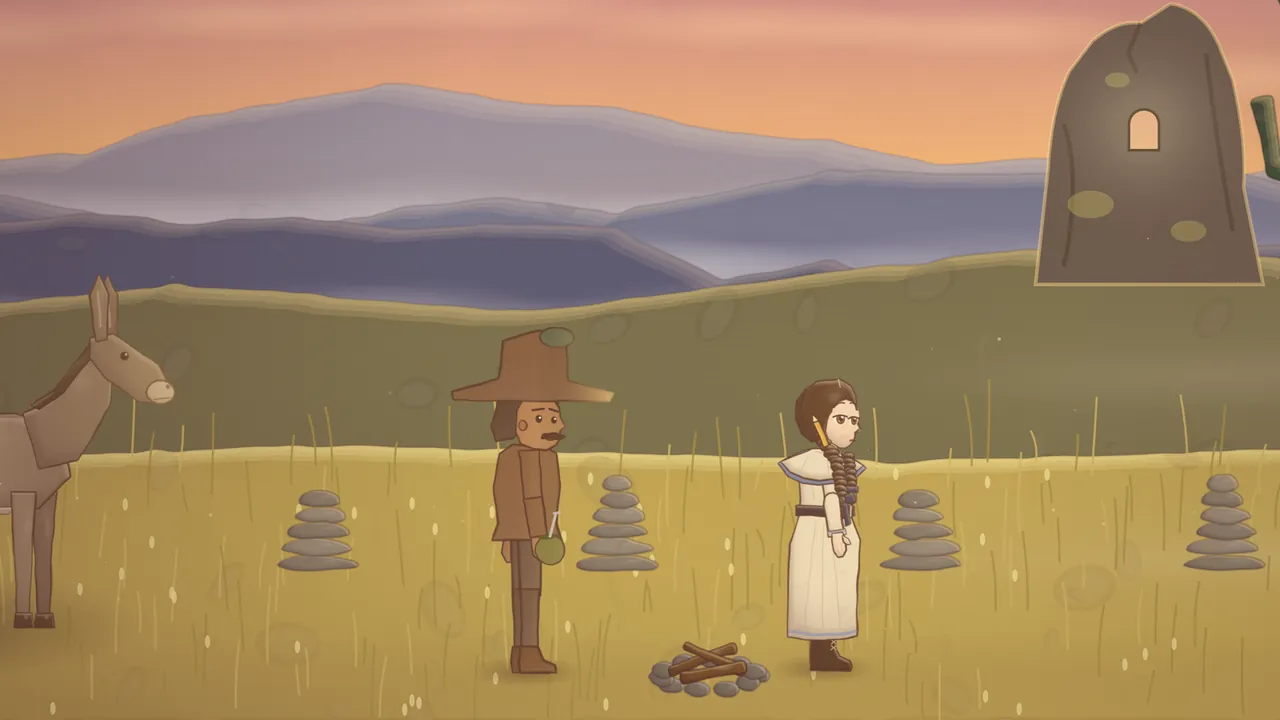
Higher up, the trail ends on a pass at sunset, and this is where the chapter gets its name. There’s grass up to Daina’s knees, “and every seed head lit up like a candle.” Four cairns of flat stones stand in the grass. Teimosa the mule has already found “the best grass on the mountain. Naturally.” Daina calls Bento, with his fire and his gourd, “a whole house in a poncho.”
Above them all stands a tall rock with a hole right through it. “A rock with a hole,” Daina says. “Sky through it.” From each cairn, the hole looks a little different. Which one matters is up to you to find.
All six of these places are in the full game. The prologue and chapters 1–2 are free to play in your browser at fernevale.com. The full game is $9.99, paid once. More about the game is on its Fernevale page.