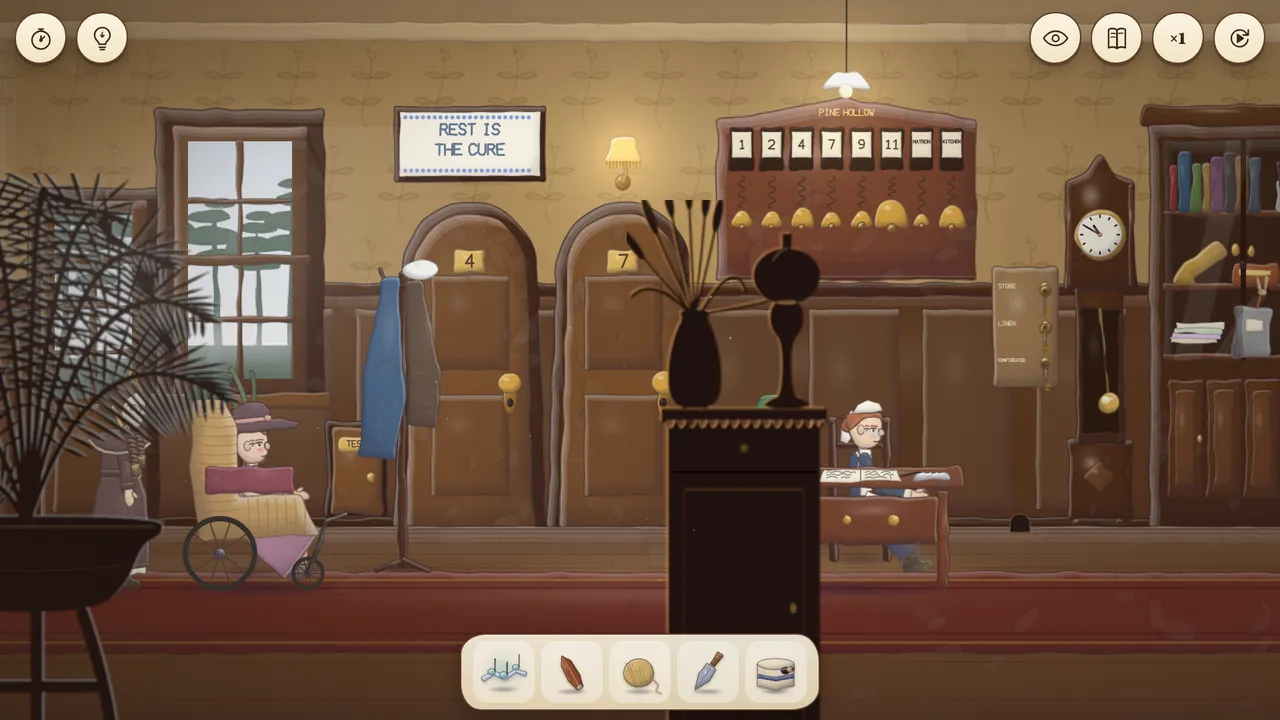
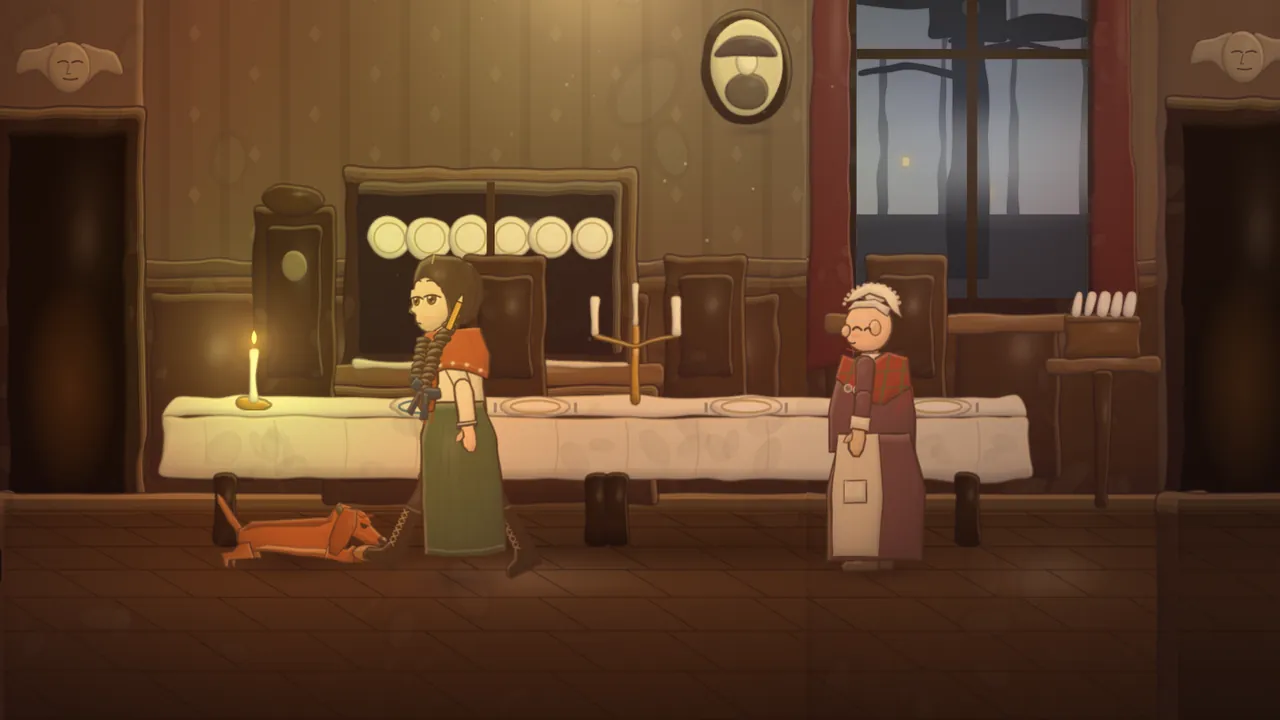
Turbo Pudding
Fernevale follows Daina from a sanatorium garden in England to a colony in Brazil, and her clothes travel with her. Almost every chapter changes something: a skirt, a hat, a shawl, the tie at the end of a plait. It’s Sunday, so we’re opening the sketchbook on Daina’s wardrobe.
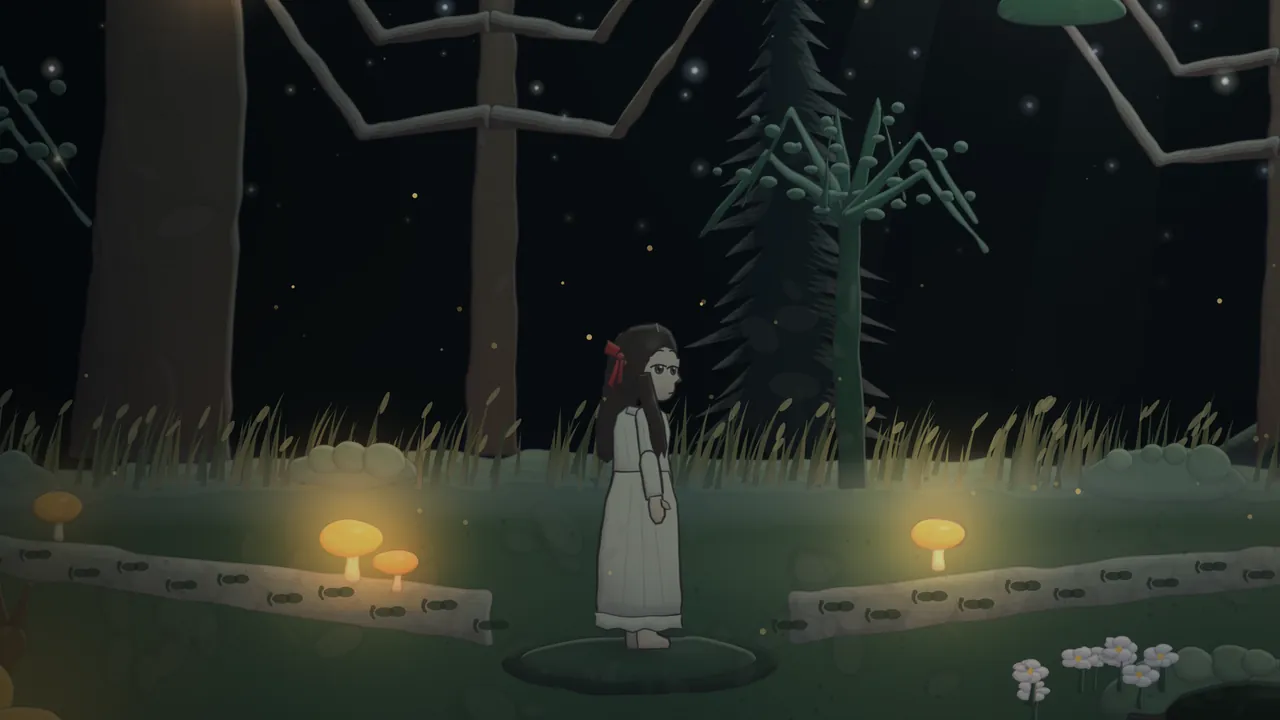
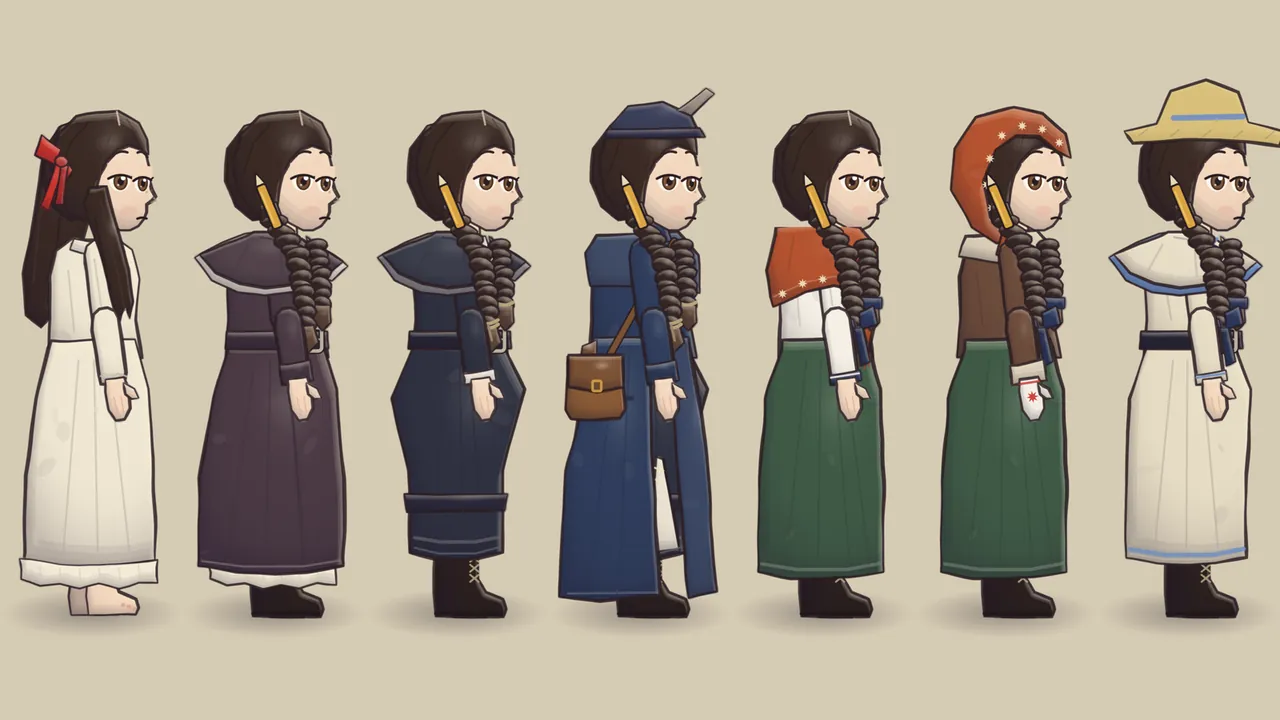
The picture at the top is the Moon Glade, where the prologue opens. Daina stands barefoot in a long nightgown with a frill round the hem, her hair loose, and Mother’s poppy-red ribbon tied in a bow at the back. It doesn’t last the night. A bird swaps it for a nut as long as her finger, and Daina later finds it in the bird’s hoard, next to a blue glass bead and a thimble: “A magpie with taste.”
One girl, seven looks
Daina is put together from separate parts, and an outfit is a list of which parts to swap, so a chapter can change her skirt and leave her plaits alone. Seven sets of cloth cover the whole trip: the nightgown, the dressing gown, the day dress, travel, home, winter and south.
Her outline never sits still, either. Every part comes in three slightly different versions of the same line, flipping a few times a second, which keeps her looking drawn by hand.
The dressing gown and the hobble skirt
In chapter 1, at the sanatorium, Sister wraps Daina in a flannel dressing gown, two sizes too big, over the nightgown, and its white frill peeks out underneath. By day, her hair goes into two dark plaits worn forward over the shoulders. Mr Hatch, the gardener, gives her a ball of jute twine, and for a while twine is what ties the ends of the plaits.
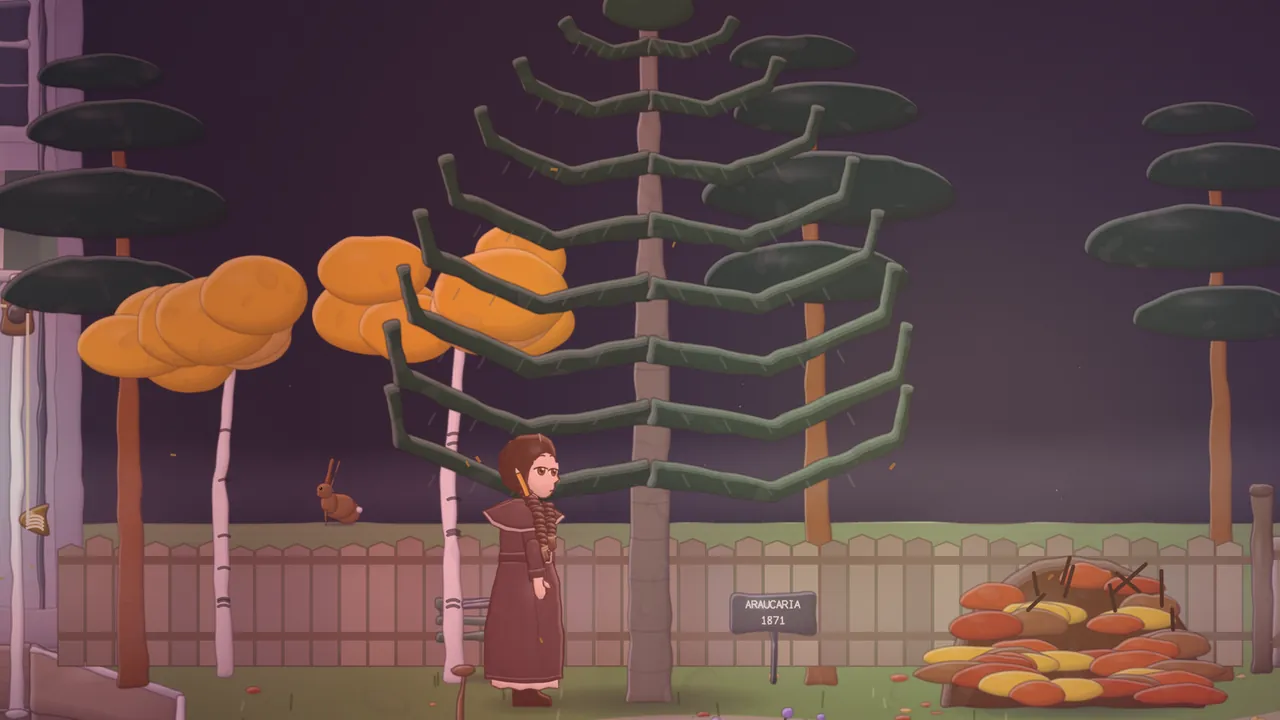
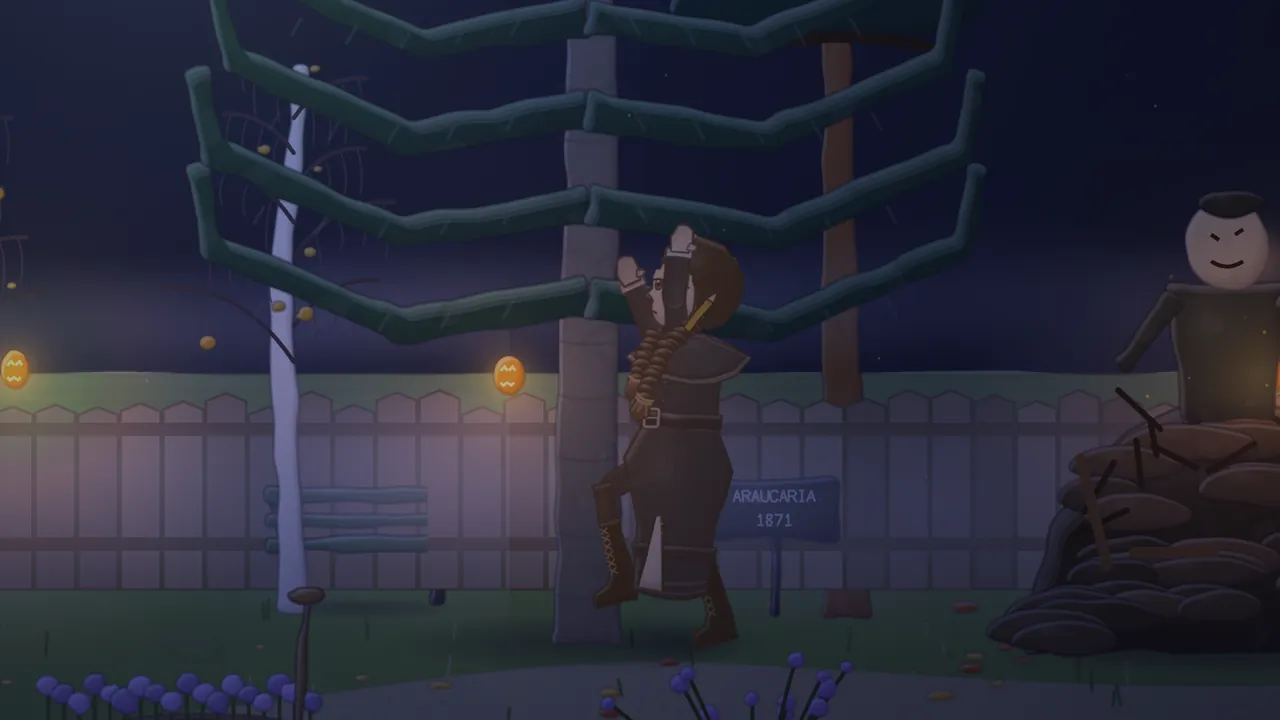
Then there’s what she brought from Aunt Edith’s. Daina takes stock: “One hobble skirt. One hatbox, no hat.” In chapter 2 she has to wear it, Aunt’s gray dress, narrow at the knees, and it changes the way she walks. Her steps get half as long and 1.6 times as quick, and she covers ground at 80 percent of her usual pace. Her verdict: “You can’t walk in it, you can only proceed.” Out in the garden at night, she adds: “This skirt was designed by someone who hated trees.”
The answer lies on Mr Hatch’s bench: a pair of long hedge shears, kept “sharp enough to cut fog.” Daina cuts a long slit up the side of the skirt. “Sorry, Aunt Edith. It’s in a good cause.” The next line says it all: “Legs! I’d forgotten I had them.” The split skirt is still there under her coat in chapter 3.
Dressed for the North Sea
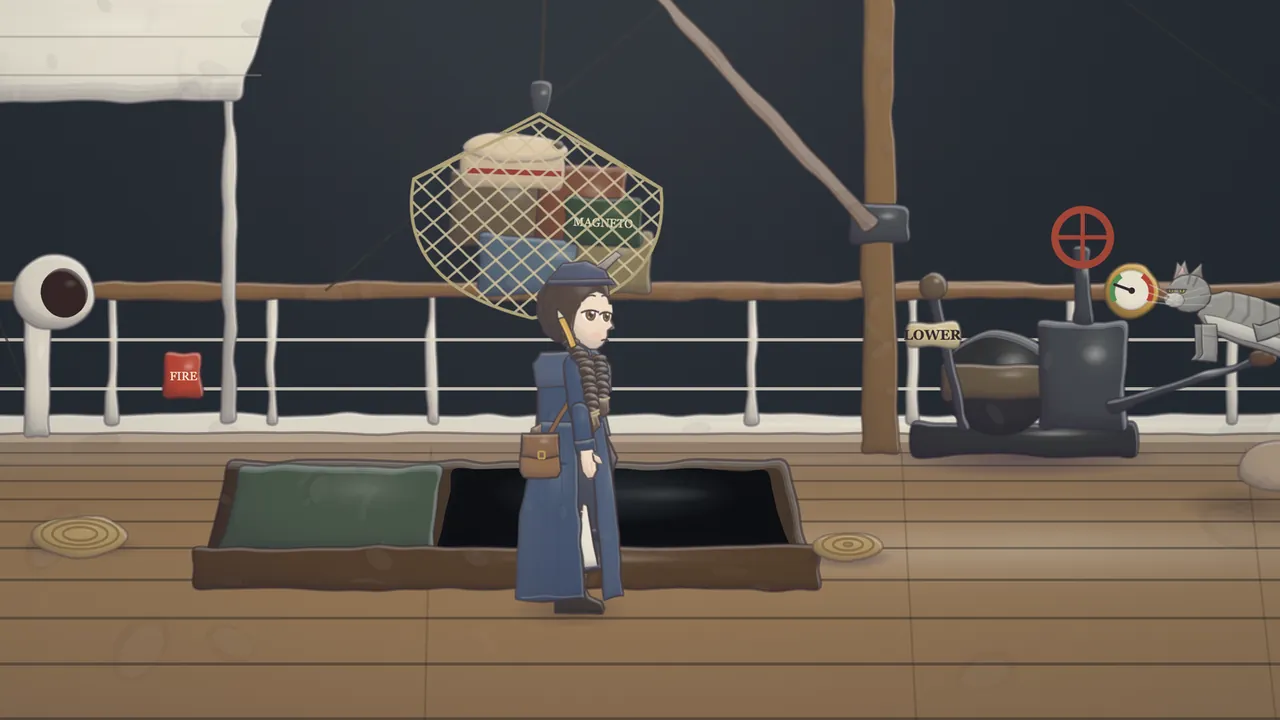
Chapter 3 begins on the docks at Hull and goes to sea on the SS Vindava. For the voyage, Daina gets an ulster, a long coat open at the front, its skirts reaching her heels. On her head sits Aunt’s little traveling toque, a felt pillbox with a band and a bit of a gray feather, too small for her. A leather satchel goes across her chest, with the corner of her album sticking out of it.
Home, winter and a choice at the mirror
In chapter 4, Daina is home, in her own clothes: a white blouse, her own dark green wool skirt and her grandmother Omīte’s knitted shawl, with one end hanging loose. The twine is gone from her plaits, and navy ribbon ties them now.
Before supper, she stands at Mother’s mirror, and the choice is yours: put it up, or keep the plait. Put it up, and she decides: “If he’s going to argue with someone, let it be a grown woman.” Keep it, and she has a different view: “It’s been through a sanatorium and the North Sea. It can survive supper.”
Chapter 5 brings the frost. Omīte’s shawl goes over Daina’s head and ties under her chin, with its star border framing her face. Her hands disappear into Omīte’s white mittens with red stars, and on goes a brown winter jacket. Daina is delighted: “Sleeves to the wrist. And a pine cone in the pocket, from when I was twelve.”
Linen for Brazil
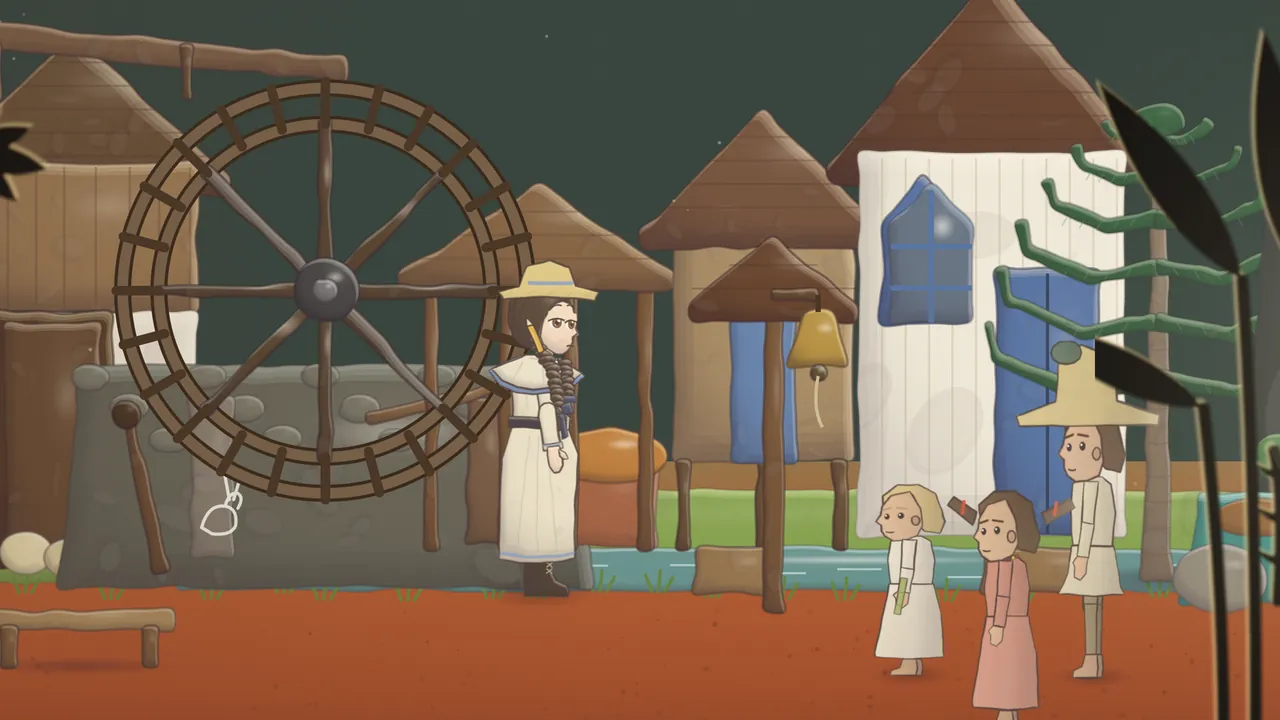
Wool doesn’t last the journey south. On the ship, as the air warms, Daina rolls up her sleeves and knots her cape round her waist. In chapter 8, in Rio Novo, a colony under the Serra, she wears Aunt Made’s linen blouse and skirt with a cornflower-blue band, a light cape edged in the same blue and a straw hat. The laced boots stay on, red earth and all.
What never changes
Under all the swaps, a few things stay put. By day, the two plaits always hang forward over her chest, each swinging a little more toward the end. A pencil stub sticks out of the near plait, close to the top, like an antenna, except when it’s in her hand.
The prologue and chapters 1–2 are free to play in your browser at fernevale.com. The full game is $9.99, paid once. More about the game is on its Fernevale page.