Turbo Pudding
Lullalotl is a calm pond game for one finger: you tap the water, the ripple wakes a sleepy friend, and the friend sings and ripples on to the next one. It’s Monday, so let’s meet the cast as a band.
Every sound in the game is built from plain tones as you play, with no recordings, and each friend gets an instrument of its own, so a long chain sounds like a little orchestra.
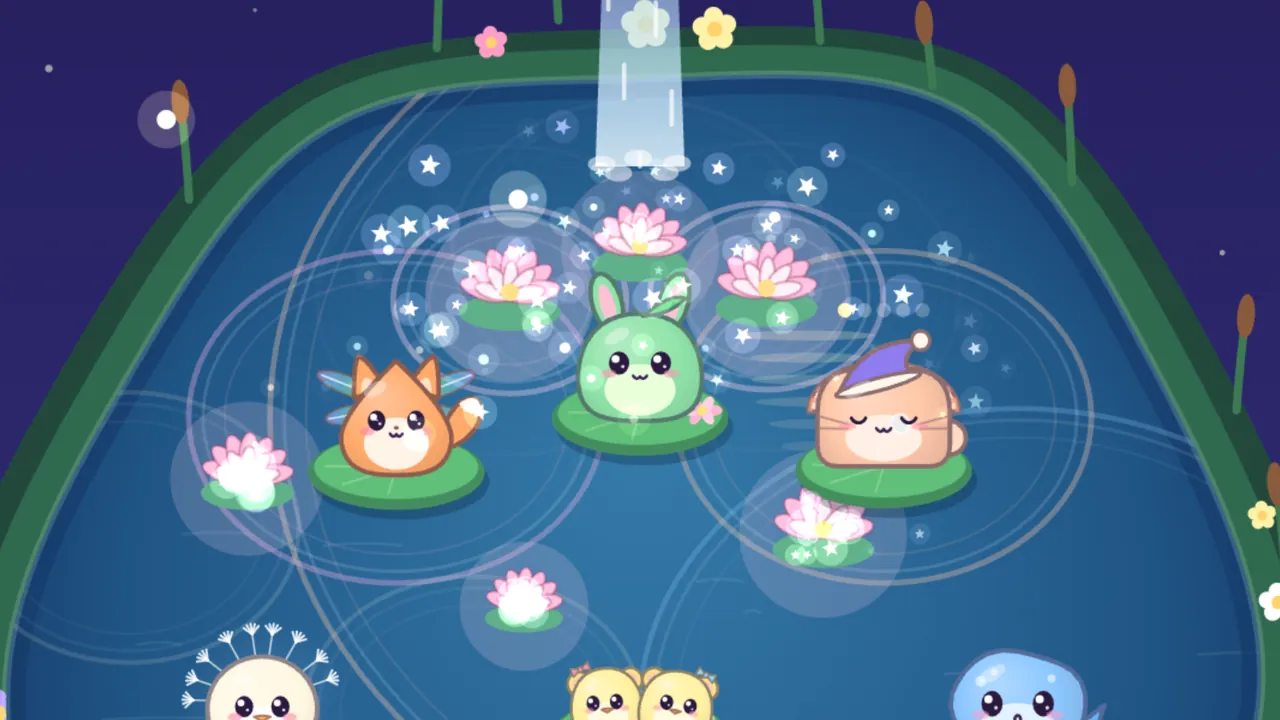
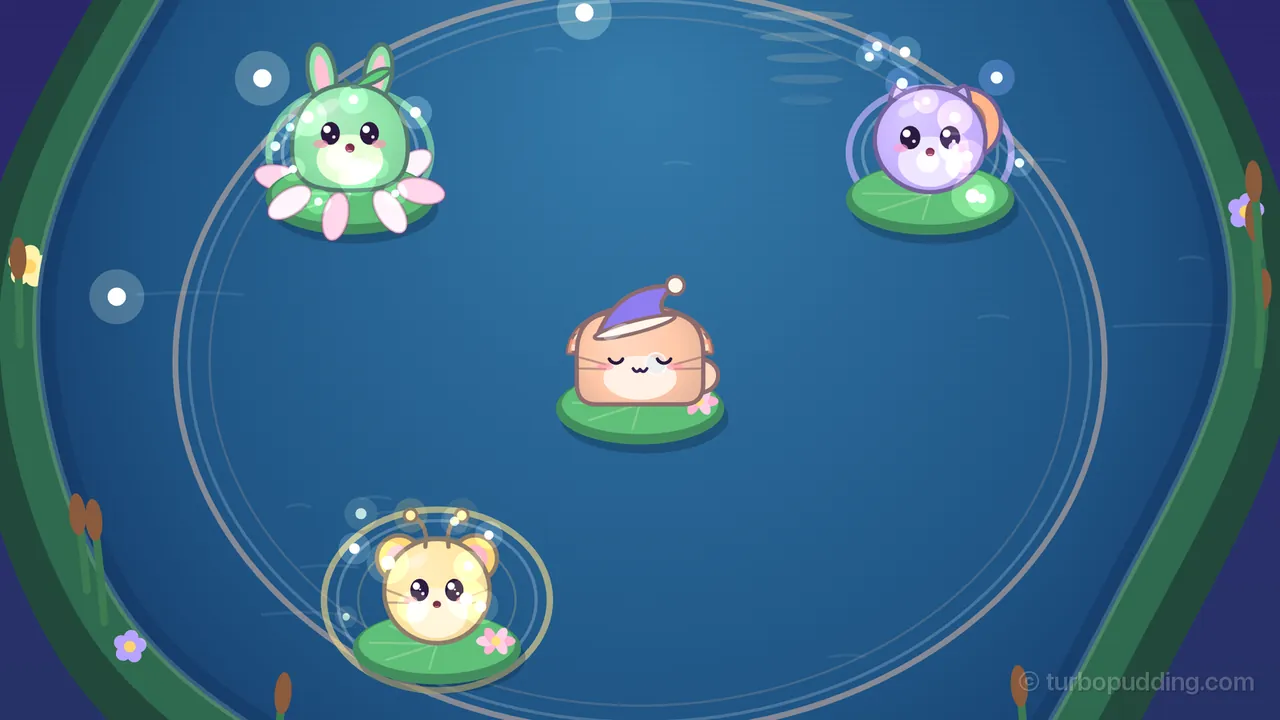
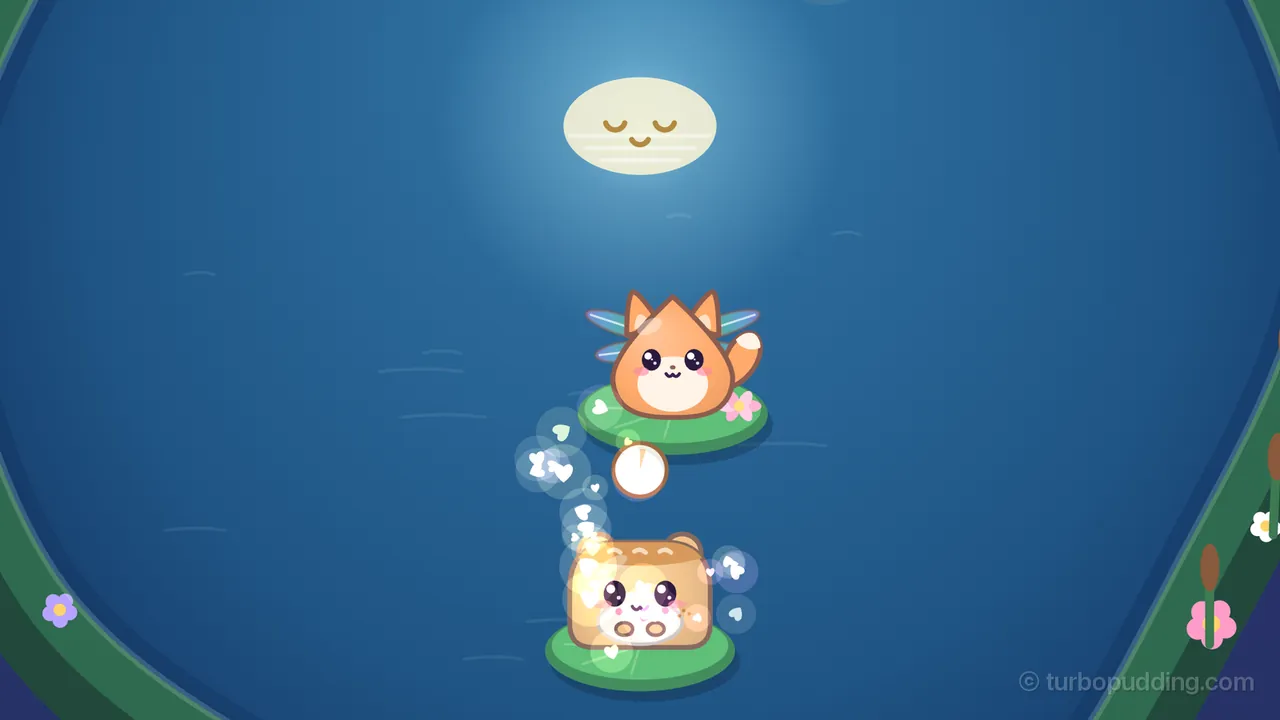
The picture at the top is Snoozy Shallows a moment after Dozy’s big yawn. The giant ring has rolled past Pip, Echo and Twinkle, and all three are singing.
Lulla, who plays the water
Lulla is the tiny pink axolotl at the edge of every pond, and she is the one member of the band who can’t sing. When she tries, her voice comes out as a happy run of three tiny bubbles. What she can do is make ripples, and every tap is a water drop: a quick plip with a soft, low gulp under it.
How a chain becomes a tune
When a friend sings, it plays one note of the chain on its own instrument. Each new link in the same wave plays one step higher on a five-note scale, so a chain climbs like a little staircase. After about two octaves, the top notes take turns instead of climbing any higher. If a wave goes quiet for 0.8 seconds, its next note starts back at the bottom.
The notes also keep time. If the music’s next eighth note is no more than 70 milliseconds away, a chain note waits for it and lands right on it. Links set off by the rain cloud play softer and a little darker, so your own chains stay in front.
Each friend also has a voice. Its note plays every time it sings, but the voice speaks up at most once every 1.2 seconds, so a crowded pond never turns into a squeak storm.
The lineup
Pip, the green frog-bunny, plays a plucked note like a little thumb piano, and its voice is a short mew that goes up like a question. Bloop, the blue whale calf, plays bass: a round note an octave down, and its low voice drops at the end. Leap plays a soft triangle chime and adds a boing as it hops, then a little splash where it lands.
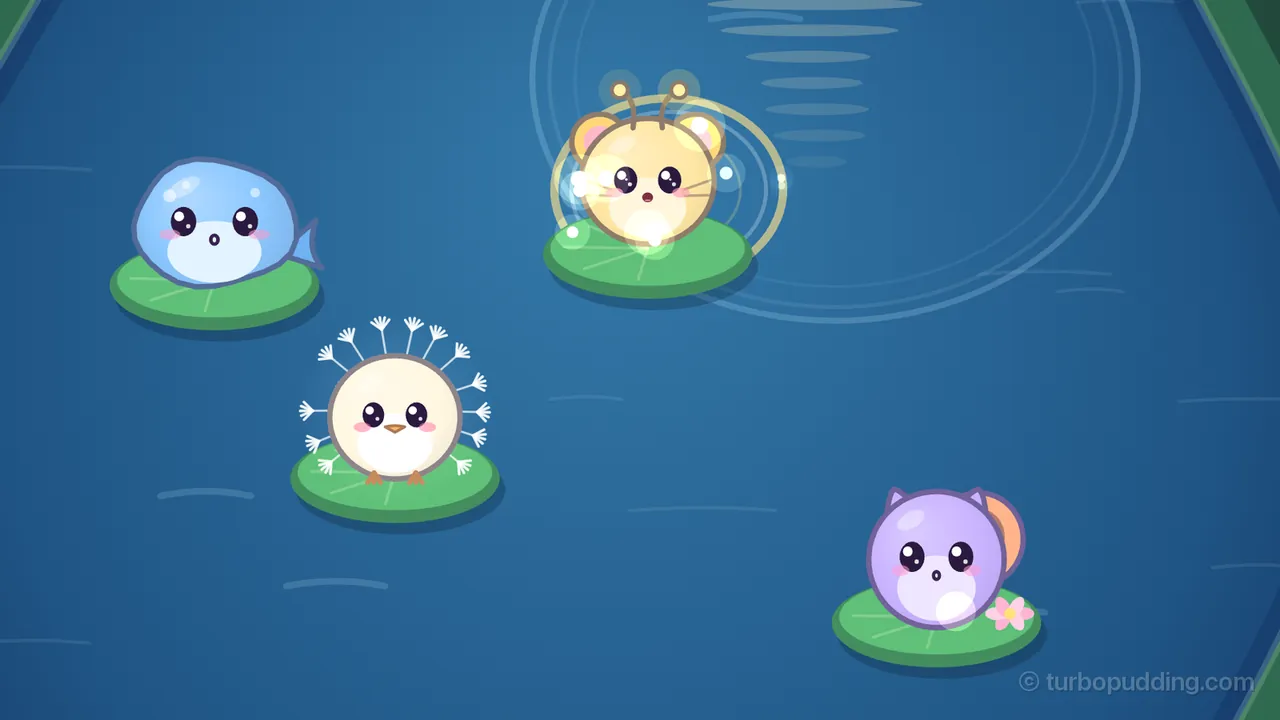
Twinkle, the shy firefly-mouse, plays a glassy bell, and its voice is the highest in the pond, a tiny trill. Echo plays a note with a slow wobble in it, which suits a friend that answers twice. Prism plays a bell too, but its big moment is the rainbow: three bells a step apart, each doubled a hair sharp so the sound shimmers.
Dozy, the kitten in the nightcap, plays bass like Bloop, and instead of a mew it purrs. After five ripples it yawns, and you can hear it: a long, low “ah” that slides down into an “oh,” then one more purr. That yawn is the giant ring in the picture at the top.
Puff, the dandelion chick, plays something close to a flute, a soft note with a breathy start. Its sneeze comes in four parts: a rising squeak, the “choo,” three seeds popping out and a tiny sound for each one landing. Tik & Tok play a woodblock. Their voice is two knocks, “tik” on the left and “tok” on the right, so in headphones the twins sit on both sides of you.
Two more singers aren’t friends at all. A lotus that opens where two rings meet plucks its note an octave higher than everyone else. And in Moon Mirror, the tenth pond, the Moon’s reflection in the water rings a bell whenever a wave reaches it.
Bun and the feast
Bun, the bear cub who is also a bun, plays a marimba, and its voice is the lowest mew of all. Bun is also the band’s big finish. If one of your own waves makes a chain of three links or more and ends on Bun, it becomes a feast: three bells, then a happy “nom-nom,” a puff of hearts and up to five times the glow for that wave. Then Bun needs eight seconds to bake a fresh tray.
When the whole pond joins in
Long chains get a reward you can hear. At five links, the pond calls out “Sweet!” with a bell. At eight, it’s “Chorus!”: a five-note chord rings out, and the Moon joins in with a soft “aah.” For eight seconds after that, the music plays a little livelier.
Quieter after bedtime
The game also turns itself down at night. From ten in the evening to five in the morning, everything is a little softer and the music plays four beats per minute slower. The Quiet night switch in the settings goes further and turns off the pond’s background sounds. Sounds, Music and Voices have their own controls too, so you can keep the band and lose the mews.
The first two ponds are free at lullalotl.com, with Pip and Bloop waiting in them. The full game is $4.99, paid once, and plays in any browser. More on the Lullalotl page.