Turbo Pudding
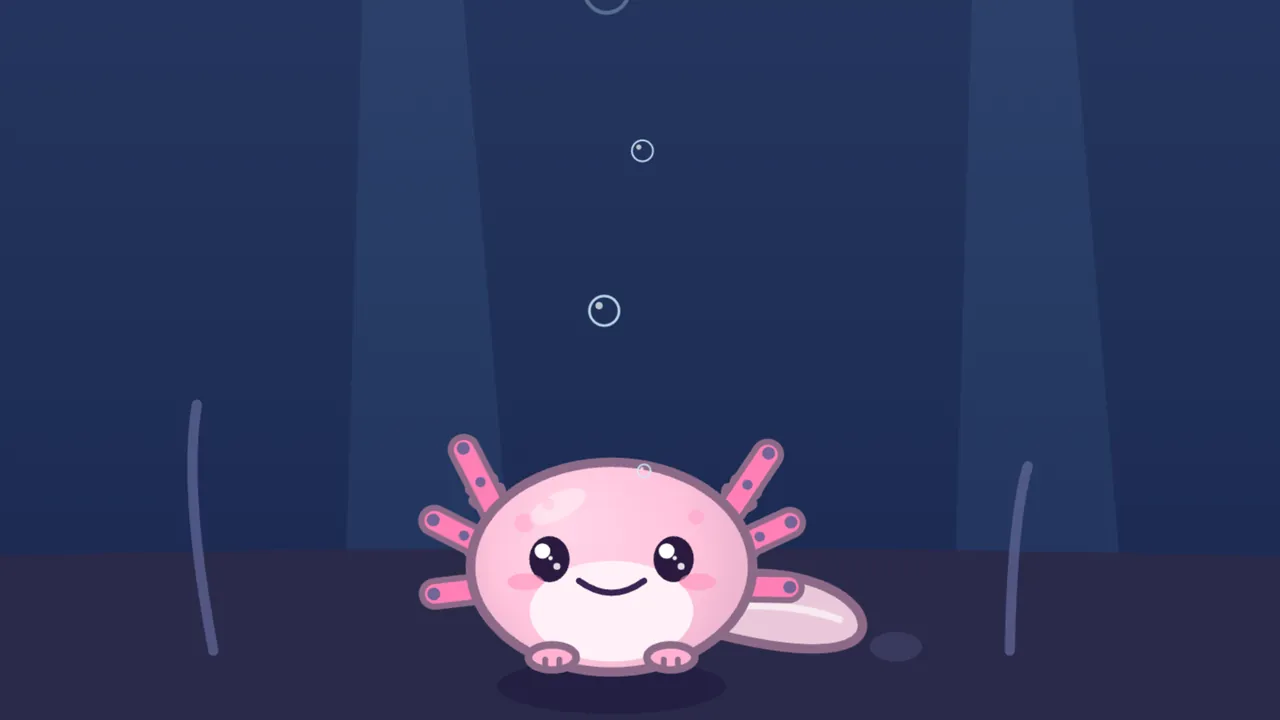
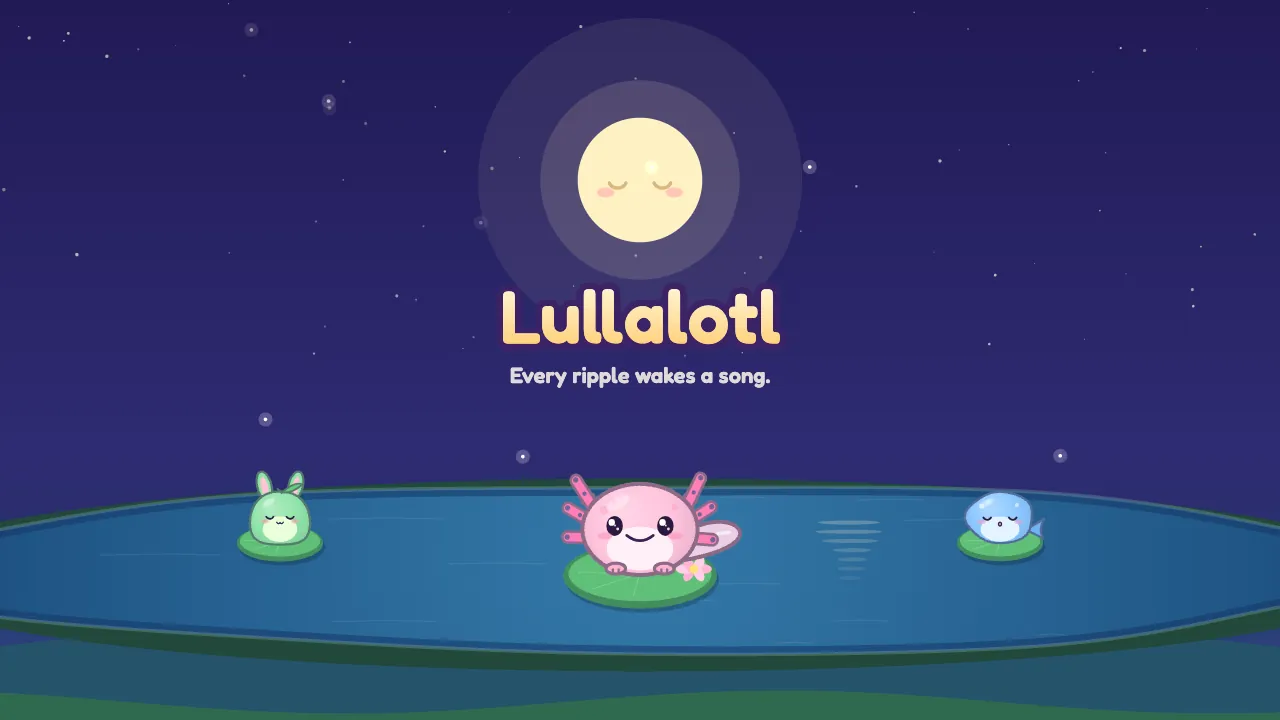
Lullalotl begins with a song. “Every night, the Moon sang a lullaby. And Moonlit Hollow drifted off to sleep.” But the Hush had never slept, not even once, and it had an idea: “If it’s very, very quiet…” The songs sank and the colors faded. Only Lulla, a tiny pink axolotl, stayed pink. She had no song to lose. She tried to sing, and out came a bubble: blub.
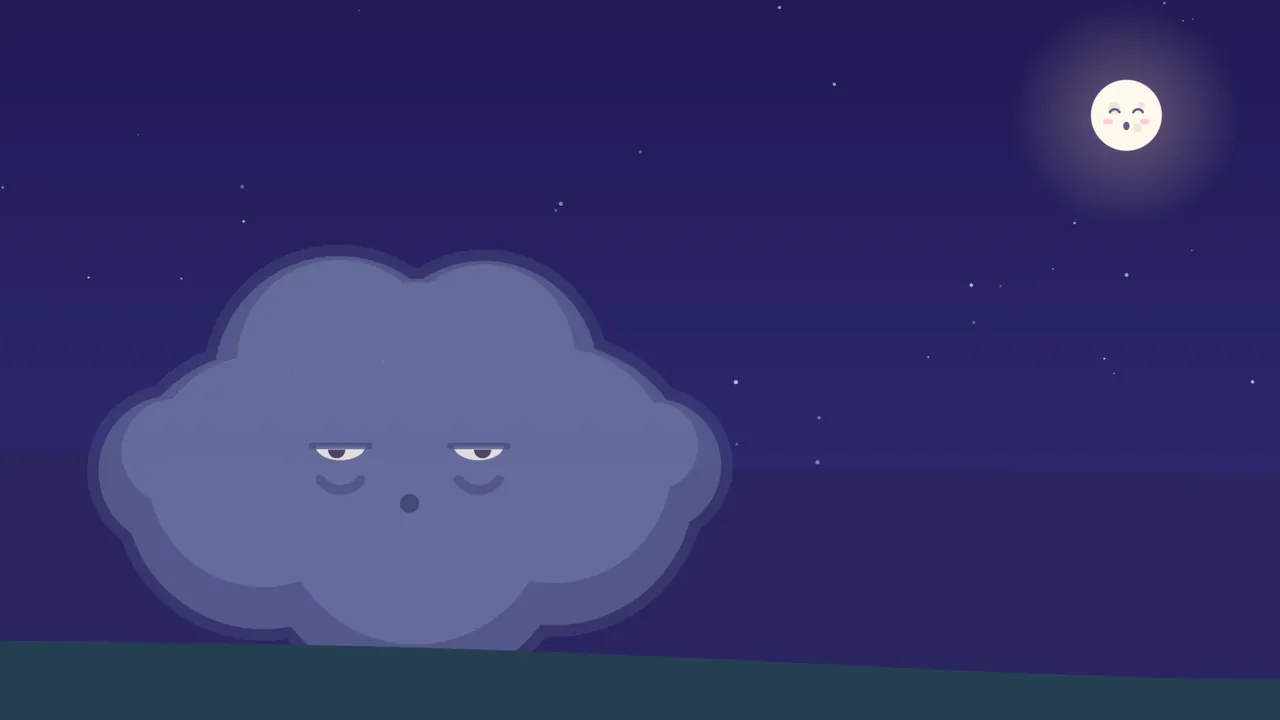
The whole game is about bringing that lost lullaby back, one note at a time. So we read up on real lullabies, then looked at how the Moon’s song is built.
A very old word
The English word lullaby has been around since about 1560. It joins lull, to soothe, with bye, as in bye-bye. You can hear the start of it in Lulla’s name, and in Lullalotl.
Lullabies sound alike everywhere
In 2018, a team led by Samuel Mehr at Harvard played 14-second clips of songs to 750 people in 60 countries. The clips came from 86 mostly small societies all over the world, and most listeners couldn’t understand the words. Yet just from the sound, they could tell which songs were lullabies, and which were dance songs or healing songs.
The same team went bigger in 2019, in a study in the journal Science. They found music in every one of the 315 societies they looked at, and found that songs used for the same job tend to sound alike. In an online test with nearly 30,000 visitors, people picked out lullabies correctly 45.6 percent of the time, while a blind guess among the four song types would be right only 25 percent of the time. Only dance songs were easier to spot. Dance songs are faster, with stronger accents and busier rhythms. Lullabies are slower, gentler and simpler.
Babies relax to lullabies they’ve never heard
Then the researchers turned to babies. In a study published in 2020, 144 babies in the United States listened to eight unfamiliar lullabies from faraway cultures, and to other songs from faraway places that weren’t lullabies.
During the lullabies, the babies’ heart rates dropped, their pupils got smaller and their skin showed calmer electrical readings, all signs of a body winding down. The effect held across the whole first year of life, so it doesn’t seem to depend on how much music a baby has heard. A lullaby, it seems, works even in a language you don’t know.
How the Moon’s lullaby is built
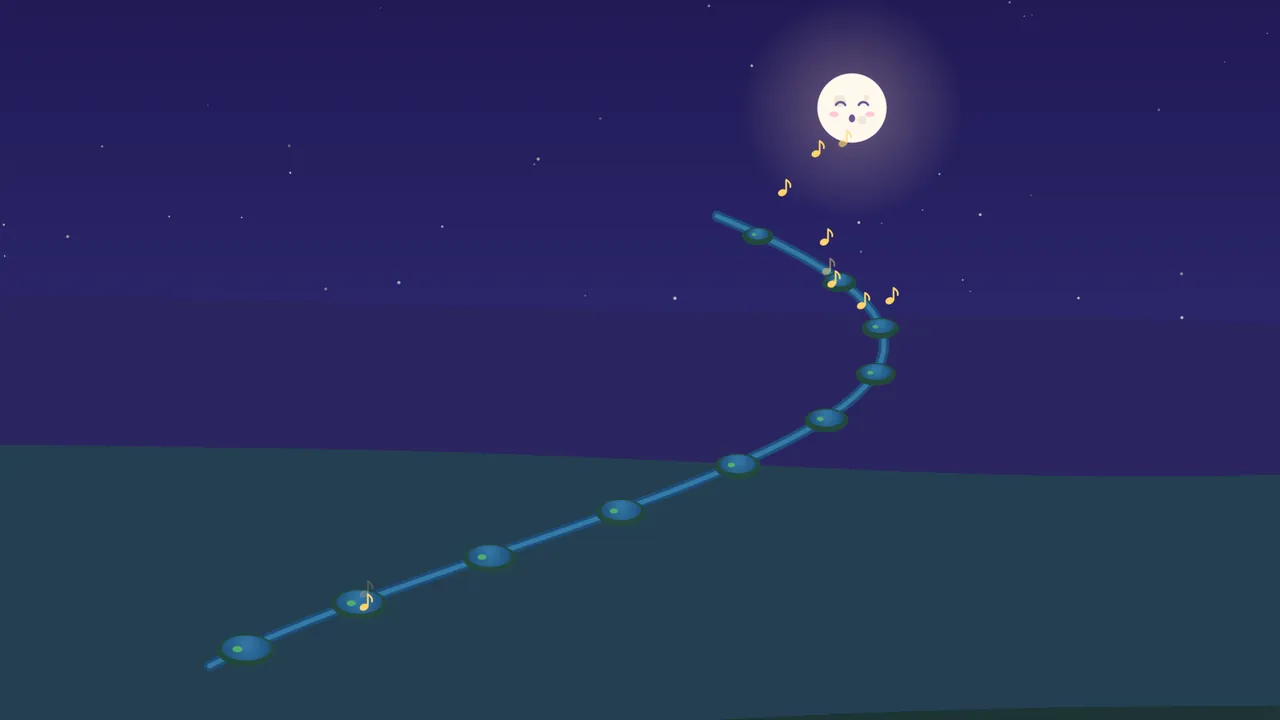
We wanted the Moon’s song to follow the same recipe. It is ten notes long and sits in F major. It uses only five different pitches, F, G, A, C and D, which together make the major pentatonic scale. There are no half steps between them, so no two notes ever clash.
It is written in 6/8, a meter that rocks: long, short, long, short, like a cradle. It stays inside a narrow range, less than an octave, and comes to rest on F, the home note, held for a whole bar.
The background music rocks the same way, through four chords, two bars each, at 66 beats a minute. The little tunes on top use the same five pitches, so whatever plays at once never sounds wrong.
Ten ponds, ten notes
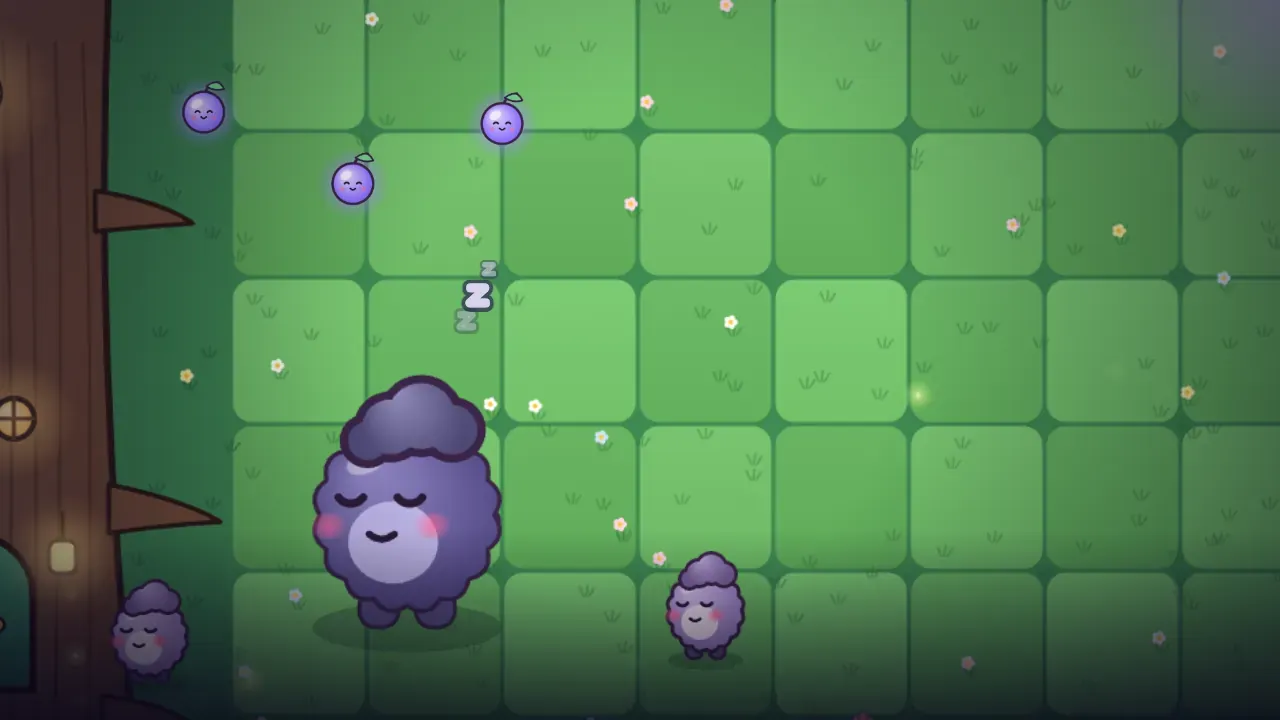
Lulla can’t sing, but her tail can go plip. The ripple wakes a sleepy friend, and the friend sings. Line your friends up well, and one ripple can wake them all. Each of the ten ponds of chapter 1, from Lily Cradle to Moon Mirror, gives back one note: “You found note 1 of the lost lullaby.”
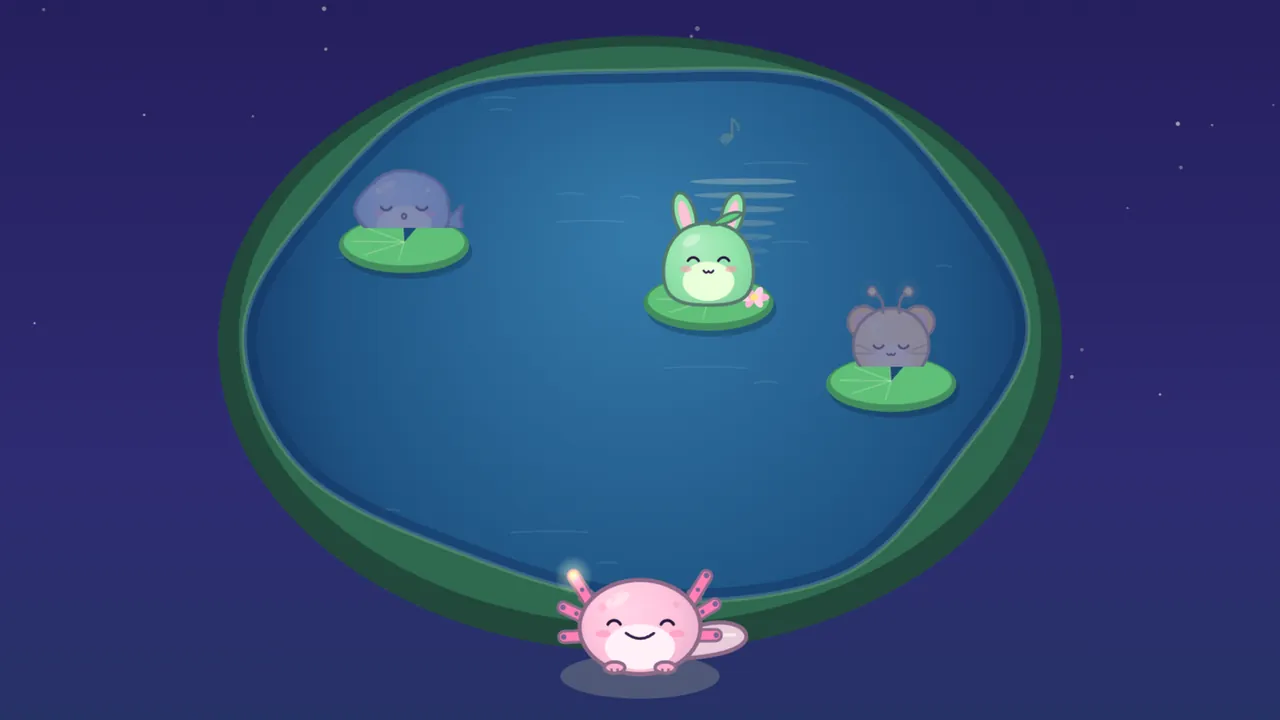
Every time you finish a pond, the game plays the lullaby from the first note up to the newest one, then settles on F so the phrase never hangs. The tune grows with you.
A song that remembers
Every 16 bars, the background music softly quotes the start of the lullaby, as many notes as you have brought back. Early on it’s a hint. Later it’s nearly the whole song.
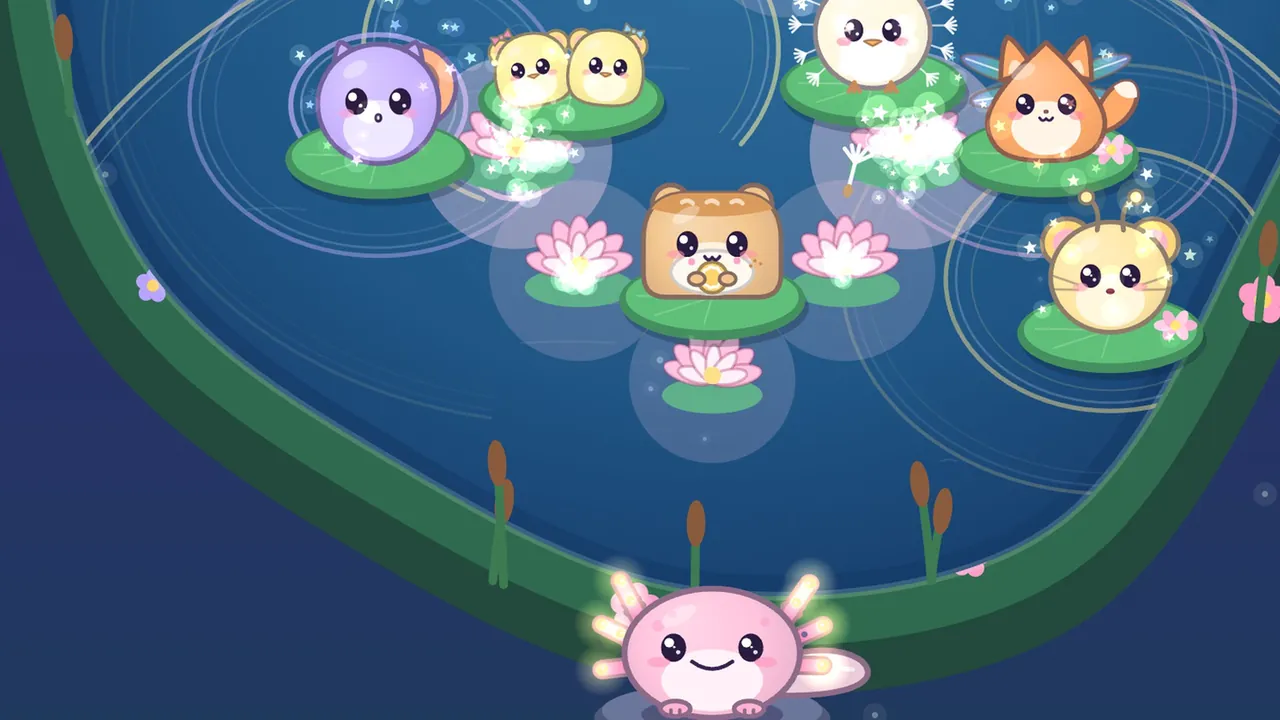
Each pond adds its own quiet sounds too, like bubbles, pebbles and a rustle in the reeds. And because a lullaby belongs to the night, the game checks the clock. From ten in the evening until five in the morning, everything plays a little softer and the music slows down by four beats a minute. There is also a Quiet night setting that turns everything down and lets the pond sounds rest.
There are no recordings in Lullalotl. Every note is played by the game itself, right on your device.
Bring the Moon her song
What happens when all ten notes are back, we’ll leave for you to find out. The first two ponds are free to play in your browser at lullalotl.com, and the full game is $4.99, paid once. More about the game is on the Lullalotl page.