Turbo Pudding
In Harrow, everybody’s phone buzzes, and Juror Seven’s buzzes most. A good part of Twelve Neighbors happens on that phone: the family chat, Paloma’s podcast comments, the town’s neighbors’ group and calls from Mom on her night shift. It’s Wednesday, so here’s how we built it, plus two smaller props, a chalkboard and a notebook.
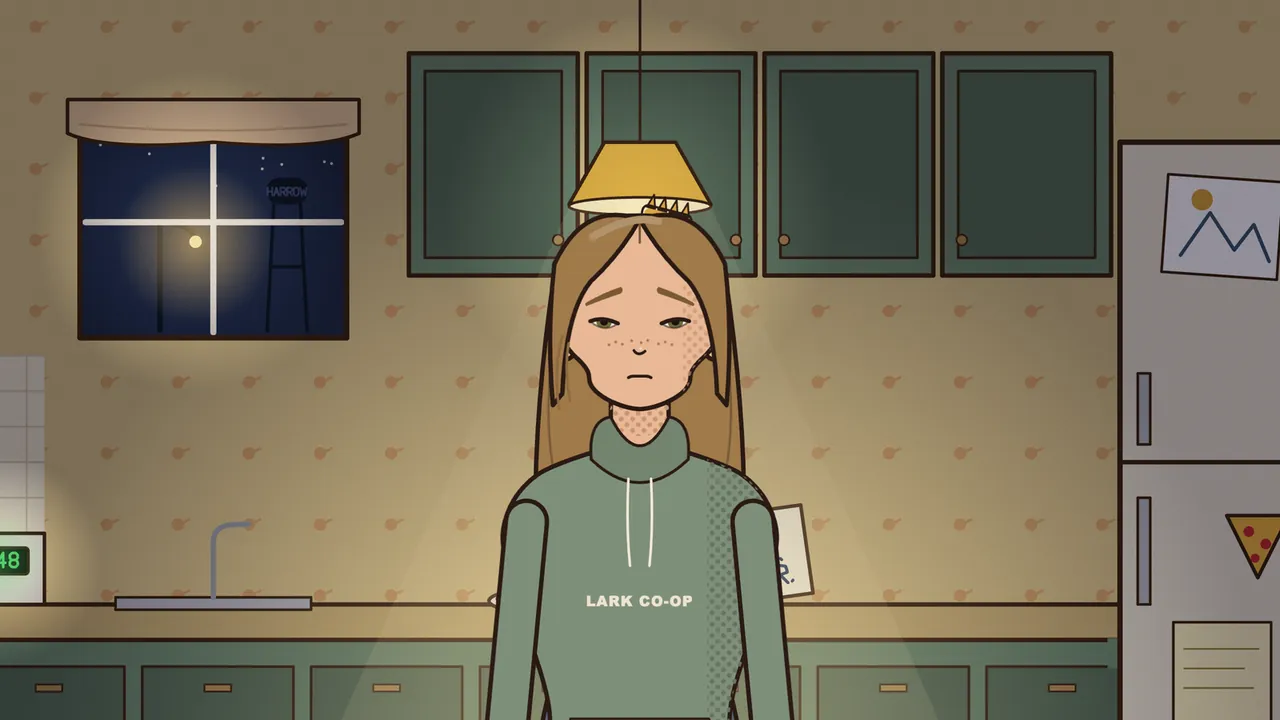
The picture at the top is chapter 3, late at night. Juror Seven is home from the Harvest Festival, tired, in a Lark Co-op hoodie, and the notebook waits on the kitchen table. Then the phone rings. It’s Mom, calling from her night shift: “Baby. I’ve got four minutes.”
A phone inside the scene
The phone is never a menu. It opens over the scene, right where the heroine is standing, and the place stays behind it: the square in the morning, a dark county road, the festival. In our script, a chat takes one line to open and one to close, and the messages in between are written like any other dialogue.
The phone has three modes. A chat is a messenger, with the other person’s messages on the left and the heroine’s on the right. A feed is a post with comments under it. A call shows who’s calling, rings until you answer and then starts its own clock, minutes and seconds, while the lines run as subtitles.
Typing…
A message from someone else never just appears. First come the typing dots, for a moment that grows with the length of the message, up to a couple of seconds. A quick “so…” lands almost at once. A long message makes you wait, the way real ones do. The heroine’s own messages go out at once.
When it’s your turn to answer, the choices turn into reply chips at the bottom of the phone, and the one you tap is sent. Sending and receiving each have their own little sound, made in code like every other sound in the game. And a save made in the middle of a chat lands you back in the same chat, with the same messages on the screen.
The comments section
A feed is where Harrow talks about the trial, and Harrow has opinions. The town group, Harrow Neighbors, opens with a note from the admin: “Please keep it kind, neighbors. We all have to live here after.” Underneath, it goes about as well as town groups go, down to a comment that was removed by an admin.
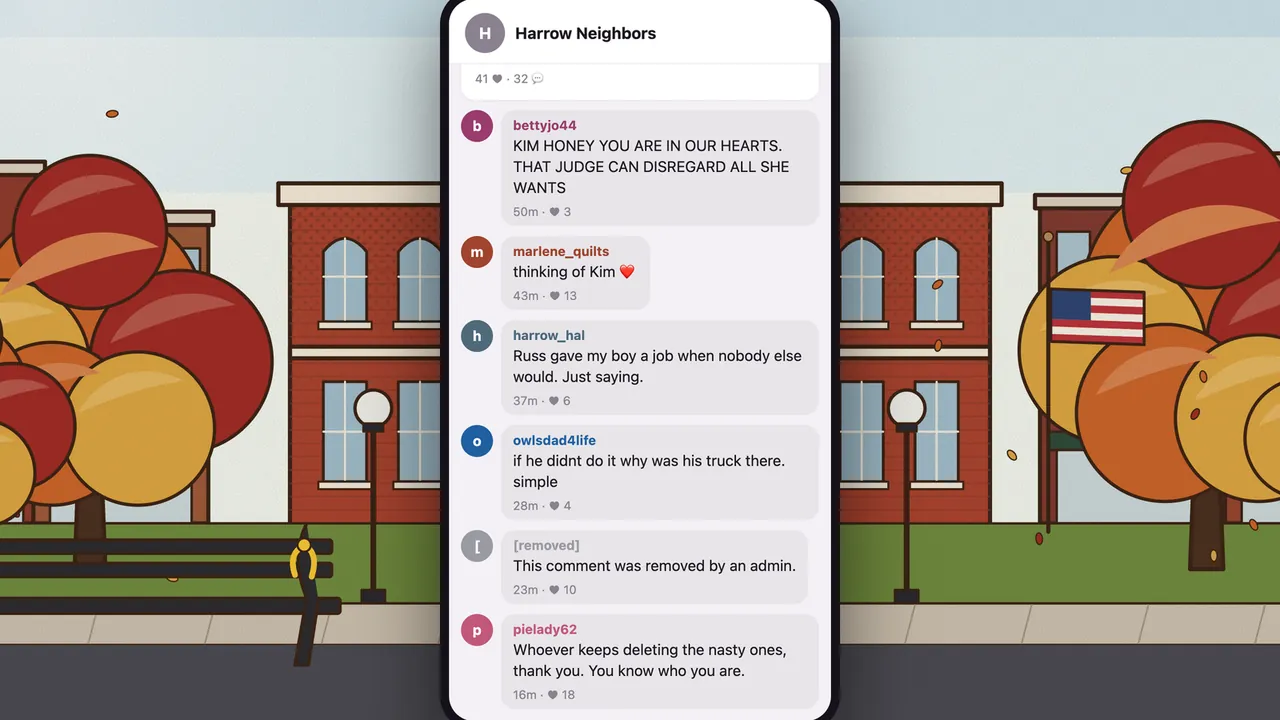
Every comment has a name, a time and a number of likes. The times and the likes are fixed for each comment, so if you reload the page, nothing shifts. A few comments show an exact clock time instead of “23m.” When one does, the time is worth a second look.
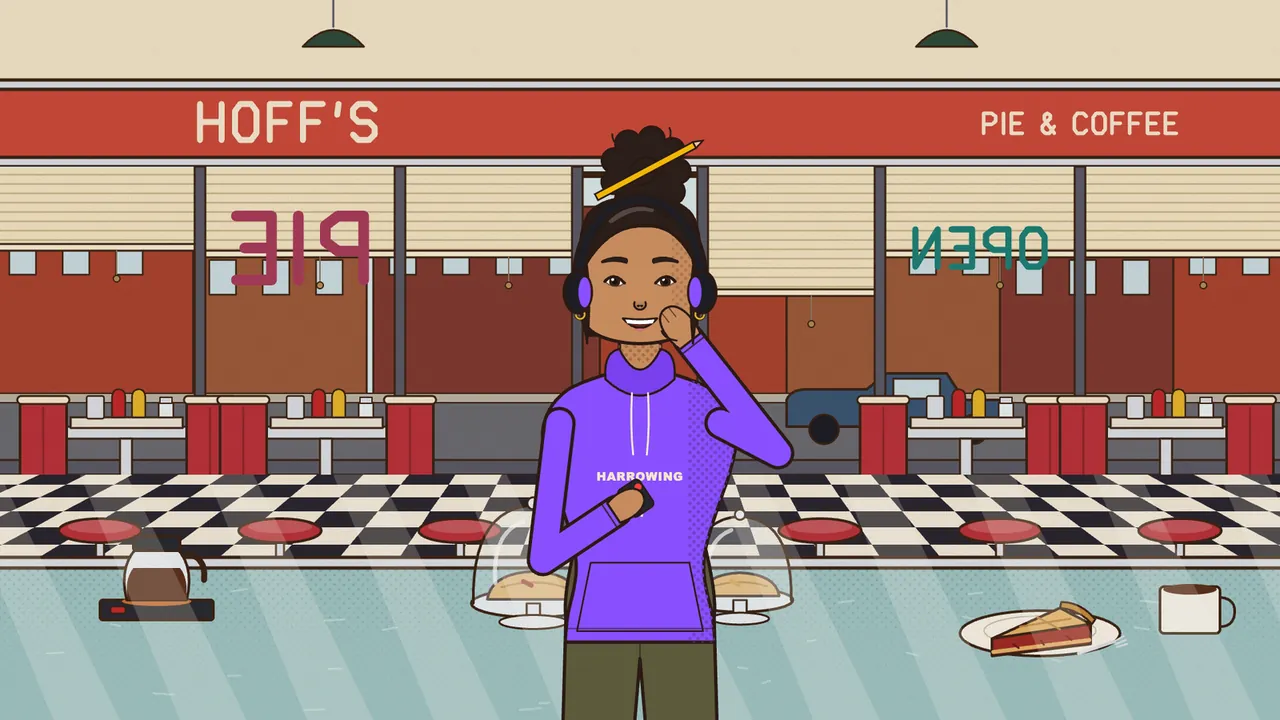
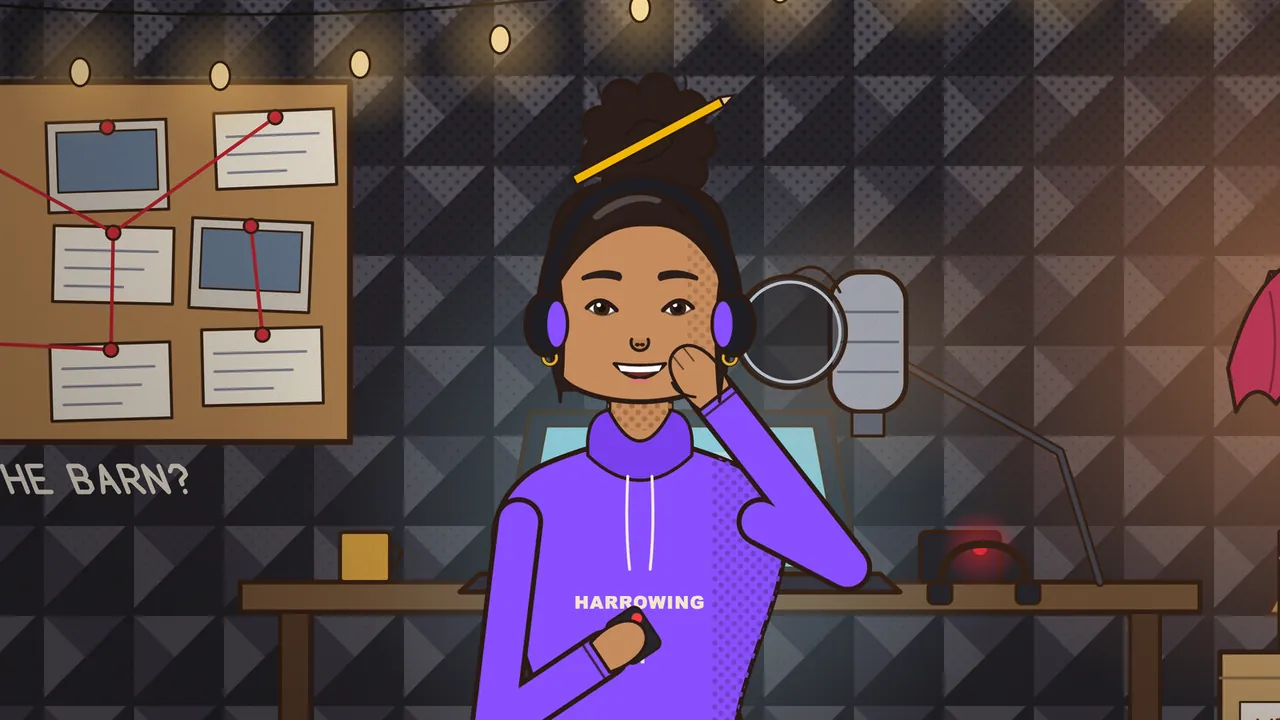
Paloma’s podcast, Harrowing, has its own comments. Under episode 31, the town argues about pie and hardware stores. Then one more commenter shows up, lanternlight, who seems to know things nobody outside the courtroom should know.
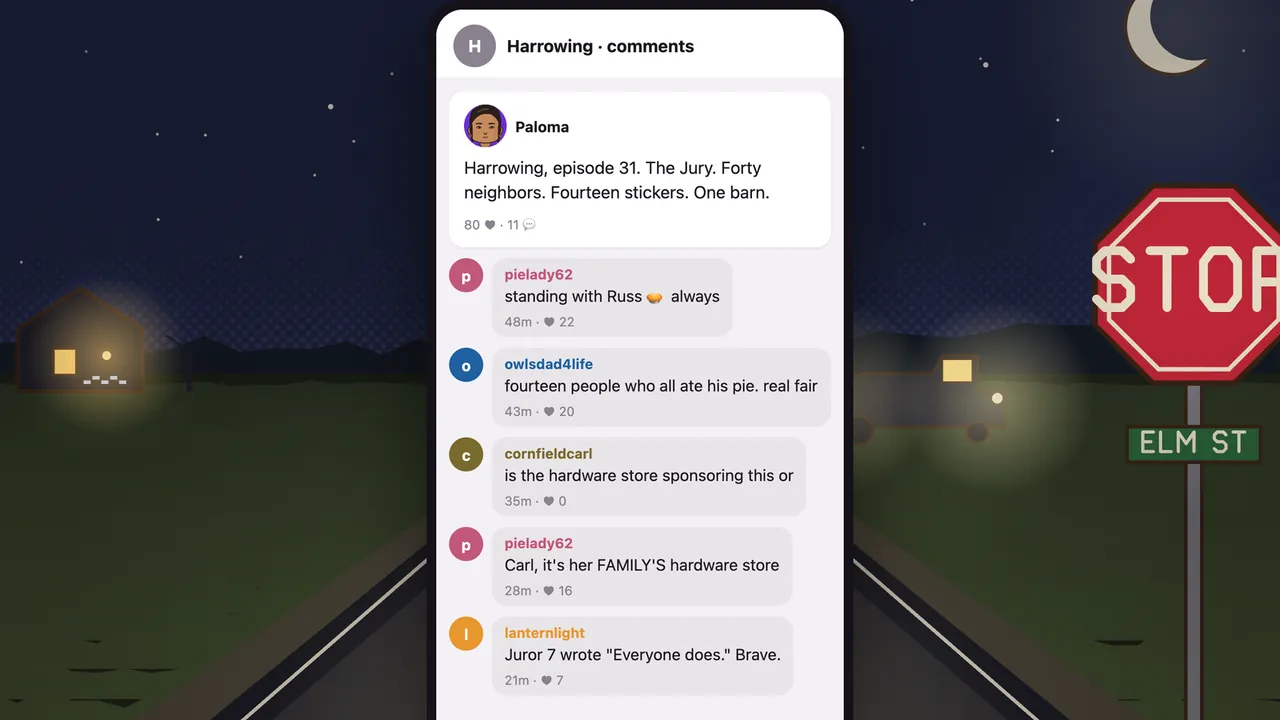
You can report that comment, reply to it or close the app. Report it, and “A little gray banner thanks me and promises a review within three to five business days.”
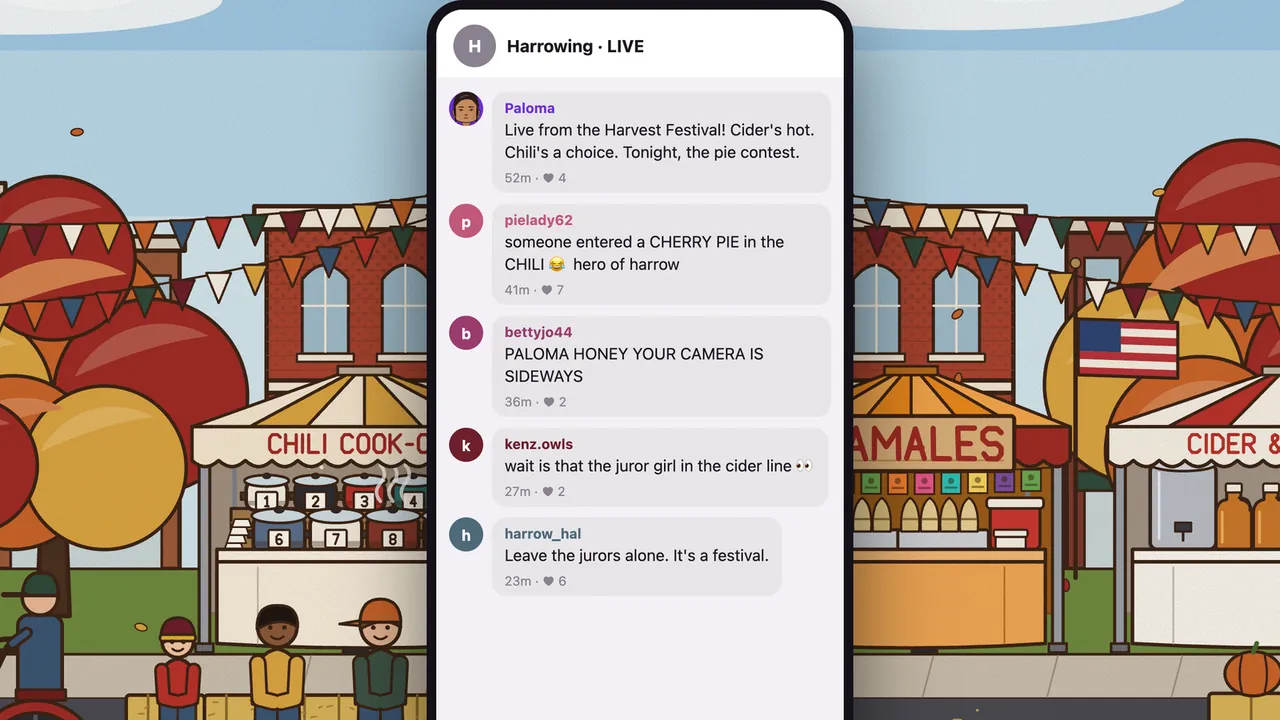
At the festival, Paloma goes live from the courthouse steps, and the feed turns into a live chat. Within minutes, someone tells her the camera is sideways.
Chalk, one stroke at a time
The game opens in the jury room, with one line: “Let’s vote again.” The votes go up on a chalkboard as tally marks, four upright strokes and a fifth across. Each stroke is drawn on its own, about a third of a second after the last, with its own scratch of chalk, and each one leans a little, so the board looks written by hand. Tap, and the count finishes at once. When the jury votes again, the board only adds the new strokes.
A notebook nobody reads
At the end of each day, at the kitchen table, the heroine writes a verdict for the day in the notebook the judge handed out: Guilty, Not guilty or I don’t know. “Nobody in the world knows what I just wrote.”
Those verdicts become a row of small squares, red for guilty, green for not guilty and white for I don’t know. The Compare verdicts button makes a link for a friend with one digit per verdict, with no name and no save in it. When the friend opens it, the row is kept in their browser, and from then on every chapter’s recap shows the friend’s verdict next to yours, marked “same as you” or “not like you.”
A tab that calls you back
After chapter 1, switch to another tab, and the game’s tab quietly renames itself: “Juror Seven, come back.” And open the browser’s console, and there’s a note waiting: “Hello, Seven. You opened the console. Everybody looks, sooner or later.”
Chapters 1 and 2 are free to play in your browser at twelveneighbors.com. The full game, all seven chapters, is $9.99, paid once. More about the game is on the Twelve Neighbors page.