Turbo Pudding
Harrow is the kind of town where Hoff’s diner “has been open for an hour, which means it has been full for fifty-nine minutes.” In Twelve Neighbors you are a 19-year-old scale clerk at the Harrow Grain Elevator and a former server at Hoff’s. One Monday in October, a jury summons sends you to the Lark County Courthouse, and the case on the questionnaire is State v. Russell Hoffman. Everybody in Harrow knows everybody.
It’s Monday, so here is the cast you’ll meet in the first two chapters, with no spoilers.
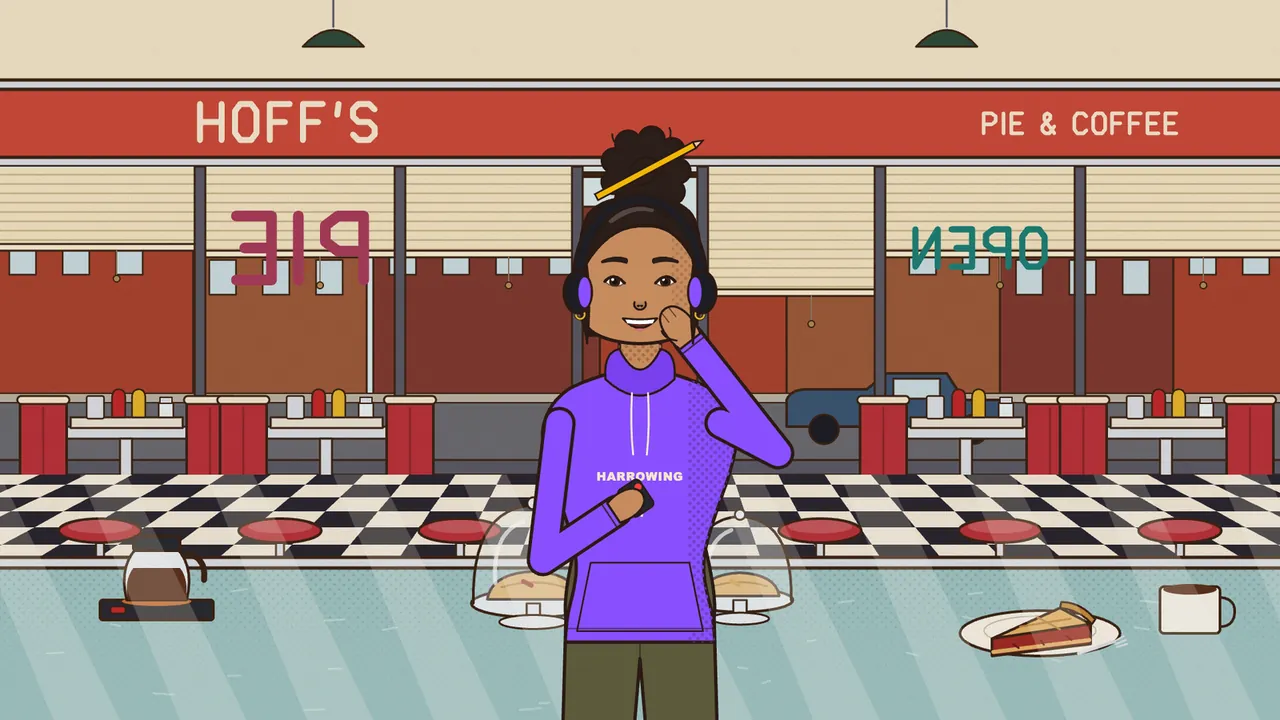
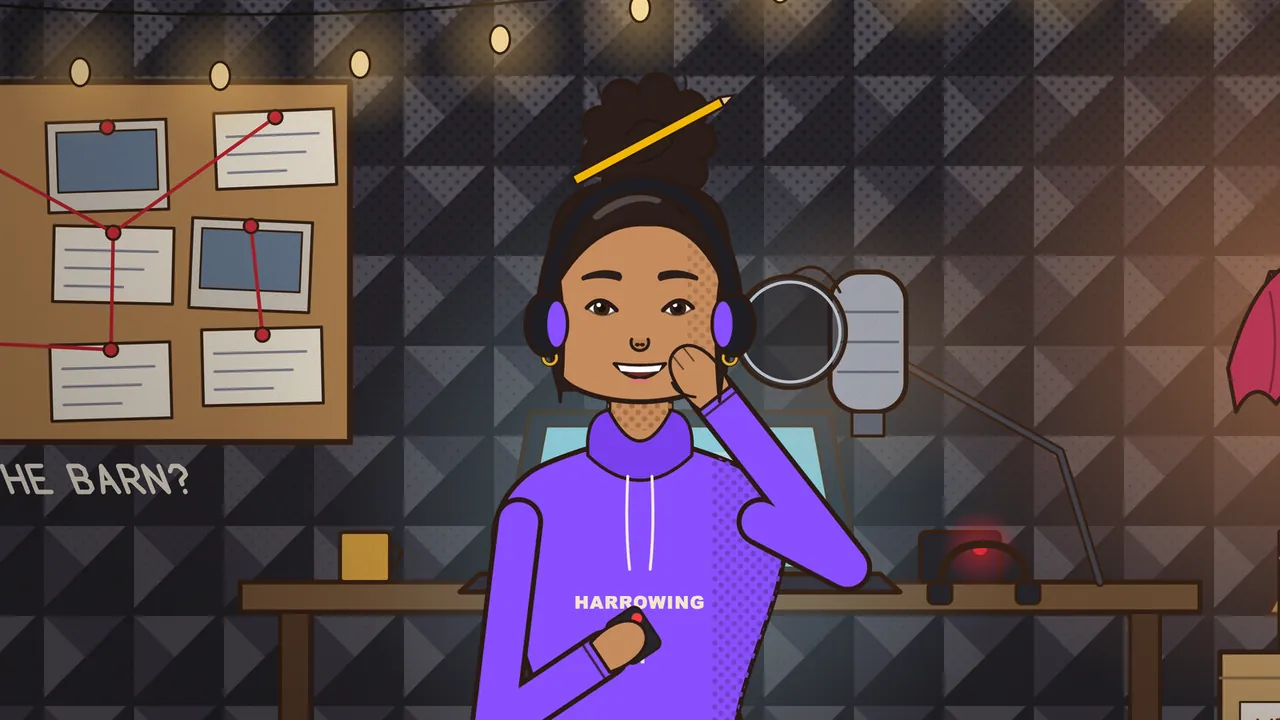
Paloma Méndez, your best friend with a podcast
Paloma runs “Harrowing,” a true-crime podcast about her own town. Her studio is a closet in her family’s basement, with egg-crate foam, a lamp with a scarf over it and forty pounds of Méndez Hardware inventory. Her show opens like this: “Welcome back to Harrowing. I’m Paloma, and nobody in this town will talk to me.”
Earl Becker, eighty, cuts right into her recording at Hoff’s: “I’ll talk to you. It’s called pop.” Paloma logs him for the record as “Earl Becker, eighty, Team Pop.” She signs off like a pro: “Stay curious. Lock your doors. Leave the light on.”
Russ Hoffman, the man with the pie
Russ runs Hoff’s, and he never asks if you want pie. A warm slice of lattice-top cherry pie just lands in front of you, even at eight in the morning. Tell him pie is not breakfast, and he has a quiet answer: “Coffee’s fresh. Sit wherever.” Point out that you’re already sitting: “Then you’re ahead of me.”
Paloma sums him up for her listeners: fifty-four, volunteer firefighter, widower, and he “makes a cherry pie that has ended marriages.” He is also the man on trial, charged with arson in the first degree. In court he wears a borrowed gray suit, and the sleeves are too short.
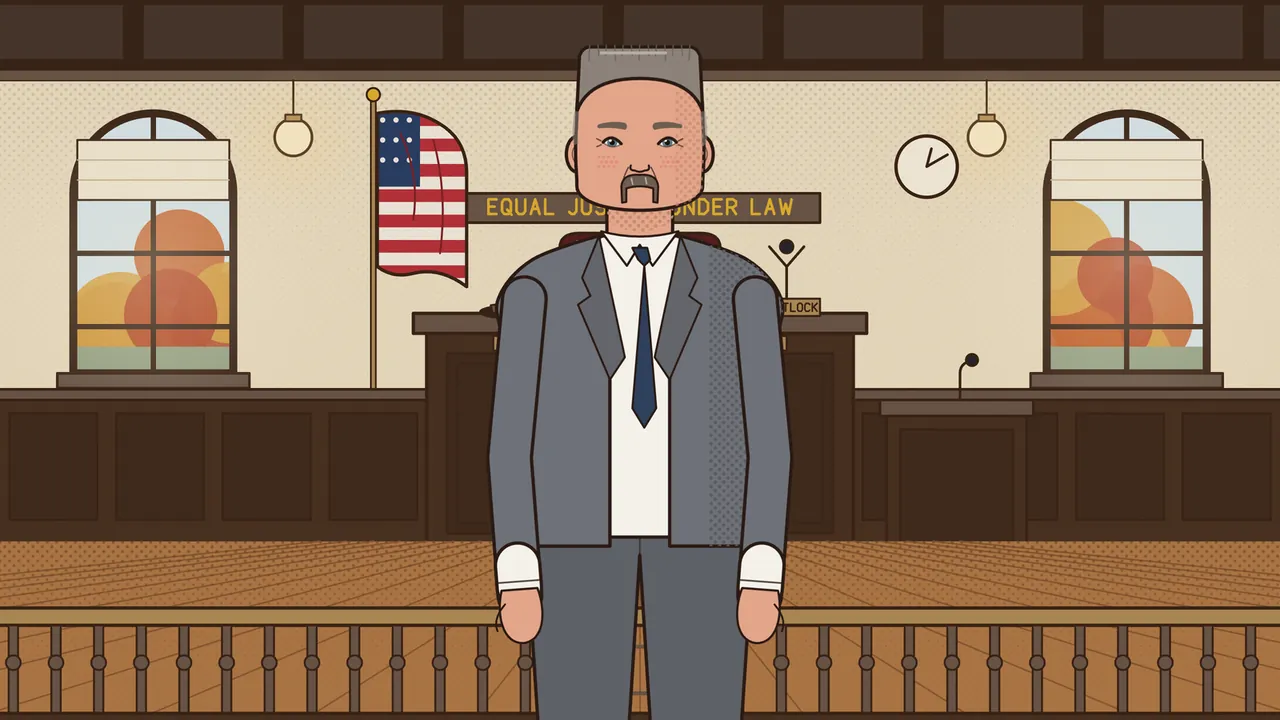
His line at the diner says the most about him: “Pie’s on the house. Always has been.”
Ray, the bailiff who counts things
Ray is the first face you see at the courthouse, handing out questionnaires: “Pens are county property. I count them.” He counts the phones too. They go into a wicker basket, each with a numbered sticker, and yours goes in seventh.
In the jury room, Ray runs breakfast like a hearing: “Glazed or sprinkles? Choose wisely. It goes on the record.” Ask to wait for pie instead, and he has a ruling ready: “Pie’s evidence, ma’am. Noted.”
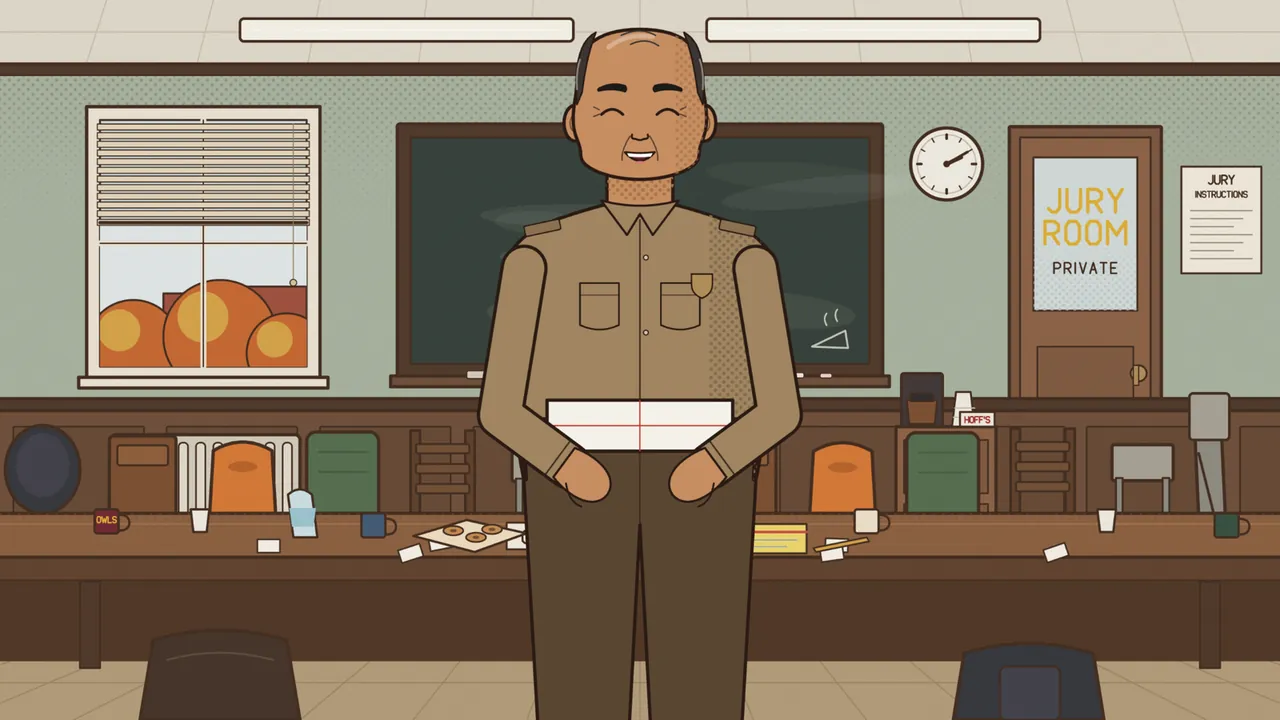
Judge Whitlock, who runs a tight room
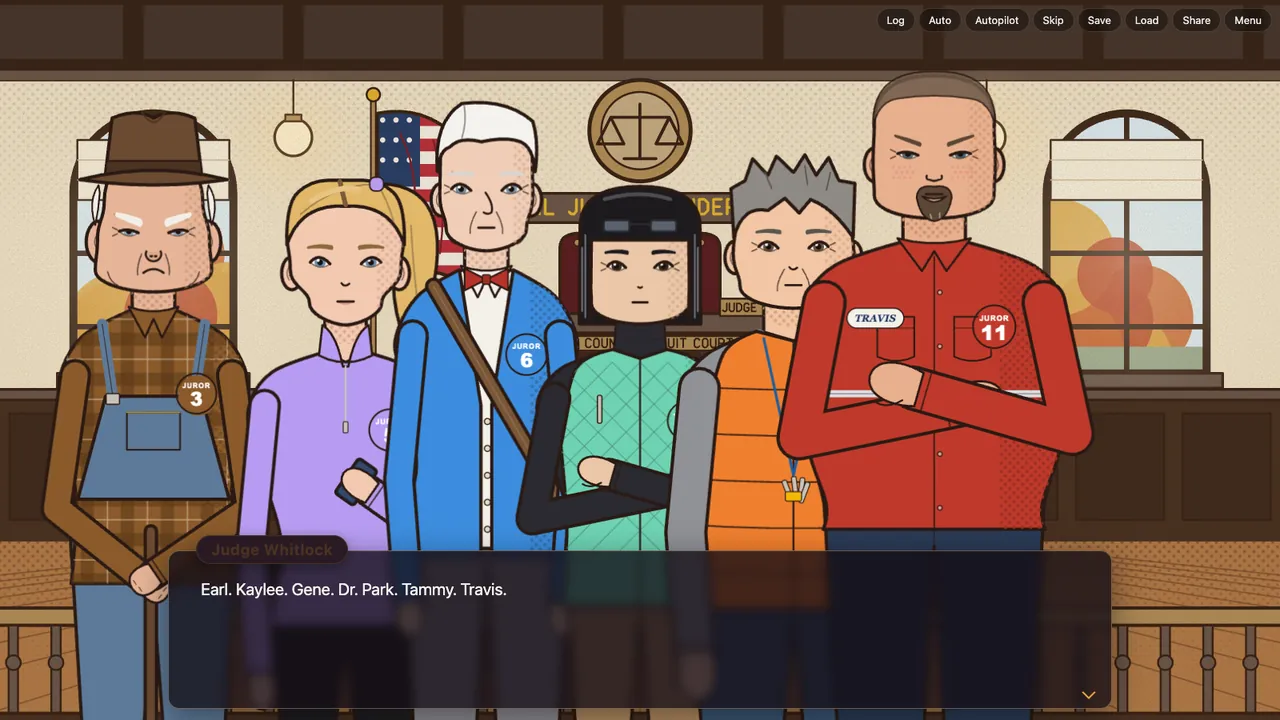
Judge Whitlock opens jury selection like this: “We summoned half the county. You’re the half that came.” When she asks who knows Mr. Hoffman, every hand goes up, and Earl raises both. Her answer: “If knowing Russ Hoffman got you excused, we’d have to import a jury.”
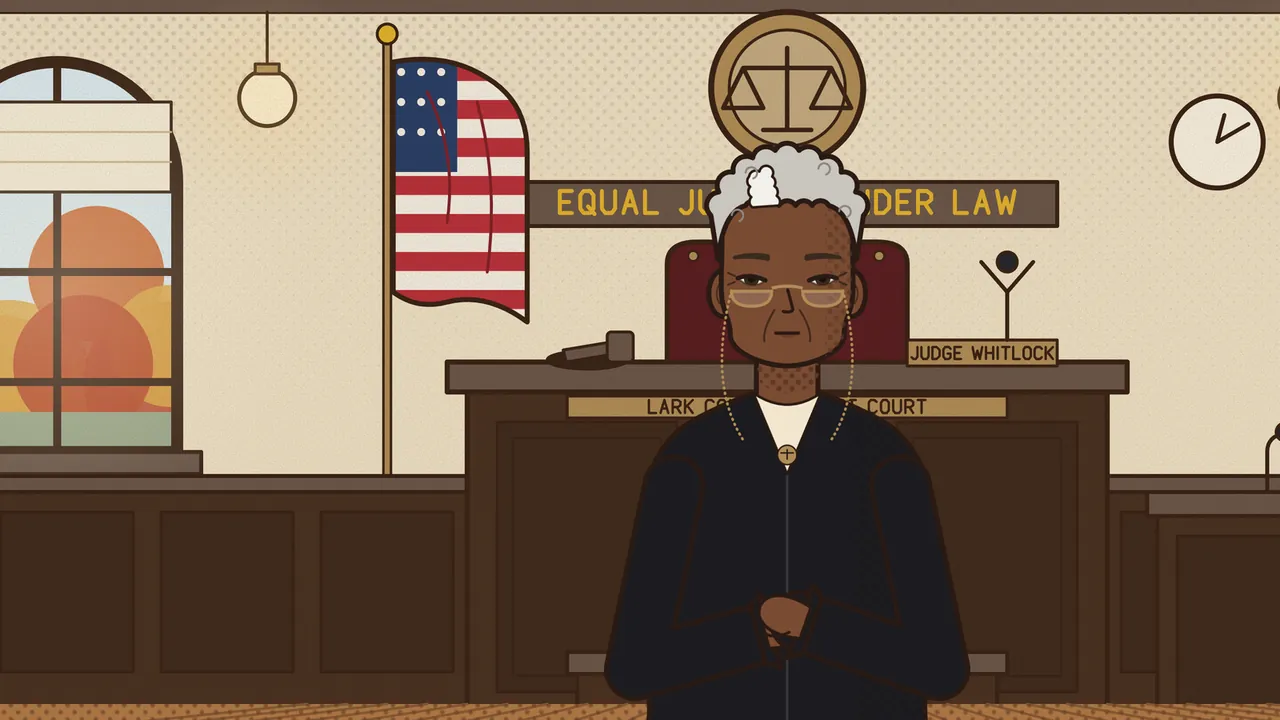
Her rules are short. “Phones in the basket. Gossip at the door.” When Brenda Kowalski reminds her that she is the hairdresser, the judge has that covered too: “Then you’ll have a very quiet month, Mrs. Kowalski.” And before the weekend’s football game: “Go Owls. That is not a ruling.”
The neighbors in the jury box
Fourteen people end up on the jury, twelve jurors and two alternates, and you know most of them.
Marcus Bell has run the pharmacy on Main for thirty years and filled prescriptions for half the room. He has one rule: “Nobody votes till everybody talks.” When the jury room gets loud, he brings it to order: “We’re not discussing the case. We’re discussing pie.”
Brenda does hair at Bless Your Hair and has three ways of saying “bless your heart.” She deals out business cards, ten percent off a perm, one per juror. Her defense: “I’m not gossiping, Travis. I’m pre-reporting.”
Wyatt Lindauer has four hundred acres of corn standing. Asked if he can serve, he checks the corn first: “Moisture’s at nineteen. Corn’s not ready. It’s a yes, sir.”
And there is Owen Kessler, alternate number thirteen, in a gray hoodie. The two of you wave at each other through the scale house window at three in the morning, and you never knew his name. When the judge stumbles over it, he finally says it: “...Owen. It’s Owen.”
Grandma Dot, who writes in capitals
At home there’s Grandma Dot. Her advice for your first day in court comes by text: “Bring the judge a pie.” That night there’s a plate under foil on the counter and a note in her capitals: EAT. SLEEP. BE FAIR.
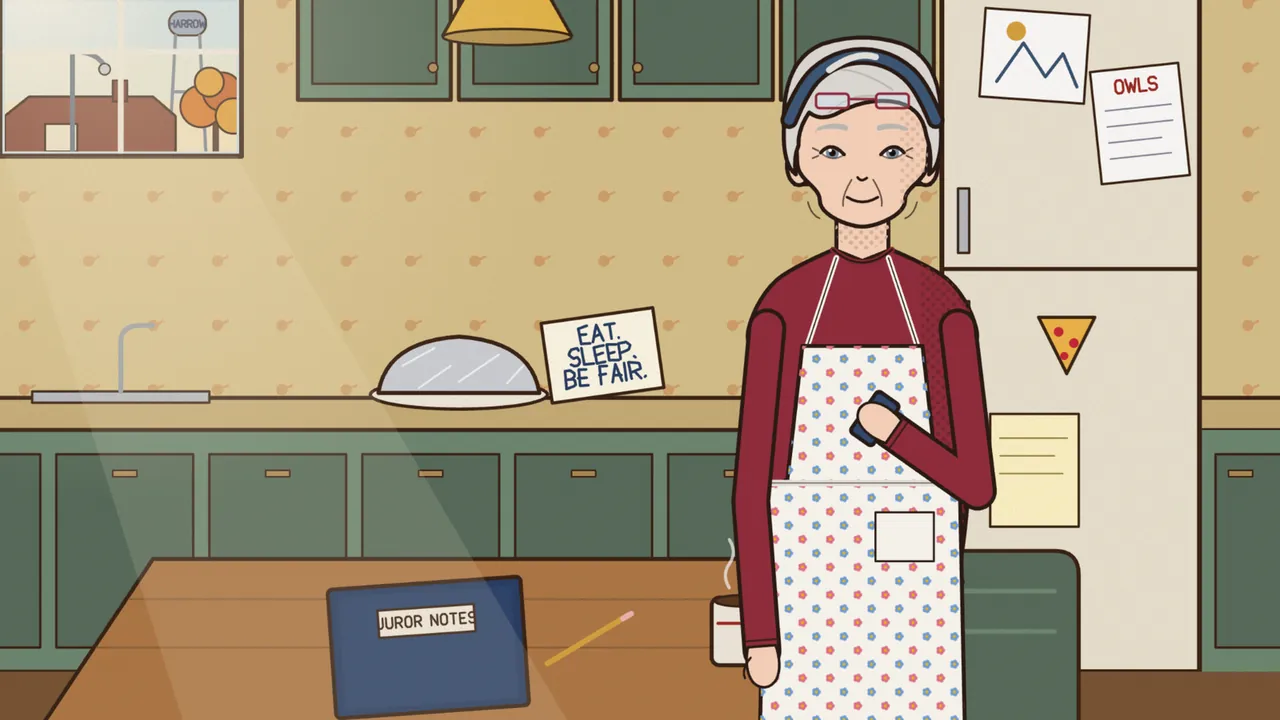
Dot doesn’t do abbreviations. Text your mother “in court rn,” and at the homecoming parade Dot gets to the point: “WHAT IS RN. THIS IS GRANDMA DOT.” Told it means “right now,” she has one more note: “Then say ‘right now.’ You have the whole alphabet.” And on Saturday morning: “Eat. You’ve got that courthouse face.”
Come meet them
Chapters 1 and 2 of Twelve Neighbors are free to play in your browser at twelveneighbors.com. The full game, all seven chapters, is $9.99, paid once. More about the game is on its Twelve Neighbors page.