Turbo Pudding
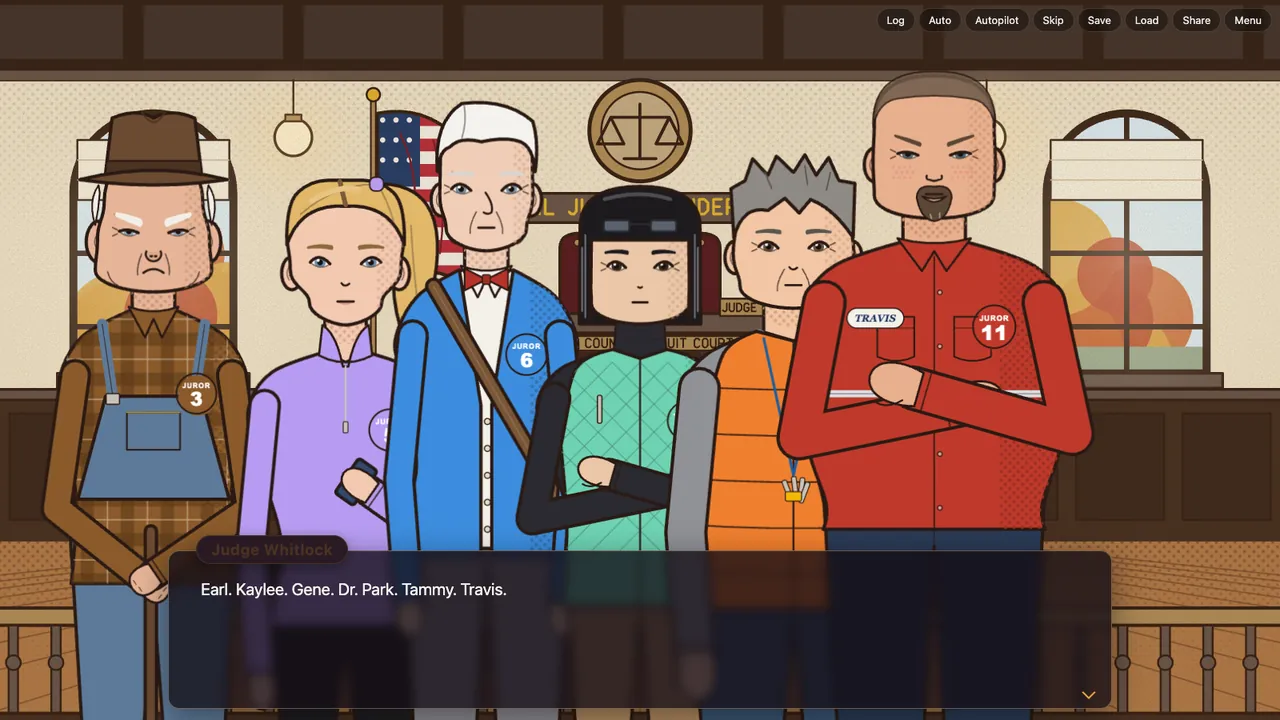
Twelve Neighbors is an arson trial in the town of Harrow, and you are Juror Seven. The case is about Russ Hoffman’s old barn, and in chapter 3 the jury finally hears how it burned. The State calls a fire investigator, Mr. Sorensen, who has “a slideshow and a tie with tiny flames on it.” It’s Thursday, so here is the real story behind his job.
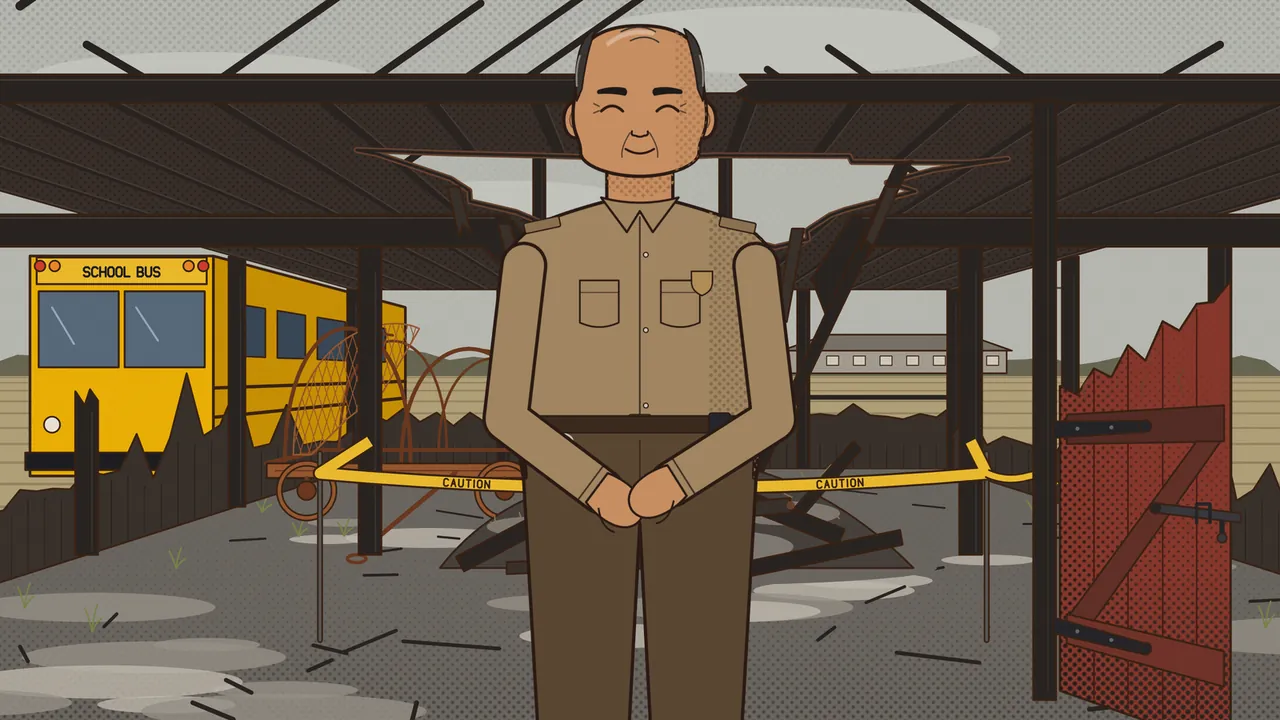
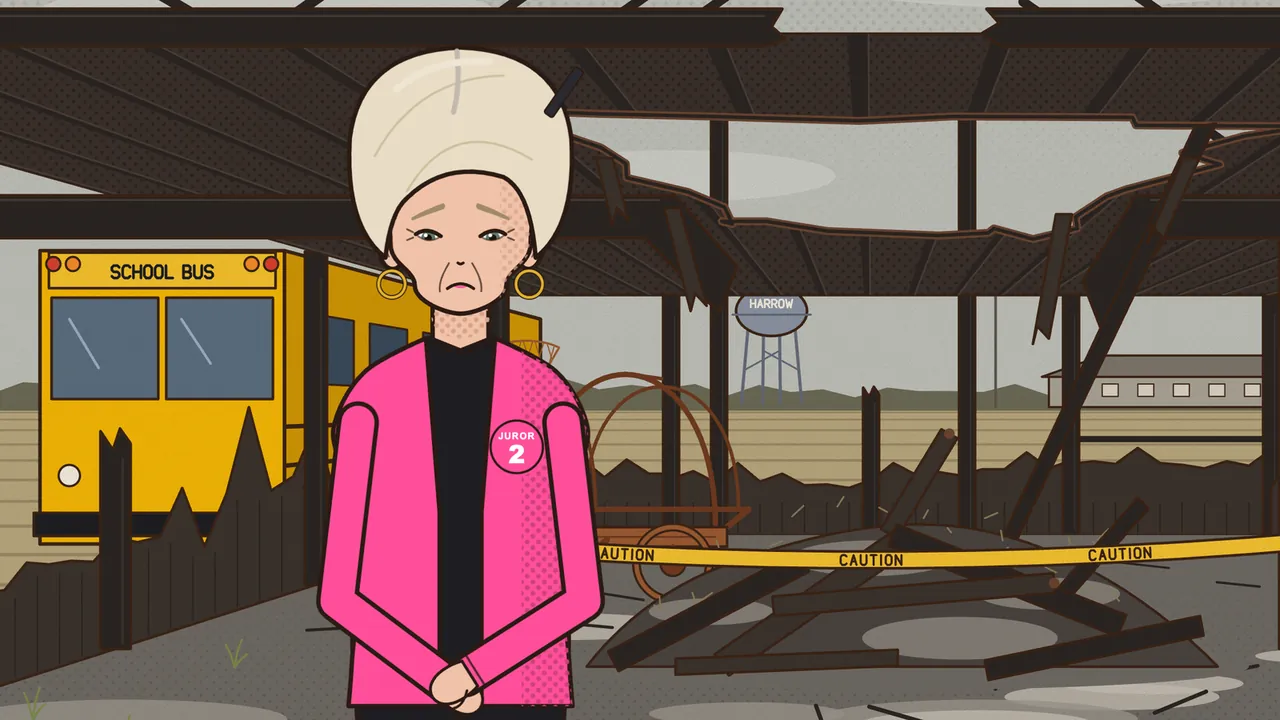
The picture at the top is Tuesday’s jury view, “a field trip, with a court reporter.” A yellow school bus takes the jury out to the barn, and Ray the bailiff sets the rules: “Look all you want, folks. No touching, no talking, no souvenirs.”
Two sentences from the stand
Sorensen gets straight to it. “Area of origin, the hayloft. Northeast corner. The fire burned down from there, not up.” Then: “The lab found an ignitable liquid in the debris. Similar to gasoline.” Brittany Shaw, the prosecutor, likes that last part so much she says it again: “Similar to gasoline. Thank you, Mr. Sorensen. Your witness.”
Those two sentences are the two halves of the real job. Investigators call it origin and cause: where a fire began, and what started it.
Safety first, then a sketch
The National Institute of Justice, the research agency of the US Department of Justice, publishes A Guide for Investigating Fire and Arson. Its first rule for the scene is short: “Safety overrides all other concerns.” After that comes patience: photographs taken systematically, logs, sketches and diagrams. The guide calls working out origin and cause “a complex and difficult undertaking” that needs training and the scientific method.
The jurors of Harrow get the short version. Brenda narrates the whole county from the seat behind the driver, like a tour guide, until the bus pulls up: “Oh. That’s the barn.” Black beams. “A tin roof folded like a napkin.” And the door, still standing.
Reading the walls
One pattern investigators look for is the V. A glossary of fire terms hosted by the National Institute of Standards and Technology, NIST, says V patterns are made by flames, hot fire gases or smoke within the fire plume, and often show up as lines of demarcation, the edges between what burned hard and what was spared.
Patterns need care, though. A 1997 report for the National Institute of Justice described full-scale fire tests in furnished bedrooms at NIST and concluded that some traditionally used indicators have little or no technically defensible basis.
Into the can
The jurors can’t take so much as a splinter, and real investigators are just as fussy. The NIJ guide says to collect from the area of origin into clean, unused containers: metal cans, glass jars or special nylon or polyester bags, each vapor-tight, sealed right away and labeled. Fuel-powered tools stay away from the samples, so a chainsaw can’t add a liquid that wasn’t there. Investigators also take comparison samples of the same material, to show the lab what it looks like with nothing on it.
Similar to gasoline?
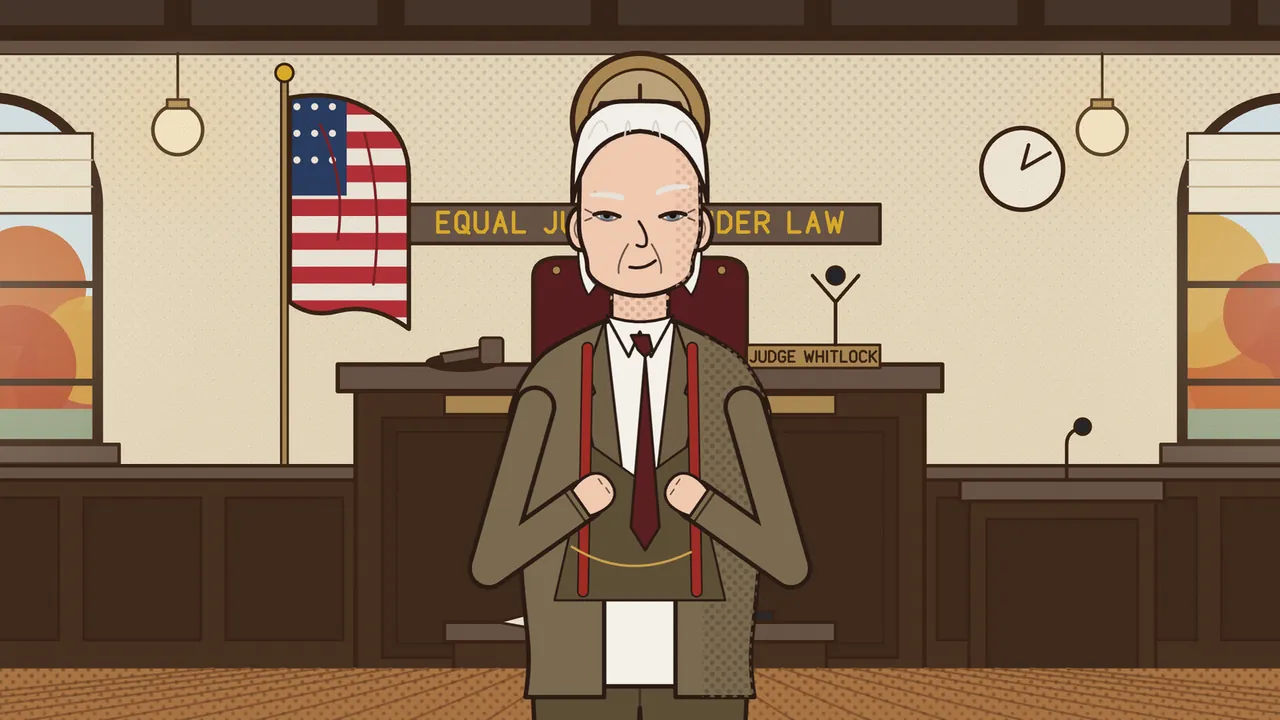
Then Walt Pruitt, for the defense, opens with four words: “Similar to what, son?” Sorensen: “…A heavy petroleum distillate. Kerosene. Lamp oil, possibly.” Walt: “Lamp oil. The kind you’d find in, say, a lamp.”
In a real lab, those are two different answers. Samples go through gas chromatography–mass spectrometry, and the results are sorted into classes under a standard called ASTM E1618. NIST hosts a draft of its update. Gasoline is a class of its own: fresh gasoline typically has molecules of 4 to 12 carbon atoms. Heavy petroleum distillates run from about 9 to more than 20, and the examples include kerosene, diesel fuel, charcoal starters and lamp oils. The standard adds a warning: labels describe what a product does, not what it’s made of, so two bottles with the same label can land in different classes.
Noses on the job
ATF, the federal Bureau of Alcohol, Tobacco, Firearms and Explosives, trains its Certified Fire Investigators for two years, with more than 300 hours of training, 100 fire scenes and 80 origin and cause reports, and they recertify every year. ATF also trains accelerant detection dogs on a food reward: six weeks for the dog, then six more with its handler.
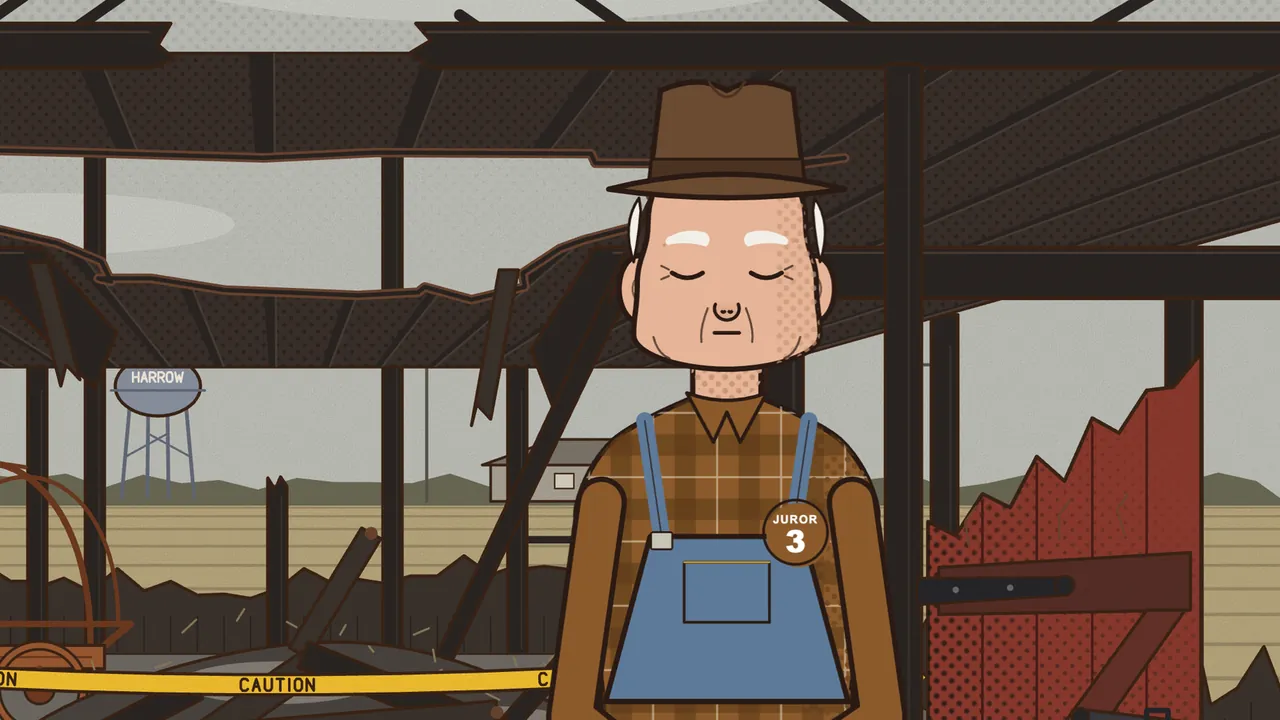
Harrow has its own nose. Inside the barn, Earl Becker, Juror Three, stands under where the loft used to be and breathes in, slow, “like a man at a pie table.” “Smells like my granddaddy’s barn.” What else he says, we’ll leave to the game.
Back in Harrow
Walt has one more go: “Did you find a gas can up there, son? A funnel? One single match?” Sorensen: “We found a great deal of ash, sir.” Walt: “I’ll take that as a no.” So what was up in that loft? A lamp, a gas can or just hay. What to think is up to you.
Chapters 1–3 of Twelve Neighbors, the jury view and the testimony included, are free to play in your browser at twelveneighbors.com. The full game is $9.99, paid once. More about the game is on its Twelve Neighbors page.